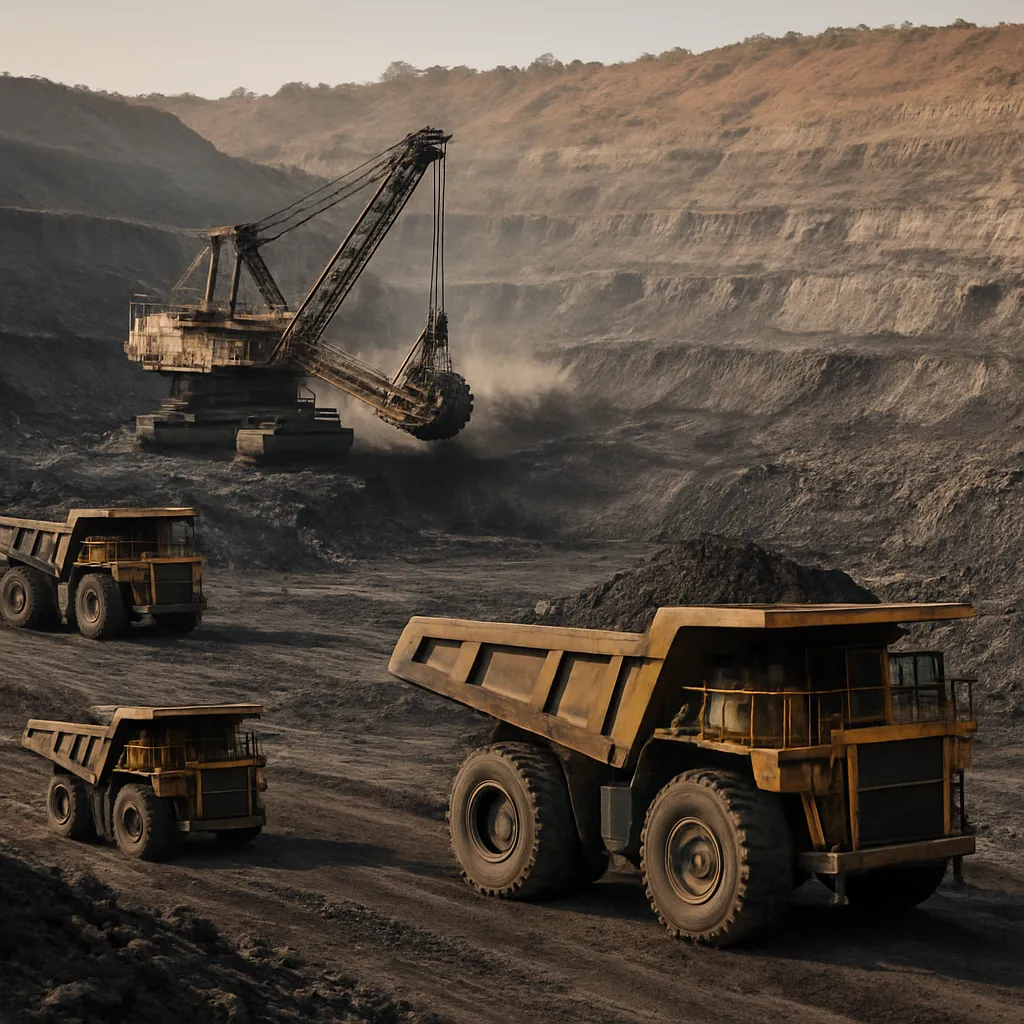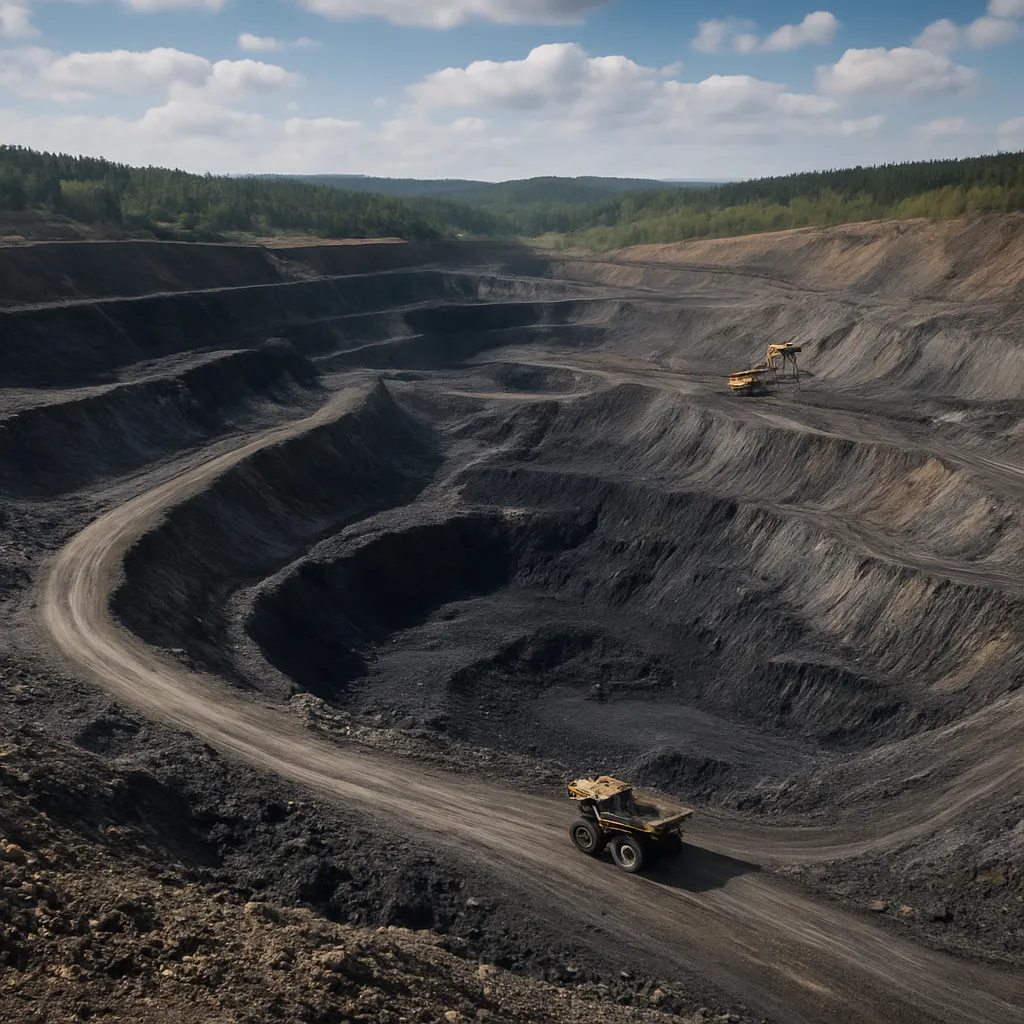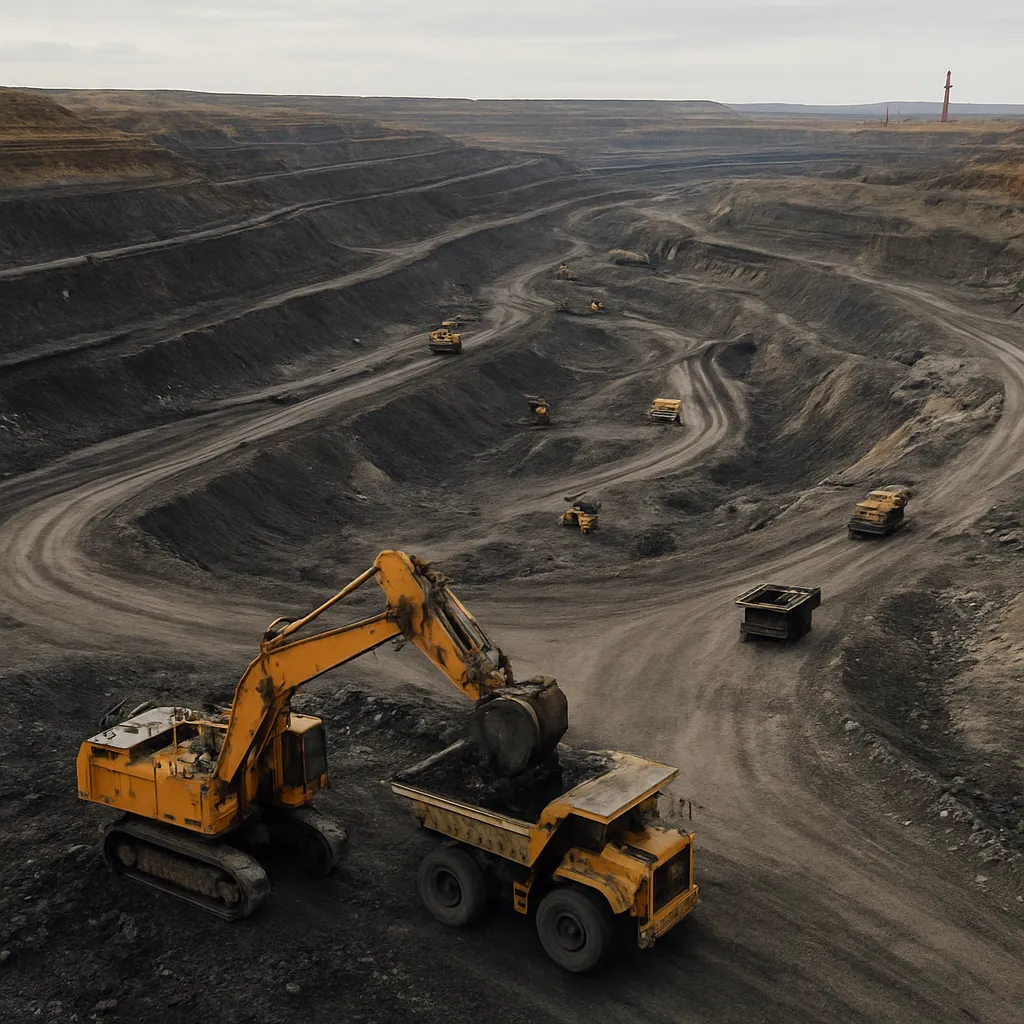
The Yuzhny Kuzbass mining area—often referred to in English as the Yuzhny (Southern) sector of the Kuzbass basin—is one of the many coal-producing localities within the vast Kemerovo coal basin in southwestern Siberia, Russia. This article presents an overview of the mine and the broader mining complex that carries the Yuzhny name: where it is located, what types of coal are produced, geological and technical features, economic and industrial significance, environmental and social aspects, and relevant statistics and trends. The focus is on synthesizing public-domain knowledge about the Kuzbass mining region and typical characteristics of mines designated as Yuzhny in that context, while highlighting their role in national and regional energy and metallurgical systems.
Location, geological setting and historical background
The Yuzhny mining sites are located within the Kuzbass (Kuznetsk Basin) in Kemerovo Oblast, southwestern Siberia. The Kuzbass is one of the world’s major coal basins and Russia’s most important coal-producing region. Geographically it lies between the Tom and Barzas rivers, extending across a substantial portion of Kemerovo Oblast. The name Yuzhny (meaning “southern”) is used by multiple mines and mining sectors in the southern part of the basin and typically designates mines, mine fields or enterprises situated in the southern zones of major mining districts.
Geologically, the Kuzbass basin contains thick sequences of Carboniferous and Permian sedimentary rocks with numerous productive coal seams. Coal in this basin varies by rank and composition, but many seams are relatively thick and laterally extensive. Over more than a century of extraction, the Kuzbass has been intensively developed: exploration and large-scale commercial mining accelerated during the late 19th and early 20th centuries and became central to Soviet industrialization. Yuzhny-sector mines share this history, often evolving from small local shafts and pits into larger modern combined underground and open-pit operations.
Types of coal and mining methods
Coal types found in the Kuzbass—and therefore in Yuzhny-area operations—span a spectrum useful for both metallurgical and energy purposes. Key coal categories include:
- Coking coal (metallurgical coal) — medium to high quality coals used in steelmaking coke production; Kuzbass contains important reserves of coking and semi-coking grades.
- Thermal coal — coals used for power generation and heating; many Kuzbass seams are exploited for thermal markets both domestic and export.
- PCI (pulverized coal injection) coal and blends — coals suited for modern steelworks’ auxiliary fuel systems.
Mining methods in Yuzhny and similar Kuzbass operations typically include:
- Underground mining (longwall and room-and-pillar): widely used for deeper seams and where minimizing surface disruption is necessary.
- Open-pit (surface) mining: employed where seams are shallower and laterally extensive. Large overburden removal and truck or conveyor systems are typical for major open-cast areas.
- Combined systems: some mining complexes use both underground and surface methods on different parts of the deposit, optimizing recovery and reducing costs.
Recent decades have seen modernization of equipment: high-capacity shearers and powered supports in longwall faces, automated conveyors, fleet electrification, and increased mechanization of haulage. Coal washing and beneficiation plants are integral to producing higher-grade concentrates for metallurgical consumers and improving economics for exported thermal coal.
Economic role and industrial significance
The Yuzhny mining sites contribute to multiple levels of the Russian economy. At a regional scale, mines in the southern Kuzbass are large employers, underpinning local towns and municipalities by providing wages, municipal revenues, and industrial spin-offs (equipment maintenance, transport, services). At a national level, the Kuzbass region is central to Russia’s coal industry, and Yuzhny operations form part of the supply base for both domestic energy needs and export markets.
Production: In recent decades, Russia’s annual coal production has typically ranged in the high hundreds of millions of tonnes (commonly cited around 400–450 million tonnes per year in pre-2020 and early-2020s figures). The Kuzbass basin has historically supplied roughly half (often in the range of 40–60%) of Russia’s coal output. Yuzhny-sector mines, as components of the Kuzbass complex, contribute to that aggregate production—production per individual modern mine or open-pit in the Kuzbass can vary from under a million tonnes per year for smaller shafts to several million tonnes annually for large open-cast sites.
Exports and markets: Coal from the Kuzbass is exported widely. Primary export markets include China, countries in East and Southeast Asia (South Korea, Japan, and increasingly Southeast Asian markets), and European and Black Sea customers. Exports flow via major transport corridors such as the Trans-Siberian Railway and Baikal–Amur Mainline, and through Pacific and Black Sea ports. For metallurgical-grade coal, long-term contracts and spot deliveries underpin economic stability and investment decisions at producing mines.
Employment and regional GDP: Coal mining is a major employer in Kemerovo Oblast, with hundreds of thousands of jobs directly and indirectly connected to the industry across the region. Yuzhny-area mines typically employ a mix of underground miners, surface crews, processing plant operators, geologists and administrative staff. Payrolls in mining towns contribute substantially to local purchasing power and municipal finance.
Infrastructure and logistics
Efficient transport and handling infrastructure are essential to the economics of Yuzhny mining operations. Key elements include:
- Rail: access to high-capacity rail lines is crucial. The Trans-Siberian and Baikal–Amur corridors provide the backbone for moving coal to European, Black Sea and Pacific ports.
- Ports: exports rely on a network of seaports—Pacific (Vanino, Vostochny, Vladivostok), Baltic and Black Sea gateways (e.g., Novorossiysk, Ust-Luga for aggregate logistics), and transshipment hubs.
- On-site logistics: conveyor belts, rail-mounted ore cars, ropeway and truck fleets, and dedicated loading terminals are common, allowing continuous high-throughput shipment.
- Beneficiation and storage: coal-washing plants, dry and wet stockyards, and covered storage for higher-grade products help maintain product quality and reduce freight penalties.
Investment in rail capacity, port handling, and intermodal facilities has been a major driver of export growth; bottlenecks in rail or port infrastructure can constrain production even when reserves and mining capacity are available.
Statistical snapshot and trends
Quantitative metrics for the specific Yuzhny mine(s) vary by operator and year. However, the following regional and industry-level statistics provide context for the likely scale and trends affecting Yuzhny operations:
- Russia’s coal production (in the late 2010s and early 2020s) was commonly reported at roughly 400–450 million tonnes annually. The Kuzbass basin contributes a substantial portion of that total.
- Kuzbass historically accounted for between 40% and 60% of national coal output, making it the largest single coal-producing region in Russia.
- Exports of Russian coal prior to major global trade disruptions were commonly in the order of ~150–220 million tonnes per year depending on the year and market conditions; a sizeable share of that tonnage originates in the Kuzbass.
- Typical large open-pit mines in the Kuzbass may produce several million tonnes per year; smaller underground operations produce from hundreds of thousands up to low millions of tonnes annually.
Recent trends of relevance to Yuzhny operations include:
- Market diversification: producers have sought to expand sales to Asian markets while maintaining traditional European and domestic customers.
- Technological modernization: adoption of automation, remote-operated equipment, and digital monitoring systems to raise productivity and safety.
- Environmental regulation and carbon considerations: pressure to reduce methane emissions, dust and water pollution, and to improve reclamation practices.
- Logistics investment: steady growth in rail and port capacity to accommodate export volumes, with occasional constraints during peak demand.
Environmental, safety and social aspects
Coal mining in the Kuzbass, including Yuzhny-sector operations, carries the typical environmental and social challenges of large-scale fossil fuel extraction:
- Environmental impacts: surface disturbance and subsidence from underground workings, water contamination risks from mine drainage and tailings, dust emissions from stockpiles and transport, and loss of vegetation and habitat in open-pit areas.
- Methane emissions: coal seams and mine workings emit methane, a potent greenhouse gas. Capturing and utilizing mine methane (for power generation or pipeline injection) is increasingly promoted as both an environmental and economic opportunity.
- Reclamation and legacy issues: progressive and post-mining land reclamation is required to restore landscapes and reduce long-term liabilities. Tailings and waste heaps need management to prevent acid drainage and erosion.
- Worker safety: historically, mining in the region faced safety challenges, including accidents underground. Safety has improved through modern equipment, training, and regulatory oversight, but mining remains hazardous.
- Social impacts: mining towns often face mono-industrial dependency; economic shocks, automation and market downturns can produce local unemployment, while pollution can affect public health, leading to higher respiratory illnesses in heavily industrialized areas.
In response, many modern mining operations in Kuzbass have invested in dust suppression, wastewater treatment, methane capture projects, automation that reduces worker exposure to hazardous tasks, community infrastructure, and programs to diversify local economies.
Ownership, investment and modernization
Yuzhny mining assets have commonly been operated by large Russian coal producers, including corporate groups that emerged during post-Soviet privatization and consolidation phases. Prominent companies with major Kuzbass footprints include national and regional producers that invest in mechanization, beneficiation, and transport infrastructure to improve margins and meet market requirements.
Investment priorities for Yuzhny-type mines typically include:
- Replacement of legacy equipment and adoption of modern longwall systems and high-capacity conveyors to increase face productivity.
- Expansion or modernization of coal-washing facilities to improve product quality and meet metallurgical requirements.
- Health and safety technologies: gas monitoring, remote-controlled machinery, and real-time telemetry.
- Environmental mitigation: methane drainage and capture, water treatment and dust control, and progressive reclamation.
- Digitalization: predictive maintenance, production optimization through data analytics, and automation of repetitive tasks.
Regional and global significance
The importance of Yuzhny mining sites is best understood within the larger functional role of the Kuzbass: a backbone of Russian coal supply for power generation, steelmaking and export earnings. Some key points:
- Steel industry support: coking and semi-coking coals from the Kuzbass feed domestic and export steelmaking operations, making the basin integral to Russia’s metallurgical sector.
- Energy security and economics: thermal coal from Kuzbass helps supply Russian electric utilities and district heating systems, particularly in industrial regions badly served by alternative fuels.
- Export earnings: coal exports have been a major hard-currency earner; maintaining reliable production and shipment volumes is central to regional and national trade balances.
- Geopolitical links: coal exports—especially to Asian markets—help integrate the Kuzbass with transcontinental trade corridors and logistics networks.
Interesting technical and human aspects
Beyond the economic headline figures, Yuzhny and related Kuzbass mines offer several notable features:
- Some Kuzbass seams are remarkably thick and continuous, enabling high recovery rates compared with many other basins worldwide.
- The region hosts long histories of mining culture: multi-generational mining families, specialized vocational schools, and local expertise in geology, ventilation, and underground engineering.
- Seasonal extremes and harsh Siberian weather require robust infrastructure and influence construction and operational schedules—cold-weather engineering is a practical local skill.
- There is active research and pilot implementation of methane-to-power and other greenhouse-gas mitigation techniques in major mining districts.
Outlook and challenges
Looking ahead, Yuzhny-sector mines share multiple opportunities and challenges:
- Market dynamics: demand for metallurgical coal may remain relatively stable if steel production continues; thermal coal faces substitution risks as global energy systems decarbonize, though regional demand and emerging markets may sustain volumes for years.
- Regulatory and environmental pressure: progressively stricter environmental standards and carbon constraints could affect long-term demand and impose additional costs, stimulating investments in emissions reduction and reclamation.
- Technological change: automation and digitalization can raise productivity and safety but may reduce labor demand, creating social transition challenges in mono-industrial towns.
- Infrastructure: continuous investment in rail and port capacity is required to guarantee the economic value of production; logistical bottlenecks remain among the most immediate constraints on export growth.
Concluding observations
Yuzhny mining sites within the Kuzbass basin are emblematic of large-scale Russian coal mining: geologically rich, operationally significant, economically consequential and environmentally challenging. They supply important coking and thermal coals, support regional livelihoods, and underpin a significant share of national coal output. The future of Yuzhny operations will depend on market trajectories for coal, the pace and direction of technological modernization, and the ability of operators and authorities to manage environmental and social impacts while maintaining reliable output and supply-chain logistics.
Key terms emphasized: Kuzbass, coal, coking, thermal, reserves, production, exports, infrastructure, methane, modernization.