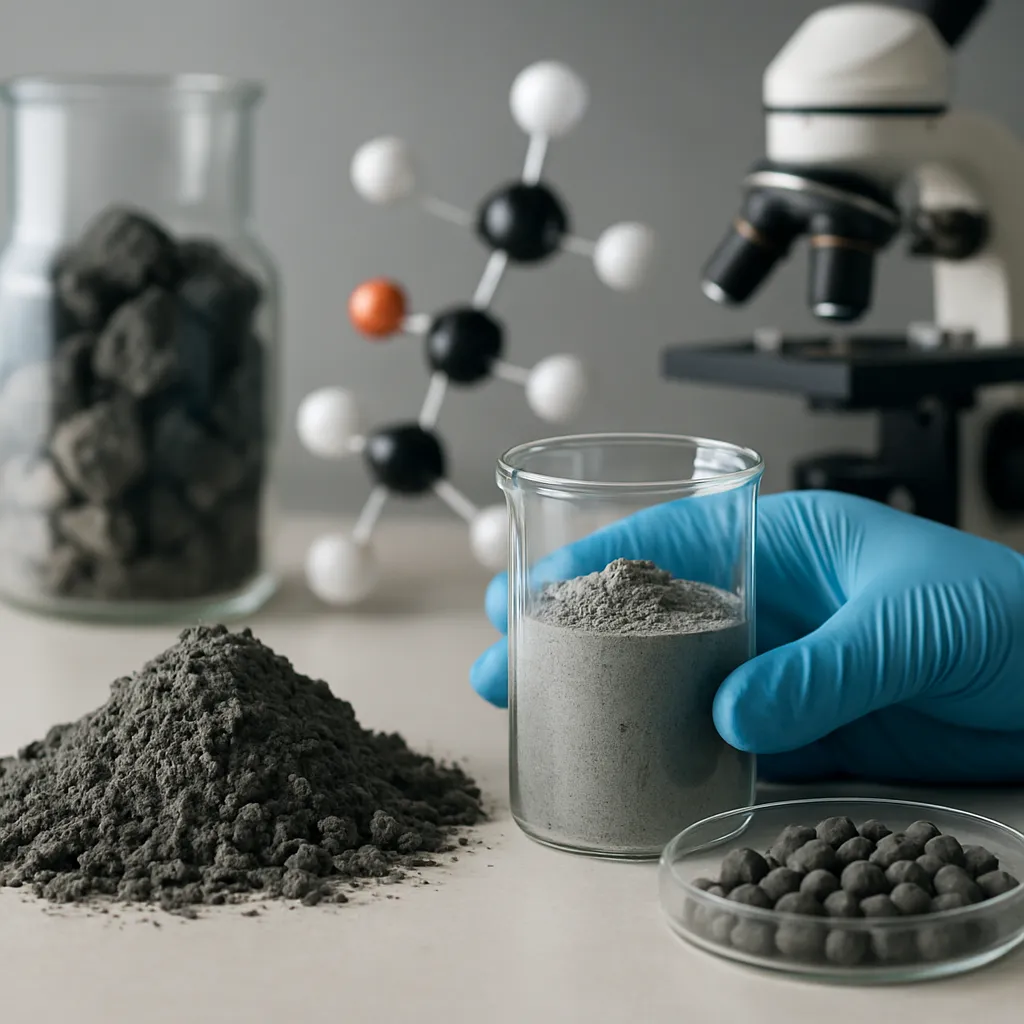
The global energy landscape has long been shaped by fossil fuels, with coal playing a central role in powering industries and generating electricity. Beyond its primary function as a fuel, coal yields significant quantities of residue known as ash. Recent advances in materials science have unlocked new pathways to convert this byproduct into valuable components for construction, advanced technologies, and environmental remediation. This article delves into the geological origins of coal, the dynamics of coal stock markets, and the innovative processes that transform coal ash into high-performance materials.
Coal Formation and Composition
Understanding how coal forms and what it contains is critical for appreciating both its advantages and the challenges it presents. Over hundreds of millions of years, plant debris accumulated in swampy regions, underwent burial, and experienced intense heat and pressure. Through this process, peat transformed into successive grades of coal—lignite, subbituminous, bituminous, and anthracite—each exhibiting distinct physical properties and energy densities. Key constituents include carbon, hydrogen, sulfur, nitrogen, and mineral matter. The carbon content increases with rank, making anthracite the highest-energy variety. Mineral impurities, however, remain trapped and give rise to various inorganic compounds when coal is burned.
Major Components of Coal
- Fixed Carbon: The solid combustible residue remaining after volatile components are expelled.
- Volatile Matter: Gases and vapors released when coal is heated.
- Moisture: Both inherent and surface water that reduce overall calorific value.
- Ash: Mineral residue comprised of silica, alumina, iron oxides, and trace metals.
While the ash fraction often accounts for 5–40% of the original coal mass, its proper management and valorization represent an opportunity to minimize waste and foster a more sustainability-oriented industrial economy.
Coal Stocks and Market Dynamics
The term “coal stocks” refers to both physical inventories held at power plants, ports, and storage facilities, as well as publicly traded shares in coal mining companies. Price fluctuations are subject to a complex interplay of supply, demand, regulatory factors, and alternative energy competition.
Supply Factors
- Mining Costs: Labor, equipment, and safety regulations influence production expenses.
- Transportation: Rail and shipping infrastructure determine how cheaply coal moves from mines to end users.
- Reserves: The geological availability of high-quality deposits affects long-term supply outlooks.
Demand Drivers
- Power Generation: Coal remains a major feedstock for baseload electricity in many regions.
- Metallurgical Uses: Coking coal is essential for steelmaking in blast furnaces.
- Policy and Regulation: Emission limits and carbon pricing can depress demand for high-emission fuels.
Investors gauge coal stock performance by tracking metrics such as burn rates, reserve-to-production ratios, and capital expenditure on clean technologies. Companies that develop strategies for circular economy integration—turning mining byproducts into saleable goods—often attract a premium valuation due to enhanced risk management and environmental stewardship.
Turning Coal Ash into Useful Materials
Once viewed purely as an environmental liability, coal ash has emerged as a versatile source of raw materials. The two main categories of ash from power plants are fly ash and bottom ash. When appropriately processed, these residues can be converted into performance additives, construction aggregates, and even advanced composites.
Geopolymer and Cement Applications
Fly ash’s fine particle size and aluminosilicate content make it an ideal precursor for geopolymers. Through alkali activation, these materials form inorganic polymers with high early strength, fire resistance, and chemical durability. Incorporating fly ash into Portland cement also reduces the clinker content, thereby lowering the carbon footprint of concrete production. Key advantages include:
- Enhanced Workability: Finer particles improve flow and reduce water demand.
- Long-Term Strength Gain: Pozzolanic reactions continue over months or years.
- Reduced Permeability: Densification of the microstructure limits ingress of deleterious agents.
Advanced Materials and Nanotechnology
Recent research highlights the potential to extract nano-silica and nanomaterials from coal ash. These high-value additives can serve as reinforcing fillers in polymers, catalysts for environmental remediation, or precursors for electronic materials. Techniques such as acid leaching, hydrothermal treatment, and supercritical drying enable separation of ultrafine silica particles. Applications range from lithium-ion battery components to high-performance coatings that offer ultraviolet protection and antimicrobial activity.
Environmental and Economic Implications
Reducing Waste and Emissions
By redirecting coal ash from landfills to material production streams, industries can dramatically reduce resource consumption and greenhouse gas emissions. Each ton of fly ash substituting cement clinker avoids nearly one ton of CO2 emissions. Moreover, stabilizing heavy metals within a chemically inert matrix prevents leaching into groundwater, mitigating long-term ecological risks.
Market Opportunities
The emergence of coal ash valorization pathways has generated new commercial markets. Specialty cement blends, light-weight aggregates, and adsorption media for water treatment exemplify products with growing demand. Start-ups and established corporations are forging partnerships to scale up processing facilities near power plants, ensuring feedstock availability and reducing transport costs.
Policy Incentives
Regulatory frameworks that classify coal ash as a resource rather than waste provide crucial incentives for industry adoption. Tax credits, grants for pilot projects, and streamlined permitting can accelerate the deployment of conversion technologies. In many jurisdictions, successful utilization rates above 50% qualify operators for additional benefits, further stimulating innovation.
Future Outlook
Continued advances in chemical engineering, materials science, and process economics will expand the portfolio of ash-derived products. As global demand for sustainable materials intensifies, coal ash—a byproduct once discarded at scale—could become a cornerstone of a cleaner, more efficient industrial ecosystem. Transforming a liability into an asset exemplifies how innovation can reconcile traditional energy sources with modern environmental and economic imperatives.