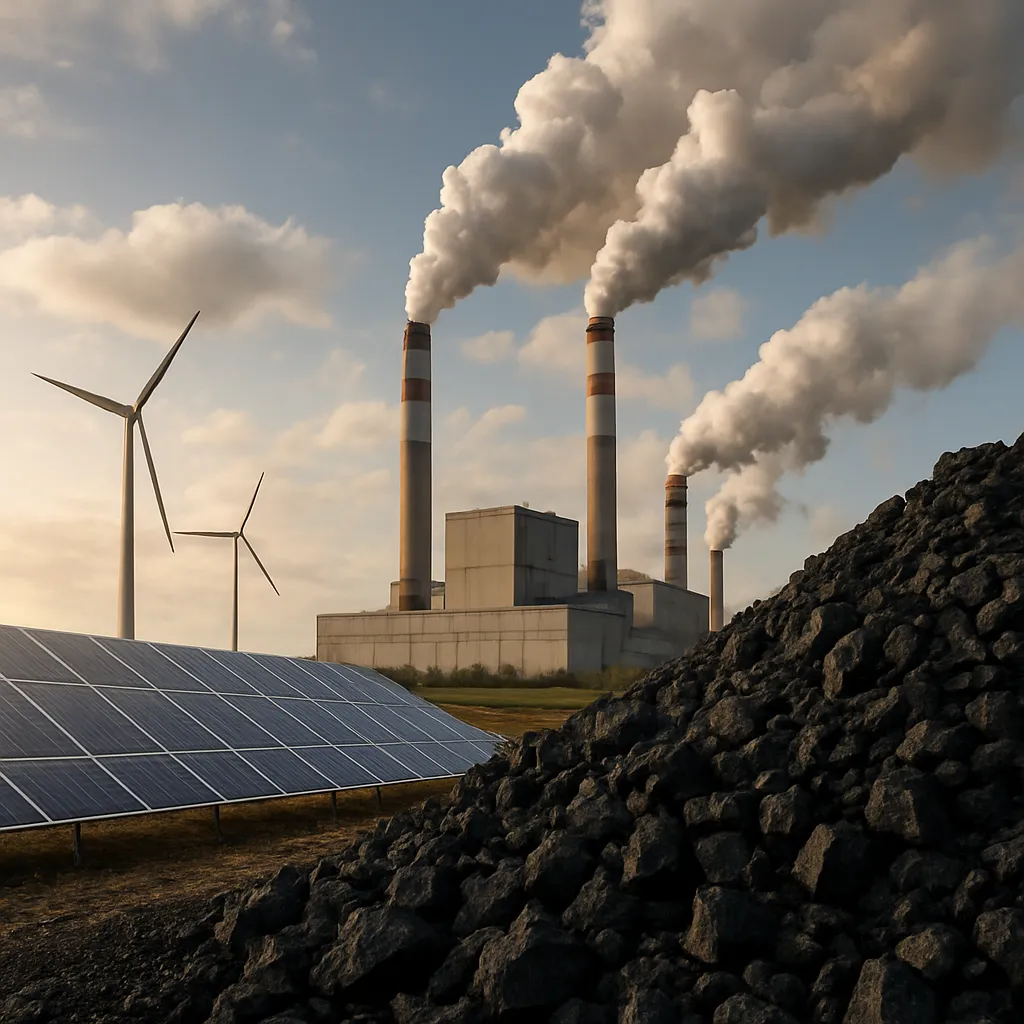
The global pursuit of a balanced energy portfolio has placed coal at the crossroads of opportunity and challenge. As economies worldwide strive to reduce carbon footprints without compromising power capacity, understanding the role of coal and coal stock management is crucial. This article explores the historical context, market dynamics, environmental concerns, and future prospects that define coal’s place in the ongoing transition toward cleaner energy sources.
Historical Development and Significance of Coal
Origins and Early Use
The industrial revolution marked a seismic shift from biomass to fossil fuels. Coal emerged as the primary driver of steam engines, railways, and steel production. Its abundant availability enabled rapid industrial growth, particularly in Europe and North America, anchoring coal as a cornerstone of modern civilization.
Geographic Distribution and Reserve Concentrations
- Australia and Indonesia: Leading exporters of thermal coal, supplying Asian markets.
- United States: Holds vast reserves in Appalachia and the Powder River Basin, fueling domestic power plants and industrial facilities.
- China and India: Rely heavily on indigenous resources to meet soaring electricity demands.
These regional endowments have shaped geopolitical relationships and trade patterns. Nations rich in coal reserves often leverage their production capabilities to secure economic advantages, while importers balance cost, quality, and environmental considerations.
Coal Stock and Market Dynamics
Inventory Management and Supply Chains
Coal stock refers to the volumes held by utilities, traders, and governments to hedge against supply disruptions and price volatility. Strategic stockpiling ensures uninterrupted power generation during maintenance outages, extreme weather events, or geopolitical tensions.
- Utility Reserves: Power producers maintain on-site stockpiles to guarantee continuous operations for weeks or months.
- Trading Hubs: Commodities exchanges and port facilities act as central points for production aggregation and distribution.
- Government Strategic Reserves: Some countries, facing energy security risks, establish national coal reserves to mitigate emergencies.
Price Fluctuations and Market Drivers
Coal prices experience swings driven by demand-supply imbalances, transportation bottlenecks, and policy interventions. Key factors include:
- Global Demand Trends: Rapid industrialization in developing nations drives up consumption.
- Environmental Regulations: Stricter emissions standards can reduce demand for high-sulfur or high-ash coal grades.
- Currency Movements: Export revenues and import costs are sensitive to exchange rate volatility.
Investors and utility planners monitor these variables to optimize procurement strategies and manage financial risk. Price benchmarks like the API 2 index in Europe or the Newcastle index in Australia serve as reference points for international trade.
Environmental Impacts and Technological Innovation
Carbon Emissions and Air Pollutants
Coal combustion releases substantial amounts of CO₂, sulfur oxides, nitrogen oxides, and particulate matter. These pollutants contribute to:
- Global warming and climate change through greenhouse gas accumulation.
- Acid rain formation, harming ecosystems and human health.
- Local air quality deterioration, leading to respiratory ailments.
Efforts to quantify and curb these impacts have led to increasingly stringent regulatory frameworks, including carbon pricing, emissions trading systems, and performance standards for coal-fired plants.
Clean Coal Technologies and Carbon Capture
Innovations aim to reconcile continued coal use with environmental stewardship. Key approaches include:
- High-Efficiency, Low-Emission (HELE) Plants: Supercritical and ultra-supercritical boilers increase thermal efficiency, reducing CO₂ per megawatt-hour.
- Integrated Gasification Combined Cycle (IGCC): Converts coal into synthetic gas, enabling pollutant removal and carbon separation before combustion.
- Carbon Capture, Utilization, and Storage (CCUS): Captures CO₂ emissions for underground storage or industrial reuse.
While promising, these technologies face challenges in scale-up, capital cost, and energy penalties. Ongoing research focuses on improving capture rates, reducing operational expenses, and integrating renewable energy sources to power capture systems.
Future Prospects in a sustainability-Driven Transition
Competition from Renewables and Gas
The rapid decline in costs for solar, wind, and battery storage has intensified competition with coal. Natural gas, with lower CO₂ intensity and flexible ramping capabilities, often displaces coal in power markets. Key trends include:
- Merit Order Shifts: Utilities dispatch the cheapest available generation first, sidelining higher-cost coal units.
- Regulatory Favoritism: Renewable portfolio standards and subsidies tilt investment toward green sources.
- Corporate Commitments: Major industrial players pledge net-zero targets, curbing coal consumption in supply chains.
Role of Diversification in Energy Security
Diversifying energy mixes remains critical for grid reliability. Coal can serve as a firm, dispatchable backup to intermittent renewables, provided emissions are mitigated. Strategies include:
- Co-firing Biomass: Blending biomass with coal to lower net carbon intensity.
- Flexible Operation Modes: Retrofitting plants for quick ramp-up and ramp-down to balance variable output from solar and wind farms.
- Hybrid Systems: Pairing coal units with thermal storage or hydrogen boilers for enhanced flexibility.
Investments in Innovation and Research
Governments, research institutions, and industry consortia are channeling funds into next-generation coal applications. Areas of focus include:
- Advanced materials for corrosion-resistant tubing in ultra-supercritical boilers.
- Modular carbon capture units that can be deployed across multiple plant sizes.
- Artificial intelligence and digital twins for optimized plant performance and predictive maintenance.
These initiatives aim to lower the cost curve and accelerate deployment of environmentally responsible coal solutions, aligning with broader climate goals while retaining the reliability benefits of coal-fired generation.