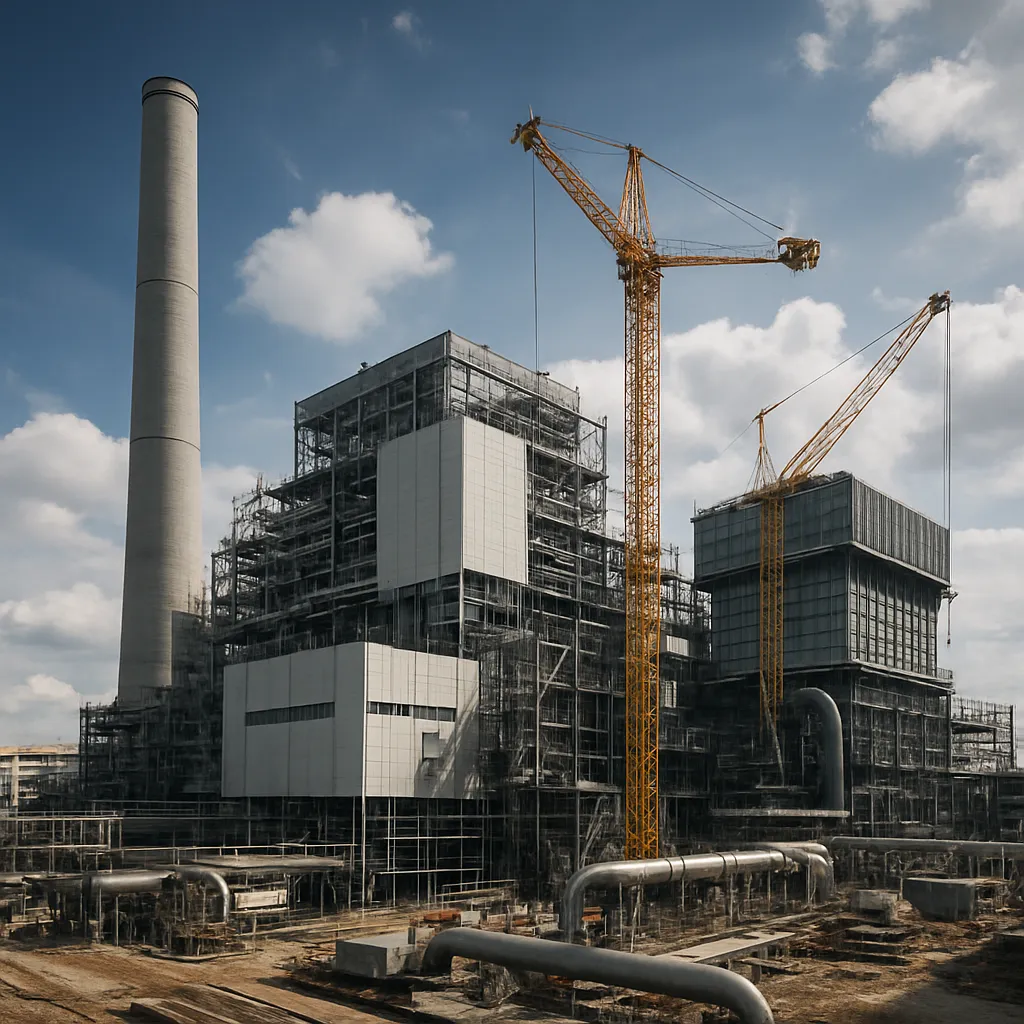
The global energy landscape is witnessing a paradigm shift as nations grapple with the challenge of reconciling economic growth with environmental stewardship. Coal has been a cornerstone of industrialization for centuries, powering factories, heating homes, and driving economic expansion. As the world accelerates towards decarbonization, the race to develop the first zero-emission coal plant underscores the enduring relevance of this fossil fuel. This article explores the multifaceted world of coal, delving into its historical evolution, the dynamics of the coal stock market, groundbreaking technologies aimed at eliminating pollutants, and the broader implications for our planet’s future.
Historical Evolution of Coal Utilization
Coal’s journey from a primitive heating source to a global energy titan spans centuries. Early civilizations discovered the fuel’s capacity to generate heat more reliably than wood, paving the way for coal’s ascent during the Industrial Revolution. Power stations harnessed steam engines fueled by coal, triggering unprecedented manufacturing efficiencies. By the 20th century, coal had cemented its role in electricity generation, steel production, and cement manufacturing.
The two primary categories of coal—thermal coal and metallurgical coal—serve distinct purposes. Thermal coal is burned in power plants to generate electricity, making it a critical component of grids worldwide. Metallurgical coal, on the other hand, is vital for steelmaking, where it acts as both a fuel and a reducing agent in blast furnaces. The differentiation between these grades has profound implications for industrial strategy and trade flows.
Despite the rise of natural gas and renewables, coal’s reliability and abundance have sustained its dominance in many regions. However, mounting concerns over air quality and carbon emissions have sparked calls for cleaner solutions, setting the stage for transformative innovation.
The Dynamics of Coal Stock and Investment
Investors have long monitored the coal sector as part of diversified energy portfolios. The performance of coal-related equities in the stock market correlates closely with global demand, regulatory landscapes, and commodity price cycles. Key factors influencing coal stock valuations include:
- Regulation: Stricter emissions standards and carbon pricing can suppress profitability, prompting companies to invest in cleaner technologies.
- Infrastructure Costs: Modernizing mines, retrofitting plants for carbon capture, and maintaining transportation networks demand substantial capital.
- Supply Constraints: Geological challenges, labor disputes, and environmental restrictions can tighten supply, driving prices higher.
- Demand Shifts: Economic expansion in emerging markets often boosts coal consumption, while advanced economies trend toward natural gas and renewables.
Speculative trading also plays a role, with futures contracts enabling market participants to hedge against price volatility. Funds focusing on energy transition increasingly consider coal stocks in the context of risk-adjusted returns and Environmental, Social, and Governance (ESG) criteria. As a result, many coal companies are rebranding their portfolios, emphasizing investments in carbon capture technologies and diversification into sustainable power sources.
Global Initiatives for Zero-Emission Coal Plants
The pursuit of a zero-emission coal plant represents a formidable engineering and economic challenge. Key approaches under development include:
- Post-combustion carbon capture: Retrofitting existing plants with solvents or sorbents that absorb CO2 from flue gases before release to the atmosphere.
- Pre-combustion capture: Gasifying coal to produce a hydrogen-rich syngas, separating CO2 prior to combustion, and burning hydrogen for power.
- Oxy-fuel combustion: Burning coal with pure oxygen instead of air, yielding flue gases composed primarily of CO2 and water vapor for easier capture.
International collaborations, such as those spearheaded by the International Energy Agency (IEA) and the Clean Coal Centre, aim to share best practices and accelerate pilot projects. In China, which consumes nearly half of the world’s coal, efforts are underway to scale up high-efficiency, low-emission (HELE) plants. In the European Union, stringent regulations have incentivized utilities to invest in carbon capture and storage (CCS) facilities, while the United States has launched tax credits to spur private sector participation.
Yet significant hurdles remain: the capital outlays for CCS can exceed a billion dollars per plant, and the technology’s energy penalty can reduce net power output by 20–30%. Despite these challenges, several projects have entered demonstration phases, offering hope that a commercially viable zero-emission coal plant may soon become reality.
Technological Innovations in the Coal Sector
Beyond capture systems, a suite of innovations is reshaping coal utilization:
- Integrated Gasification Combined Cycle (IGCC): Converts coal into synthetic gas for cleaner, more efficient power generation with easier CO2 removal.
- Advanced Materials: Development of corrosion-resistant alloys and ceramics that endure higher temperatures, improving plant efficiency and lowering emissions.
- Digitalization: Deployment of sensors, AI-driven analytics, and predictive maintenance to optimize mine operations and reduce downtime.
- Coal-to-Liquids (CTL) and Coal-to-Chemicals: Processes that transform coal into transport fuels or chemical feedstocks, potentially with integrated carbon management.
These advancements not only aim to curb pollutants but also promise enhanced profitability by boosting plant efficiency and unlocking new revenue streams. For mining operations, automation and remote monitoring have reduced safety risks and operational costs, further augmenting the appeal of coal in certain contexts.
Environmental, Economic, and Geopolitical Impacts
Coal’s environmental footprint—air pollution, land disruption, and water consumption—has galvanized activists and policymakers alike. Yet coal remains a lifeline for energy access in developing nations where grid stability and cost considerations trump decarbonization objectives. This tension underscores the complex interplay between climate goals and energy security.
Economically, coal-dependent regions face transition challenges, from job losses in mining communities to revenue declines for export-oriented nations. Governments are exploring just transition strategies, including retraining programs and incentives for renewable energy deployment.
On the geopolitics front, major coal exporters—Australia, Indonesia, Russia, and Colombia—wield influence over global energy markets. Importers in East Asia and Europe negotiate long-term supply contracts that can lock in emissions profiles for decades. As the zero-emission coal race heats up, supply chain considerations and international partnerships will be critical in determining winners and losers.
Emerging economies must balance aspirations for industrial growth with mounting climate commitments. Some propose carbon border adjustments to level the playing field, while others advocate for technology transfer agreements to ensure equitable access to advanced coal technologies.
Looking Ahead: The Future of Coal
The narrative of coal is evolving from a polluting relic to a potential testbed for breakthrough climate solutions. While renewable energy sources continue to expand, coal’s unique role in providing baseload power and industrial heat keeps it squarely in the global energy mix. The success of zero-emission coal plants will hinge on technological feasibility, economic viability, and international cooperation.
If scalable carbon capture and innovative plant designs can be deployed cost-effectively, coal could play a significant part in a decarbonized future. Otherwise, accelerated retirement of coal assets may be inevitable, compelling regions to invest heavily in alternative energy systems and grid modernization. The coming years will be pivotal in determining whether coal stocks can transform into catalysts for climate progress or become stranded assets in an increasingly low-carbon world.