The Sena coal mines in Mozambique occupy a central place in the country’s modern extractive economy. Located in the resource-rich province of Tete, these deposits and the infrastructure that serves them have transformed local transport corridors, attracted major international investment and shaped debates about economic development, environmental protection and social impact. This article surveys the geological setting and location of the Sena (Moatize and surrounding) coal deposits, the types of coal produced, infrastructure and logistics, ownership and production figures where available, the mines’ economic significance and social-environmental issues, and outlooks for the coming years.
Location and geological setting
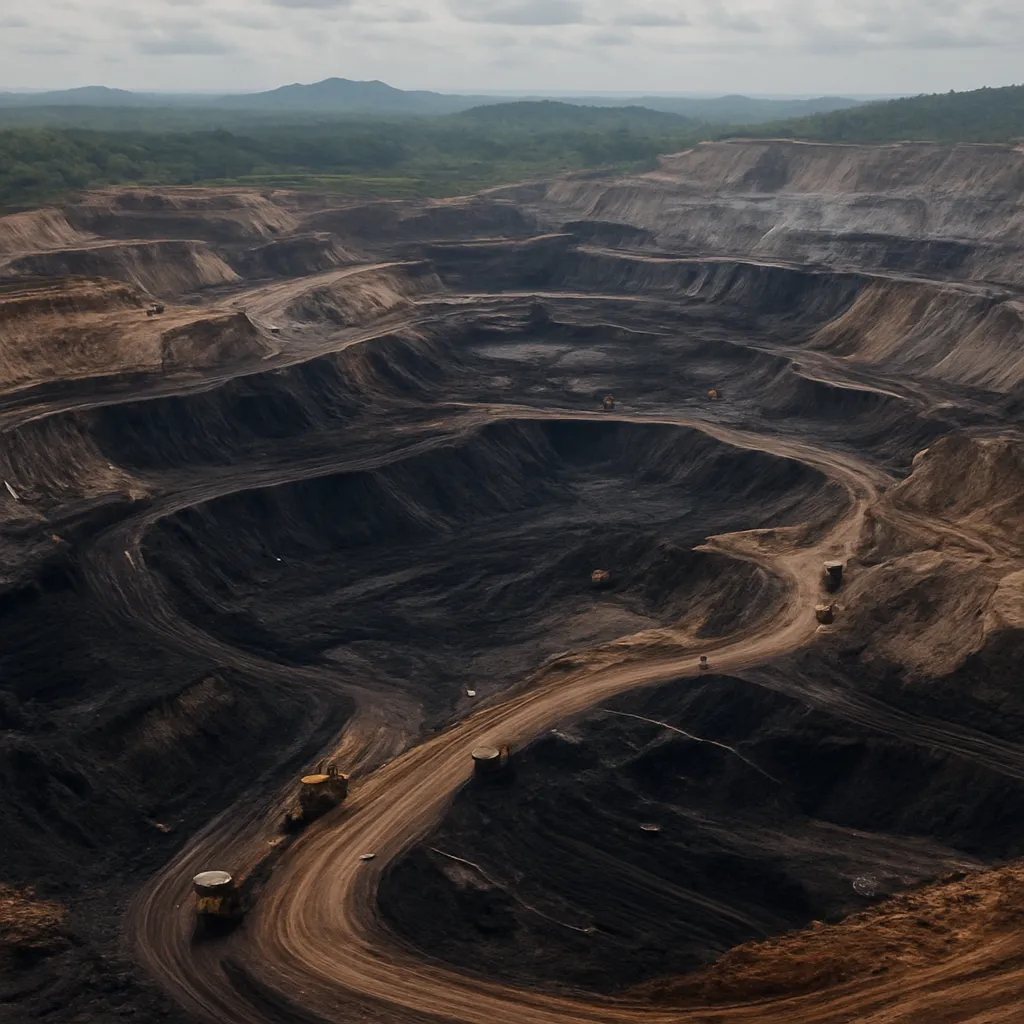
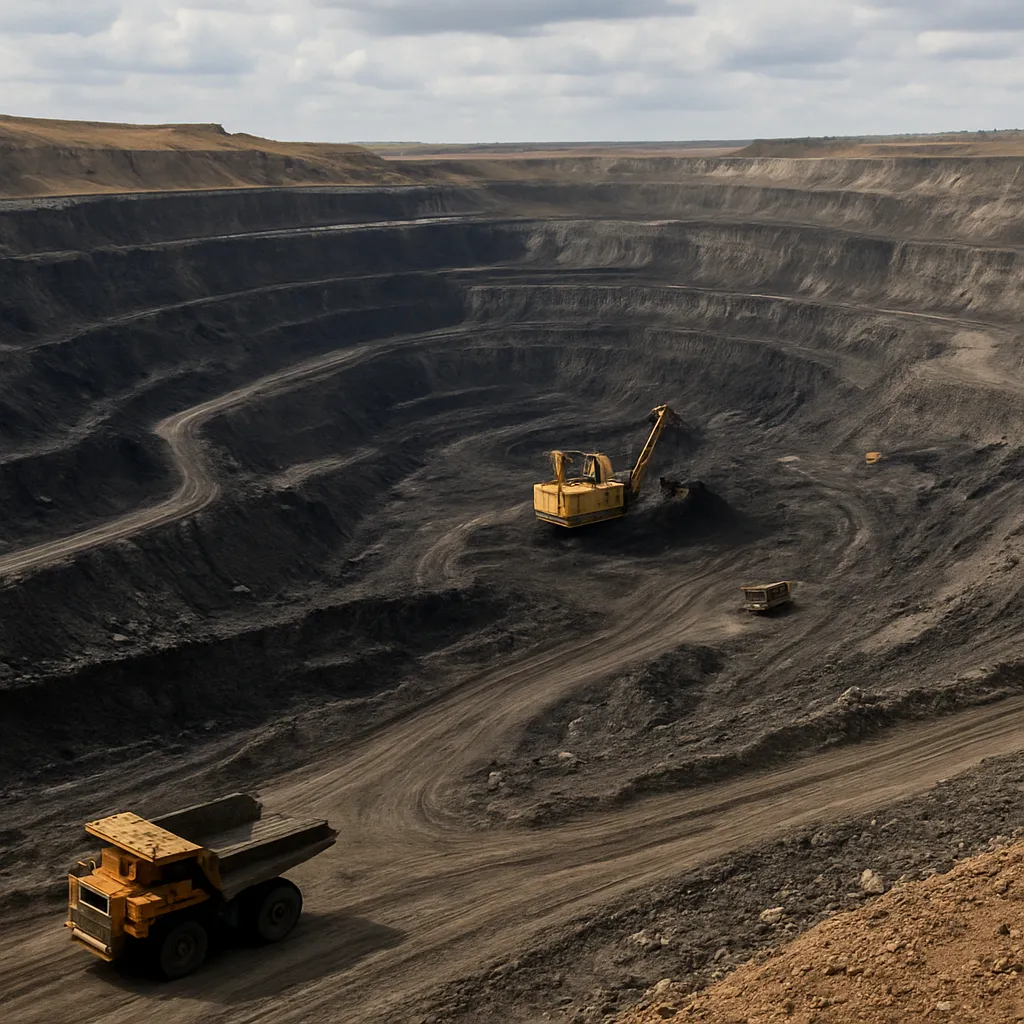
The coal deposits commonly referred to as the Sena coal mines are concentrated in western Tete Province in central Mozambique. The best-known deposit in the area is the Moatize coalfield, which lies in the Zambezi River basin tributary landscape. Geologically, the Tete coal basin contains multiple seams of Carboniferous to Permian-age coal-bearing rocks. Coal is found in large, laterally extensive seams that are amenable to open-pit mining in many locations.
The region’s geology yields both thick seam continuity and variable coal rank across short distances. This geological setting has enabled large-scale open-pit operations but also requires detailed pit planning because seam quality, ash content and sulphur can vary within short distances. The mines are linked to maritime export routes by rail corridors that are historically and operationally branded with the name Sena — most importantly the Sena railway line linking the Tete basin to the port of Beira. More recently, the Nacala and Beira corridors have become central to coal logistics in the region.
Types of coal and what is extracted
The deposits in the Tete basin produce a mixture of coal types, broadly falling into two commercial categories:
- Metallurgical (coking) coal — higher-rank coal suitable for steelmaking. Certain seams within the Moatize deposit are valued for lower ash and suitable carbonization properties that are sought by steel producers.
- Thermal coal — used primarily for electricity generation and industrial boilers. Much of the coal mined in the area is marketed as thermal coal to power stations and for general steam-raising purposes.
Quality varies by seam and by pit. Some parcels of coal are blended to meet customer specifications for ash, volatile matter and calorific value. Typical commercial products from the mines include a range of thermal coal grades and smaller volumes of higher-value coking coal suitable for blending into metallurgical coal products.
Mining operations, ownership and investment
Development of large-scale coal mining in Tete accelerated in the late 2000s and early 2010s after exploration confirmed extensive resources. International miners and junior companies acquired exploration and mining rights; some consolidated and developed major operations backed by significant capital expenditure for open-pit mining, processing plants, railway rehabilitation and port terminals.
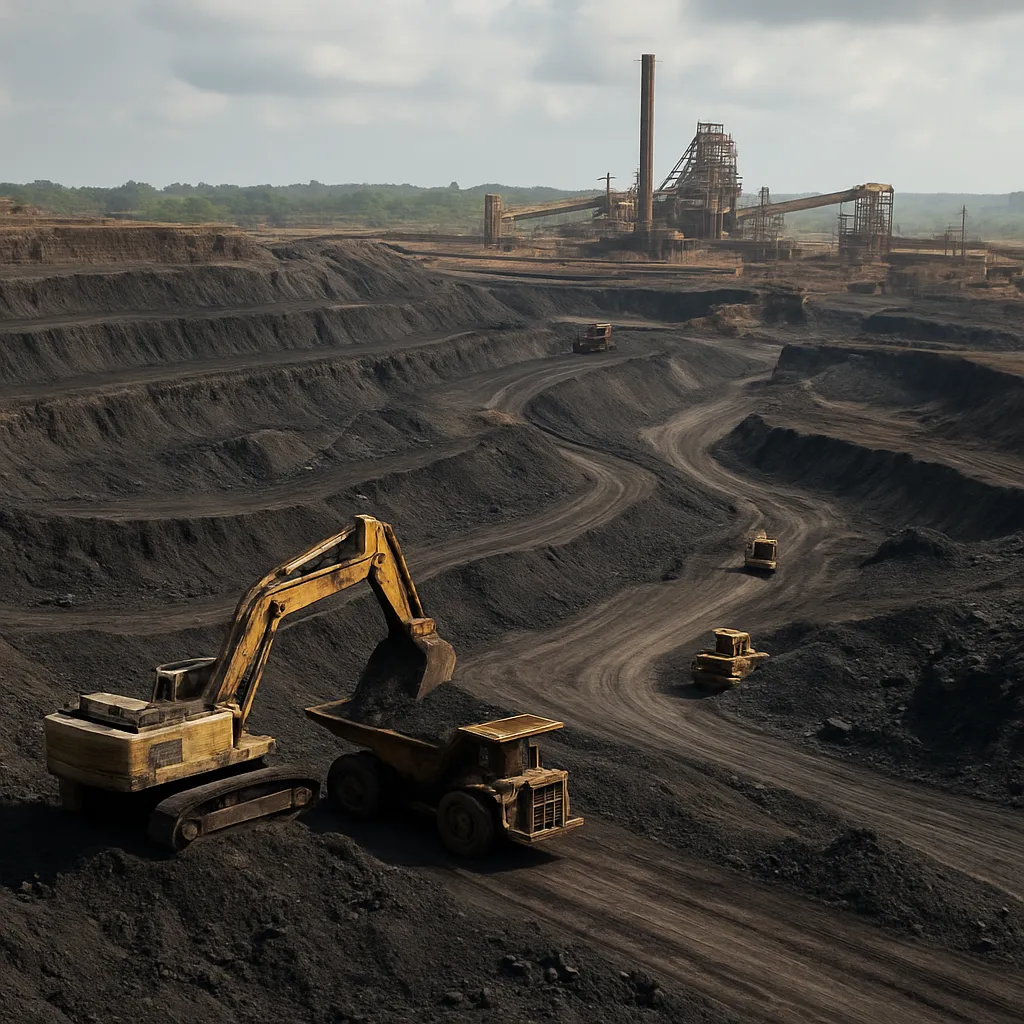
A key characteristic of the area is the integration of mine development with transport infrastructure investment. Mining companies have invested in or partnered with government and private logistics operators to rehabilitate the Sena railway and build or expand coal handling facilities at ports on the Mozambican coast (notably Beira and, via the Nacala corridor, Nacala).
Large international companies have been active in the basin (including major global miners and a range of international juniors and private investors). One of the best-known operators associated with the Moatize project is Vale, which committed significant capital to develop open-pit mines, associated processing plants and logistical corridors. Several other companies hold smaller concessions or exploration licenses in the broader Tete basin.
Infrastructure and logistics: rail, ports and corridors
Coal extracted from Sena-area mines depends critically on two types of infrastructure: heavy-haul rail corridors inland, and coal handling facilities at ocean ports. Historically, the Portuguese-era Sena railway linked Tete to Beira; however, decades of underinvestment and damage from heavy rains and floods periodically disrupted logistics. Rehabilitation and upgrades have been ongoing, financed by a mix of public funds, developer investment and international loans.
- Sena railway and Beira Corridor — the original route to the port of Beira; rehabilitation was a priority to permit larger volumes of coal exports. Upgrades included track strengthening, heavier axle-load capability, passing loops and improved signaling.
- Nacala Corridor — an alternative route developed more recently. The Nacala logistic corridor, which connects the coalfields through Malawi to the deep-water port of Nacala, has become an important export pathway because of port depth and year-round access.
- Port facilities — both Beira and Nacala have received direct investment in terminal capacity, conveyors, stockpiles and ship-loading equipment to handle thermal and metallurgical coal shipments to Asian, African and European markets.
These corridors are major capital projects in their own right and have had a large multiplier effect on local employment, logistics services and regional trade flows.
Production volumes and economic statistics
Exact production numbers fluctuate year to year due to market demand, operational challenges and logistics constraints. However, several broad points can be made with reasonable confidence:
- Designed capacities for major mine complexes in the Moatize and surrounding concessions were planned in the range of several million tonnes per annum (Mtpa) for each large operating unit. Aggregate potential output from the basin has often been discussed in double-digit Mtpa ranges when multiple mines and phases are fully operational.
- Actual annual exported coal volumes have varied: in the early years of large-scale operations, and after rehabilitation of infrastructure, the basin achieved combined shipments in the low- to mid-single-digit millions of tonnes per year (rising to higher levels as logistics stabilized). Periods of logistical disruption, floods or market downturns caused temporary reductions in throughput.
- Economic revenue from coal exports became a significant source of foreign exchange for Mozambique, contributing hundreds of millions of dollars per year at times when global coal prices and seaborne demand were strong. Coal royalties, taxes and wages also made the sector an important contributor to provincial and national budgets.
Because reporting standards and the number of producing entities have changed over time, published yearly totals differ between company reports and national customs statistics. When planning and early-construction phases are included, the Tete basin’s developed and probable resources have often been discussed in the billions of tonnes (resources vs recoverable reserves vary widely depending on technical assumptions and cut-off grades).
Economic and regional significance
The Sena coal mines have had multi-dimensional importance for Mozambique:
- Export earnings and foreign exchange — coal became one of Mozambique’s leading mineral exports by value in the years following large-scale development, helping the country earn critical foreign currency.
- Infrastructure legacy — rail and port upgrades required by coal exports produced durable transport infrastructure that benefits other sectors (agriculture, general freight and regional trade), though access and tariffs determine the extent of that benefit.
- Employment and local procurement — mining projects generated direct employment (skilled and unskilled) and indirect jobs in services, transport, construction and supply chains. Local procurement policies boosted small-business opportunities, though many skilled positions went to expatriates or specialized contractors early in project life-cycles.
- Fiscal contributions — taxes, royalties and negotiated community development payments channelled revenue to district and national budgets, although debates persist about the sufficiency and transparency of benefit distribution.
Social and environmental issues
Large-scale coal mining in the Sena / Moatize area has produced both opportunities and controversies:
- Community displacement and resettlement — open-pit development required relocation of some villages, land-use changes and compensation processes that drew scrutiny. Effective resettlement that preserves livelihoods remains a complex challenge.
- Water and hydrogeology — mining changes groundwater behaviour and surface drainage. Concerns about water availability for agriculture and domestic use, as well as potential contamination risks, have been prominent in environmental assessments.
- Dust and air quality — blasting, hauling and coal handling create dust and particulate emissions; companies have invested in mitigation (watering, covers, dust suppression) but community complaints about air quality have occurred.
- Biodiversity and land use — although the immediate mining footprint is relatively concentrated, cumulative impacts on ecosystems and farmland must be managed. Rehabilitation and biodiversity offsets are parts of environmental management plans.
- Carbon and climate considerations — as a fossil-fuel commodity, coal sales raise questions about long-term climate impacts. International pressure and shifts in global energy policy can affect long-term demand for thermal coal, altering the economic profile of mines.
Regulatory, legal and community frameworks
Mozambique’s regulatory environment for mining includes licensing, environmental impact assessment, community consultation and benefit-sharing mechanisms. Mining contracts and mineral concessions define fiscal terms, local content obligations and social investment commitments. Over the past decade mine operators, government agencies and civil society organizations have negotiated frameworks intended to improve transparency and local benefit, including measures for employment, local procurement and community development funds. Enforcement and monitoring capacity at the local level, however, remain important areas for improvement.
Market dynamics and price exposure
Coal from the Sena mines is sold into international thermal and metallurgical coal markets. Price dynamics are driven by global demand (notably from Asia), shipping costs, the grade of coal (higher-rank metallurgical coal commands premium prices), and competition from other coal-exporting countries. Infrastructure bottlenecks can depress realized prices (for example, by necessitating discounted sales when logistics delay shipments or force stockpiling). Conversely, improvements in rail and port throughput increase the ability of producers to capture favourable market windows.
Recent trends and operational challenges
In the years since the first large-scale development, operators in the Tete basin have faced cyclical and structural challenges:
- Weather-related disruptions such as heavy rains and floods have periodically damaged railway links and port access.
- Volatility in global coal prices reduces predictability for expansion investments and can slow new projects.
- Social tensions over resettlement, employment and local contracting have required continuous engagement strategies.
- Competition for transport corridor access among different minerals and freight users requires coordinated corridor management.
Future prospects and strategic considerations
The longer-term prospects for the Sena-area mines depend on a mixture of market, technical and policy factors:
- Market demand for thermal vs metallurgical coal will shape the value proposition of the Tete basin. A sustained recovery in Asian demand or a focus on higher-grade coking coal would improve project economics.
- Improvements in rail and port reliability are essential to reach higher steady-state output and to attract additional investment. Continued public-private cooperation on corridor management is likely to remain central.
- Diversification of local economies and maximization of local content in procurement and services will be important for ensuring broader developmental benefits.
- Climate policy and the global energy transition could affect long-term thermal coal demand; producers may increasingly pivot toward higher-value metallurgical coal, or invest in carbon mitigation and rehabilitation to meet investor and buyer expectations.
Interesting facts and lesser-known points
- The term “Sena” is associated with a historic transport corridor and railway line that pre-dates large-scale mining; mining investment revitalized and redefined that corridor for mineral exports.
- Coal development in Tete has catalyzed investments in power and logistics that can be repurposed to serve agriculture and regional trade if policies prioritize multi-use access.
- Local and regional economic multipliers from mining — in construction, transport, hospitality and services — often outlast the life of short-term construction phases, creating new local employment niches.
- Community-led monitoring and civil society groups in the region have been active in advocating for stronger environmental safeguards, transparency in contract terms and equitable benefit-sharing.
Summary and concluding observations
The Sena coal mines and the broader Tete coal basin have been transformative for Mozambique’s economy and regional infrastructure. They have brought substantial investment, employment and export earnings while also posing significant environmental and social challenges that require careful management. The future of the basin will hinge on reliable logistics (rail and port), the global coal market (thermal versus metallurgical demand), and the capability of Mozambican institutions and companies to translate resource wealth into sustainable development outcomes for local communities and the national economy.
Overall, the Sena-area coal developments illustrate both the opportunities and trade-offs inherent in resource-driven growth: large-scale infrastructure and export industries can lift regional economic prospects, but the long-term success of such projects depends on transparent governance, sustained investment in multi-use infrastructure, robust environmental protection and meaningful community engagement.