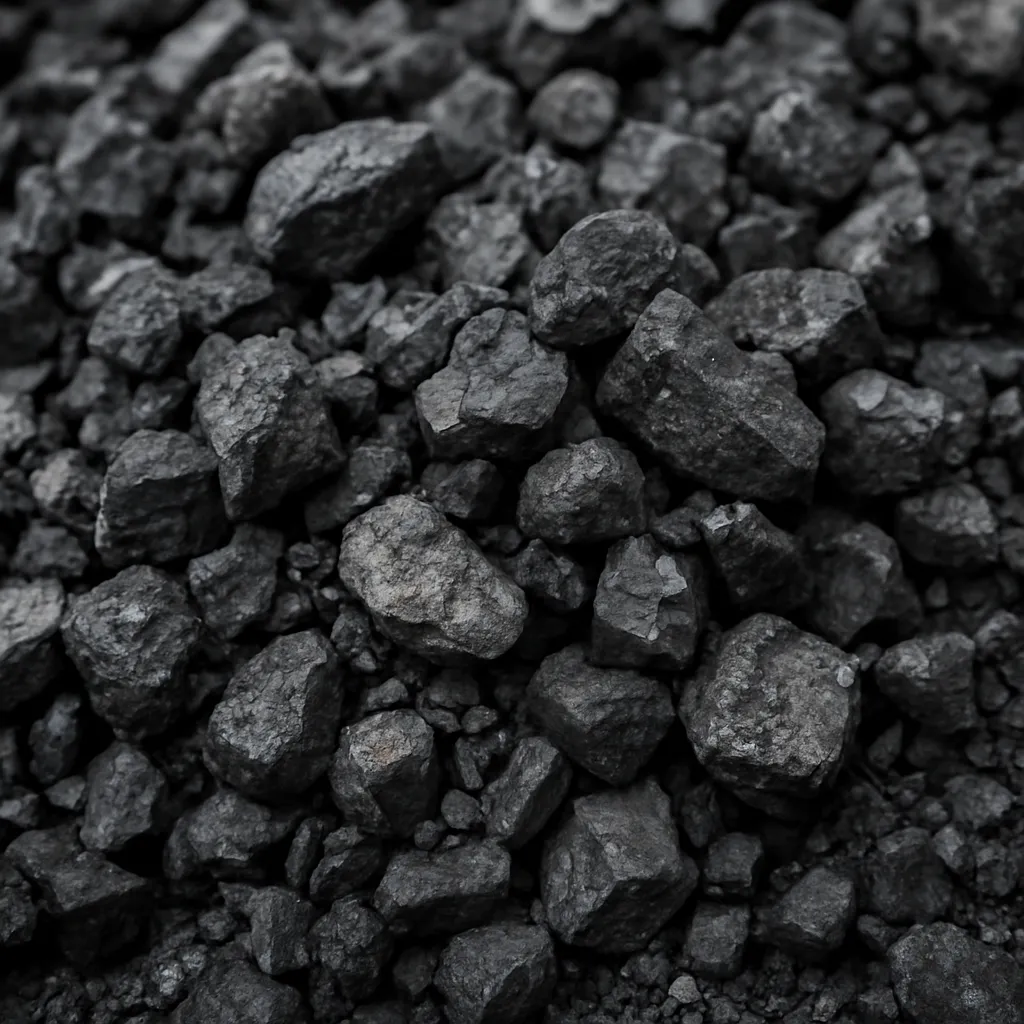
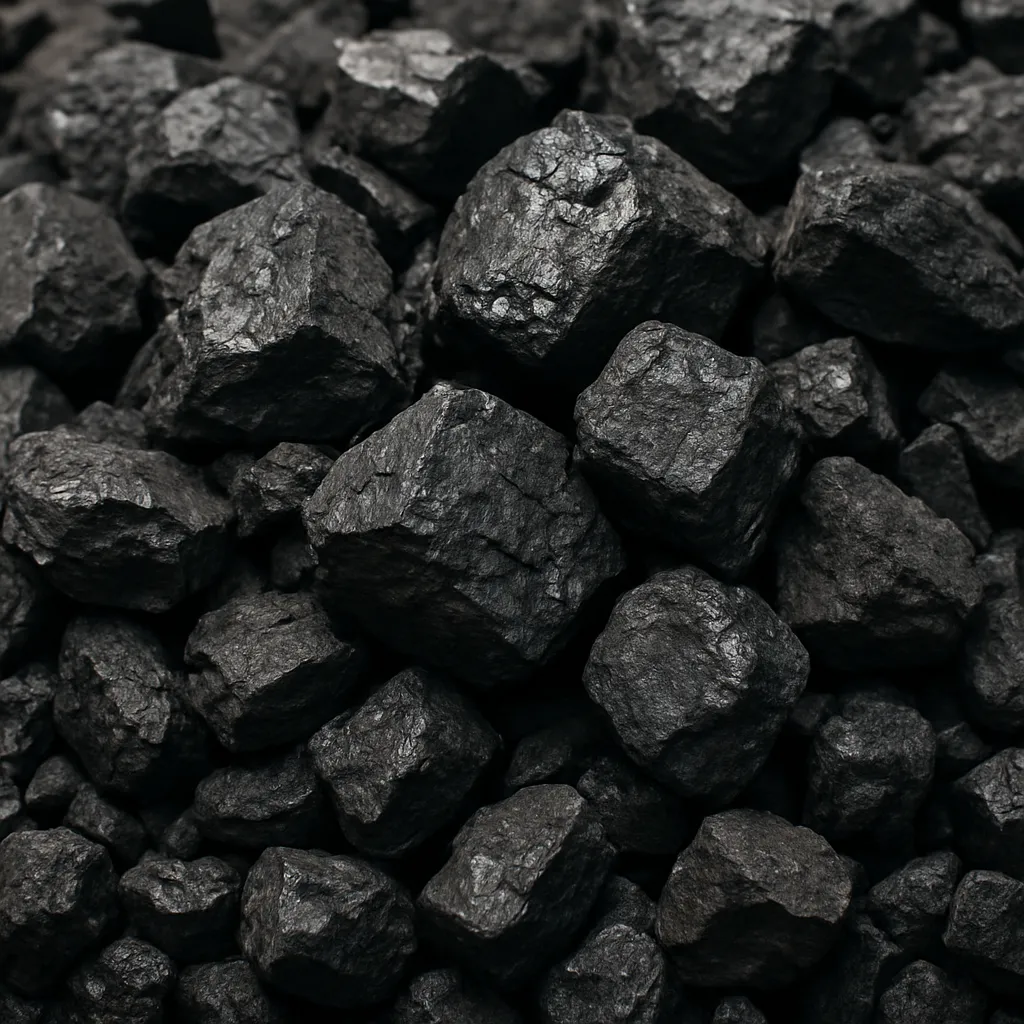
Run-of-mine coal (commonly abbreviated as ROM coal) is the raw material produced directly from a mine before any processing, washing or blending. It represents the first form of coal as it leaves the working face or pit and is therefore central to understanding mining operations, logistics, markets and environmental impacts. This article explains what ROM coal is, where it occurs and is mined, how it is handled and processed, its economic significance and current statistical trends, and the major industrial and environmental issues associated with it.
Definition, composition and characteristics
Run-of-mine coal is the unprocessed product produced by both surface (open-cut) and underground coal mining operations. ROM coal typically includes a mixture of coal of different qualities and may contain rock, clay, stone, fines (very small coal particles), seams of varying rank, and even moisture and other impurities. Its principal characteristics that determine subsequent use and processing include:
- Calorific value (gross and net, expressed in kcal/kg or MJ/kg)
- Ash content (percentage of incombustible material)
- Volatile matter and fixed carbon (affecting combustion behavior)
- Sulfur content (relevant for emissions control and regulations)
- Moisture content (affects transport costs and energy density)
- Particle size distribution (lumps versus fines)
Because ROM coal is heterogeneous, it often undergoes separation and washing to improve quality, reduce ash and produce saleable products such as thermal coal and coking coal feedstocks. In many operations, ROM coal may be stockpiled and blended to achieve target quality specifications for customers or for export markets.
Where ROM coal occurs and major producing regions
Coal deposits are widespread globally and occur in sedimentary basins formed in a variety of geological settings. Significant basins and mining regions that produce ROM coal include:
- China: Major basins such as Shanxi, Inner Mongolia, Shaanxi and Xinjiang. China remains the world’s largest producer and consumer of coal, with a wide range of coal ranks from lignite to high-rank bituminous coal.
- India: Basins in Jharkhand, West Bengal, Odisha, Chhattisgarh and Telangana. India’s coal is mainly bituminous and sub-bituminous and is primarily used for power generation.
- Australia: Bowen Basin (Queensland), Hunter Valley (New South Wales), and many other deposits. Australia is a leading exporter of high-quality metallurgical and thermal coal.
- Indonesia: Kalimantan and Sumatra contain large deposits of sub-bituminous and low-rank thermal coal, crucial for regional and global thermal markets.
- United States: Powder River Basin (Wyoming and Montana) is the largest U.S. coal-producing region (predominantly low-sulfur sub-bituminous coal). Illinois Basin, Appalachian Basin (Pennsylvania, West Virginia) supply a mix of metallurgical and thermal coal.
- Russia, South Africa, Colombia, Poland and Kazakhstan are also important contributors to global ROM coal production.
Globally, ROM coal production spans climates from tropical (Indonesia, Colombia) to temperate and cold zones (Russia, Canada). The method of extraction—open-pit versus underground—often reflects seam depth, thickness and geotechnical conditions.
Mining methods, handling and processing of ROM coal
Extraction methods
ROM coal is produced by two primary mining methods:
- Open-pit (surface) mining: where seams are close to the surface. This method typically yields large volumes of ROM coal efficiently and at lower cost per tonne. It often produces a wide range of particle sizes due to blasting and mechanical excavation.
- Underground mining: used for deeper seams. Methods include longwall, room-and-pillar and bord-and-pillar systems. Underground ROM coal can be cleaner in terms of oversize rock but may require more initial crushing.
Processing steps after extraction
After ROM coal is recovered, it usually passes through a sequence of activities:
- Primary and secondary crushing to reduce the size of lumps and facilitate transport or further processing.
- Screening and classification to separate sizes for different customers or processes.
- Coal washing (dense media separation, jigging, cyclones) to reduce ash and improve calorific value, particularly for export or metallurgical coal.
- Blending operations to meet contract quality specifications (for example, blending low-ash and high-ash ROM coal to reach a target ash percentage).
- Stockpiling, reclaiming and conveying to rail or port infrastructure for delivery to markets.
Logistics are a critical part of the economics of ROM coal. Costs and losses can occur through handling, spontaneous combustion in stockpiles, weathering (which increases moisture and degradation), and fines generation.
Economic and statistical overview
Coal remains an important commodity for many national economies despite the energy transition. Some key economic and statistical points about ROM coal and coal production broadly include:
- Global coal production: In the early 2020s, the world produced roughly 7–8 billion tonnes of coal annually. Production levels and trends can swing with energy demand, commodity prices and national policies. China accounts for roughly half of global coal production, followed by major contributions from India, the United States, Australia, Indonesia and Russia.
- Export markets: Australia and Indonesia are the world’s largest coal exporters. Australia typically exports several hundred million tonnes per year of thermal and metallurgical coal combined; Indonesia exports a similar magnitude mainly of thermal coal to Asian markets.
- Domestic consumption: In many producing countries (notably China and India), a high proportion of ROM coal is consumed domestically, primarily for electricity generation and industrial heat.
- Employment and regional economies: Coal mining provides direct and indirect employment for hundreds of thousands to millions of people globally, with significant economic dependence in regional mining communities.
- Price volatility: Coal prices are volatile and influenced by supply disruptions, policy changes, energy demand, and competition from gas and renewables. Prices of thermal coal experienced sharp increases in 2021–2022 due to supply-demand imbalances, followed by corrections as markets adjusted.
Statistical breakdowns vary year to year. For example, in a recent multi-year period, China produced around 3.8–4.2 billion tonnes annually, India around 700–1,000 million tonnes, the United States around 400–700 million tonnes (with fluctuations as thermal coal demand changed), Australia around 400–500 million tonnes of ROM production (though export volumes differ), and Indonesia produced and exported hundreds of millions of tonnes. Exact figures depend on the year and the data source (IEA, national geological surveys, industry reports).
Industrial uses and market dynamics
ROM coal, after processing, flows into different product streams with distinct markets:
- Thermal (steam) coal: Used for electricity generation and heat in industrial boilers. Thermal coal quality requirements are typically determined by power station design (furnace type, emission controls), with considerations for ash fusion, sulfur and moisture.
- Metallurgical (coking) coal: High-rank coals are processed to produce coke for steelmaking in blast furnaces. Coking coal commands higher prices and stricter quality requirements (low ash, low sulfur, appropriate volatile matter).
- Small niche markets: Activated carbon, carbon electrodes, and other specialty carbon products require particular feedstock qualities sourced from ROM after careful beneficiation.
Market dynamics are driven by global economic growth (steel production, power demand), energy policy (emissions regulations, coal phase-out targets), shipping and logistics (availability of rail wagons, port capacity), and the competitiveness of alternatives (natural gas, renewables, nuclear). The ability to control ROM coal quality through washing and blending plays a key role in accessing higher-value markets.
Environmental, social and regulatory aspects
ROM coal production interacts with environmental and social issues at every stage:
- Greenhouse gas emissions: Combustion of coal is a major source of CO2 emissions globally. How ROM coal is used (direct combustion vs gasification, CCS potential) impacts national emissions profiles.
- Local air pollution: Particulate matter, SOx and NOx are concerns around coal-fired power plants and during handling and transport of ROM coal. Dust suppression measures and covered conveyors are common mitigations.
- Land disturbance and biodiversity: Open-cut mining can remove large areas of vegetation and topsoil. Mine rehabilitation, progressive reclamation and offsets are increasingly mandated by regulators.
- Water management: Coal washing and dust control require significant water handling; potential for acid mine drainage exists where sulfide minerals are exposed.
- Community impacts and social license: Mining affects indigenous land rights, local employment, and regional economies. Social license to operate depends on engagement, benefit-sharing and environmental performance.
Regulatory trends in many developed countries push toward emissions reductions and stricter environmental standards, affecting the long-term markets for ROM coal. At the same time, in developing economies where electricity demand is still growing, coal remains a critical and often economical energy source in the near term.
Logistical considerations and value chain
Moving ROM coal from pit to port/plant involves multiple logistical steps that influence cost and quality:
- Haul roads and heavy trucks in open-pit mines; belt conveyors and crushers in both surface and underground sites.
- Rail networks are fundamental for bulk transport in many regions (e.g., Australia, the U.S., Russia). Rail capacity and reliability can be a binding constraint on export volumes and domestic supply.
- Ports and shipping: Coal terminals with shiploading capacity and stockyard management are critical. For seaborne thermal coal, shipping costs and freight rates (e.g., Capesize, Panamax vessels depending on cargo size) materially affect delivered prices.
- Storage and stockpiling: Proper stockpile design minimizes spontaneous combustion risk and fines generation. Frequent rehandling increases fines and quality deterioration.
Quality management and measurement
Quality control of ROM coal is essential to meet contractual obligations and to optimize returns. Common practices include:
- Sampling protocols at the point of extraction and during stockpile reclaiming to ensure representative lab analyses.
- On-line moisture and calorific value analysis to adjust blending operations.
- Use of wash plants and jigs to produce multiple product grades from a single ROM feed.
Buyers often specify calorific value, ash, moisture, sulfur, and specific trace elements. Non-compliance can lead to price penalties or rejection, making in-mine quality control economically critical.
Interesting technical and historical notes
Some lesser-known but noteworthy points about ROM coal:
- Spontaneous combustion can occur in stockpiled ROM coal, especially in fine, oxidized material. Mine operators use temperature monitoring, inert gas blanketing in extreme cases, and careful stockpile design to mitigate it.
- ROM coal often contains multiple seams or partings—layers of rock or clay that must be separated either in the mine or later in the wash plant; separation decisions affect yield and product quality.
- Historically, many industrial towns developed around coalfields because of the local nature of early coal-based industries; transitions away from coal can therefore be economically and socially complex.
- Technologies such as sensor-based sorting and advanced washing circuits are increasingly used to maximize recovery of saleable coal from ROM feeds.
Future perspectives, challenges and innovations
The future of ROM coal is shaped both by persistent demand in some regions and by global efforts to decarbonize. Key trends include:
- Demand shifts: While many OECD countries reduce coal-fired generation, emerging economies may maintain or increase use in the near term. This creates a bifurcated market with regional differences.
- Value-focused production: Mines increasingly aim to produce higher-value metallurgical coal and low-ash thermal coal through better ROM management, washing and blending.
- Emission mitigation: Carbon capture, utilization and storage (CCUS) technologies applied at coal-fired plants could extend the utility of ROM coal if widely commercialized.
- Automation and digitalization: Autonomous haul trucks, real-time quality monitoring and predictive maintenance lower operating costs and reduce risks associated with ROM handling.
- Rehabilitation and circular economy approaches: Reclaimed mine lands are being repurposed for agriculture, renewables (e.g., solar arrays on rehabilitated pits), and biodiversity offsets.
Summary
Run-of-mine coal is the raw output of mining operations and the starting point for nearly all coal value chains. Its heterogeneity defines the need for processing, washing and blending to meet market needs. ROM coal production remains economically significant in many countries, supports regional employment, and sustains large export markets. At the same time, its production and use present environmental and social challenges that are shaping policy and innovation in mining, processing and energy systems. Understanding ROM coal—its properties, the places it is mined, and how it moves through the economy—is essential for assessing both the near-term realities of energy and industry and the longer-term transition to low-carbon systems.