The Rajmahal Coalfield is an important coalbearing region in eastern India. Located in the northeastern part of the state of Jharkhand (with parts extending toward nearby districts), the field has played a notable role in regional mining, energy supply and local economies for decades. This article provides an overview of the location and geology of the Rajmahal Coalfield, describes the types of coal and mining methods used there, outlines its economic and industrial significance, and highlights environmental, social and statistical aspects associated with the mine and its surroundings.
Location, geology and history
The Rajmahal Coalfield is situated in the Rajmahal Hills region of northeastern Jharkhand, principally within Sahibganj and Godda districts. The coalfield lies near the borders of the state of West Bengal and not far from the course of the Ganges River, which helps define the broader landscape and transport corridors for the area. The region is characterized by undulating hills, plateaus and river valleys that are part of the larger historic Rajmahal volcanic province.
Geologically, Rajmahal coal seams are part of the Gondwana coal measures, deposited during the late Paleozoic to early Mesozoic eras. Coal-bearing strata here occur in fault-bounded troughs and benches exposed in the hills. The geology is complex in places due to later tectonic activity and the overlay of volcanic basalt flows known locally as the Rajmahal Traps. Coal occurs in a sequence of seams of variable thickness and lateral continuity.
The history of systematic coal exploration in the Rajmahal area dates to the late 19th and early 20th centuries, with expanded modern exploration and mine development accelerating after India’s independence. In recent decades the field has seen development of large-scale surface or opencast mines designed to tap near-surface seams that are amenable to mechanized extraction.
Coal types, quality and mining methods
Coal from the Rajmahal Coalfield is primarily used as thermal coal (steam coal) for electricity generation and for other industrial fuel needs. The rank of coal in this field generally ranges from low- to medium-rank bituminous to sub-bituminous, though quality can vary significantly between seams and blocks. Typical properties include moderate calorific value and a tendency to carry ash and moisture to varying degrees, depending on the seam; this influences how the coal is blended and processed before use.
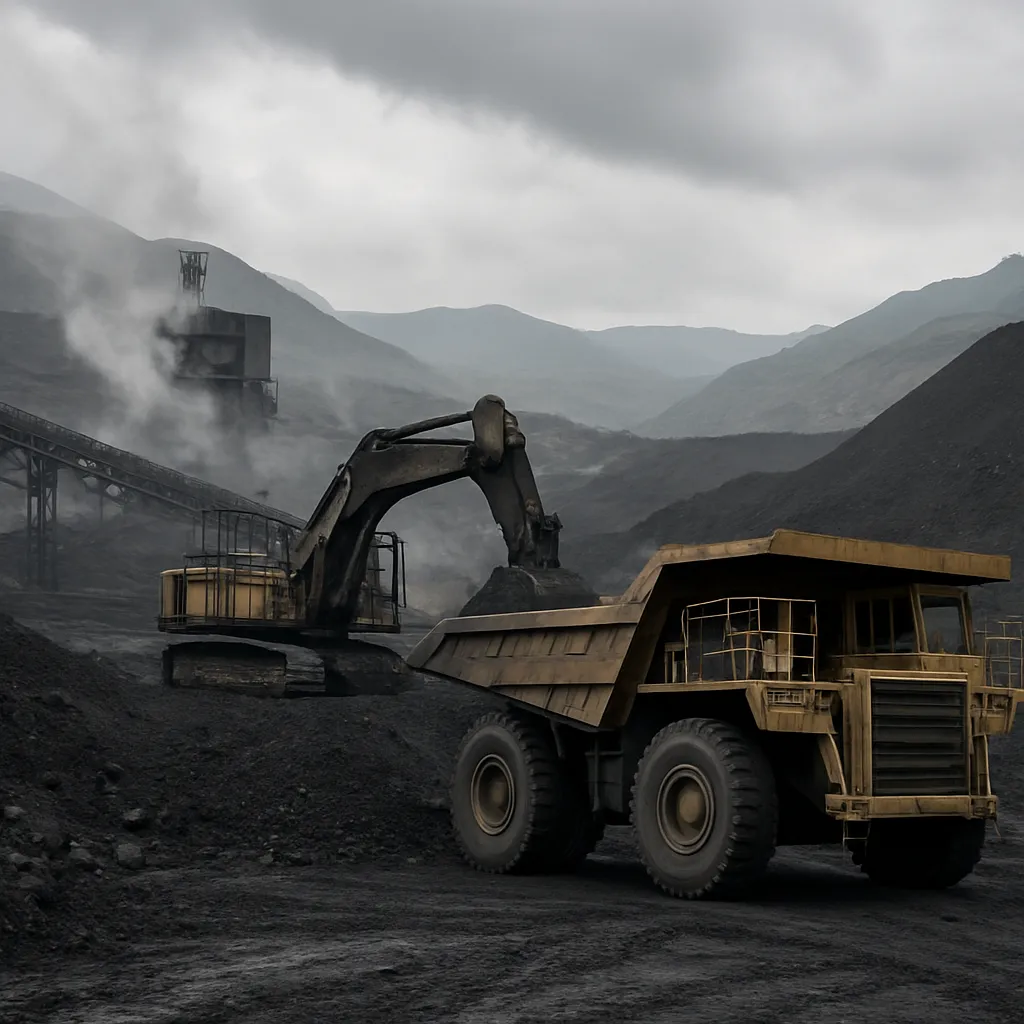
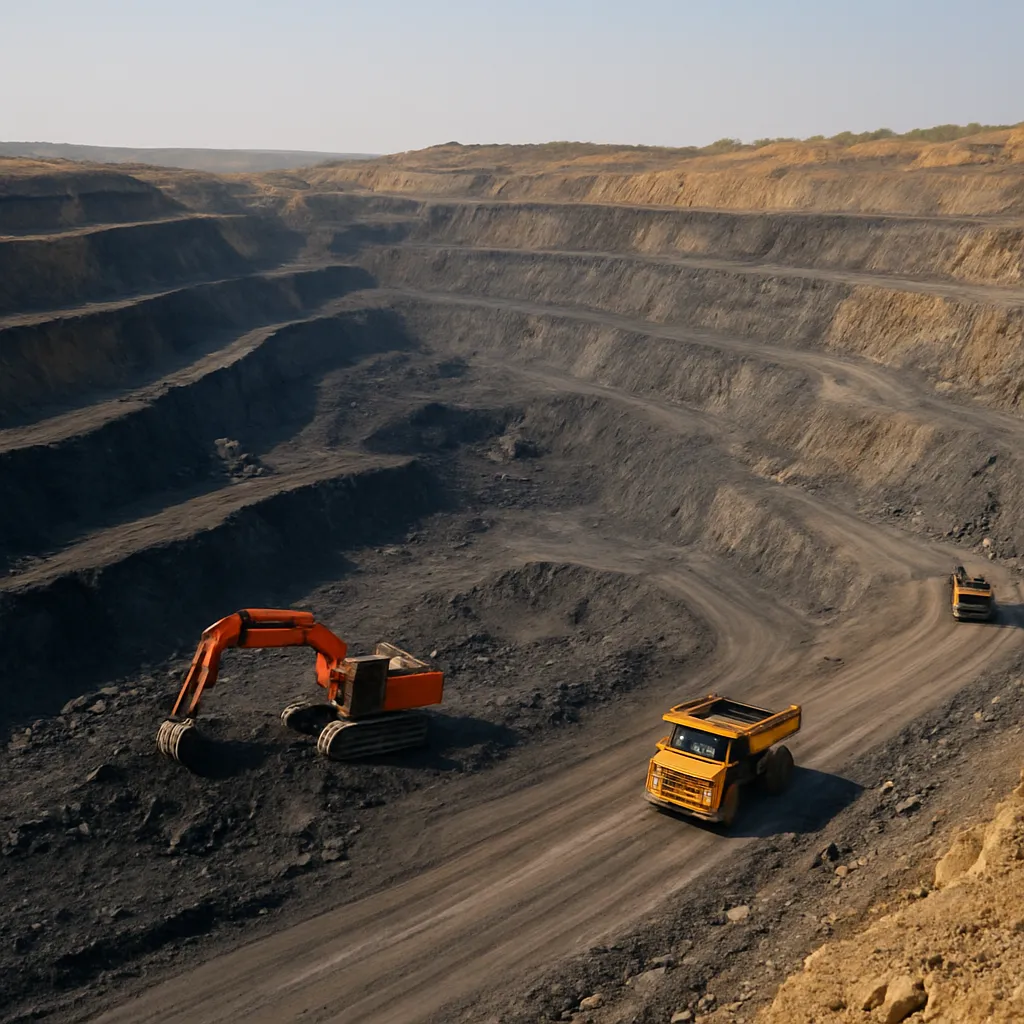
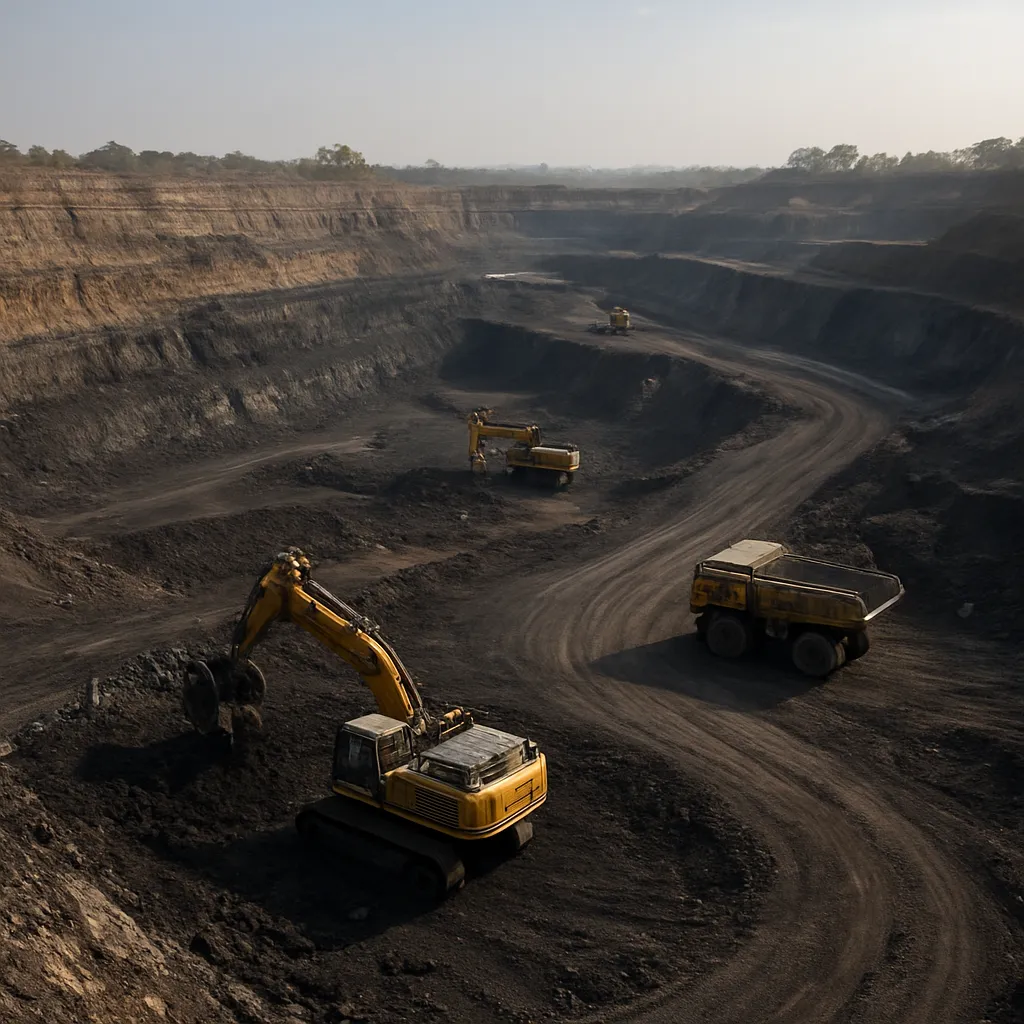
Mining in Rajmahal is dominated by large-scale open-pit operations where thick, near-surface seams permit cost-effective surface extraction. Opencast techniques rely on heavy earthmoving equipment — such as excavators, haul trucks and draglines — to remove overburden and recover coal. In limited areas where seams are deeper or geologically complex, small-scale underground workings or selective mining techniques may occur, but opencast mining remains the decisive method for commercial production.
To improve product quality, coal from the field is often subject to beneficiation and washing where possible. Beneficiation reduces ash content and increases calorific value, making the coal more suitable for modern thermal power stations and industrial consumers. However, the geological variability and presence of fine ash particles can complicate washing efficiency.
Production, reserves and statistical snapshot
Estimating reserves and production for a coalfield like Rajmahal requires reference to formal geological surveys and company reports. Official and public-sector estimates generally describe the Rajmahal Coalfield as holding several billion tonnes of in-situ coal resources, with exploitable reserves concentrated in opencast-suitable seams. Reserve estimates reported in various surveys and publications over time place the Rajmahal field among the larger coalfields in eastern India in terms of available tonnage, though precise numbers vary with new exploration data and reserve reclassification.
Annual extraction from the Rajmahal Coalfield historically has been in the range of millions of tonnes per year. Production rates fluctuate with the commissioning of new opencast blocks, expansion projects, market demand for thermal coal, and operational constraints. Coal from Rajmahal primarily supplies regional power stations, industrial consumers (such as cement and steel units), and in some cases, is transported nationally via rail connections to meet demand across India.
- Reserves: Publicly available geological summaries place Rajmahal among coalfields with reserves measured in the billions of tonnes; estimates differ by source and by classification of proven versus inferred reserves.
- Production: Typical annual production figures have been measured in the low to mid millions of tonnes in years when major opencast blocks were active; expansion projects aimed to raise annual output in certain periods.
- Area: The coalfield spans several hundred square kilometers in a discontinuous pattern across the Rajmahal Hills and adjacent lowlands.
Because reserve and production figures are updated periodically by geological agencies and mining companies, it is common to find a range of numbers in different reports. For policy, planning and investment purposes, stakeholders rely on the most recent audited mine statements and government resource assessments.
Economic and industrial significance
The Rajmahal Coalfield plays multiple economic roles at the local, state and national levels. At the most immediate level, coal mining creates direct employment in mines and associated service sectors, and it supports secondary economic activity in transport, equipment supply, maintenance and local commerce. Mining companies operating in the field — whether state-owned enterprises or contractors — contribute to public revenue through royalties, taxes and statutory obligations.
At the industrial level, coal from Rajmahal is an important feedstock for thermal power plants in eastern India. India’s electricity system still relies heavily on coal for base-load generation, and Rajmahal-sourced coal contributes to regional energy security by helping supply fuel to grid-connected stations. In addition, non-power industries such as cement, brick-making and certain manufacturing operations consume Rajmahal coal or blends containing it.
On the macroeconomic scale, coalfields like Rajmahal support national objectives of stable energy supply and industrial growth. The value chain — from excavation to transport to end-use — creates economic multipliers in infrastructure development (roads, rail, power) and in regional development funds earmarked under mining company corporate social responsibility schemes.
Employment and local development
Mining operations generate direct jobs for mine operators, engineers, equipment operators, safety personnel and managers. Indirectly, the mines support employment in logistics, local contracting, hospitality and retail. Mining companies in the area also typically fund community development projects — including schools, clinics and water systems — as part of statutory and voluntary obligations.
Fiscal contributions
Royalties, excise and corporate taxes from mining activities provide revenue streams to state and central governments. These funds are used for infrastructure and public services in mining districts, although effective distribution and impact depend on governance and fiscal policies at the state level.
Connectivity, transport and logistics
Access to efficient transport is vital for coalfields. Rajmahal benefits from road and rail links that enable coal dispatch to nearby power plants and farther afield. Rail sidings and freight corridors are often expanded when new mining blocks come online to accommodate heavy coal movement. Proximity to river routes has been evaluated by planners for bulk transport, though rail remains the dominant method for moving coal to market.
Logistical enhancements — such as dedicated freight lines, stocking yards and mechanized loading systems — can reduce transit times and handling losses, improving the competitiveness of Rajmahal coal in distant markets. However, transport bottlenecks and seasonal constraints can still affect timely dispatch during high-demand periods.
Environmental and social impacts
Large-scale opencast mining inevitably creates environmental and social challenges that require active management. Key impacts include:
- Land disturbance: Removal of topsoil and overburden alters landforms and can reduce agricultural land availability.
- Air quality: Dust from blasting, excavation and haulage can affect nearby communities unless mitigated by water-spraying, covered conveyors and dust suppression systems.
- Water: Mining can affect surface and groundwater regimes — both in quantity and quality — requiring careful management of dewatering, runoff and effluent.
- Biodiversity: Habitat removal can impact local flora and fauna, particularly in hill and riparian zones.
- Socioeconomic disruption: Displacement, livelihood changes and cultural impacts may result from mine expansion, making resettlement and rehabilitation central to social planning.
To address these concerns, mining operators and regulators implement environmental management plans that include progressive land reclamation, afforestation, dust control, wastewater treatment and community development programs. Rehabilitation of mined land for agriculture or forestry and the restoration of riparian buffers are examples of best-practice measures used in the region.
Regulation, ownership and governance
Coal mining in India operates under a framework of national and state laws governing mineral concessions, environmental clearances, land acquisition, labor rights and royalties. The Rajmahal Coalfield has seen activity by public sector companies and contractors under license or concession agreements. Major public-sector entities involved in eastern India’s coal landscape often coordinate with state governments for exploration and mine development.
Regulatory agencies periodically review environmental clearances, safety compliance and social obligations. Community engagement and stakeholder consultations are part of the statutory process for major project approvals, and monitoring by independent bodies and local authorities helps ensure compliance with environmental and social commitments.
Corporate social responsibility (CSR)
Mining companies operating in and around Rajmahal typically undertake CSR initiatives oriented toward improving local living standards. These can include investments in healthcare, education, skill development, rural electrification, and small-scale infrastructure. The success of CSR efforts often depends on sustained engagement with local communities and transparent allocation of resources.
Challenges and opportunities
Challenges facing the Rajmahal Coalfield include environmental remediation, ensuring sustainable livelihoods for affected populations, maintaining efficient transport and handling systems, and upgrading coal quality to meet stricter emission standards at power stations. The global and national energy transition toward lower-carbon energy sources also introduces uncertainty about long-term coal demand, impacting investment planning.
Opportunities include modernization of mining techniques to raise productivity and safety, implementation of advanced coal-washing and blending to improve fuel quality, and diversification of the local economy through value-added industries that use coal more efficiently. Further, rehabilitation and land reclamation can create opportunities for afforestation, agriculture and economically productive uses of former mine areas.
Interesting facts and broader context
- Strategic role: Rajmahal contributes to the energy matrix of eastern India, helping supply thermal power particularly in nearby states.
- Geological interest: The interaction between Gondwana coal measures and the Rajmahal volcanic sequences makes the area of interest to geologists studying Earth history and mineral deposition.
- Large-scale opencast character: The field exemplifies India’s broader reliance on large opencast operations for bulk coal production, prioritizing mechanization and economies of scale.
- Community impact: The coalfield has shaped settlement patterns, employment distributions and local economies in Sahibganj and Godda districts.
Outlook and concluding remarks
The Rajmahal Coalfield remains a significant coal-producing area in eastern India, with important implications for regional energy supply, local economies and industrial activity. While estimates of reserves and annual production figures vary with periodic reappraisals and operational changes, the coalfield continues to be a focus of mining investment and regional planning. Future performance will depend on how effectively operators and regulators manage environmental and social impacts, modernize operations, and adapt to evolving energy demand patterns.
As India balances economic development with environmental commitments, coalfields like Rajmahal will continue to play a transitional role: providing fuel for current energy systems while also presenting opportunities to pursue cleaner technologies, rehabilitation efforts and socio-economic diversification in mining districts. The long-term sustainable development of the Rajmahal area will hinge on integrated planning that addresses geology, mining economics, environmental safeguards and community welfare in a coordinated way.