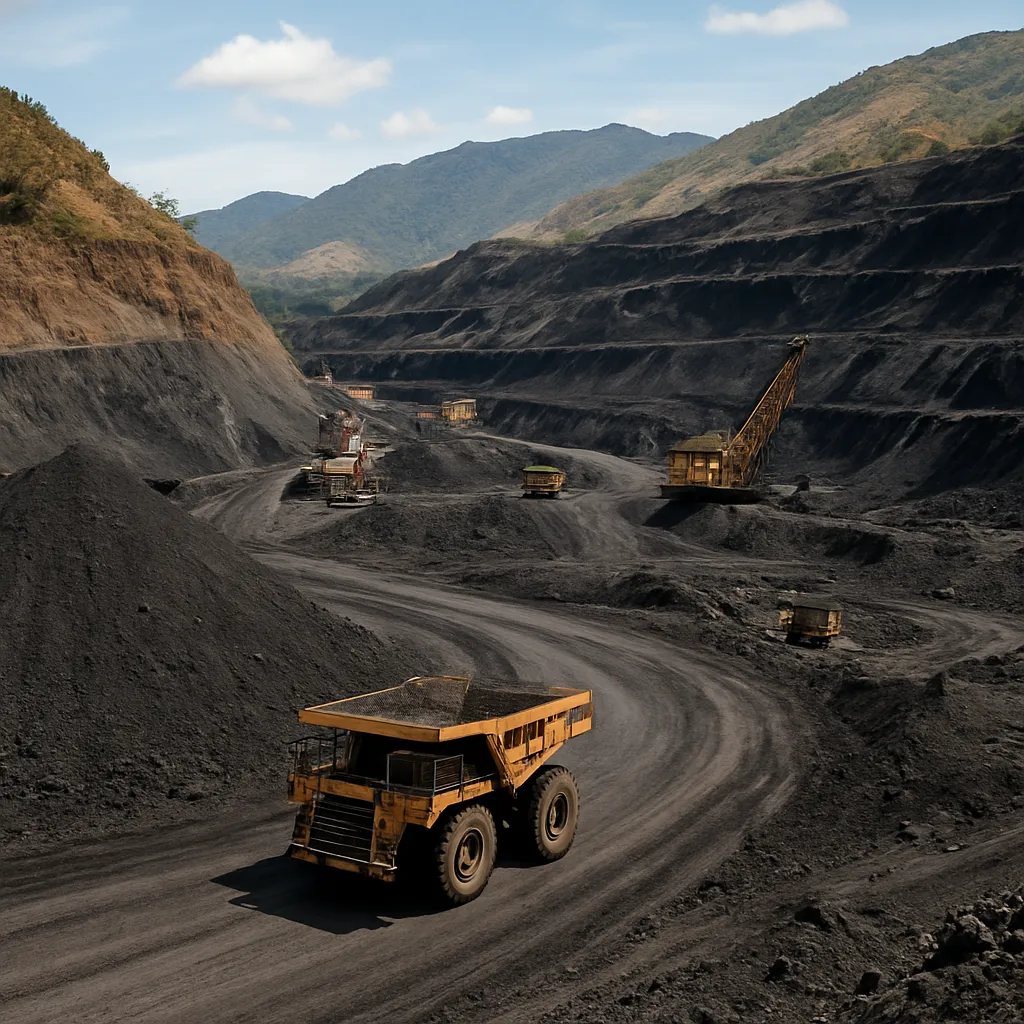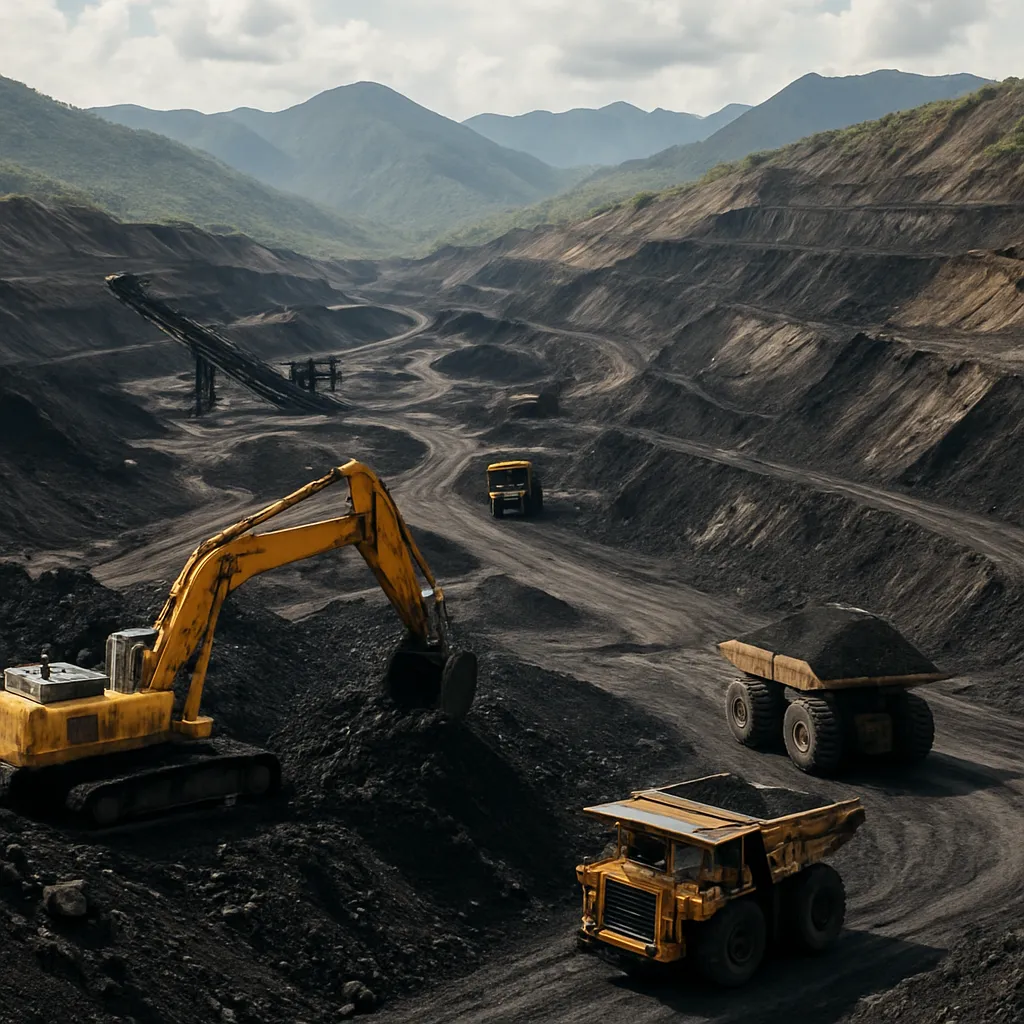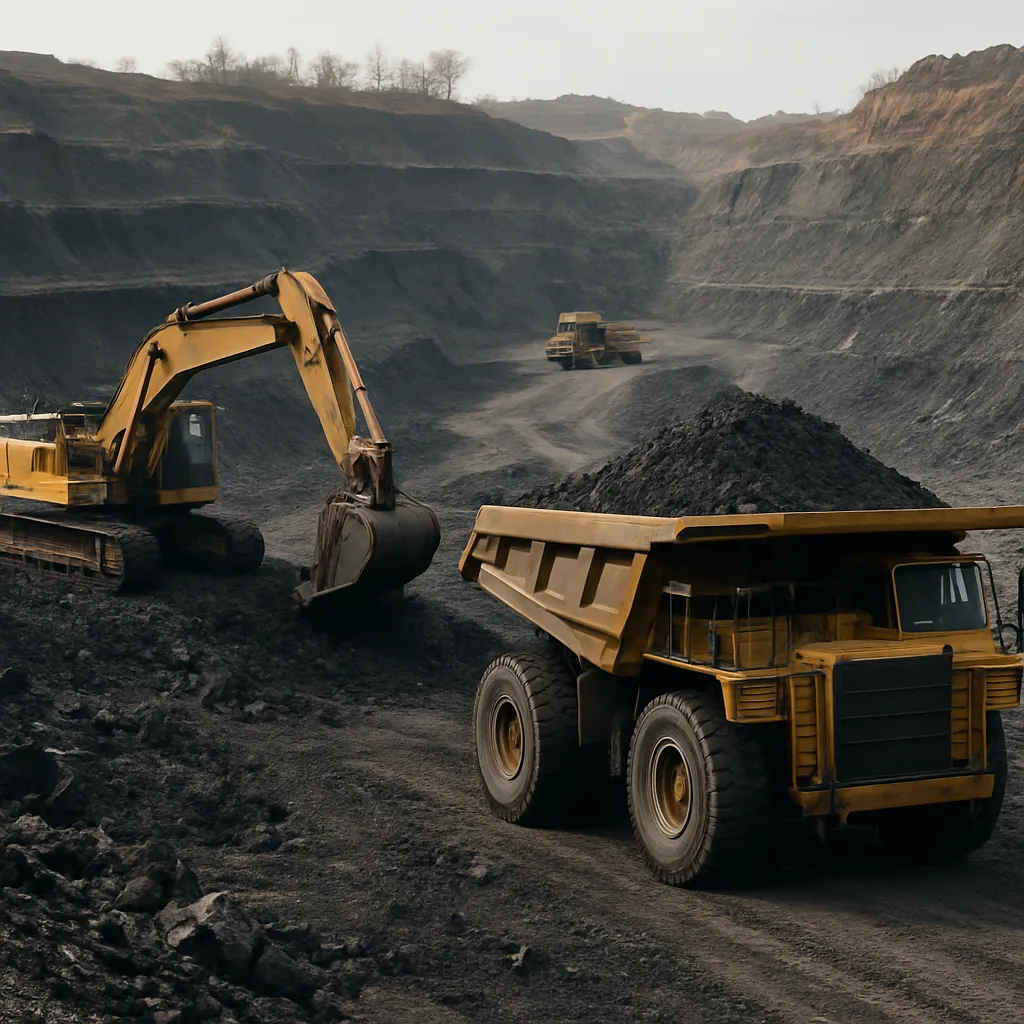
Pathakhera Mines represent one of the many coal-producing localities in central India that feed the country’s large appetite for thermal coal. Located in the central Indian geological provinces, the mines extract coal that is primarily used for electricity generation and local industrial consumption. This article examines the location and geology of the Pathakhera area, the type and quality of coal produced, the mining operations and socioeconomic footprint, statistical and economic context, environmental and safety issues, and future prospects for the mines and the surrounding region.
Location and geological setting
The Pathakhera mining area is situated in central India within the broad Gondwana coal-bearing basins that extend across parts of Madhya Pradesh and Maharashtra. These basins—remnants of the ancient Permian–Triassic and Carboniferous–Permian deposits—contain multiple coalfields whose deposits were formed in fluvial and deltaic environments during the late Paleozoic and early Mesozoic eras. The coal seams in the Pathakhera area belong to this Gondwana sequence and are typically interbedded with sandstones, shales and clays.
Pathakhera is notable for its location in a region where coal seams are accessible at shallow to moderate depths, enabling both underground and surface mining techniques. The local geology commonly produces coal of the type classified as thermal (non-coking) coal—used mostly by power plants and industrial boilers rather than by the metallurgical industry. Key geological characteristics include variable seam thickness, presence of impurities such as high ash and moisture, and coal ranks ranging from sub-bituminous to low-volatile bituminous depending on the specific seam and depth.
Mining operations: methods, infrastructure and workforce
Operations in Pathakhera typically involve a combination of mining methods chosen according to seam geometry, depth and local environmental constraints. Common practices include:
- Underground mining—room-and-pillar and bord-and-pillar systems are frequent where seams are shallow to moderately deep and roof conditions permit safe extraction.
- Opencast (surface) mining—where seams outcrop or overburden removal is economical, surface mining is used to achieve higher productivity and lower unit costs.
- Coal handling and preparation—coal is often sorted, crushed and screened before transport; in many central-India operations, simple coal-washery facilities may reduce ash content and improve calorific value for specific end-users.
Infrastructure that supports mining in and around Pathakhera includes haul roads, conveyors, small railway sidings or branch lines, and power and water supply systems. Mines in this region also rely on a local workforce drawn from nearby towns and villages. Employment patterns typically include a mix of skilled miners, equipment operators, technical staff and administrative workers. Mining operations contribute to local incomes through direct employment, contractor services and ancillary economic activities such as transport, equipment maintenance and small-scale commerce.
Coal quality and uses
The coal extracted from Pathakhera is primarily thermal coal, characterized by:
- Calorific values that generally fall in a moderate range typical of central Indian Gondwana coals—often around 3,000–4,500 kcal/kg on as-received basis (depending on seam and moisture content).
- Relatively high ash content—commonly 20–40% or higher in many central Indian seams—making the coal less suitable for steelmaking but acceptable for combustion in modern coal-fired power plants equipped with emissions controls.
- Variable sulfur content—often low to moderate, which affects compliance with environmental standards and selection of end uses.
Primary uses of Pathakhera coal are:
- Fuel for regional thermal power plants—both state-run and private generation units rely on locally mined coal to reduce logistics costs and supply uncertainty.
- Industrial fuel—used in brick kilns, cement factories, sugar mills and other energy-intensive local industries.
- Local household uses historically included non-commercial uses in rural areas, though modernization and regulation have reduced household coal use in many places.
Because of its quality profile, Pathakhera coal is an important element of the local energy mix rather than a competitive metallurgical coal for steel production. Coal washing and blending are common strategies to improve fuel quality for specific consumers.
Economic and industrial significance
Although Pathakhera is not one of India’s largest single-source coalfields in national terms, its role in the regional economy is significant. Coal mining in Pathakhera supports:
- Regional energy security—by reducing reliance on long-distance coal transport and ensuring steady deliveries to nearby thermal plants.
- Employment and livelihoods—direct jobs in mines and indirect employment in logistics, workshops and services.
- Local industrial development—providing affordable fuel inputs to cement, brickmaking, sugar and small manufacturing operations in the surrounding districts.
Revenue generated by mining activity benefits local and state government finances through royalties, taxes and duties. In addition, many mining companies and public sector coal entities invest in local community development programs—roads, schools, health clinics and sanitation projects—either as mandatory corporate social responsibility (CSR) commitments or as voluntary initiatives to maintain social license to operate.
Statistical context and production figures
Precise yearly production, reserve and workforce numbers specifically for Pathakhera can vary and are sometimes presented by different agencies under slightly different administrative names. Broadly, however, the statistical context is:
- India’s coal production has been in the hundreds of millions of tonnes per year during the 2010s and early 2020s; Coal India Limited and its subsidiaries produce the majority of the country’s coal, while captive and private mines add significant volumes. National production exceeded 700 million tonnes in recent years, with annual fluctuations driven by demand from the power sector and industrial output.
- Madhya Pradesh is one of the important coal-bearing states in central India, contributing a meaningful share of central India’s coal output. The region’s mines—including areas such as Satpura and other Gondwana deposits—together account for a solid portion of state production.
- Local mine-level production at sites comparable to Pathakhera often ranges from a few hundred thousand to a few million tonnes per year, depending on the number, size and mechanization level of the pits. Exact figures for Pathakhera would be available from company annual reports, state mining departments or the Directorate General of Mines Safety (DGMS) records.
Beyond production numbers, economic indicators tied to mines like Pathakhera include:
- Royalties and taxes collected by the state government, which vary with output and coal pricing mechanisms.
- Investment in mining equipment and infrastructure—capital expenditure increases when mines expand opencast operations or install modern preparation plants.
- Employment multipliers—each direct mining job often supports multiple indirect jobs in transport, shops, catering and services.
Environmental, health and safety issues
Coal mining in Pathakhera shares environmental and social challenges common to many coal-producing regions. Key concerns and mitigation measures include:
- Land disturbance and rehabilitation—opencast mining removes vegetation and topsoil; modern best practice requires systematic reclamation, topsoil management and reforestation of exhausted benches and overburden dumps.
- Air quality—dust from mine faces, haul roads and coal handling areas can affect local air quality. Mitigation includes dust suppression (water spraying), green belts and covered conveyors.
- Water impacts—mining can alter groundwater regimes and pose risks of contamination from mine effluents. Controlled discharge, effluent treatment and careful water-balance planning are essential.
- Worker safety—underground mining poses risks of roof falls, gas emissions and confined-space hazards. Compliance with DGMS regulations, use of modern safety equipment, gas monitoring and worker training are central to reducing accidents.
- Community health—respiratory diseases can be associated with airborne particulates; public health initiatives and healthcare access are vital mitigation approaches.
Regulatory frameworks in India require environmental clearances, mine closure plans and periodic monitoring of impacts. Many modern mines also adopt technologies for methane drainage and utilize generated methane for power or heating where feasible, contributing to improved safety and greenhouse gas management.
Social footprint and community relations
Mines such as Pathakhera often exist in close proximity to rural communities and tribal populations. The social footprint includes resettlement and rehabilitation when mines expand, livelihood disruptions as farmland is acquired, and both positive and negative economic effects. Responsible operators typically implement:
- Resettlement and rehabilitation (R&R) plans that provide housing alternatives, compensation and skill development for displaced families.
- Local procurement and recruitment policies to favor nearby labor and suppliers, thereby multiplying local economic benefits.
- Education and health initiatives as part of CSR commitments—schools, vocational training centers and primary healthcare camps help raise human development indicators.
Conversely, conflicts can arise when environmental impacts or inadequate compensation stir community opposition. Transparent stakeholder engagement, independent environmental and social impact assessments, and long-term development partnerships are critical to sustaining operations and minimizing disruption.
Technology, mechanization and modernization
The future competitiveness of mines like Pathakhera depends on modernization. Current global and national trends influencing modernization include:
- Mechanization—use of continuous miners, shovel-dumper systems and surface mining equipment increases productivity while reducing per-ton labor costs.
- Coal preparation—modern washeries and beneficiation plants lower ash content and improve calorific value, making the coal more valuable to power producers and industry.
- Digitalization and automation—real-time monitoring, fleet management systems and predictive maintenance reduce downtime and improve safety.
- Environmental technologies—dust suppression systems, effluent treatment plants and methane recovery technologies help align mines with stricter environmental and climate standards.
Investment in these technologies can be capital-intensive, but it often pays back through lower operating costs, higher saleable coal yields and fewer regulatory conflicts. Public sector companies and private firms increasingly collaborate on pilot projects for cleaner and safer mining.
Role in the national energy mix and industrial chains
Pathakhera’s coal contributes to multiple elements of India’s energy and industrial landscape:
- Power generation—thermal plants (both state-run and private) rely on regional coal to maintain grid stability and meet base-load demand.
- Industrial energy use—local industries benefit from shorter supply chains and lower logistics costs when using nearby coal sources.
- Supply chain integration—Pathakhera connects to rail and road networks that feed larger national networks, enabling coal to reach farther markets when needed.
India’s long-term energy planning includes diversification toward renewables and greater energy efficiency, but projections foresee a continuing role for coal in the medium term because of the scale of existing thermal capacity and economic constraints on rapid conversion. Mines like Pathakhera therefore remain strategically relevant during transition planning—especially if they invest in efficiency and lower-emissions technologies.
Future prospects, challenges and opportunities
The outlook for Pathakhera mines will be shaped by a mix of market, regulatory and technological factors:
- Market demand—continued industrial and power-sector demand in central India will support operations, although long-term national policy goals to decarbonize could reduce absolute demand over decades.
- Regulatory environment—stricter environmental norms and land-use regulations may raise compliance costs but also encourage adoption of cleaner technologies.
- Investment and finance—access to capital for mechanization, washery construction and environmental mitigation is critical; state-backed financing or public–private partnerships are common financing routes.
- Community engagement—sustained social investment helps reduce conflict and ensures a stable labor supply.
- Adaptation strategies—diversifying into value-added services (coal beneficiating, methane utilization, land redevelopment) provides alternative revenue streams as mining lifecycles mature.
Opportunities include converting exhausted mining areas into green energy sites (solar parks on reclaimed land), industrial estates that leverage existing transport links, or forestry and agroforestry projects that restore ecosystem services and provide new livelihoods for local residents.
Closing observations
Pathakhera Mines are a typical example of central India’s coal-producing localities—geologically rooted in the Gondwana coal basins, producing predominantly thermal coal with variable quality metrics, and playing an important role in the regional economy by providing energy, employment and fiscal revenues. While specific production and reserve counts for Pathakhera vary depending on reporting sources and mine boundaries, the mine’s economic and social footprint is clear: it supports local industry and power generation, contributes to state revenues, and poses familiar environmental and social challenges that require modern mitigation measures.
Looking ahead, Pathakhera’s viability will depend on continual investment in mechanization, environmental management, and community development. Strategic modernization and responsible management can help the mines remain productive while reducing their environmental footprint and providing sustainable benefits to the people and industries that depend on them.