The Ovoot Tolgoi coal site is one of Mongolia’s notable coal projects, combining significant geological resources with strategic economic importance for both local communities and regional energy markets. Located in eastern Mongolia, this mine contributes to the country’s coal supply and export capacity, addressing industrial and domestic energy needs. The mine operates within Mongolia’s broader coal industry ecosystem and is linked to regional transport and trade networks that connect to neighboring markets. This article examines the mine’s location and geology, the types of coal produced, operational and statistical data, economic and social impacts, environmental considerations, and future prospects. Key themes include the mine’s role in export flows to China, its mining method (primarily open-pit), estimated reserves, and the quality of product (notably bituminous and coking ranks).
Location and geological setting
Ovoot Tolgoi is situated in the eastern part of Mongolia, in a region characterized by vast steppe landscapes, arid to semi-arid climate conditions, and geological formations favorable to coal accumulation. The deposit lies within a broader belt of coal-bearing basins that extend across parts of Mongolia and into northern China. These basins are the product of complex depositional and tectonic histories spanning the Paleozoic and Mesozoic eras, resulting in layered sequences of sedimentary rocks with multiple coal seams of varying thickness and quality.
The mine’s accessibility is shaped by its proximity to overland transport corridors that link Mongolia to Chinese border points, enabling significant cross-border coal flows. Because Mongolia is landlocked, access to export markets depends heavily on road and rail connections; many mines in the region, including Ovoot Tolgoi, rely on trucks for short-haul movement to aggregation points and on rail for large-volume international shipments when available. The location also places the mine within a climatic regime where seasonal conditions — including winter cold and summer dust — influence operational planning, infrastructure maintenance, and environmental control measures.
Coal types, quality and geology
Ovoot Tolgoi produces predominantly bituminous coal, with portions that can be classified as semi-soft or suitable for coking and metallurgical purposes depending on the seam and processing. Mongolian coal deposits show considerable variability: some seams yield thermal coal used for electricity generation and heating, while others provide coal with properties desirable to steelmakers. The coal from Ovoot Tolgoi generally has characteristics that make it valuable as a feedstock for industrial furnaces and for energy production.
Key geological characteristics of interests to operators and buyers include the coal’s calorific value (energy content), volatile matter, ash content, sulfur content, and coking properties such as plasticity and coke strength. While detailed seam-by-seam laboratory values depend on specific sampling and testing, the coal from this region is typically sought after for its reasonable calorific value and workability in metallurgical applications after beneficiation. Coal quality affects market price, blending decisions, and choice of end user.
Mining methods, processing and transport
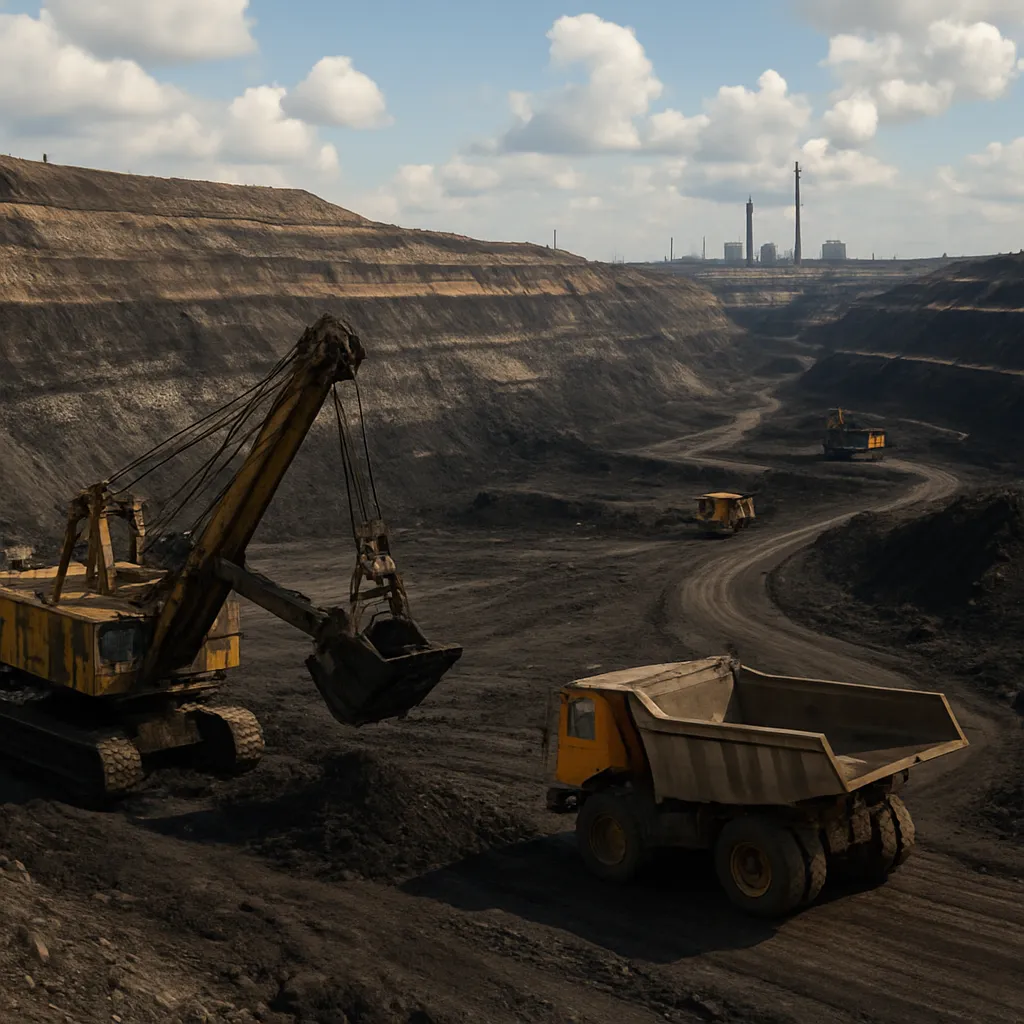
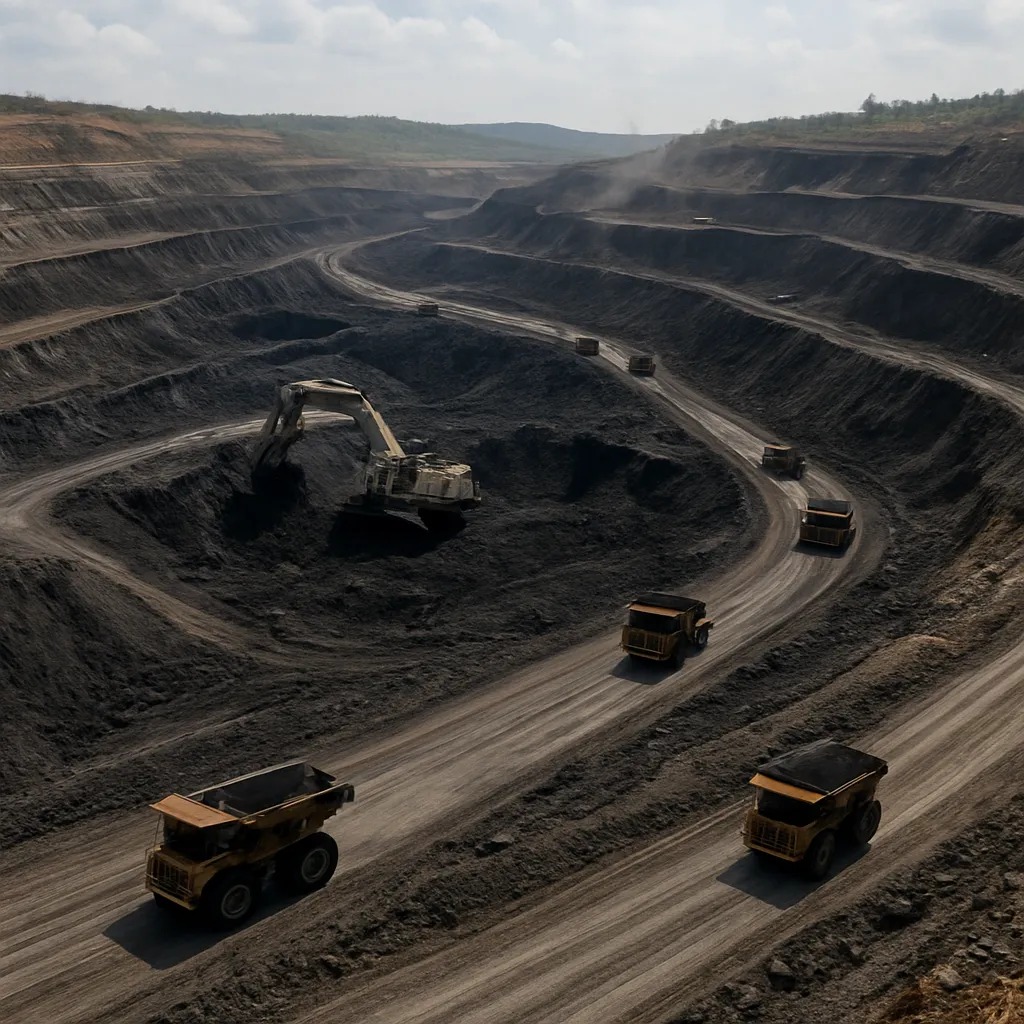
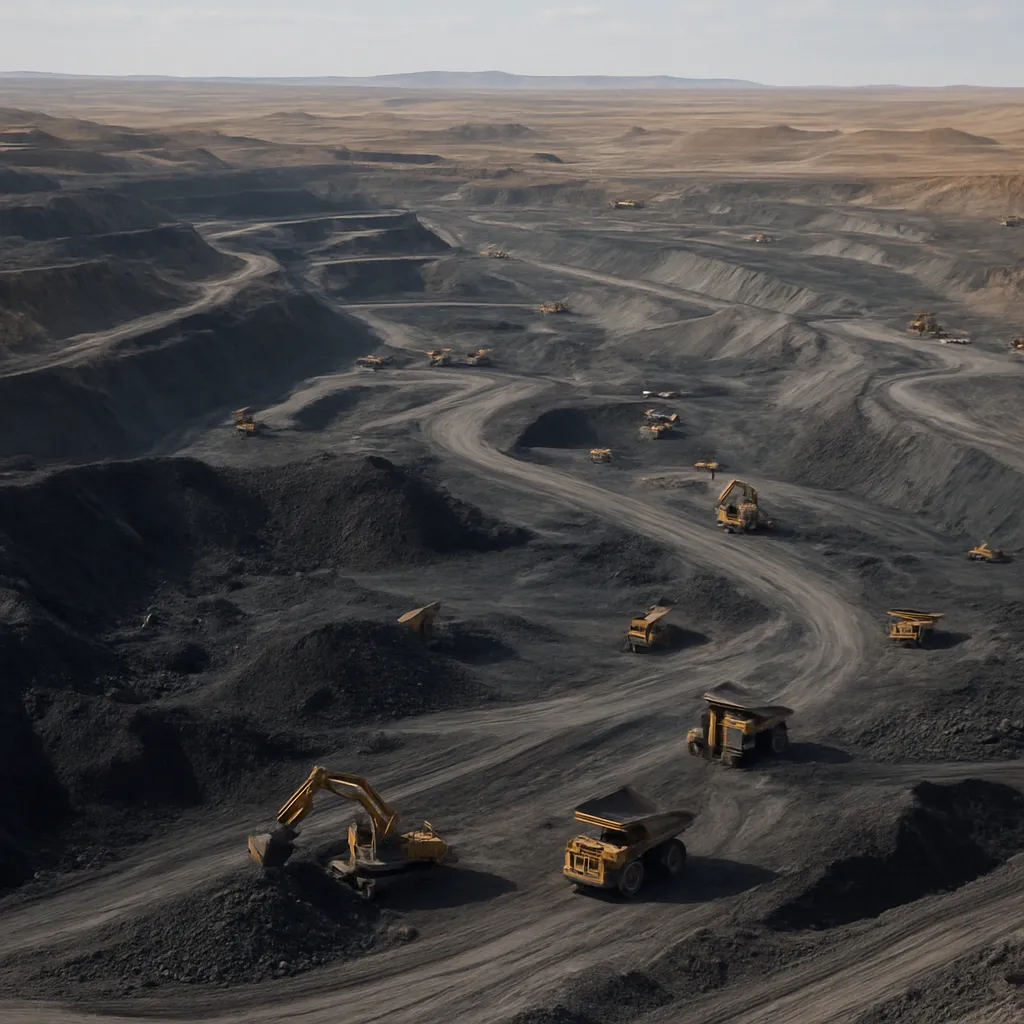
The Ovoot Tolgoi operation is primarily an open-pit mining enterprise. Open-pit methods are commonly used in Mongolian coal fields where seams are relatively shallow and extensive, enabling economical extraction with large-scale earthmoving equipment. Typical activities include overburden removal, drilling and blasting where required, loading and hauling of ROM (run-of-mine) coal, and crushing/grading processes at the mine site or nearby processing facilities.
Processing steps usually include screening to separate lump product from fines, simple washing or gravity separation to reduce ash content and improve calorific value, and stockpiling for quality-controlled dispatch. Depending on market requirements, some coal may be run through more advanced beneficiation to produce higher-grade coking coal or to achieve specifications demanded by industrial customers.
Transport logistics are central to the mine’s commercial model. Coal is commonly moved by truck to nearby railheads or border-crossing aggregation points. From there, large cargo consignments are sent across the Chinese border to meet demand in steelmaking centers and power plants. The efficiency and cost of transport — including road conditions, distance to processing and loading facilities, and customs and border protocols — materially affect the mine’s competitiveness in export markets.
Production statistics and reserves
Reserves and production volumes at Ovoot Tolgoi have been described in industry reporting as material, often measured in the hundreds of millions of tonnes for economically extractable coal within the broader deposit area. Annual production has varied over time as market conditions, company investment, and infrastructure constraints have evolved. In general terms, many mid-sized Mongolian coal mines produce in the range of several hundred thousand to a few million tonnes per year, with larger operations capable of producing significantly more.
Actual figures for Ovoot Tolgoi can fluctuate from year to year. Historical reporting by industry observers and company communications have occasionally cited annual outputs in the low millions of tonnes during peak operational periods. Because Mongolia’s overall coal export volumes have been in the tens of millions of tonnes annually (with most exported to China), Ovoot Tolgoi contributes a measurable share to the national totals. Exact reserve estimates depend on the classification used (proven, probable, inferred) and the scope of exploration; many deposits in the region report reserves and resources that provide multi-decade life-of-mine potential under favorable economic conditions.
Economic significance and market integration
The economic footprint of Ovoot Tolgoi extends from local employment to national export revenues. Coal mining in Mongolia is a major engine of export earnings, foreign exchange inflows, and government revenues through taxes, royalties, and licensing fees. Mines like Ovoot Tolgoi support a variety of ancillary businesses — equipment and fuel suppliers, transport contractors, maintenance crews, and local service industries — creating indirect employment multipliers in rural areas where alternatives may be limited.
Export orientation is a defining feature: the majority of Mongolian coal exports go to China, whose steel and power sectors demand large volumes of both thermal and metallurgical coal. Mines that can consistently deliver quality coal in large batches are better positioned to capture price premiums and long-term contracts. As a supplier of industrial-grade coal, Ovoot Tolgoi plays a role in supplying both thermal energy needs and the raw material needs of industry, including, potentially, the steel sector when higher-grade material is produced.
In revenue terms, coal remains one of Mongolia’s top export commodities. While figures vary with global commodity cycles, export earnings from coal have historically represented a substantial share of Mongolia’s merchandise exports. This inflow of currency supports public spending and investment, although it also exposes the country to commodity price volatility and external demand shocks.
Ownership, investment and infrastructure development
Ownership structures in Mongolian coal projects vary widely: some mines are majority-owned by Mongolian companies, others by joint ventures involving foreign partners, and some by internationally listed companies with diverse investor bases. Investment in equipment, processing facilities, and logistics determines the scale and reliability of operations. Mines that invest in wash plants, quality control systems, and stable haulage arrangements command better market access and bargaining power.
Infrastructure remains a constraining factor for many Mongolian operations. Rail capacity, paved road networks, border facility efficiency, and storage and loading infrastructure all influence a mine’s ability to scale output. Governments, private sector actors, and international financiers have all participated in projects to enhance connectivity — including proposals and phased construction for rail links that would allow larger volumes to be transported to export points. Any improvement in transport infrastructure can materially raise the long-term value of coal projects in Mongolia by reducing delivered costs and enabling higher throughput.
Environmental, social and governance (ESG) aspects
Coal mining poses a set of environmental and social challenges that are of growing interest to governments, financiers, communities, and NGOs. At the mine level, common environmental concerns include dust and particulate emissions, water use and potential impacts on groundwater, landscape disturbance, waste rock and overburden management, and greenhouse gas emissions associated with both extraction and end-use combustion of coal.
Responsible operators implement mitigation measures such as dust suppression systems, progressive rehabilitation of worked-out areas, controlled water usage and recycling, and continuous environmental monitoring. Social considerations include working conditions, safety, fair employment practices, engagement with local herding communities, and equitable sharing of benefits including local procurement, infrastructure investments (schools, health clinics), and royalties distributed through local government budgets.
From a governance perspective, transparent contracting, community consultation, and compliance with Mongolian law and international best practice are critical to securing social license to operate and maintaining long-term project viability. International lenders and buyers increasingly assess ESG performance when deciding on financing or procurement, which encourages mines to adopt higher standards.
Role in regional energy and industrial ecosystems
Ovoot Tolgoi, like other Mongolian coal mines, functions as a supplier into broader regional systems. Coal from the region has historically played roles in power generation, district heating, and heavy industry across northern China and within Mongolia. The mine contributes to energy security for customers who rely on coal for stable base-load power and for industrial processes where alternative fuels may be less economical or technically feasible in the short term.
At the same time, market dynamics are evolving: demand patterns shift with Chinese industrial policy, fluctuations in steel production, and international moves toward low-carbon technologies. Metallurgical coal remains important for steelmaking where alternatives (e.g., hydrogen-based reduction) are still at early commercial stages. Thermal coal faces longer-term decline risks as global decarbonization progresses, though transitions often extend over decades, leaving continued demand in many regions.
Recent trends, challenges and future outlook
Recent years have seen commodity price volatility, shifts in cross-border trade regulations, and infrastructure bottlenecks that periodically constrain output or depress realized prices. Mines like Ovoot Tolgoi must navigate these dynamics while balancing investment, cost control, and community expectations. Proactive strategies include optimizing load-out and logistics, diversifying customer bases, enhancing product quality through beneficiation, and pursuing efficiency gains through equipment modernization.
Longer-term prospects depend on multiple factors: the trajectory of Chinese demand for coal (both thermal and metallurgical), the pace and direction of global decarbonization policies, improvements in regional transport infrastructure, and the mine’s own ability to maintain cost-effective production. Potential upside scenarios include improved rail links that reduce freight costs and open access to larger Chinese markets, or the development of higher-margin coking-coal products through selective washing and blending.
Practical impacts on local communities and economy
For local communities, the mine provides employment, stimulates small business opportunities, and can generate revenues for local administrations. However, these benefits can be uneven, and social impacts require active management. Issues frequently encountered include seasonal disruptions to traditional livelihoods (such as herding), competition for scarce water resources, and the need for durable local infrastructure that remains useful after mine closure.
Community engagement programs that succeed often include transparent revenue-sharing arrangements, investments in healthcare and education, vocational training targeted at the local workforce, and collaborative land-use planning to reduce conflicts over grazing routes and water points. Progressive mine closure planning — designed to restore or repurpose disturbed land — is also a growing focus to ensure long-term community resilience after operations cease.
Concluding perspectives
Ovoot Tolgoi is an illustrative example of a Mongolian coal project that blends geological opportunity with operational and market complexities. Its contribution to regional coal supply chains underscores the continuing role of coal in industrial and energy sectors across northeastern Asia, even as longer-term energy transitions introduce uncertainty. The mine’s commercial success depends on a mix of resource quality, production efficiency, transport infrastructure, environmental performance, and the ability to respond to evolving market and policy conditions.
As Mongolia navigates economic development pathways, mines such as Ovoot Tolgoi will remain important assets. Their ultimate legacy will be shaped not only by the volumes of coal extracted and revenues generated, but also by how responsibly they manage environmental impacts, partner with communities, and invest in infrastructure that benefits broader economic diversification. Continued monitoring of production statistics, export flows to China, and investments in infrastructure will provide critical signals about the near-term trajectory of Ovoot Tolgoi and similar mining operations in Mongolia.