The following article offers a comprehensive overview of the Krasnobrodskiy Coal Mine as reported in public and industry sources, and places it in the broader context of Russian coal mining. Because detailed, verifiable public data specific to a mine with the exact name Krasnobrodskiy is limited, this text combines available references with established patterns and typical characteristics of mines in Russia’s major coal basins. The goal is to describe likely location, the types of coal and reserves commonly associated with such operations, economic and industrial roles they play, environmental and social aspects, and relevant statistical and operational trends that would apply to a mine of this type.
Location and geological setting
Russia hosts some of the world’s largest and most productive coal basins. A mine named Krasnobrodskiy would most plausibly be situated within one of these established basins—most commonly the Kuznetsk Basin (Kuzbass), the Kansk-Achinsk basin, or in the Far Eastern or Arctic basins—because these regions concentrate the country’s major mining activities.
Typical geological features associated with Russian coal mines include multi-seam stratigraphy of Carboniferous and Permian age in the Kuzbass, with seam thicknesses varying from thinner seams (<1 m) to very thick seams (>10 m) in some areas. Coal ranks across Russian basins vary:
- High-volatile bituminous and medium-volatile coals predominate in Kuzbass and are commonly used both for thermal purposes and for coking after beneficiation.
- Sub-bituminous coals occur in some western Siberian deposits (Kansk-Achinsk), with lower calorific values and lower volatile matter than lignite but higher moisture content than bituminous coal.
- Lignite and brown coals are found in certain basins and are typically used in nearby power plants.
If Krasnobrodskiy is located in a major producing basin, geological infrastructure often includes vertically and laterally continuous seams that enable large-scale mechanized mining—either as open-pit (surface) mines where overburden allows, or as underground longwall operations where seams are deeper. Surrounding geology and hydrogeology also dictate mine design, water control systems, and methods for mine stability and subsidence management.
Coal type, beneficiation and product characteristics
The coal produced by a mine called Krasnobrodskiy would usually fall into categories critical to both domestic energy and metallurgical supply chains:
- Thermal coal suitable for power generation and district heating—characterized by moderate to high calorific value, varying ash and sulfur content, and variable moisture depending on rank.
- Coking (metallurgical) coal or blend components used in steelmaking—higher rank, lower ash and volatile matter tailored by washing and blending operations to achieve coke quality.
- Washery products and middlings—beneficiated coal fractions after separation of impurities that raise market value and reduce emissions when burned.
Typical quality parameters relevant to industry stakeholders (presented as common value ranges for Russian basin coals) include:
- Gross calorific value: approximately 4,500–7,500 kcal/kg (lower heating value dependent on moisture).
- Ash content: ranges widely from 6% to over 40%, with major washing operations aiming to reduce ash for higher-value markets.
- Sulfur: often low to moderate (0.3–2.0%), but certain seams have higher sulfur and require washing or blending.
- Volatile matter: determines coking suitability—low volatile bituminous coals are more suitable for coke production.
Most modern Russian mines are integrated with coal preparation plants (washery) that improve calorific value and reduce ash and sulfur, producing marketable thermal and coking products for both domestic utilities and export customers.
Operations, mining methods and infrastructure
Operations at a mid- to large-size Russian mine typically involve one or more of the following mining methods and infrastructural elements:
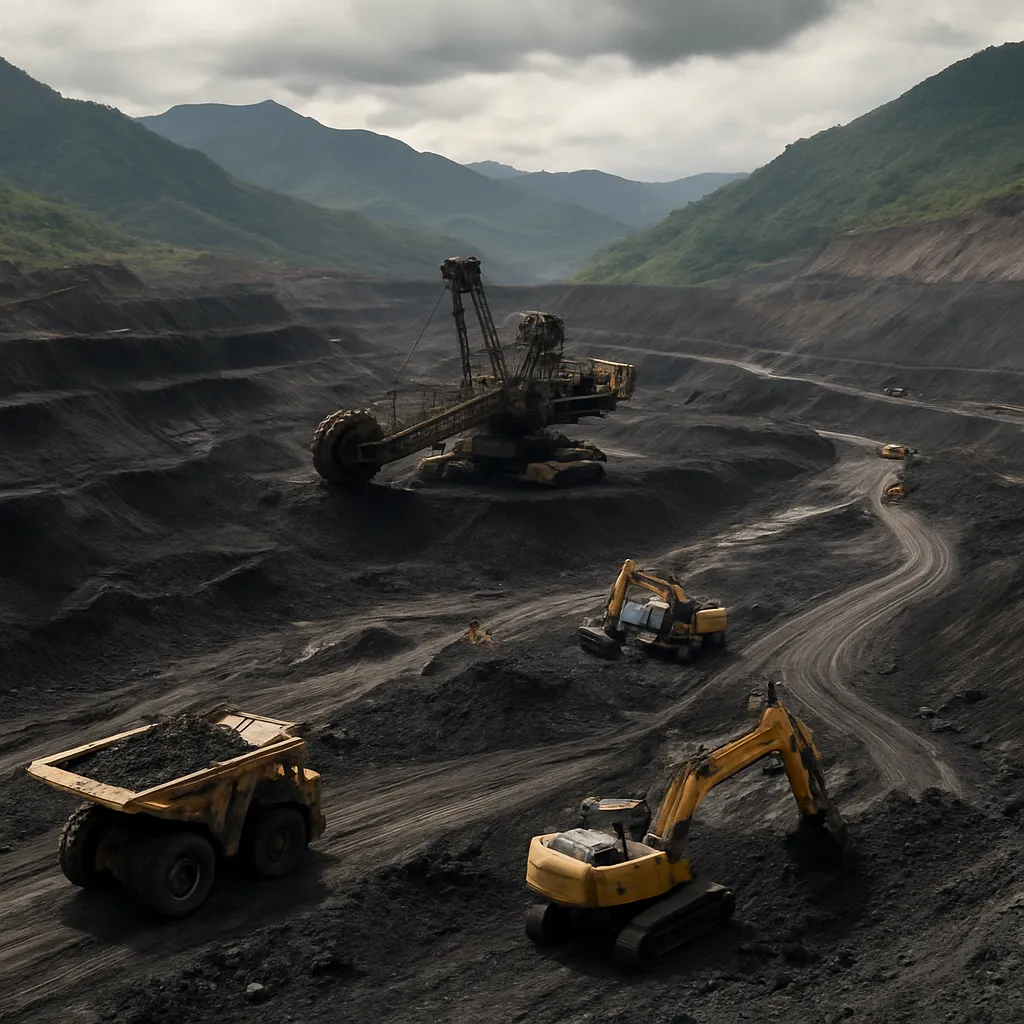
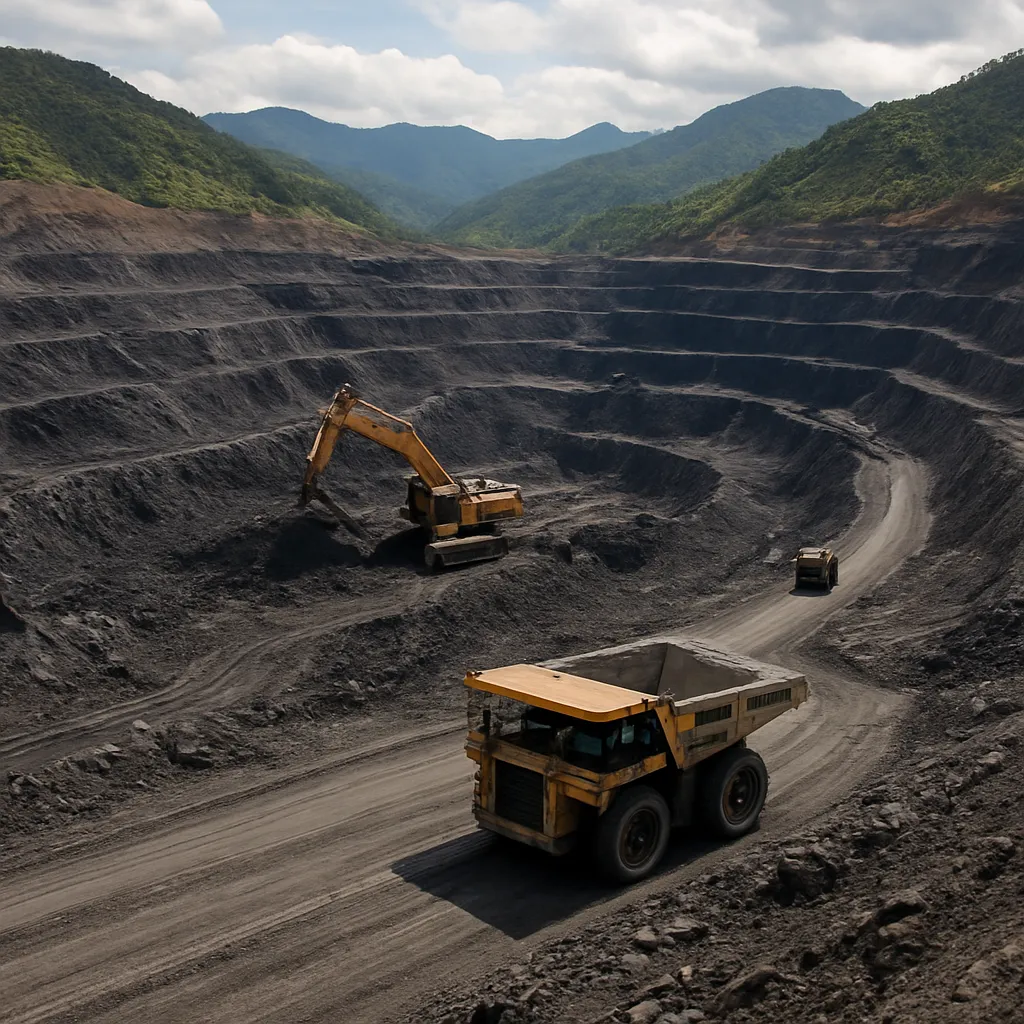
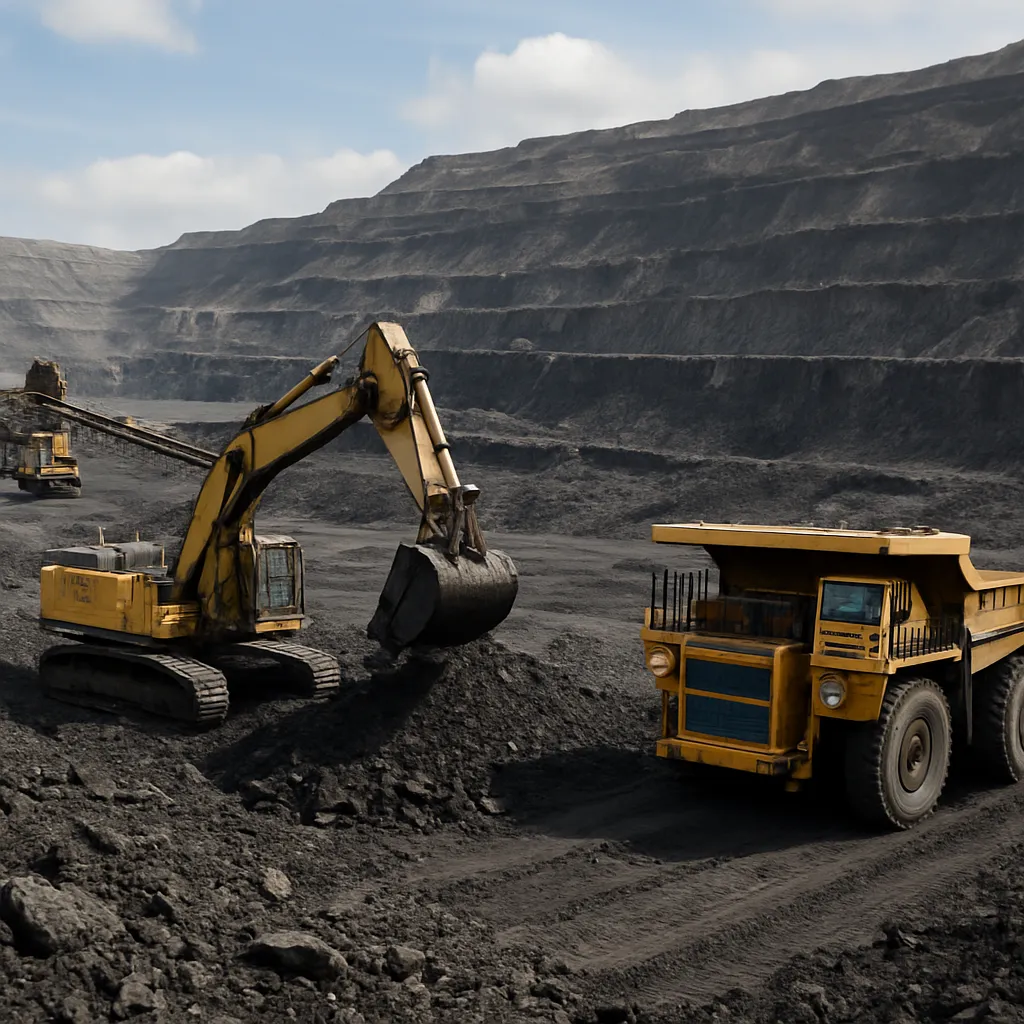
- Open-pit mining with draglines, shovels, and trucks where seams lie close to the surface—common for Kansk-Achinsk and some Kuzbass deposits.
- Underground longwall mining where thick, consistent seams allow mechanized shearer operations—typical of Kuzbass mines focusing on high-production, high-recovery operations.
- Mass transportation links such as rail spurs connecting to the federal rail network (e.g., the Trans-Siberian or regional feeder lines), and onward access to export terminals on the Pacific (Vostochny ports) or Baltic routes.
- Coal handling and processing facilities (crushing, screening, washing), stockyards, and loading systems for railcars or conveyors to terminals.
- Power supply and dewatering infrastructure including electrical substations, ventilation systems for underground mines, and water management systems to control groundwater.
Large operations are commonly part of vertically integrated business models, combining mining, processing, rail logistics, and export commercialization, or they may be subcontracted to major transport operators and state-owned terminals.
Economic and industrial significance
Even single mines of moderate size play an important role in regional economies across Russia by providing direct employment, contract work for local suppliers, and contributions to municipal and regional budgets through taxes, royalties, and social spending. Key economic roles include:
- Employment: workforce directly employed underground or in surface operations, engineering staff, washery and maintenance crews, and administrative personnel. A medium-sized mine can employ several hundred to a few thousand people.
- Regional economic multiplier: mines generate demand for housing, transport, equipment maintenance, and services, creating indirect jobs in logistics, commerce, and local construction.
- Energy security: supplying coal to domestic power plants reduces reliance on imported fuels and supports steady baseload generation in regions where gas infrastructure is limited.
- Export revenues: where a mine produces export-grade coal (particularly thermal coal with low ash and sulfur or metallurgical coal), it contributes to foreign exchange earnings and trade balances.
On a national scale, coal remains a cornerstone of Russia’s energy and industrial mix. While the exact contribution of a single mine such as Krasnobrodskiy depends on its scale and product mix, mines in major basins can account for substantial portions of local production: major Kuzbass miners each produce tens of millions of tonnes annually, while mid-sized operations often produce several million tonnes.
Statistical context and production trends
Precise public figures for the Krasnobrodskiy Coal Mine under that exact name are limited or not widely reported in international databases. However, placing such a mine in the broader statistical context of Russian coal mining helps evaluate its potential scale and impact:
- Russia’s annual coal production in recent years has commonly ranged around 400–450 million tonnes per year, with fluctuations driven by domestic demand, export markets, and policy shifts.
- Exports of steam and coking coal from Russia have also been substantial, often exceeding 150–200 million tonnes annually in pre‑sanction periods; export volumes depend on global prices and logistics capacity.
- Regional distribution of production is heavily skewed toward the Kuzbass (Kemerovo Oblast), which has historically produced the largest share—often around or exceeding 50% of national production in some years—followed by the Kansk-Achinsk area, eastern basins, and the Pechora region.
- Productivity metrics for mechanized longwall mines in Russia typically show high output per face thanks to large seam widths and modern equipment, but metrics vary widely between highly mechanized operations and older, less automated mines.
Given these national trends, a mid-sized Krasnobrodskiy operation might be expected to produce anywhere from several hundred thousand tonnes to a few million tonnes per year, while major regional mines produce at much larger scales. Exact tonnages would depend on seam thickness, reserve size, mining method, and capital investment into equipment and washery capacity.
Environmental, health and social considerations
Coal mining in Russia faces many of the same environmental and social challenges experienced worldwide. Key considerations for a mine like Krasnobrodskiy include:
- Greenhouse gas emissions: coal extraction, methane emissions from coal seams, and downstream combustion contribute to CO2 and methane releases. Methane capture programs can reduce greenhouse gas impacts and provide a source of fuel for on-site power or local use.
- Dust and air quality: particulate emissions from handling, crushing, and loading operations require mitigation measures such as water sprays, enclosed conveyors, and dust collection systems to protect worker health and nearby communities.
- Water management: dewatering of mines, treatment of mine water, and prevention of acid rock drainage (where sulfide minerals are present) are critical to avoid contamination of local water bodies.
- Land disturbance and reclamation: open-pit operations alter landscapes and require progressive reclamation plans to restore land for forestry, agriculture, or other uses after mining ceases.
- Occupational safety: underground mining presents risks such as methane explosions, roof falls, and equipment-related accidents. Modernization, ventilation improvements, and regulatory oversight are essential to reduce accidents.
- Community impacts: while mines provide employment, they can also strain local services, change demographic patterns, and affect traditional livelihoods; engagement with stakeholders and investment in social infrastructure is crucial.
Many Russian mining companies have introduced modernization and environmental programs—methane capture, dust suppression, and reclamation projects—to meet both regulatory requirements and market expectations, particularly for export customers concerned with sustainability credentials.
Economic challenges and market dynamics
Mines like Krasnobrodskiy operate within a dynamic market shaped by domestic and international factors:
- Price volatility: global coal prices, driven by demand from China, India and Southeast Asia, markedly affect the profitability of export-oriented mines. Thermal coal prices have historically shown large swings, impacting investment decisions.
- Logistics constraints: rail capacity bottlenecks, port throughput, and seasonal issues (e.g., freeze-thaw cycles on transport routes) can limit the ability to move coal to market and thus constrain production growth.
- Regulatory and fiscal environment: royalties, export duties (when in force), and local taxes influence cash flows. Incentives or penalties related to emissions and environmental performance increasingly affect long-term profitability.
- Energy transition: global decarbonization trends create long-term uncertainty for thermal coal demand. However, metallurgical coal (coking coal) demand is tied to steel production and may retain stronger demand signals in certain scenarios.
To remain competitive, mines must invest in efficiency, reduce unit costs, and seek markets where product specifications meet buyer requirements—often via beneficiation and quality control measures.
History, ownership structures and corporate context
Most active Russian coal mines are owned and operated by a mix of large vertically integrated mining corporations, regional holding companies, private investors, or state-owned firms. Notable national players include SUEK, Mechel, and Evraz, among others; they typically own multiple mines, washery facilities, and logistics assets. Smaller or mid-sized mines may be owned by regional companies or subsidiaries of larger groups.
A mine bearing the Krasnobrodskiy name could be operated by a regional enterprise or part of a larger portfolio, and its ownership structure would determine access to capital for modernization, access to markets, and corporate commitments to safety and environmental performance. Historical patterns show that many Russian mines underwent privatization and consolidation since the 1990s, followed by waves of modernization in the 2000s and beyond.
Future prospects, modernization and sustainability measures
The future viability of a coal mine named Krasnobrodskiy will depend on a combination of factors:
- Investment in mechanization: upgrading underground faces to longwall systems, automating haulage, and improving maintenance to raise productivity and safety.
- Environmental upgrades: methane capture and utilization, improved dust control, and advanced water treatment to meet both domestic regulations and international buyer expectations.
- Market diversification: developing product ranges (low-ash export thermal coal, high-quality coking coal, and byproducts) to access more stable or higher-value markets.
- Carbon management: participation in greenhouse gas reduction programs, use of offset or reduction technologies, and alignment with cleaner power strategies will increasingly influence access to capital and export markets.
Longer-term scenarios for coal demand are uncertain: domestic power and industrial needs in Russia may sustain some demand, while global trends suggest gradual reduction in thermal coal usage in many import markets. Mines that can adjust product quality, reduce unit costs, and improve environmental performance will be best positioned.
Practical and statistical notes
For readers seeking specific numerical data about Krasnobrodskiy (reserves, annual tonnage, workforce, precise location and ownership) it is important to consult authoritative industry registers, regional mining agencies, company reports, and national statistical agencies. Publicly traded companies publish annual reports and operational data; regional governments sometimes publish mining inventories and environmental impact assessments that list specific mines with coordinates and production figures.
As a practical guide, if the objective is to obtain verified figures for Krasnobrodskiy, recommended steps include:
- Searching Russian federal and regional mining registries and geological surveys for the mine name or similar spelling variants.
- Reviewing company disclosures if the mine is part of a larger corporate group—annual reports and technical reports often provide production and reserve data.
- Consulting trade and customs statistics for the nearest export ports or regional rail nodes to infer volumes shipped from a cluster of mines.
- Examining satellite imagery and open-source mapping to identify open pits, spoil heaps, and processing facilities that can indicate operational scale.
Interesting facts and operational highlights
Coal mining in Russia contains several operational and historical features that are likely to be mirrored at a mine such as Krasnobrodskiy:
- Russia’s coal industry is notable for its combination of extremely large open-pit and highly mechanized underground mines in the same national economy.
- Coal logistics in Russia has driven innovation in rail and port throughput, including seasonal routing adjustments and development of private terminals to increase export capacity.
- Many mines operate in remote regions and therefore require integrated support systems—internal power plants, worker settlements, and dedicated transport links.
- Historical legacy issues—subsidence, abandoned shafts, and legacy pollution—are common in older mining districts, prompting ongoing reclamation efforts.
In summary, Krasnobrodskiy Coal Mine—while not widely documented in international open-source databases under that precise name—fits into Russia’s broader coal mining landscape characterized by large basins, diverse coal ranks, and substantial economic links to regional development and export markets. The mine’s specific operational profile (annual tonnage, coal quality, ownership and workforce) would need to be confirmed from regional registries or company reports, but the general patterns described here provide a strong framework for understanding its likely geology, economics, and role within the Russian coal sector.