The following article provides an in-depth overview of the Kaniha Coal Mine in India, covering its location, geology, mining methods, economic importance, environmental and social impacts, and outlook. The piece integrates technical, economic and contextual information relevant to planners, industry professionals and readers interested in India’s coal sector. Where precise public figures are scarce, estimates and typical ranges are used and clearly indicated.
Location and geological setting
The Kaniha Coal Mine is located in eastern India, within one of the country’s major coal-bearing regions. The mine lies in a district known for its extensive coal basins, which form part of the larger Gondwana coalfields that dominate India’s mainland coal production. The site is commonly associated with the coalfields in the state of Odisha (and the broader Talcher–Angul basin complex), a region characterized by extensive open-pit and underground workings.
Geologically, the Kaniha deposit is part of the Permian-to-Triassic Gondwana sequences where coal seams occur in cyclical sedimentary packages. The coal here is primarily non-coking and is classified as thermal coal that supplies nearby power plants and industrial consumers. Typical properties of coal from this region include:
- Rank: low- to medium- volatile bituminous to sub-bituminous (depending on the seam)
- Calorific value: generally in the range of approximately 3,500–5,000 kcal/kg (regional variation)
- Ash content: relatively high in many seams (often 20–40% or more), necessitating washing for certain downstream uses
- Sulfur: usually low to moderate, which affects combustion and emission control requirements
- Seam thickness: variable, with both thin seams and economically workable thick seams in different parts of the lease
The geological complexity — including faulting, seam continuity and variability in quality — determines mine design, extraction strategy and beneficiation requirements.
Mining operations and methods
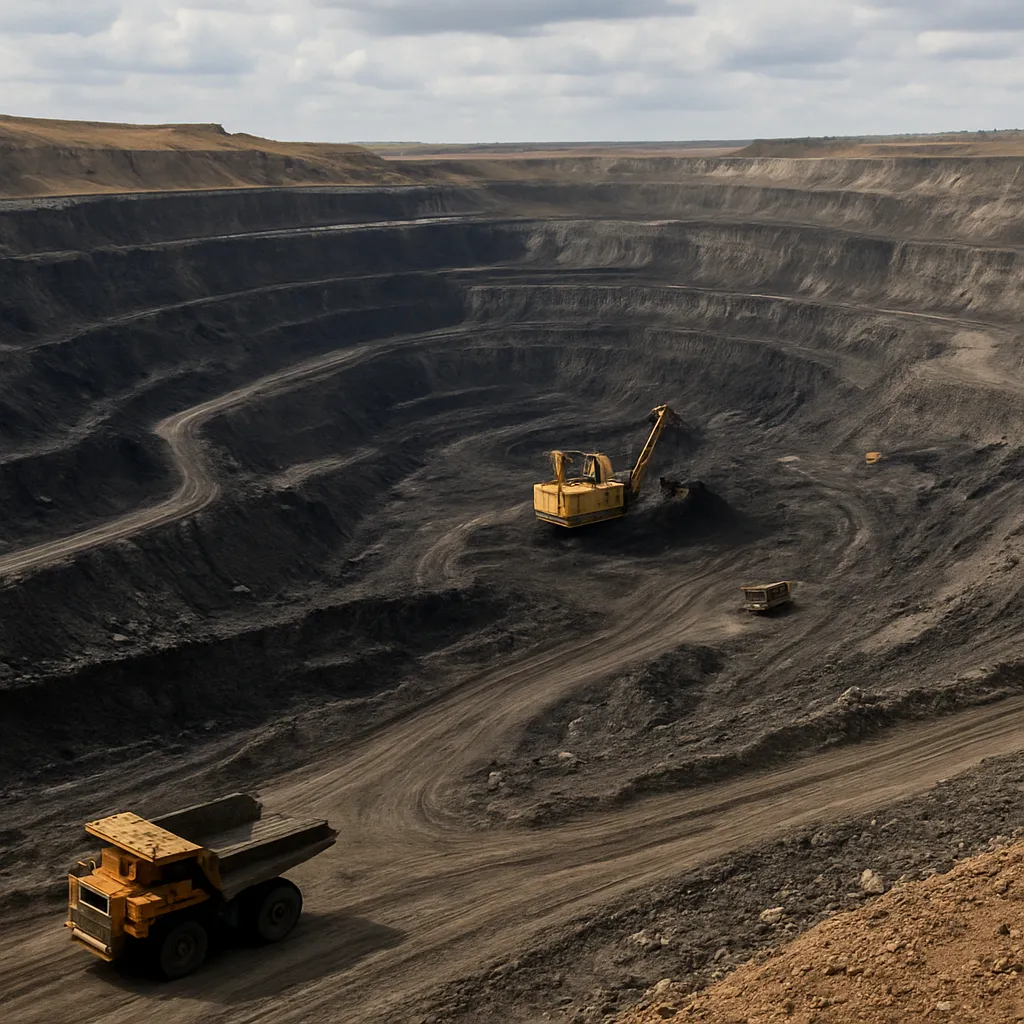
Kaniha operates predominantly as an opencast (open-pit) mining complex, though some nearby blocks in the same coalfield may include shallow underground workings. Open-cast methods are favored in the basin because they provide higher recovery rates and lower unit costs for thick and near-surface seams.
Typical mining workflow
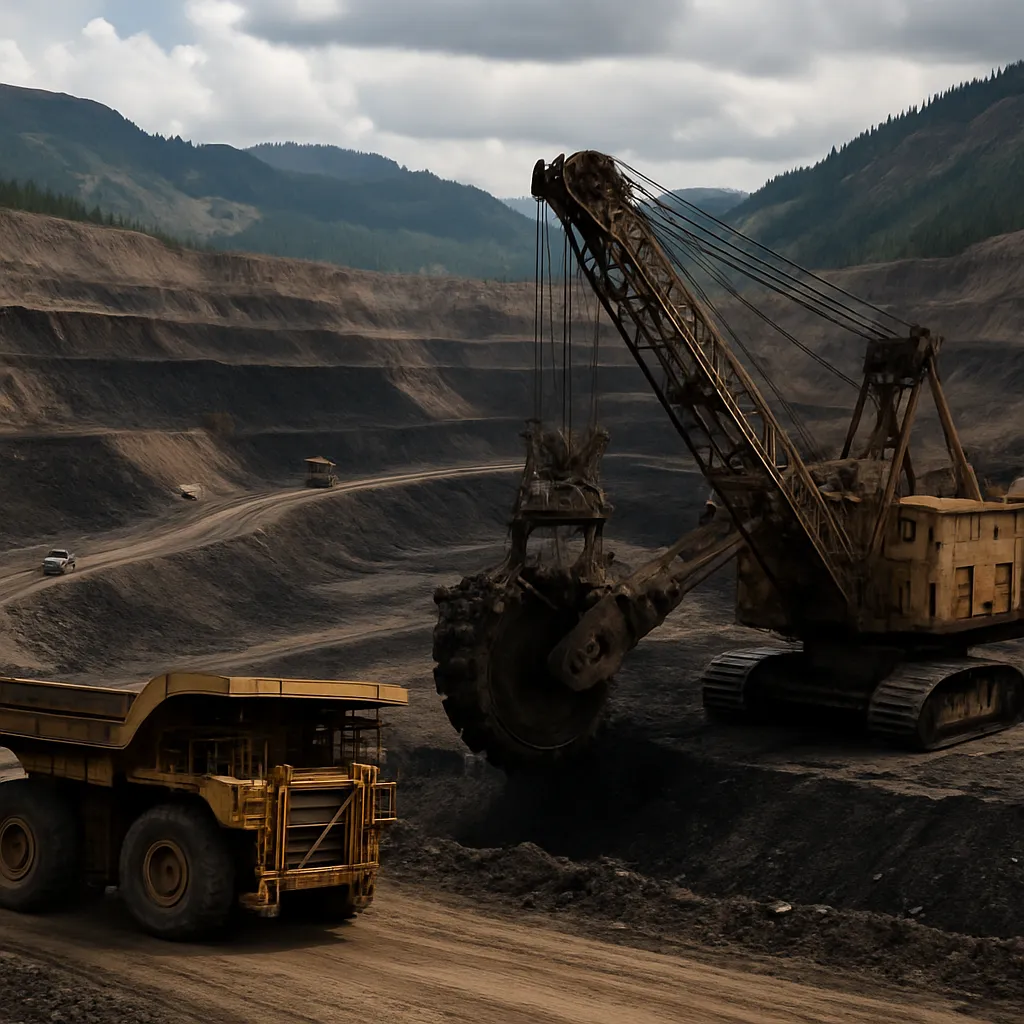
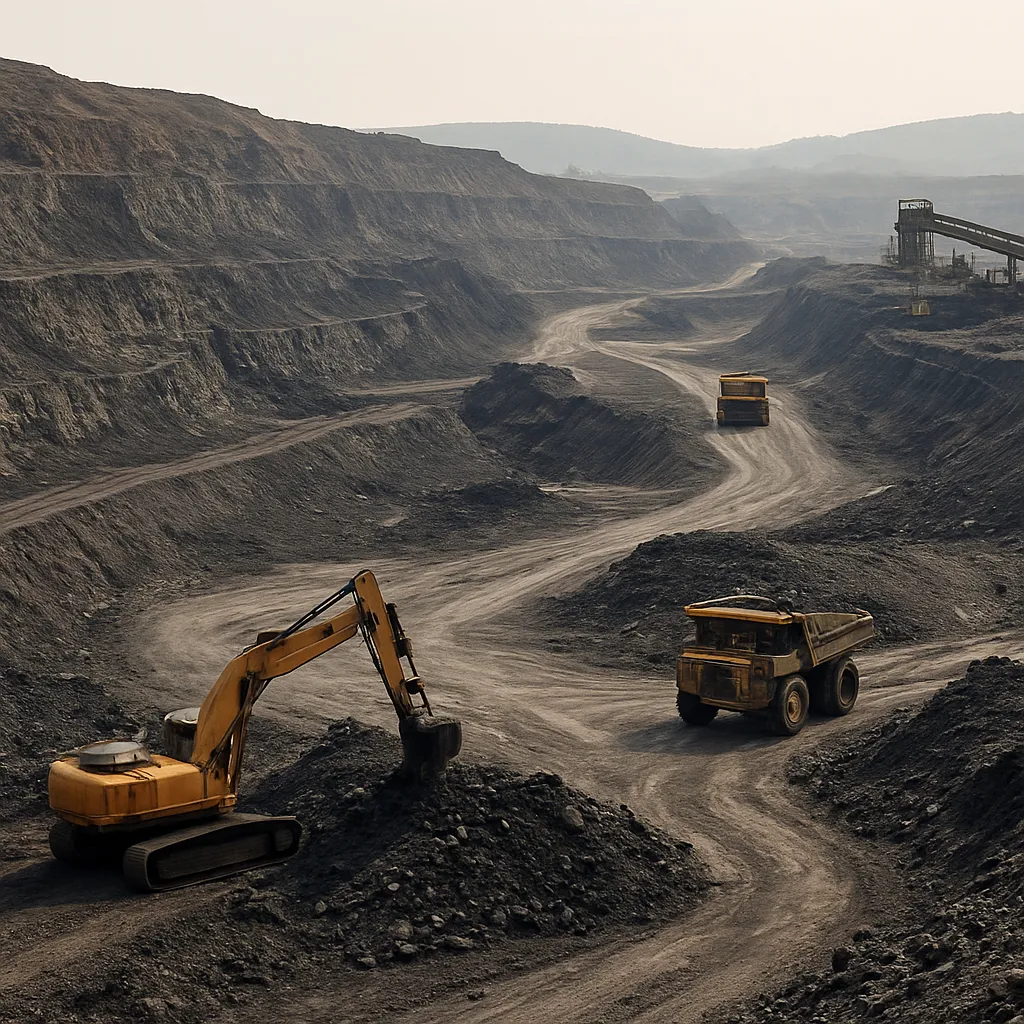
- Overburden removal using large excavators, draglines and dozers to expose coal seams
- Drilling and controlled blasting where required to fragment hard strata
- Coal loading with shovels and transport by haul trucks to primary crushers or directly to washing plants
- Beneficiation (coal washing) to reduce ash content and improve calorific value for certain customers
- Progressive backfilling, slope stabilization and rehabilitation of worked-out benches
Mechanization levels at the site are consistent with major Indian public-sector mines: fleet operations with high-capacity hydraulic excavators, rope shovels in some sections, and heavy haulage trucks. Continuous improvements in equipment, digital monitoring and safety systems are typical as operators modernize to improve productivity and reduce incidents.
Ownership, production and reserves
Kaniha is operated by a major coal company that manages several blocks in the basin; such companies often include subsidiaries of the national Coal India Limited or regional public sector firms. The mine supplies predominantly domestic thermal markets, with a focus on power generation and local industries.
Publicly available, mine-specific production data for Kaniha are limited in open-source documents. Based on the scale and infrastructure visible in comparable mines in the region, the Kaniha complex is likely to have an annual production capacity in the range of 1–5 million tonnes per annum (Mtpa), depending on the number of working seams and mechanization level. Proven and probable reserves for a single mid-sized mine in this coalfield commonly range from tens to a few hundred million tonnes; therefore, Kaniha’s life-of-mine can extend several decades under sustained production, subject to regulatory clearances and economic viability.
Key economic metrics to consider for Kaniha include:
- Production: estimated multi-Mtpa capacity (see above)
- Reserves: tens to low hundreds of million tonnes (typical range for comparable blocks)
- Employment: direct employment typically ranges from several hundred to a few thousand workers on-site, depending on mechanization and contracting model
- Royalty and revenue: royalties and taxes contribute to state and central revenues; the mine supports local economies through wages, purchases and infrastructure
Because Kaniha supplies primarily thermal coal, its output is essential to the viability of coal-fired power stations in the region, which rely on domestic coal linkages for baseload supply. The mine also supports smaller industrial consumers, brick kilns and captive power units depending on allocation and logistics.
Infrastructure and logistics
Efficient transport and handling infrastructure are vital to maximizing the value of coal extracted at Kaniha. Typical infrastructure elements associated with such a mine include:
- Internal haul roads and conveyor systems to move coal from pit to crusher or washery
- Coal handling and preparation plants (CHPP) for washing and sizing
- Rail sidings and loop lines linking the mine to the national rail network, enabling dispatch to distant power plants
- Road access for local deliveries and ancillary supplies
- Water supply systems for mining, washing and dust suppression
In many Indian coal basins, the proximity to rail corridors and load-infrastructure is a major determinant of offtake patterns. The Kaniha mine typically integrates with regional railheads and dispatch systems; short-haul deliveries to nearby thermal power stations are common, reducing both cost and logistical complexity.
Economic and social significance
The Kaniha Coal Mine plays a multi-faceted economic role at local, state and national levels:
- Energy security: by supplying domestic thermal fuel, the mine contributes to grid stability and power generation capacity, reducing dependence on imported coal.
- Employment: the mine is a significant employer in the local economy, creating direct mining jobs and indirect jobs in transport, services and supply chains.
- Revenue generation: royalties, taxes and fees from mining operations support public finances and local development projects.
- Industrial support: coal from Kaniha supplies captive power and industrial boilers, underpinning manufacturing and related activity in the region.
- Community development: companies operating mines often invest in corporate social responsibility (CSR) projects—education, health, water supply and road construction—which can have lasting local benefits.
Nevertheless, the economic benefits are balanced by costs: environmental remediation, land acquisition and social displacement are expensive and require careful management. Workforce skill development and transition planning are also critical to maximize local developmental returns.
Environmental management and rehabilitation
Mining in the Kaniha area, as in other major coalfields, presents environmental challenges that are being addressed through a combination of engineering, policy and community initiatives:
- Air quality: dust suppression via water-sprays, covered conveyors, and greenbelts helps reduce particulate emissions from haul roads and stockpiles.
- Water management: sedimentation ponds, controlled discharge, and recycling systems are implemented to manage mine-water and minimize impacts on local rivers and groundwater.
- Rehabilitation: progressive backfilling of exhausted benches, slope stabilization, topsoil management and reforestation are used to restore worked areas over time.
- Waste handling: overburden and slurry management follow regulatory controls to reduce leachate and instability risks.
- Emissions control: coal washing reduces ash and improves combustion efficiency, indirectly lowering greenhouse gas emissions per unit of power generated.
Regulatory oversight by state and central agencies requires environmental impact assessments (EIA), public consultations and post-mining land-use plans. Increasingly, operators explore technologies such as methane capture, coal beneficiation, and electrification of haulage to reduce the mine’s carbon footprint.
Health, safety and community relations
Worker safety is a priority in mining operations. Measures at Kaniha-like operations typically include:
- Mandatory personal protective equipment (PPE), training and induction programs
- Monitoring and mitigation of occupational hazards (respirable dust, noise, vibration)
- Emergency preparedness, first-aid centers and occupational health clinics
- Community engagement to address resettlement, livelihood restoration, and grievance redress mechanisms
Effective community relations help reduce conflict. Companies often implement local hiring preferences, skills training, and micro-enterprise support to share economic gains with host communities.
Role in India’s energy transition and future prospects
While coal remains central to India’s electricity generation, the broader energy transition presents both challenges and opportunities for mines like Kaniha. Key considerations include:
- Short- to medium-term demand: domestic thermal coal demand is expected to remain significant for the coming decades to meet baseload requirements, particularly as intermittent renewable capacity grows.
- Quality-driven evolution: increasing demand for higher-quality, lower-ash coal will drive investment in washery capacity and blending strategies.
- Technology adoption: mechanization, digitalization, predictive maintenance and fleet electrification can reduce operating costs and emissions intensity.
- Alternative uses: coal-to-chemicals, gasification and carbon capture and storage (CCS) are long-term pathways that could add value to existing coal assets under supportive policy and economics.
- Regulatory and social pressures: environmental regulations and community expectations will shape future permit approvals, land access and rehabilitation obligations.
In sum, mines such as Kaniha must balance near-term production imperatives with investments in environmental performance and community development to remain viable and socially acceptable in the long run.
Key strengths, challenges and strategic recommendations
Strengths:
- Proximity to major power consumers and rail networks improves logistics and reduces transportation costs.
- Availability of sizeable reserves supports long-term planning and sustained local employment.
- Established operational experience in the basin and skilled workforce.
Challenges:
- High ash content in some seams increases the need for washing and handling of rejects.
- Environmental and social impacts require ongoing mitigation and funding for rehabilitation.
- Market pressures from renewables and policy shifts toward cleaner technologies necessitate strategic adaptation.
Strategic recommendations:
- Invest in beneficiation (washery) capacity to improve coal quality for power and industrial users.
- Accelerate mechanization and adopt digital mine management tools to enhance productivity and safety.
- Expand community development programs (education, health, livelihoods) to build local goodwill and resilience.
- Pursue methane capture and utilization where feasible to reduce greenhouse gas emissions and generate additional revenue.
- Develop mine closure and post-mining land-use plans early in the mine life to lower end-of-life liabilities.
Interesting facts and broader context
- The Gondwana coal basins of eastern India, where Kaniha is situated, are estimated to contain a large share of the country’s accessible coal reserves, making the area strategically important for national energy supplies.
- Modern opencast operations in this region are among the world’s larger single-site producers when multiple contiguous blocks are operated in unified plans.
- Coal washing plants often transform high-ash raw coal into grades suitable for efficient combustion, thereby adding value and reducing transport costs per unit of usable energy.
- Investment in local infrastructure (roads, power, water) associated with mining operations frequently catalyzes broader regional development beyond the mine perimeter.
Summary: The Kaniha Coal Mine is a significant component of India’s domestic coal infrastructure. It produces primarily thermal coal from Gondwana sequences and contributes to local employment, state revenues and national energy security. While precise publicly accessible production and reserve figures for the mine are not always granular, it is characteristic of mid-sized opencast complexes in eastern India with estimated annual capacities of roughly 1–5 Mtpa and multi-decade potential reserves. The mine’s future will be shaped by its ability to improve coal quality through beneficiation, reduce environmental impacts, foster local development, and adapt to an evolving energy landscape.