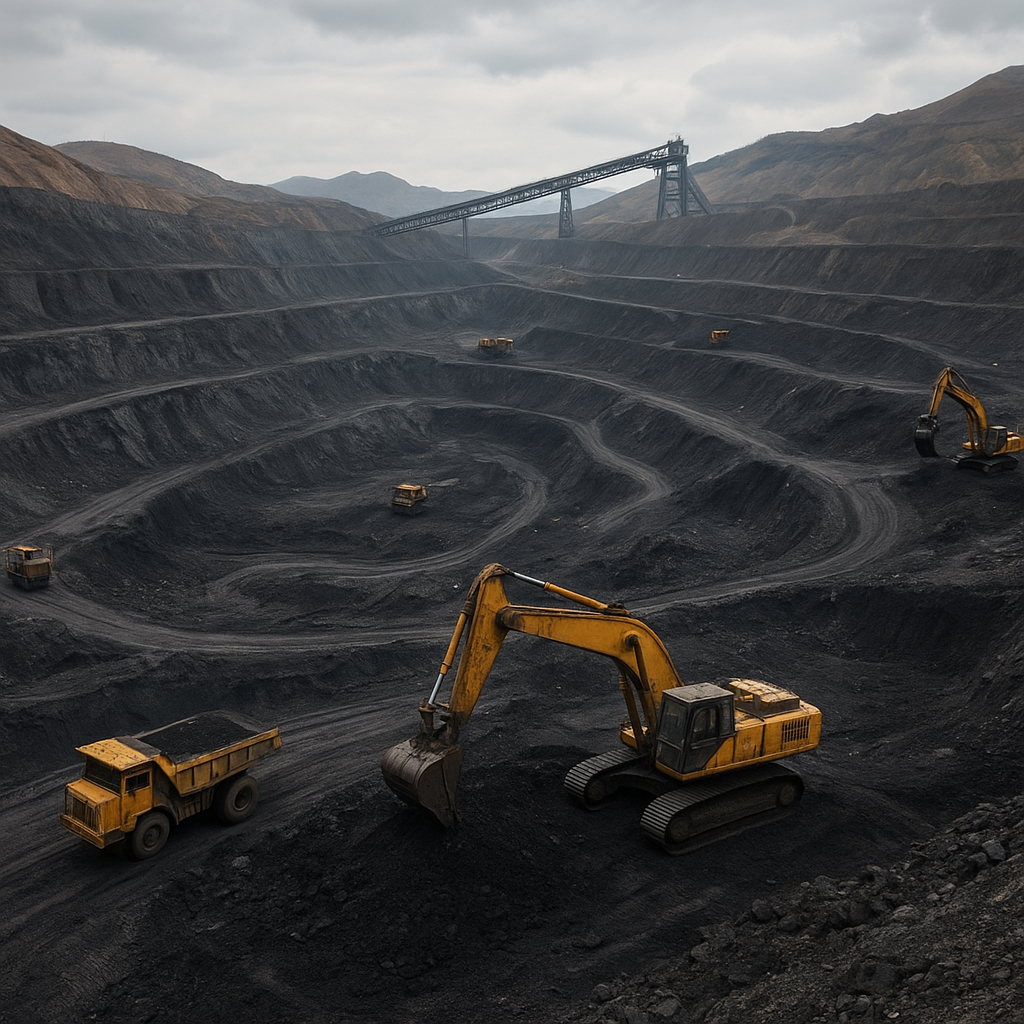
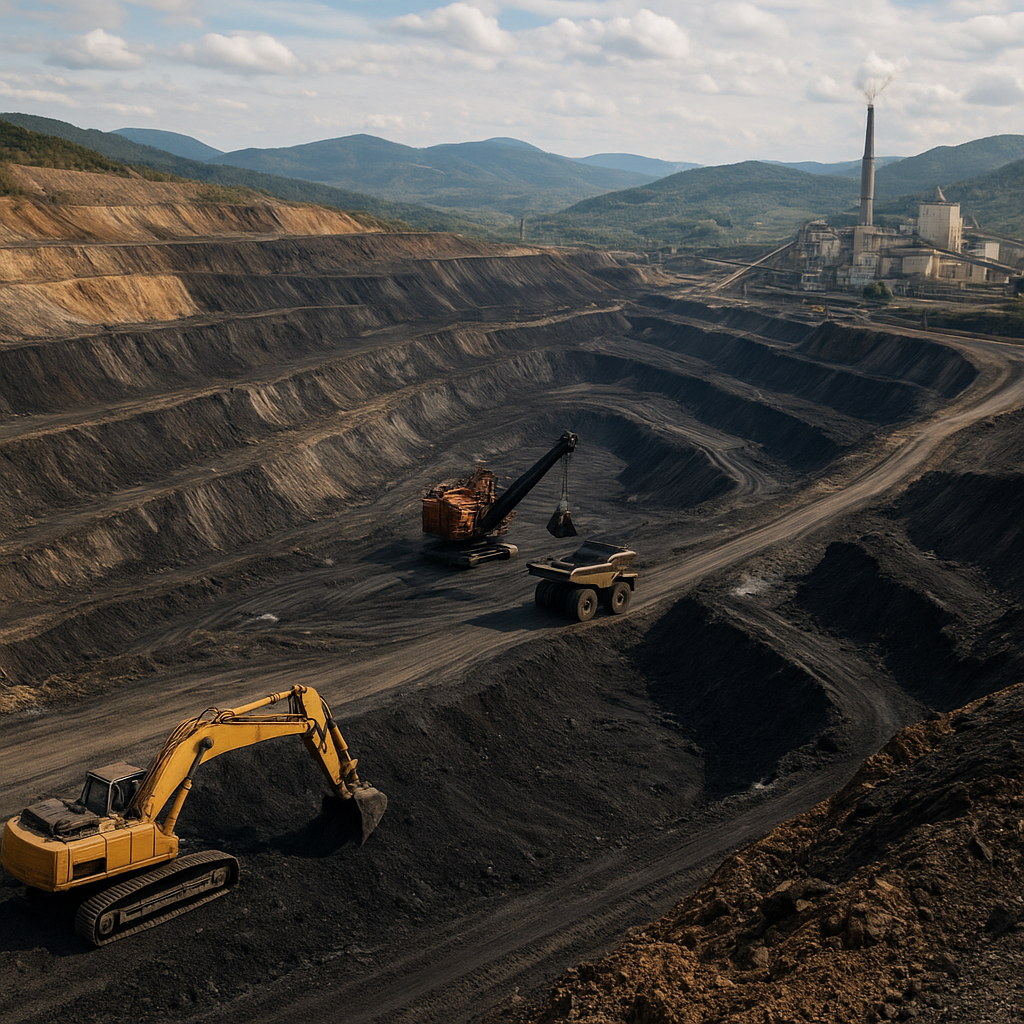
The Kangala Coal Mine is one of the many coal-producing operations in South Africa’s extensive coal belt. Located in the heart of Mpumalanga’s coal-rich basin, it contributes to the domestic energy supply and to regional economic activity while facing contemporary challenges of environmental management and market shifts. This article provides an overview of the mine’s location, geology, operations, economic significance, environmental and social impacts, and its likely trajectory in a changing global energy landscape.
Location and geological setting
The Kangala Coal Mine is situated in the Mpumalanga province of South Africa, within the broader Witbank (Emalahleni) coalfield — one of the country’s most productive coal basins. The Witbank coalfield lies east of Johannesburg and Pretoria and stretches across a landscape dominated by mining infrastructure, power stations, and associated industrial facilities. The region’s geology is characterized by extensive Permian-era sedimentary sequences that host multiple coal seams of varying depth, thickness and quality.
The coal seams in this part of Mpumalanga are typically part of the Vryheid Formation (Karoo Supergroup) and present coal with properties suitable primarily for thermal power generation and certain industrial uses. Seams are commonly interbedded with shales and sandstones, and mining operations must manage variable seam thickness, roof conditions and localized geological complexity. The location within the Witbank field means Kangala benefits from established transport and energy infrastructure, including rail links and proximity to large power stations.
What is mined and coal quality
At Kangala the principal commodity is thermal coal, commonly used for electricity generation in coal-fired power stations and for some industrial heat processes. The coal type in the Witbank field — and therefore at Kangala — is generally bituminous in rank, offering relatively high calorific value compared with lower-rank coals, but it can also be relatively high in ash and sulphur depending on the seam and the presence of interbands.
Key coal quality characteristics relevant to Kangala and similar mines include:
- Calorific value — typically sufficient for centralised power generation (thermal output commonly in the range expected of Witbank coals).
- Moisture — variable; affects net energy delivered.
- Ash content — can vary significantly seam-to-seam and affects furnace efficiency and disposal requirements.
- Sulphur and trace elements — require management for emissions and compliance with environmental standards.
Product quality is managed through beneficiation (washing) at many Witbank operations to reduce ash and improve calorific value when coal is destined for higher-specification markets or export. Coal from Kangala is used largely for domestic coal-fired generation and industrial customers, though some material historically has entered export streams when quality and logistics allow.
Operations, mining methods and infrastructure
Kangala, like many mines in the Witbank coalfield, has utilised a combination of surface (open-pit) and underground mining techniques depending on seam depth, overburden thickness and economic considerations. Typical operational aspects include:
- Use of draglines, shovels and trucks for open-pit extraction where seams are shallow and overburden economically removable.
- Room-and-pillar or bord-and-pillar underground mining where seams are deeper or surface disturbance must be minimised.
- Coal preparation and washing facilities to upgrade product quality for specific markets.
- On-site infrastructure for material handling, stockpiling, rail loading and road access to serve domestic power stations and export terminals.
The mine’s logistical connectivity to the national rail network is a critical asset, linking Kangala to major consumers such as Eskom power stations and to export terminals on the east coast when export volumes are dispatched. Reliable electricity and water supply are also essential operational inputs, both of which are under pressure in the region due to infrastructure constraints and competing demands.
Economic and statistical context
Precise, up-to-date production statistics for Kangala may vary by reporting year and company disclosures. Mines within the Witbank coalfield typically have historically posted annual production figures that can range from less than one million tonnes for smaller operations up to several million tonnes for larger collieries. While specific Kangala production numbers fluctuate, the mine contributes to the aggregate output of the Mpumalanga coalfield, which is the backbone of South Africa’s coal sector.
To place the mine in national context:
- South Africa’s annual coal production in recent years has broadly been in the range of roughly 200–250 million tonnes, though exact yearly figures vary with demand and operational disruptions.
- Mpumalanga is by far the leading producing province, accounting for approximately three quarters or more of the country’s coal output.
- Domestic electricity generation, principally via Eskom’s coal-fired stations, consumes a large share of South Africa’s coal, while quality-suitable coal is also exported to markets in Asia and elsewhere.
Economic contributions from Kangala and comparable mines include:
- Direct and indirect employment — mines provide jobs on site and in service industries (transport, engineering, supply).
- Fiscal revenues — royalties, taxes and export earnings when product moves to foreign markets.
- Local procurement and community investment — where companies invest in social projects, housing, health and education programs as part of corporate social responsibility (CSR) and Black Economic Empowerment (BEE) commitments.
Significance in industry and regional economy
Kangala plays a role typical of mid-sized collieries in the Witbank field: it helps underpin national energy security by supplying coal to power stations and provides regional economic stimulus through employment and supplier contracts. The presence of mines like Kangala supports ancillary industries such as transport (rail and road logistics), equipment supply and maintenance, and coal beneficiation.
Key industry links and impacts include:
- Contribution to energy reliability — even as South Africa navigates energy sector challenges, coal remains dominant in the generation mix and mines like Kangala are part of that supply chain.
- Export linkages — when product quality and logistics permit, coal from the Witbank area can be blended and exported, bringing foreign exchange inflows.
- Local economic multipliers — wages and procurement ripple through nearby towns and provincial economies.
Environmental and social considerations
Coal mining in Mpumalanga, including operations such as Kangala, carries significant environmental and social responsibilities. The main environmental challenges are:
- Air quality — mining and coal handling generate dust and particulate emissions; nearby power stations add combustion-related pollutants.
- Water management — dewatering, runoff and contact water require careful treatment to avoid polluting rivers and groundwater; acid mine drainage is an ongoing risk in some coal basins.
- Land disturbance and rehabilitation — open-cast mining transforms landscapes, necessitating progressive rehabilitation and long-term land-use planning to restore ecosystems or convert land to other productive uses.
Social and community issues include employment safety and health, community expectations about jobs and development, and the legacy of mining when operations cease. Effective community engagement, transparent royalty and benefit sharing and adherence to environmental regulations are critical to maintaining social license to operate. South African mining regulation also emphasises rehabilitation bonds and closure planning to ensure mines restore lands post-mining.
Safety, technology and operational improvements
Safety is a central focus in South African coal mining. Kangala, like other collieries, operates under safety frameworks that address underground hazards, surface operations, heavy machinery, and occupational health risks such as respiratory ailments. Industry-wide trends and technologies that affect safety and efficiency include:
- Automation and remote-control equipment to reduce human exposure to hazardous tasks.
- Real-time monitoring systems for equipment condition, gas and dust levels, and geotechnical stability.
- Advanced coal processing and washery techniques to improve product quality and reduce waste.
- Rehabilitation technologies that accelerate revegetation and landscape stabilization.
Investment in training and continuous improvement in safety culture is critical. Mines that successfully integrate modern monitoring systems and maintenance practices typically see improved productivity and lower incident rates.
Regulatory and market pressures
Kangala operates within a regulatory environment that includes national mining and environmental legislation, labour law obligations and specific conditions related to Black Economic Empowerment and local procurement. Market pressures affecting the mine include:
- Fluctuating domestic demand driven by the performance of Eskom’s generating fleet and industrial consumption.
- International coal price volatility and competition from other coal-exporting countries.
- Longer-term policy and investor pressure associated with climate change, decarbonisation and shifts in global finance that can restrict capital for fossil-fuel projects.
These pressures create a need for strategic adaptation: improving cost-efficiency, diversifying product streams (e.g., supplying higher-value thermal coal or specialised industrial coals), and demonstrating credible environmental management plans to access capital and retain market share.
Community relations and socio-economic programs
Mining companies operating in Mpumalanga commonly engage in community development programs and social investment initiatives. These include:
- Local employment and skills training to increase the proportion of staff from neighbouring communities.
- Support for small and medium enterprises (SMEs) through supplier development schemes.
- Investment in health, education and infrastructure projects, often in cooperation with local government and NGOs.
- Initiatives aimed at mitigating the social impacts of mine closure through retraining and alternative livelihood programs.
Effective community relations are crucial to maintain stable operations. Where mines like Kangala have established programs that align with local priorities, they can generate long-term benefits and reduce conflict risk.
Historical background and ownership dynamics
The history of coal mining in the Witbank field stretches back more than a century, with many collieries changing ownership, scale and operating models over time. Kangala, like other mines in the region, has experienced cycles of investment, consolidation and operational reconfiguration in response to market conditions and regulatory change.
Ownership structures in South African coal mining often involve a combination of private companies, local investors, and arrangements to meet national economic empowerment objectives. Over time, many mines have restructured to improve efficiencies, address environmental liabilities and to satisfy changing market requirements.
Future outlook and challenges
The medium-term outlook for Kangala Coal Mine is shaped by several converging trends:
- Continued domestic dependence on coal for electricity through the coming decade, providing ongoing demand for thermal coal, albeit with pressure to reduce emissions.
- Potential for reduced export volumes if global coal demand declines faster than regional supply adjustments, though some markets may still require South African quality coals for years to come.
- Regulatory tightening and investor scrutiny on environmental performance, necessitating improved water management, dust control and progressive rehabilitation.
- Opportunities for operational optimisation through technology adoption and cost management to maintain competitiveness.
Key strategic directions for Kangala and similar operations include enhancing efficiency, diversifying into higher-margin product lines where feasible, strengthening environmental compliance and community programs, and planning responsibly for closure and post-mining land uses. These measures will determine the mine’s resilience as the global energy system gradually evolves.
Interesting facts and broader perspective
Some broader and interesting considerations about mines like Kangala and the Witbank coalfield:
- The Witbank region is one of the most intensively mined coal basins in South Africa, and its coal underpins much of the country’s industrial development.
- Coal operations in Mpumalanga have driven the growth of related engineering, rail and port industries, forming integrated value chains that serve both domestic and international markets.
- Mine rehabilitation and the repurposing of former pit sites — for example into commercial sites, renewable energy hubs or managed wetlands — are becoming increasingly explored as long-term post-mining options.
- Technological shifts, such as improved washery processes and emissions-reducing combustion technologies, may extend the commercial life of thermal coal assets while lowering their environmental footprint.
Conclusions
Kangala Coal Mine is representative of mid-sized coal operations in Mpumalanga’s Witbank coalfield: it supplies thermal coal to power stations and industrial users, supports local economies through jobs and procurement, and must navigate environmental, regulatory and market pressures. While precise production figures and ownership details can vary over time, the mine’s significance lies in its role within South Africa’s broader coal-based energy system and regional economy. The future of Kangala will depend on a balanced approach that maintains operational efficiency and economic contributions while addressing the environmental and social responsibilities that modern mining demands.