Industrial foundry coal plays a central role in traditional metalcasting and steelmaking processes, supplying both the thermal energy and specific carbon characteristics required by many furnaces. This article examines the geology, properties, extraction, processing, economic importance and future prospects of what is commonly termed foundry coal — a specialty category often overlapping with coking coal and other high-rank metallurgical coals. We will look at where such coals are mined, how they are transformed into coke and other products, the market and statistical context, as well as environmental and technological trends such as decarbonization. The text includes practical details for industry readers and general-interest context for policymakers and students.
Geology, Types and Global Distribution
Coal is a sedimentary rock formed from the burial and alteration of plant material over geological time. Ranks of coal range from lignite and subbituminous through bituminous to anthracite, with increasing carbon content and calorific value. Foundry and coking coals are typically higher-rank bituminous coals with specific plasticity, volatile matter and caking behavior that allow them to be converted to high-strength coke in ovens.
Major producing regions for metallurgical and foundry-grade coals include:
- Australia — Queensland and New South Wales (Bowen, Surat and Sydney basins) are the world’s largest exporters of metallurgical coal and supply the global steel industry.
- United States — Appalachian and Illinois Basin coals historically supplied foundries; high-quality coking coal is produced in parts of Pennsylvania, West Virginia and Kentucky, as well as in the Powder River Basin (mainly thermal).
- Russia — Kuzbass and Far Eastern basins supply both domestic steelmaking and exports.
- Canada — Alberta and British Columbia produce significant metallurgical coal (highly sought for premium coking properties).
- China — Shanxi, Inner Mongolia and other northern basins provide large volumes of both thermal and metallurgical coal; much of China’s coking coal is produced domestically.
- Poland, South Africa, Colombia and India — each has notable metallurgical/foundry coal resources that supply domestic and regional markets.
Within these regions, the geological occurrence of suitable foundry coal is determined by historical peat deposits, burial depth, and tectonic and thermal maturation. Not every coal seam is appropriate; foundry-grade deposits are sought where rank, plasticity and impurity profiles align with coking requirements.
Physical and Chemical Properties Important to Foundries
Foundry coal is valued for its ability to produce a coke that provides a combination of mechanical strength, reactivity and thermal properties. Key coal and coke characteristics include:
- Volatile matter and fixed carbon — influence the coke yield and combustion behavior.
- Plasticity and caking index — describe how a coal softens and fuses during heating and are essential for coking behavior.
- Ash content — lower ash is generally preferable because ash is inert and reduces coke reactivity; ash composition (silica, alumina) also matters.
- Sulfur content — impacts product quality; low sulfur is critical for many foundry irons and steels.
- Porosity and mechanical strength of produced coke — high strength ensures permeability and support in the furnace burden, while controlled porosity affects gas flow and reduction reactions.
Foundry coke (the direct solid product used in cupola furnaces and some blast furnaces) is often large-lump, dense and mechanically robust. It serves a dual role in the cupola: as a primary heat source and as a support matrix that allows gas flow through the burden. Consequently, coals destined for foundry coke production are blended and coked to meet stringent size, strength and impurity specifications.
Extraction, Preparation and Coke Production
Mining methods for foundry-grade coal include both underground and surface (open-pit) techniques, depending on seam depth, geology and economics. After extraction, coal goes through preparation plants where it is crushed, screened and washed to remove impurities and adjust size fractions. Beneficiation can significantly influence ash and sulfur levels, improving the feedstock for coking processes.
Coke production involves heating coal in the absence of oxygen in coke ovens (by-product or non-recovery ovens) to drive off volatiles and form a porous carbonaceous residue — coke. The coking process yields valuable by-products such as coal tar, benzene, toluene, phenols and ammonia, which have chemical industry value but also require environmental controls.
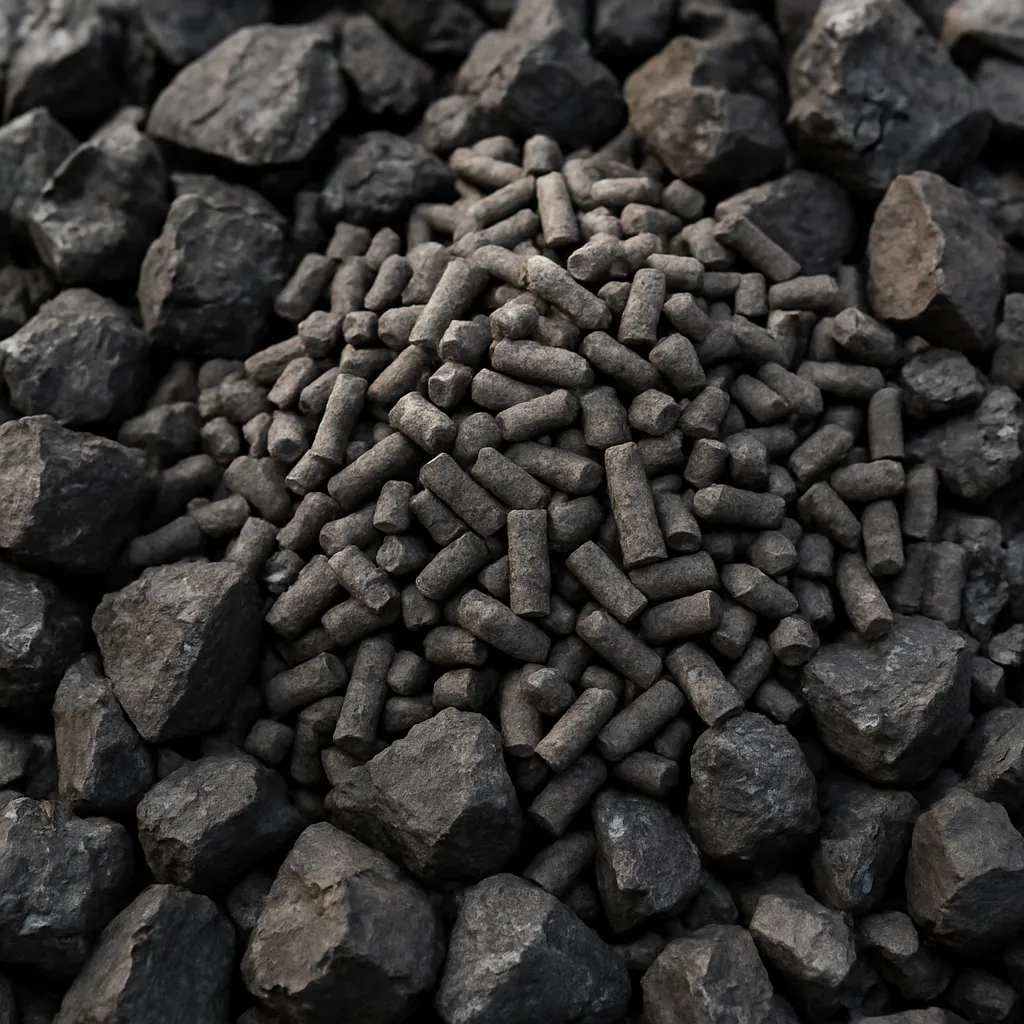
Foundry operations may purchase ready-made foundry coke or, in regions with integrated supply chains, foundries may obtain coke from nearby coking plants. Alternative approaches, particularly where premium coke is scarce, include briquetting coke breeze into larger lumps or producing synthetic coke-like materials from smokeless fuels or coal blends. These substitutes have varying success depending on the furnace technology.
Economic and Statistical Overview
Quantifying the market for foundry coal specifically is challenging because statistical agencies usually aggregate coal into broad categories: thermal coal and metallurgical (or coking) coal. However, some broad facts and trends are useful for context.
- Global coal production in recent years (2020–2022) was on the order of about 7–8 billion tonnes annually, with fluctuations driven by power-sector demand, industrial activity and policy shifts.
- Metallurgical and coking coals represent a significant minority of total coal volumes — commonly estimated in the ballpark of 10–15% of global production. Within that share, the subset suitable for foundry coke is smaller, but strategically important because of quality constraints.
- Major exporters of metallurgical coal (by volume and value) include Australia, Russia, Canada and the United States. Australia dominates seaborne coking coal trade, driving global prices and availability.
Price behavior for coking and foundry-grade coals can be volatile. Market tightness, strong global steel demand, supply disruptions and geopolitical events have produced price spikes — for example, in 2021–2022 premium coking coal prices reached multi-year highs, occasionally exceeding several hundred U.S. dollars per tonne at peak moments. Thermal coal and coking coal price trends differ because they serve different markets and are influenced by different policy and logistical factors.
Trade flows are regional and global. Countries with little or no domestic high-grade coking coal rely on imports for steel and foundry industries. Conversely, regions with abundant foundry coal can capture higher-value exports. For foundries, logistics and the quality assurance of inbound coke or coal can be decisive for production costs and product quality.
Role in Foundries and Steelmaking
Foundry coal (after conversion to coke) performs several essential functions in iron foundries and some steelmaking routes:
- It serves as a concentrated heat source to melt metal charges and maintain furnace temperatures.
- It provides a reducing atmosphere (via CO and hydrogen generated in coke combustion) that assists in decarburization and in controlling slag-metal chemistries.
- Mechanically, coke forms a permeable bed in cupolas and blast furnaces that permits gas flow and supports the burden; its strength prevents excessive degradation under load.
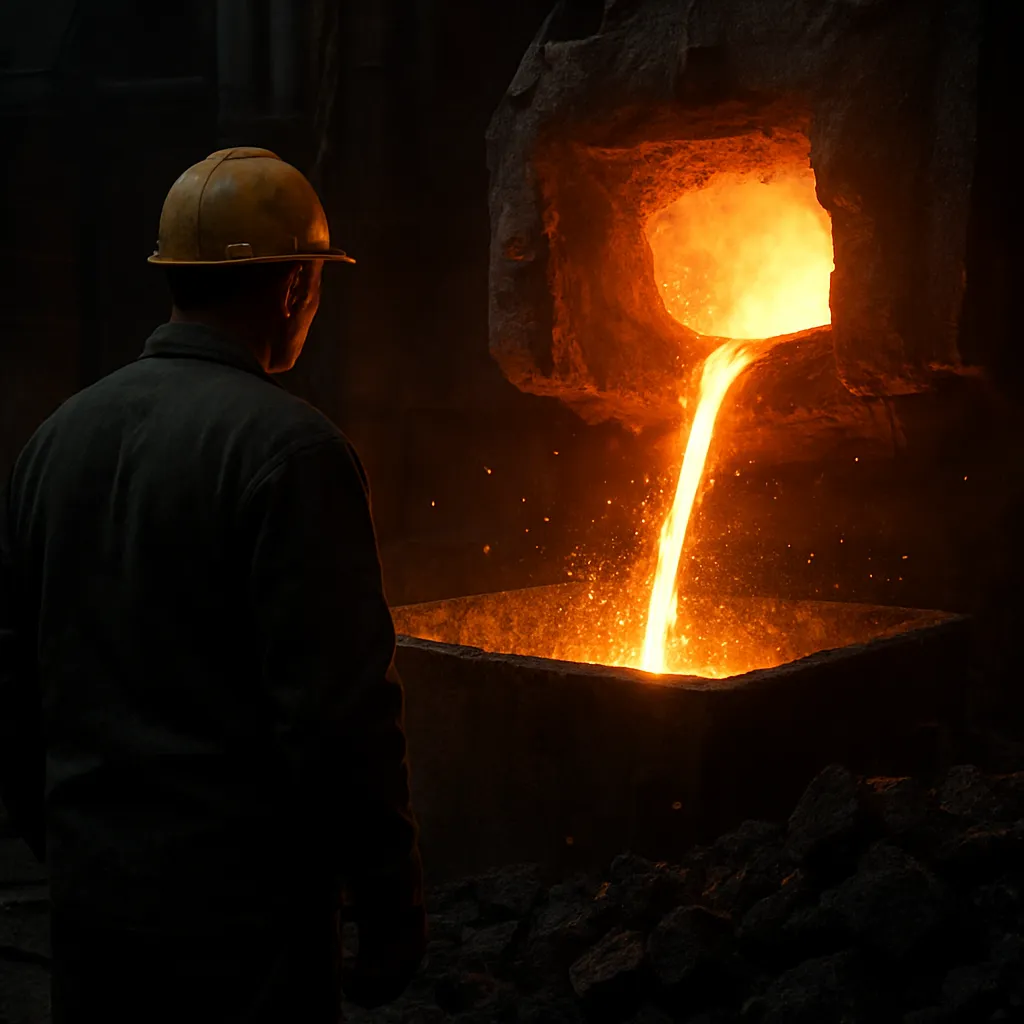
The most traditional consumer of foundry coke is the cupola furnace — a vertical shaft furnace used extensively for melting cast iron. Cupolas rely on coke both for fuel and for structural porosity. Modern foundries increasingly use induction furnaces or electric-arc melting, which reduce or eliminate coke demand, but cupolas remain important in regions where electricity cost is high or where specific metallurgical attributes are better achieved with coke-fired melting.
In blast furnace steelmaking, coke is a primary reductant and structural component in the furnace stack. The quality of blast-furnace coke (high strength, low reactivity) is distinct from typical foundry coke in some respects, and parameters like Coke Reactivity Index (CRI) and Coke Strength after Reaction (CSR) are used to assess suitability for blast-furnace service.
Environmental Impacts and Regulation
Coal mining, coke production and combustion have significant environmental footprints. Key concerns include:
- Greenhouse gas emissions — combustion of coal and coke produces CO2; coke ovens and furnaces also emit methane and other greenhouse gases unless controlled.
- Air pollutants — particulate matter, sulfur oxides (SOx), nitrogen oxides (NOx), and volatile organic compounds (VOCs) from coking operations and foundry furnaces.
- Water and soil contamination — acid mine drainage, heavy metals and contamination related to coal washery effluents or coke-oven by-products.
- Land use and biodiversity — open-pit mining and associated infrastructure can cause habitat loss and landscape alteration.
Regulatory frameworks in many jurisdictions have tightened emissions limits and imposed stringent controls on by-product handling. This has raised compliance costs for coking plants and coke-using foundries, prompted investment in emission-control technologies and encouraged shifts toward alternative melting technologies. Environmental pressures are also driving innovation in decarbonization solutions for steel and foundry sectors.
Technological Trends, Alternatives and Decarbonization Pathways
The foundry and steel industries face significant pressure to reduce carbon intensity. Several complementary technological and operational trends are relevant:
- Electrification — increasing use of induction and electric-arc furnaces reduces reliance on coke. These routes are particularly compatible with higher scrap metal input and are often powered by grid electricity, which can be decarbonized.
- Hydrogen-based processes and direct reduced iron (DRI) — hydrogen can serve as a low-carbon reductant for certain steelmaking routes, potentially decreasing demand for metallurgical coal in primary steelmaking.
- Recycling and circular economy — increased scrap use in electric furnaces reduces primary coke needs, though certain castings and metallurgical specifications still require primary melted iron.
- Carbon capture and utilization/storage (CCUS) — retrofitting coke ovens, blast furnaces or foundry exhausts with CCUS can reduce net emissions, albeit at considerable cost.
- Advanced coke substitutes — briquetting of coke breeze, synthetic carbon materials, or bio-based carbon additives (char, torrefied biomass blends) are being explored to supplement coke or adjust metallurgical behavior.
Transition timelines and technology adoption vary by region, depending on electricity costs, scrap availability, capital access and regulatory incentives. In many developing economies, foundries will continue to rely on coke for decades unless strong policy or market drivers accelerate change.
Challenges, Supply Risks and Market Dynamics
Several structural challenges affect the availability and cost of foundry coal and coke:
- Quality mismatch — not all coking coal can produce high-quality foundry coke; premium coals command a price premium and can be subject to shortages.
- Logistics and trade disruptions — seaborne trade concentrates supply in a few exporting countries; geopolitical events, pandemics and transport bottlenecks can cause sharp price volatility.
- Regulatory and social license constraints on mining — permitting delays, community opposition and environmental limits can restrict supply growth.
- Competition from steel decarbonization efforts — decreasing primary steel production through blast furnaces reduces demand for metallurgical coal, but growing demand for castings in some sectors may sustain foundry coke needs.
For foundries, strategic approaches include securing long-term supply contracts, maintaining local stockpiles, investing in alternative melting technologies and improving furnace efficiency to reduce coke consumption per tonne of metal produced.
Interesting Historical and Technical Notes
Coal and coke have been central to industrial development. The production of coke from coal enabled the high-temperature metallurgy that fueled the 18th and 19th century Industrial Revolution. Technical refinements — from beehive ovens to by-product ovens, to modern non-recovery and recovery ovens — reflect changing environmental priorities and market structures.
From a materials science perspective, the transformation of coal into coke is a remarkable case of thermochemical engineering: macromolecular coal structures volatilize and rearrange under heat, leaving a nearly pure carbon mesh that contributes both chemical and mechanical functions in metallurgical processes. Characterization tools such as petrographic analysis, plastometers and thermogravimetric methods are routinely used by coal and coke technologists to predict performance.
Outlook and Conclusions
Foundry coal, while a niche within the broader coal market, remains a strategically important commodity for metalcasting and certain steelmaking routes. Its future will be shaped by:
- Technological change in the metals sector (electrification, hydrogen and recycling).
- Environmental regulation and carbon-pricing regimes that shift relative economics between fossil-based and low-carbon pathways.
- Global trade dynamics and the concentration of high-quality coking coal resources in a few exporting countries.
- Innovation in alternative carbon sources and improved furnace efficiency.
For industrial planners and foundry managers, close attention to coal quality parameters (ash, porosity, sulfur and plasticity), supply-chain resilience and emerging low-carbon technologies will be essential. National policymakers should weigh the regional economic benefits of local coal and coke industries against environmental and climate goals, fostering transitions that preserve jobs and skills while reducing emissions.
Practical Recommendations for Stakeholders
- Foundries: audit coke consumption and quality versus required metallurgical outcomes; explore briquetting and blending as short-term mitigations for high-cost coke markets.
- Miners and suppliers: invest in consistent quality control, transparent testing and long-term contracts to stabilize relationships with foundry customers.
- Policymakers: design transition policies that support modernization of foundries (energy efficiency, electrification incentives) and responsible mine closure and land reclamation programs.
- Investors and analysts: monitor price signals in seaborne coking coal markets, regional regulatory changes and the pace of steel-sector decarbonization for long-term demand forecasts.
Final note
Foundry coal sits at the crossroads of geology, chemistry, industrial metallurgy and global trade. While its absolute market share is modest compared with thermal coal, its quality constraints and link to steel and foundry production give it outsized industrial importance. The coming decades will test how quickly the metalcasting and steel sectors can adapt to environmental mandates while maintaining the metallurgical performance that foundry-grade coke provides.