The Curragh Coal Mine is one of the established coal operations in Central Queensland, Australia. Situated in a region famous for its rich coal geology and long-standing mining activity, Curragh has played a noteworthy role in supplying coal to domestic power stations and international markets. This article outlines the mine’s geographical setting, the nature of its coal, operational characteristics, economic significance, environmental and social responsibilities, and the outlook for the operation amid changing global energy and commodity markets.
Location and geological setting
The Curragh site is located in Central Queensland near the town of Blackwater, within the broader Bowen Basin, a major Australian coal-producing province. The Bowen Basin contains multiple Permian-aged coal measures and is characterised by extensive deposits of both thermal and metallurgical coal. Curragh accesses seams that are part of the Rangal and adjacent coal measures, which are typical sedimentary coal seams formed in lowland coastal and deltaic environments during the Permian period.
The Bowen Basin’s geology is favourable for large-scale, relatively shallow coal deposits that can be exploited by surface mining methods. Curragh’s geology yields coal with properties suitable primarily for electricity generation and industrial heat use. The mine’s location in Queensland places it within a well-developed infrastructure corridor of rail, roads and export terminals, connecting inland coalfields to Queensland’s major seaports such as Hay Point, Dalrymple Bay and Gladstone.
Type of coal and quality characteristics
Curragh principally produces thermal coal, which is used for power generation in domestic and international markets. Thermal coal from the Bowen Basin is generally valued for its predictable combustion characteristics and heat content. Typical commercial descriptors for coal quality include calorific value (measured in kilojoules per kilogram), ash content, moisture, volatile matter, and sulfur levels. While exact seam chemistry varies within the mine, Bowen Basin thermal coals often have moderate to high calorific values with variable ash content, depending on wash plant practices and blending strategies.
At Curragh, raw coal undergoes crushing, screening and washing to improve product quality for customers. Washing reduces ash and impurities, improving the net energy content and making the coal more marketable. Products are typically segregated into saleable thermal coal product categories that meet specifications for specific international utilities, industrial users and domestic power plants.
Mining methods and infrastructure
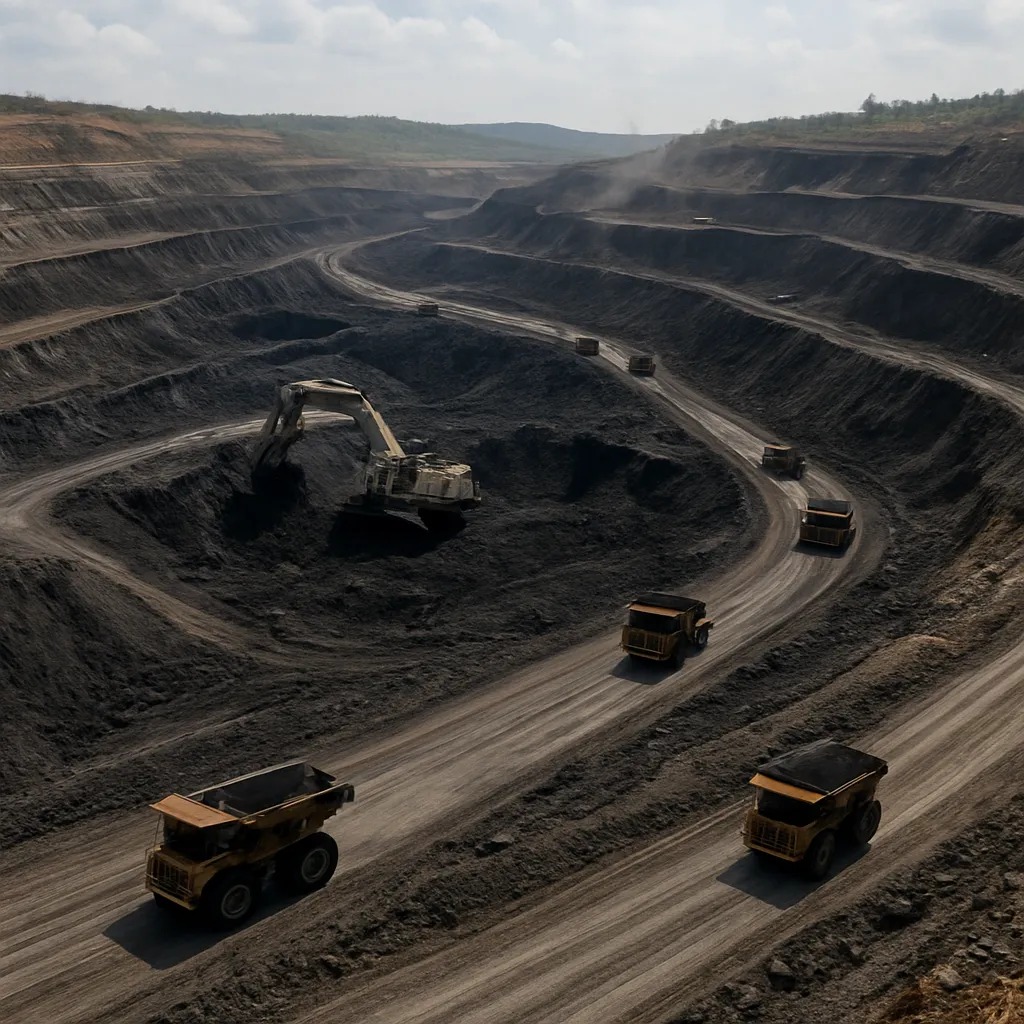
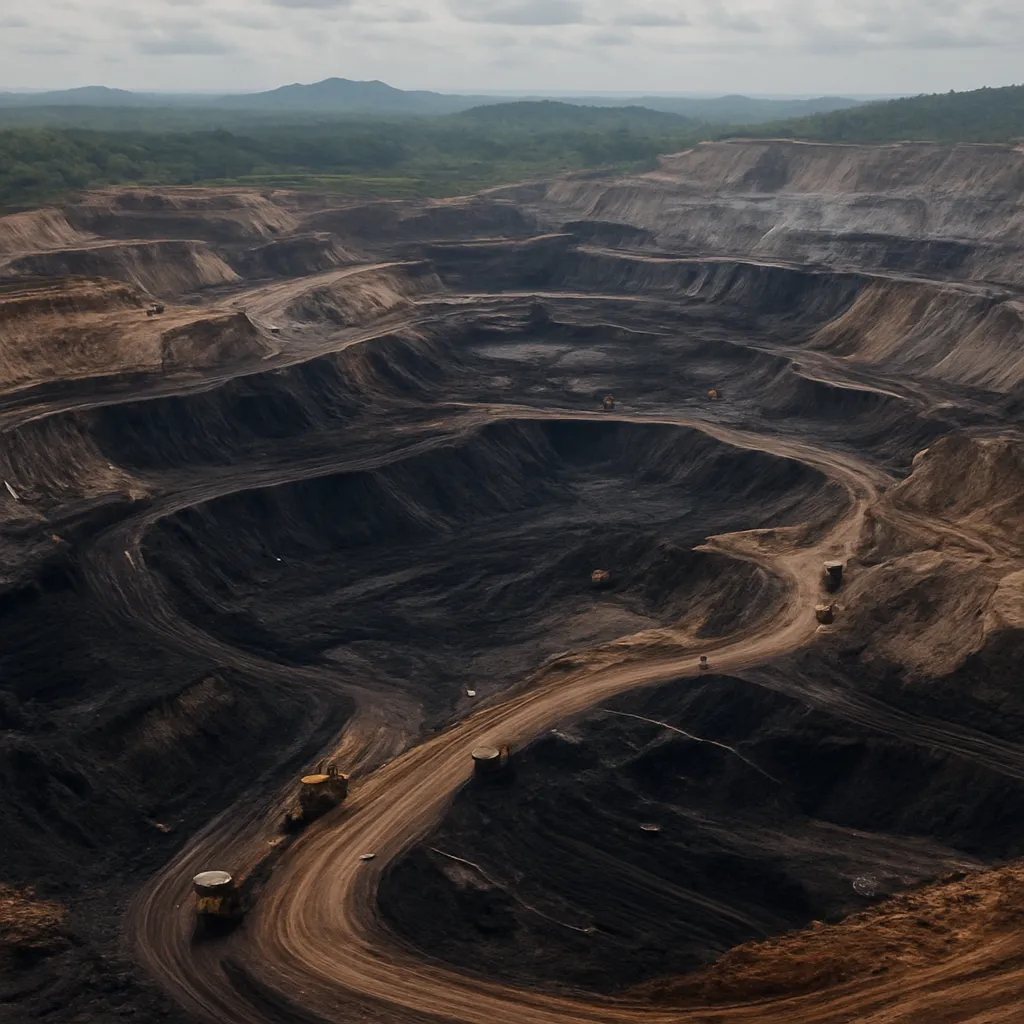
Curragh has historically been operated as a predominantly open-cut (surface) mine, employing standard large-scale surface mining methods. Open-cut operations involve removing overburden, extracting coal using large excavators and trucks, and transporting run-of-mine material to processing facilities. The mine complex usually includes a coal handling and preparation plant (CHPP), overburden dumps, tailings and water-management systems, workshops, and administrative facilities.
Logistics and transport are central to Curragh’s value chain. Coal is transported by rail using the Blackwater rail system to coastal ports for export or to domestic customers. The mine’s connectivity to rail and port infrastructure enables efficient dispatch and forms an essential part of the supply chain linking Bowen Basin production to global energy markets. Rail is the economic artery for the mine, enabling multi-million-tonne annual throughput to shipping terminals.
Production volumes and workforce
Annual production at Curragh has varied across years depending on market demand, operational plans and investment cycles. Historically, output from the mine has been in the multi‑million tonnes per annum range. At times, production figures have been reported in the order of several million tonnes per year (commonly cited operational ranges for mines of this scale are roughly 5–10 Mtpa), though yearly throughput can fluctuate with market conditions, cutback scheduling and resource life planning.
The operation supports a significant number of jobs directly at the mine site and indirectly through service companies and the regional supply chain. Employment at a mine like Curragh typically includes operators, engineers, maintenance staff, environmental specialists, logistics personnel and administrative workers. Including contractors, the workforce often numbers in the hundreds to low thousands during peak activity, with economic spillovers into accommodation, retail, transport and local services in nearby towns.
Economic impact and export markets
Curragh contributes to both local and national economies through employment, royalties, taxes and export earnings. Coal exports from Queensland represent a substantial part of Australia’s commodity export portfolio, and mines like Curragh feed international demand for reliable thermal coal supplies. Export markets for Australian thermal coal traditionally include countries across East and Southeast Asia—such as Japan, South Korea, Taiwan, India, and China—where coal remains an important fuel for electricity generation and industrial processes.
Financially, revenue streams derive from the sale of coal to domestic utilities and export customers, with prices influenced by global coal markets, freight costs, and product quality. Royalties and corporate taxes paid to state and federal governments, along with payroll and local procurement, generate fiscal and economic benefits. In regional terms, Curragh’s operation supports small businesses and provides long-term economic anchors for communities around Blackwater and other Central Queensland service towns.
Regulatory environment and community relations
Operations at Curragh are governed by Australian and Queensland mining laws and environmental regulations. The regulatory framework addresses mine approvals, environmental impact assessments, water rights, rehabilitation obligations and workplace health and safety standards. Compliance with environmental performance standards, progressive rehabilitation and transparent community consultation are required components of the mining lease and development approvals.
Community engagement is a continual process. The mine typically undertakes consultation with local stakeholders, including councils, residents, agricultural users, and Indigenous communities. Social investment programs, local procurement policies and employment and training initiatives are common methods mines use to build positive local relationships. Management of air quality (dust), noise, water discharge and traffic around mine operations are frequent community concerns that operations seek to manage through technical controls and monitoring programs.
Environmental management and rehabilitation
Environmental stewardship is a significant focus for modern mining operations. Curragh implements water management systems to control stormwater and groundwater, sedimentation controls around disturbed areas, and dust suppression measures on haul roads and stockpiles. Progressive rehabilitation—whereby disturbed land is progressively recontoured, topsoiled and revegetated during the operational life rather than only after mine closure—reduces the overall environmental footprint.
Mine closure planning and long-term rehabilitation aim to return land to agreed post‑mining land uses such as grazing, conservation or other community-preferred outcomes. Rehabilitation activities are overseen by regulators and typically include monitoring programs to verify the success of revegetation, erosion control and the re-establishment of ecosystem services. Noise, greenhouse gas emissions and water impacts remain ongoing challenges, subject to both technical mitigation and broader policy frameworks addressing climate change.
Health, safety and technological innovation
Modern mine sites maintain a strong focus on workplace safety, training and risk management. Curragh, like other large operations, applies risk assessment frameworks, incident reporting systems and continuous training to reduce workplace injuries and manage hazards associated with heavy machinery, blasting, load-haul operations and transport movements.
Technological adoption—such as fleet management systems, GPS tracking, automated drilling, real-time monitoring of equipment, and improvements in processing plant efficiency—can improve productivity and safety. Advances in predictive maintenance reduce unplanned downtime, and data analytics assist operational planning and optimisation. As the industry evolves, automation and remote-operated equipment have been increasingly explored to enhance efficiency and reduce safety risks.
Statistical context and comparative perspective
In a national context, Queensland’s coal industry supplies a substantial share of Australia’s coal exports. Although production and demand figures change with global energy patterns and commodity cycles, coal remains a major export commodity for the state. The Curragh mine, as one of the Bowen Basin operations, contributes to Queensland’s standing as a principal coal-producing region.
Exact figures for Curragh’s remaining reserves and historic cumulative production are reported periodically in company disclosure documents and regulatory filings. Those seeking the most recent statistical detail—such as proven and probable reserves (Mt), resources, and specific annual production numbers—should consult the mine operator’s public reports, Queensland government mineral resource summaries or Australian government energy and resource statistical releases for up-to-date and audited numbers.
Future outlook, challenges and opportunities
The future for Curragh is shaped by several intersecting trends. Global energy transition dynamics, including rising ambitions for lower-carbon energy sources and policies to reduce greenhouse gas emissions, affect long-term demand for thermal coal. Short- to medium-term markets, however, continue to reflect demand from regions where coal remains an economic baseload fuel or where energy security priorities support continued coal-fired generation.
Operationally, extending the life of the mine depends on remaining reserves, commodity prices, regulatory approvals for new cutbacks, and the economics of extraction and processing. Opportunities include improving product yield through processing enhancements, cost efficiencies via mechanisation and optimised logistics, and diversifying services in the regional economy. Challenges comprise volatile commodity prices, increasing environmental compliance expectations, and community and investor pressure concerning climate and sustainability performance.
Interesting facts and regional significance
- Curragh is part of the broader Bowen Basin complex—one of Australia’s most productive coal provinces and a long-standing contributor to the country’s export earnings.
- The mine’s workforce and supply contracts underpin a network of regional suppliers and service providers, making it an economic anchor for nearby communities.
- Curragh’s product has historically supplied both domestic power stations and international markets across Asia, demonstrating the global integration of Queensland’s coal industry.
- Progressive rehabilitation and community programs at Curragh illustrate how modern mines seek to balance resource extraction with environmental and social responsibilities.
In summary, the Curragh Coal Mine represents a significant component of Central Queensland’s mining landscape. With its strategic location in the Bowen Basin, focus on thermal coal production, and integration into rail and port logistics, Curragh has been economically important to regional communities and export markets. Looking forward, its trajectory will reflect the combined influences of resource endowment, market demand, operational innovation and evolving environmental and policy expectations. Sound management of these dimensions will determine the role Curragh plays in the Australian coal sector during the coming decades, including how effectively it addresses rehabilitation, maintains safe operations, and manages economic transitions affecting local employment and livelihoods.