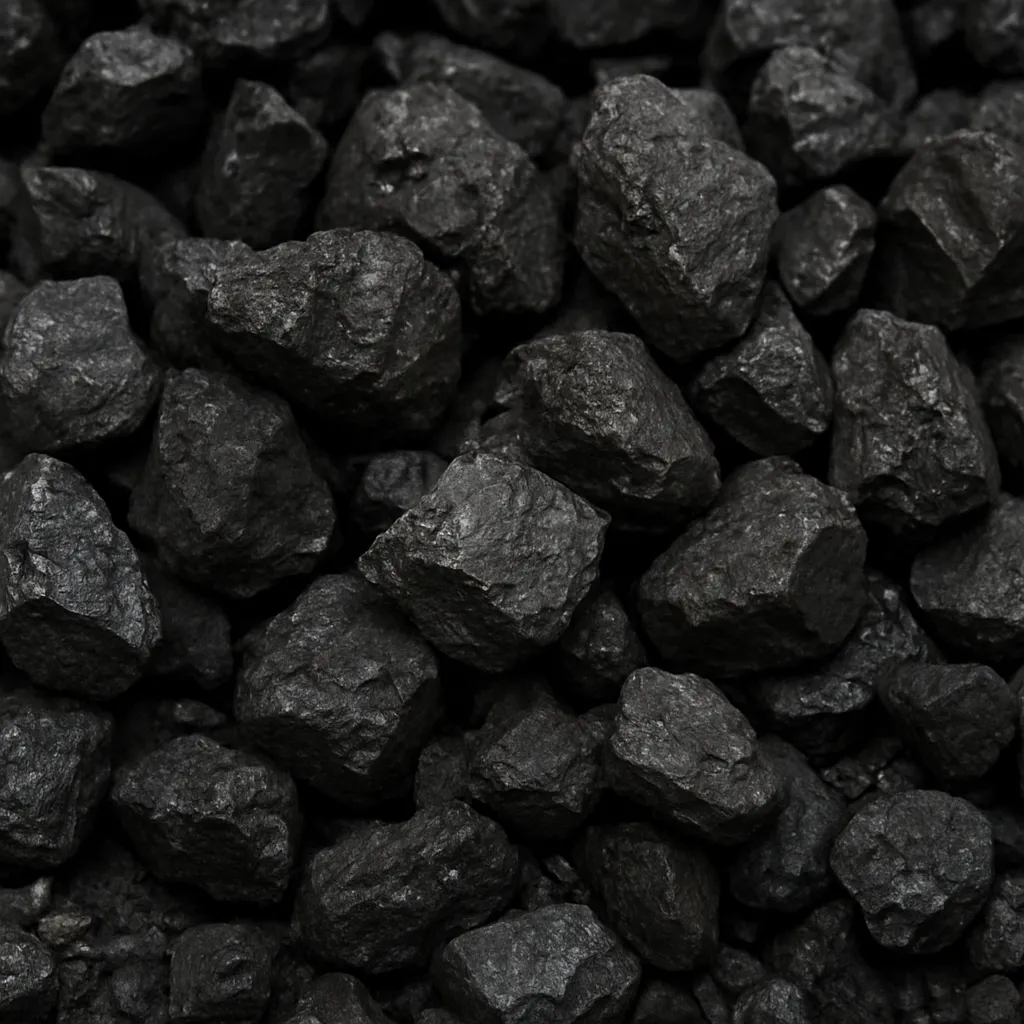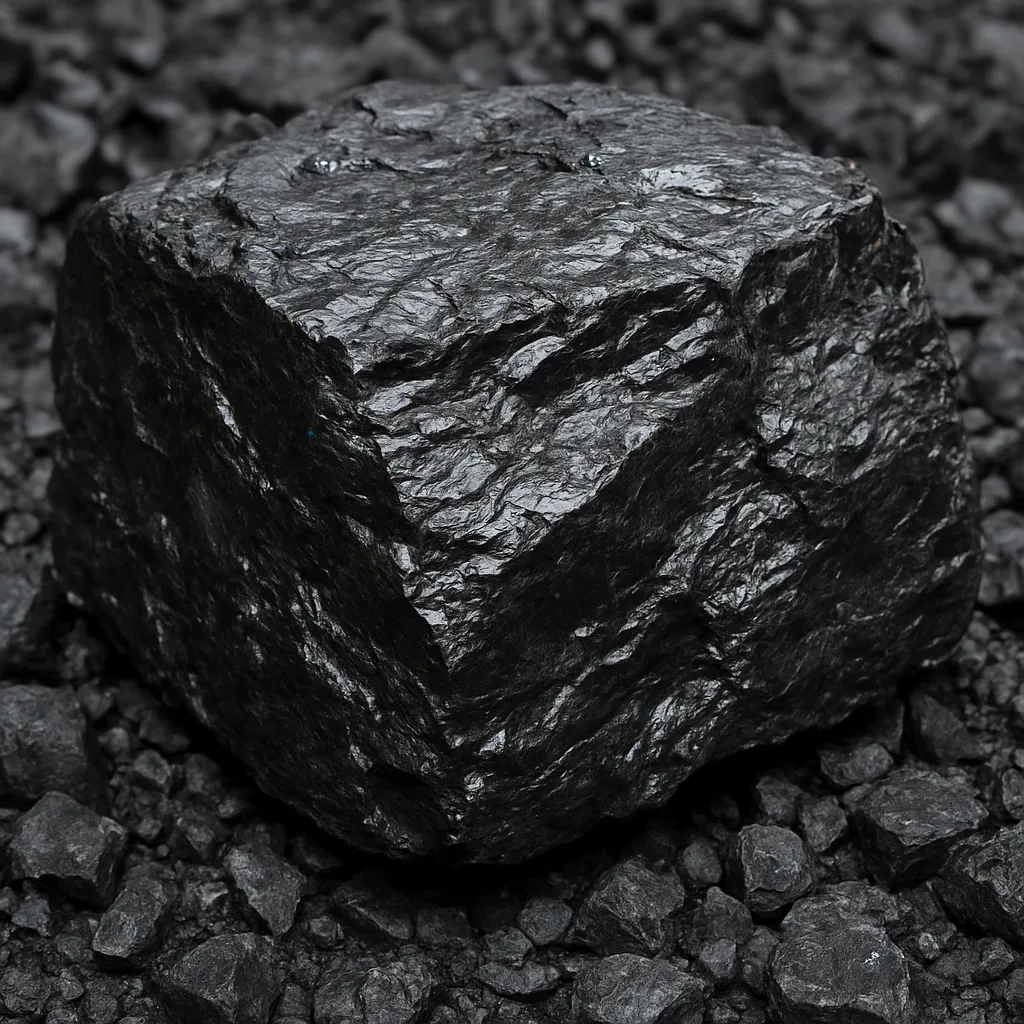
Coal with high vitrinite content represents a distinct and economically important category of coal whose physical and chemical characteristics influence its use across power generation, metallurgical processes, chemical conversion and research. This article reviews the petrographic nature of vitrinite-rich coals, where such coals are typically found and mined, their industrial significance, relevant economic and statistical context, environmental considerations, and emerging technologies and markets that shape their future.
Properties and petrographic characteristics
At the petrographic level, coal is composed of organic constituents called macerals and inorganic mineral matter. The dominant maceral in many bituminous coals is vitrinite, derived primarily from woody plant tissues and bark. Vitrinite occurs in distinct bands known as vitrain and typically appears glassy to dull in polished sections. Its abundance and properties strongly influence the coal’s behavior during combustion, coking and thermal treatment.
Vitrinite reflectance and rank
A central measurement used to classify coal rank and thermal maturity is reflectance of vitrinite (commonly abbreviated Ro). Vitrinite reflectance is measured microscopically on polished samples and expressed as a percentage (for example, Ro 0.5% to Ro 2.0%). As rank increases from lignite through sub-bituminous, bituminous and to anthracite, vitrinite reflectance rises accordingly. Typical ranges:
- Ro < 0.6% — bituminous low-rank coals and sub-bituminous
- Ro ≈ 0.6–1.5% — medium-volatile to high-volatile bituminous coals
- Ro ≈ 1.5–2.5% — low-volatile bituminous to semi-anthracite
- Ro > 2.5% — anthracite and meta-anthracite
Because vitrinite is sensitive to burial and heating, vitrinite reflectance is also used in petroleum geology as a proxy for the thermal maturity of sedimentary basins, which helps predict hydrocarbon generation windows.
Reactivity and chemical behavior
Coal high in vitrinite typically shows higher thermal reactivity than coals dominated by inertinite macerals. At lower ranks vitrinite releases more volatile matter upon heating, which affects combustion performance, flame stability and pollutant formation. Vitrinite-rich coals often exhibit strong plasticity and caking behavior during heating — a property that is crucial for producing coking coals used to make metallurgical coke when properly ranked.
Where vitrinite-rich coals occur and are mined
Vitrinite-rich coals are common in many of the world’s major coal basins because much of the coal-forming vegetation consisted of woody plants. Notable regions and basins with significant vitrinite-rich seams include:
- Kuznetsk Basin (Kuzbass), Russia — extensive bituminous deposits widely mined for both thermal and metallurgical applications.
- Appalachian Basin, United States — historical and still-active production of bituminous coals with significant vitrinite fractions, supporting power and metallurgical needs.
- Donets Basin (Donbass), Ukraine — long-established source of high-quality bituminous and coking coals.
- Upper Silesian and Lublin Basins, Poland — important European deposits with vitrinite-rich hard coals.
- Bowen Basin, Australia — a major source of metallurgical and thermal coals; many seams have favourable vitrinite content for coking coal blends.
- Major Chinese basins (e.g., Shanxi, Inner Mongolia basins) and Indian Gondwana deposits — many seams contain substantial vitrinite.
- South African Karoo and other basins — varied maceral compositions, but important vitrinite-bearing coals exist for domestic industry.
Location and accessibility vary: some vitrinite-rich seams are near-surface and suitable for open-pit mining, while others are deep and extracted via longwall or room-and-pillar underground methods. Proximity to steel plants, ports and gasification facilities often dictates the economic attractiveness of mining specific vitrinite-rich seams.
Economic and market significance
Not all coal is equal on commodity markets. Coals used for steelmaking (metallurgical or coking coals) and certain high-reactivity coals used in chemical conversion processes command premiums. The coking behavior required for metallurgical coke depends on a balanced maceral composition; vitrinite content is a critical component. Consequently, vitrinite-rich coals that meet rank and volatile specifications can command higher prices and are often blended to produce consistent coke properties.
Trade and price drivers
- Metallurgical coal demand is tied primarily to steel production. Regions with strong steel industries (East Asia, parts of Europe) drive steady demand for coking-grade vitrinite-rich coals.
- Seaborne trade is dominated by a few exporters (Australia, United States, Russia, Canada), and premium coking coals can trade at multiples of thermal coal prices.
- Domestic power generation needs and coal-to-chemicals plants also create markets for specific vitrinite qualities.
While precise price levels fluctuate widely over time, a stable observation is that high-quality coking coals typically trade at significant premiums compared to standard thermal coal. Blending strategies in coke ovens allow steelmakers to use coals with complementary maceral compositions to meet coke strength and porosity specifications.
Statistical context and trends
Global coal production and consumption continue to be large on an absolute scale. In recent years, total world coal production has been on the order of several billion tonnes annually, with a sizeable portion consumed domestically in major producing countries. The market for metallurgical coal is a smaller fraction of global coal output but has outsized economic importance due to its role in steelmaking.
- Major coal producers include China, India, the United States, Australia, Indonesia and Russia. China is by far the largest producer and consumer, while Australia and Indonesia are major exporters.
- Metallurgical coal accounts for a modest share of global production but a significant share of the seaborne traded coal in value terms.
- Trade flows are influenced by regional steel production, freight costs, and geopolitical factors; sudden price spikes in metallurgical coal markets have occurred during supply disruptions or surges in demand for steel.
Specific statistics on global vitrinite-rich coal volumes are not commonly reported as a discrete global metric, because most statistical reporting focuses on coal rank (e.g., bituminous vs. anthracite) and end-use (thermal vs. metallurgical). However, petrographic surveys and mine-level data routinely report vitrinite content for quality control and blending purposes.
Industrial uses and processing advantages
Vitrinite-rich coals find applications across industries due to their thermal and plastic properties:
- Metallurgical coke production — Vitrinite contributes to the plastic stage and coke-matrix development; appropriate rank and maceral balance enable production of coke with required mechanical strength for blast furnaces.
- Electricity generation — High-reactivity vitrinite-rich coals can be advantageous in pulverized fuel boilers because they ignite and combust effectively; however, ash, sulfur and trace elements remain key determinants for power-plant suitability.
- Coal gasification and coal-to-liquids (CTL) — Coals with higher vitrinite content and predictable reactivity are often preferred feedstocks for gasification and liquefaction because they produce consistent syngas yields and conversion behavior.
- Carbon and specialty materials — Some vitrinite-rich coals are suitable precursors for producing graphite, carbon fibers, activated carbon and other carbon products after appropriate thermal and chemical treatment.
Processing steps such as washing, flotation and size classification are commonly used to upgrade vitrinite-rich coals by lowering ash and sulfur and improving coke yield. Coal petrography guides blending and processing to meet industrial specifications for coke ovens and gasifiers.
Environmental considerations
Environmental performance of coal combustion and conversion depends partly on coal quality. Vitrinite content affects reactivity, which in turn can influence combustion temperature profiles and emissions of pollutants such as NOx. However, bulk properties that drive emissions are ash content, sulfur, trace metals (mercury, arsenic) and chlorine. Therefore, vitrinite-rich coals are not automatically cleaner; they must be considered holistically.
- Mitigating CO2 emissions — Regardless of maceral composition, combustion of coal releases CO2. Decarbonization strategies (CCUS — carbon capture, utilization and storage) and transitioning to lower-carbon energy sources remain central policy goals in many countries.
- Pollutants and control technologies — Modern power plants and industrial installations use sulfur capture, particulate filters and selective catalytic reduction to control SOx, PM and NOx emissions from coal firing.
- Land and water impacts — Mining operations, whether open pit or underground, have environmental footprints: subsidence, water contamination and habitat disruption. Reclamation and water treatment are critical in managing these impacts.
Technological developments and research directions
Research continues into improving the value and reducing environmental impacts of vitrinite-rich coals. Key areas include:
- Advanced petrography and automated maceral analysis to better predict coke quality, combustion behavior and gasification performance.
- Optimized coal blending algorithms that use machine learning and real-time plant data to maintain coke and syngas quality while minimizing costs.
- Improvements in gasification and CTL technologies that can more efficiently convert vitrinite-rich feedstocks into chemicals, fuels and hydrogen with lower emissions.
- Development of carbon capture integration specifically designed for steelmaking and coal conversion plants where vitrinite-rich coal is a feedstock.
Additionally, the role of coal in producing high-value carbon materials (e.g., graphene precursors, tailored activated carbons) is an expanding niche that may increase demand for select vitrinite-rich coals with low impurities.
Regional economic impacts and social considerations
In many coal-producing regions, vitrinite-rich seams underpin local economies by providing jobs, supporting supply chains and enabling steel and chemical industries. But social license to operate is increasingly important; communities and governments demand stronger environmental safeguards, transparent taxation and equitable benefit-sharing.
- Employment and regional development — Mining and related industries are major employers in producing basins. Skills training and diversification strategies are often necessary to adapt to market shifts.
- Revenue and trade balance — For export-oriented producers, high-quality vitrinite-rich metallurgical coal contributes disproportionately to export earnings compared with lower-grade thermal coal.
- Transition planning — Regions dependent on coal mining are developing transition plans that include retraining, economic diversification and investment in clean energy or manufacturing.
Interesting technical and historical notes
- Vitrinite was originally named for its glass-like appearance; the term vitrain describes bands of relatively pure vitrinite that can be exceptionally bright in hand sample.
- Historical coke-making in the 18th and 19th centuries depended on locally available vitrinite-bearing coals; the quality of regional coals played a role in the localization of early steel industries.
- Because vitrinite reflectance is correlated with thermal maturity, vitrinite analysis from coal seams is sometimes used to infer the maturity of adjacent sedimentary sequences for hydrocarbon exploration.
Outlook and conclusions
Coals rich in vitrinite remain strategically important for multiple sectors: steel production, chemical conversion, power generation and specialty carbon materials. While global energy transition pressures affect long-term demand for thermal coal, the metallurgical coal niche and high-value chemical/graphitic applications sustain interest in high-quality vitrinite-bearing deposits. Markets and prices will continue to be influenced by steel demand, trade geopolitics, shipping costs and environmental regulations. Technological advances in gasification, carbon capture and high-value carbon product manufacturing could increase the long-term value of vitrinite-rich coals, provided environmental and social challenges are addressed.
Understanding and measuring vitrinite content and petrography remain essential for resource evaluation, mine planning and product specification. Continued investment in analytical techniques, beneficiation and emission-control systems will determine how vitrinite-rich coals are used responsibly in coming decades.