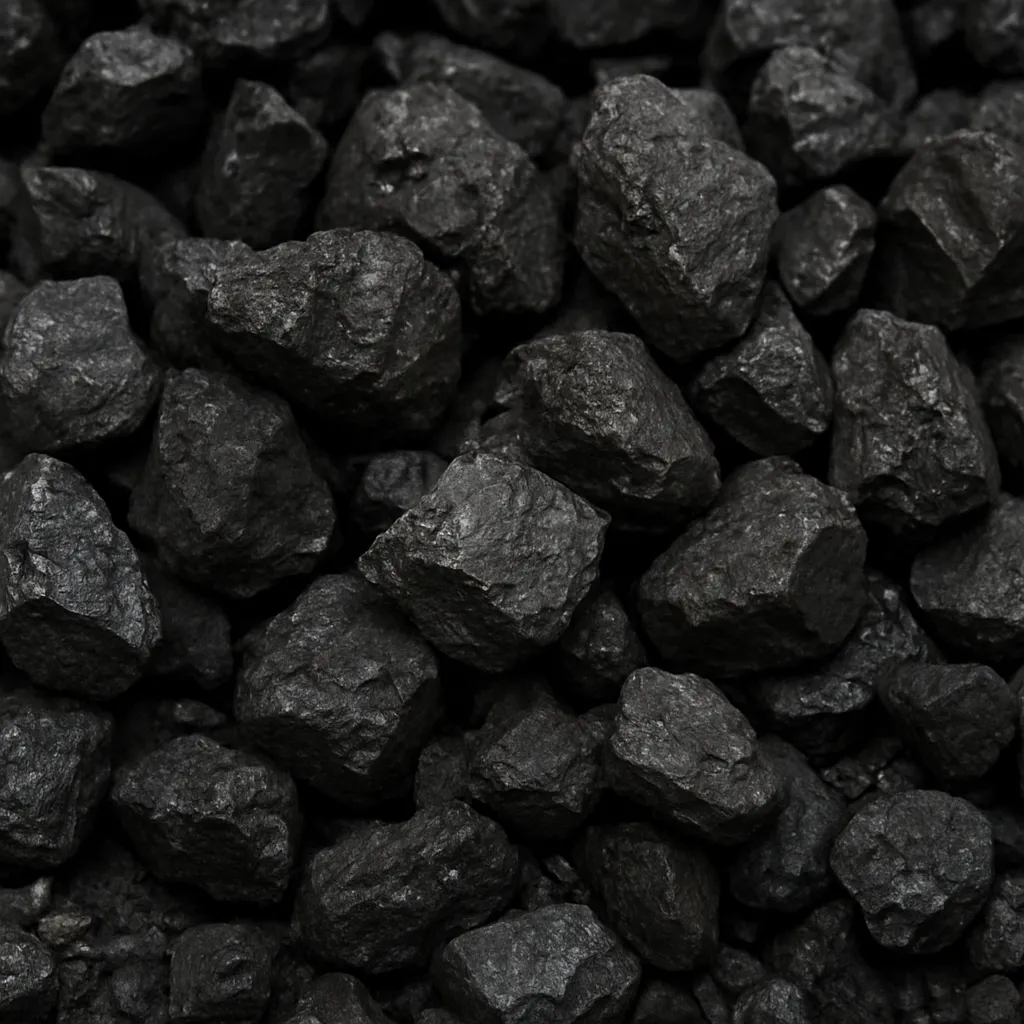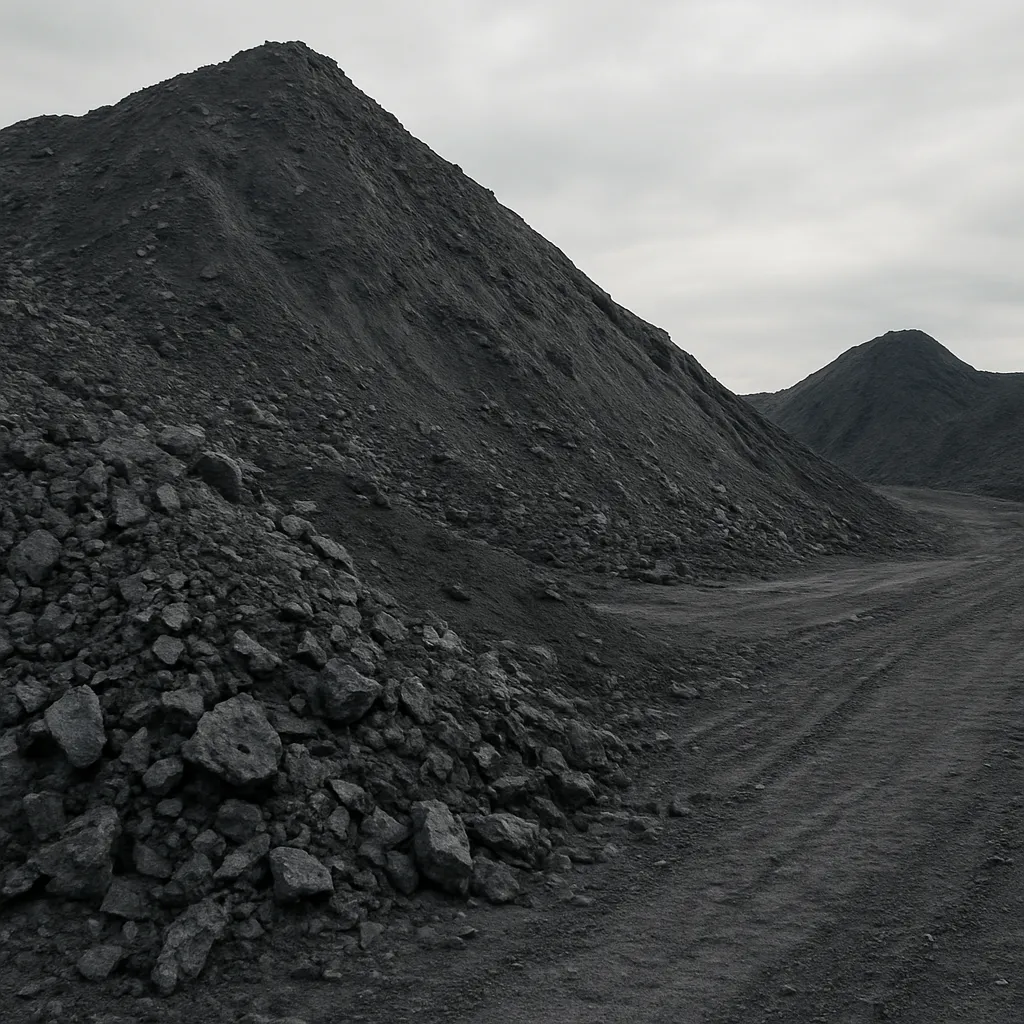
Coal tailings are the residual material left after the physical processing of coal (washing and beneficiation) and after coal extraction operations. They represent a complex mixture of fine coal particles, rock fragments, clay, water and a range of associated chemical constituents. This article examines where coal tailings are produced and stored, how much is generated, their economic and industrial significance, environmental and social impacts, and modern approaches to reuse, remediation and regulation. Throughout the text you will find discussion of technical, economic and policy aspects that shape how societies manage this large and often problematic waste stream.
Occurrence, formation and geographic distribution
Coal tailings arise wherever coal is mined and processed. They are produced in two main contexts: as overburden and rock waste from open-pit mining, and as fine-grained rejects and slurry from coal washing plants and beneficiation units. Regions with intensive coal mining therefore host the largest volumes of tailings. Major coal-producing countries — such as China, India, the United States, Indonesia and Australia — have extensive networks of tailings impoundments, spoil heaps and slurry ponds.
Typical locations and landscape features
- Open-pit and surface mine benches, where spoil and overburden are stored in large dumps.
- Washery tailings ponds and slurry impoundments near coal preparation plants.
- Underground mine backfill areas where rejects may be used to fill voids.
- Abandoned mines and decommissioned processing sites, where legacy tailings remain after closure.
Spatially, tailings tend to cluster near coal basins and historical mining centers. In many countries coalfields are in inland basins with limited drainage, increasing the persistence of tailings ponds and spoil heaps on the landscape.
How coal tailings are generated and managed
The generation of coal tailings is linked to the mining method, the geological quality of the coal seam, and the level of processing. Raw coal as extracted from the ground frequently contains rock, shale, clay and mineral matter. Preparation plants use gravity separation, flotation and screening to upgrade the coal. The coarse inert material becomes spoil or waste rock, while the fine fraction often becomes slurry or tailings that demand specific storage solutions.
Types of coal waste
- Overburden: rock and soil removed to access seams (dominant in open-pit mining).
- Coal washery tailings: fine coal and mineral matter rejected during preparation.
- Coal ash: combustion residues from power plants (related but distinct from tailings).
- Slurry: water-suspended fine particles from beneficiation.
Typical storage options include slurry ponds (wet storage), engineered tailings dams, dry stacking after dewatering, and placement in engineered landforms for reclamation. Historically, many tailings facilities were built with little engineering, leading to long-term stability, dust and leachate problems.
Economic and statistical overview
The global coal industry is large, and coal tailings are correspondingly substantial. While precise figures for tailings volume vary by source and depend on definitions, several broad estimates and trends are widely recognized. Global primary coal production in the early 2020s was roughly in the range of 7–8 billion tonnes per year, with China accounting for more than half of that total. Coal beneficiation and mining produce an additional multi-billion tonne stream of waste and rejects annually.
Production and waste ratios
- Global coal production (approximate, 2020–2022): 7–8 billion tonnes/year.
- Countries with largest production: China (~3.5–4.0 billion t), India (~700–1,000 million t), United States (~500–800 million t), Indonesia and Australia (several hundred million t each) — figures vary year to year.
- Waste generation: Depending on geology and processing intensity, waste-to-product ratios can span from 0.5:1 up to >1:1 when considering both overburden and fine tailings over the life of a mine. In some long-lived surface mines, cumulative spoil volumes exceed the mined coal volume.
- Washery tailings rates: For heavily washed coal, tailings can represent 10–40% of the processed mass as fine rejects, though the precise percent depends on coal type and the stringency of cleaning.
Economic implications of tailings are manifold. Storage, monitoring, remediation and regulatory compliance represent ongoing costs for mining companies. At the same time, advances in reprocessing can recover lost coal fines and create revenue streams. Estimates of global costs associated with mine waste management run into the billions of dollars annually when factoring closure liabilities, environmental remediation and social compensation.
Employment and regional economies
Coal mining is a significant employer in producing regions, and tailings management supports jobs in engineering, environmental monitoring and reclamation. In many coal-dependent regions, the social and economic costs of tailings are embedded in broader debates about mine closure, economic diversification and workforce transition.
Industrial significance and potential value
Although tailings are primarily an environmental and operational liability, they can also represent a valuable resource if treated correctly. Tailings contain recoverable coal fines, minerals and sometimes trace elements that can be extracted with modern technologies.
Uses and valorization pathways
- Fine coal recovery: Reprocessing tailings with cyclones, flotation and centrifuges can reclaim marketable coal, improving resource efficiency and reducing waste.
- Fuel feedstock: Low-grade tailings can be briquetted or pelletized into composite solid fuels for industrial use, provided environmental standards are met.
- Construction materials: Tailings have been used as an additive in bricks, lightweight aggregates, cement clinker production and road base, substituting natural aggregates in some applications.
- Mine backfill and reclamation: Dewatered tailings can serve as engineered fill to restore mined landscapes.
- Extraction of by-products: Research explores recovery of rare earth elements, metals and other commodities from some coal-related wastes and ash.
Adoption of these valorization routes depends on market prices for coal and construction materials, the cost of processing, and environmental regulations. In some instances, recovering a small fraction of tailings as usable coal or building material can improve a mine’s economics and reduce long-term liabilities.
Environmental, health and social impacts
Coal tailings pose diverse environmental and social challenges. Their impacts stem from leachate and suspended solids, potential for spontaneous combustion, dust generation, and, in the worst cases, catastrophic dam and spoil slope failures.
Key environmental hazards
- Acid mine drainage (AMD): When sulfide minerals are present in tailings, oxidation can generate acidic waters that dissolve heavy metals and mobilize contaminants into groundwater and surface water.
- Heavy metals and metalloids: Tailings can contain arsenic, selenium, mercury and other trace elements that bioaccumulate or contaminate water resources.
- Dust and particulate emissions: Dry tailings and exposed spoil surfaces create air-quality and respiratory health concerns for local communities.
- Spontaneous combustion: Fine coal in tailings can oxidize and heat, sometimes leading to underground or surface fires that are difficult to extinguish and emit toxic gases.
- Structural failure: Tailings dams and spoil heaps may fail, causing loss of life, property damage and long-term environmental degradation (notable historical incidents include coal spoil-tip failures and slurry dam breaches).
Socially, communities adjacent to tailings facilities can suffer from loss of livelihoods, health impacts and reduced property values. High-profile disasters have amplified public scrutiny and regulatory responses in many countries.
Regulation, liability and remediation costs
Governments regulate tailings storage and mine closure with the aim of protecting public health and the environment. Key regulatory instruments typically address design standards for tailings dams, monitoring and reporting, financial assurance for closure and post-closure care, and permitting for reprocessing or reuse.
Financial and legal aspects
- Closure liabilities: Mining companies must set aside funds for remediation; inadequate financial assurance can leave taxpayers with cleanup costs after bankruptcy or abandonment.
- Insurance and indemnity: The risk of tailings incidents affects insurance premiums and corporate risk management strategies.
- Community consultation and compensation: Social license to operate increasingly requires stakeholder engagement and benefit-sharing with affected communities.
Large-scale remediation projects — stabilizing slopes, treating AMD, capping tailings and restoring vegetation — can be expensive, often costing tens to hundreds of millions of dollars for major legacy sites. These costs have become central in mine planning and corporate governance.
Technological advances and future directions
Technological innovation is reshaping how the industry approaches tailings. The goal is to reduce generation rates, improve stability, recover value and minimize environmental impacts.
Promising technologies and strategies
- Dewatering and dry stacking: Removing water from tailings to produce a filter cake that can be stacked more stably and with lower environmental footprint than wet impoundments.
- Fine coal recovery: Advanced flotation, centrifugation and sensor-based sorting to reclaim more of the valuable carbon fraction from tailings.
- Phytoremediation and biological treatment: Using plants and microbes to stabilize soils, immobilize metals and improve water quality over time.
- Encapsulation and reuse in construction: Immobilizing contaminants within stabilized products such as geopolymer bricks or cementitious matrices.
- Digital monitoring and early-warning systems: Sensors, remote monitoring and machine learning to detect instability or seepage and prevent failures.
Policy trends favor circular economy approaches: turning waste into resources where feasible, internalizing long-term environmental costs in project evaluations, and strengthening regulatory frameworks to prevent future legacy issues.
Case studies, historical incidents and lessons learned
Several incidents and successful remediation projects illustrate the stakes and possible responses:
- Flooding and slurry breaches in coal-producing regions have shown the devastating social impacts of inadequate tailings design and oversight.
- The Aberfan disaster (Wales, 1966) highlighted the dangers of poorly managed coal spoil tips collapsing onto communities — a tragic reminder of the need for engineering and governance.
- Progressive reclamation projects in parts of Europe and Australia demonstrate how engineered landforms, vegetation and reuse can transform tailings areas into productive landscapes.
- Commercial-scale reprocessing plants in several countries have proven that economically recoverable coal fines can be reclaimed from historical tailings, reducing environmental risk while creating revenue.
Conclusions and outlook
Coal tailings are an intrinsic by-product of a century and a half of large-scale coal extraction and processing. They present both a major environmental challenge and an opportunity for resource recovery and improved industrial practice. Meeting that challenge requires integrated action: robust regulation, investment in technology, sound financial planning for mine closure, and community engagement. In the near term, tailings will continue to occupy significant physical and financial space in coal-producing regions. Over the medium term, innovations in dewatering, fine recovery and material reuse coupled with stricter oversight can meaningfully reduce the liabilities associated with coal tailings and capture otherwise lost value.