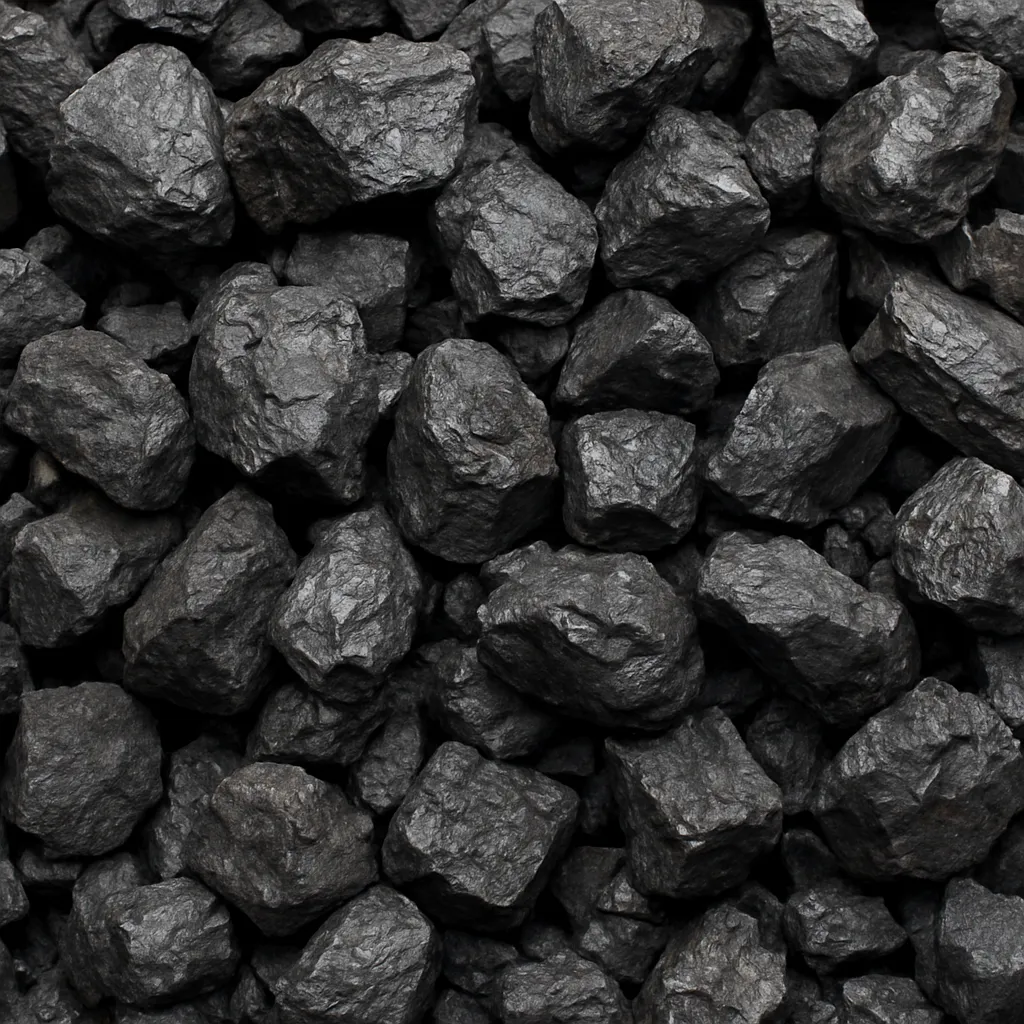
Bituminous coal is one of the most important and widely used ranks of coal worldwide. It occupies an intermediate position in the coalification scale between sub-bituminous coal and anthracite, combining significant energy content with properties that make it suitable both for power generation and for metallurgical processes. This article examines the geology, global distribution, mining and processing methods, economic and industrial significance, environmental challenges and statistical context of bituminous coal, and offers perspectives on trends shaping its future role in the global energy and materials system.
Geology, properties and classification
Bituminous coal forms from the diagenesis and coalification of plant matter over millions of years under increasing heat and pressure. It is characterized by higher carbon content and calorific value than lignite or sub-bituminous coal, but generally lower fixed carbon and higher volatile matter than anthracite. Typical physical and chemical properties of bituminous coal include:
- Carbon content (dry, ash-free): roughly 60–86%, depending on rank and grade.
- Calorific value: often in the range of 24–35 MJ/kg (approximately 5,700–8,400 kcal/kg) on a higher heating value basis.
- Moisture: variable, usually lower than in lower-rank coals (but can range 2–15% as-extracted).
- Ash content: highly variable, from a few percent to over 20% in some seams, influencing handling and combustion properties.
- Volatile matter: moderate to high (generally higher than anthracite), which affects combustion characteristics and coking behavior.
Within the bituminous rank there are important subcategories:
- Coking (metallurgical) coal: bituminous coals with properties (plasticity, volatile content, low ash and sulfur) enabling them to produce coke when carbonized. Coke is essential in blast furnace iron and steelmaking.
- Thermal (steam) bituminous coal: used primarily for electricity generation and industrial heat.
Geologically, bituminous seams are typically found in Carboniferous to Permian-aged strata in many parts of the world, often in basin settings where thick organic-rich deposits accumulated. Seam thickness, depth, continuity, and rank vary widely, driving the choice of mining method and the economic viability of deposits.
Global distribution and major producing regions
Bituminous coal occurs on every continent except perhaps Antarctica in economically exploitable quantities. Major occurrences align with ancient sedimentary basins and orogenic belts where suitable plant material was buried and matured. Important producing regions and countries include:
- China: the world’s largest coal producer and consumer. Large reserves of bituminous coal underpin much of China’s power generation and industrial coal use; however, a mix of ranks exists across the country from lignite to higher-rank bituminous and anthracite.
- United States: significant bituminous resources are concentrated in the Appalachian Basin, the Illinois Basin and the Powder River Basin (though Powder River coal is largely sub-bituminous). The Appalachian and Illinois Basins supply a large share of the nation’s coking and higher-grade steam coal.
- India: large deposits in the eastern and central coalfields; India relies heavily on bituminous and sub-bituminous coal for coal-fired power generation and increasing industrial demand.
- Russia: vast reserves, with important bituminous deposits in Kuzbass (Kemerovo), the Pechora Basin and eastern Siberia, supplying domestic industry and exports.
- Australia: significant coking and thermal bituminous coals, especially in Queensland and New South Wales; Australia is a major exporter of both metallurgical and thermal coal.
- South Africa: important bituminous coal for domestic power (e.g., Eskom) and export markets.
- Indonesia and other Southeast Asian countries: substantial exports, often focused on thermal coal (some of which is high-volatile bituminous).
Regional geology, mining infrastructure and proximity to steelmaking and energy markets shape the local importance of bituminous coal. Coastal export hubs (e.g., Eastern Australia, Indonesia, South Africa) support global trade, while inland producers (e.g., Appalachia, Kuzbass) feed domestic heavy industries and power plants.
Mining, processing and transport
Mining methods
Bituminous coal is extracted using both underground and surface mining techniques, chosen according to seam depth, thickness, geology and economics.
- Underground mining: includes longwall, room-and-pillar and board-and-pillar systems. Longwall mining is widely used for thick, relatively continuous seams and is highly productive, while room-and-pillar is used where seam geometry or safety concerns limit longwall application.
- Surface mining (open-pit or strip mining): employed when seams are shallow and extensive, enabling lower production costs per tonne but greater landscape disturbance.
Processing and coal preparation
After extraction, bituminous coal typically undergoes cleaning and preparation to remove rock, ash, sulfur-bearing minerals and other contaminants. Coal preparation plants perform crushing, screening, dense medium separation, jigs, froth flotation and other processes to produce products tailored to market requirements, such as thermal coal for power plants or low-ash, low-sulfur coking coal for steelmaking.
Transport and logistics
Freight systems — rail, barge, truck and port terminals — are crucial to link mines and markets. Bituminous coal’s economic viability depends heavily on transport costs; proximity to consumers (power plants, steel mills) or to export ports often determines which deposits are developed. Seaborne trade connects major exporters (Australia, Indonesia, Russia, South Africa, Colombia) with importers (China, India, Japan, South Korea, Europe).
Economic and industrial significance
Bituminous coal plays multiple critical roles:
- Electricity generation: High-energy bituminous coal has historically powered thermal power stations worldwide, contributing a large share of baseload electricity in many countries.
- Metallurgy: Coking bituminous coal is indispensable for traditional blast furnace steelmaking. The quality of coking coal influences coke strength, furnace performance and steel quality.
- Industrial uses: Coal is used in cement production, paper, chemicals, and as a feedstock for coal-to-chemicals and coal-to-liquids processes in some regions.
- Employment and regional economies: Coal mining sustains jobs, tax revenue and local services in producing regions, often forming the backbone of regional economies.
The economic value of bituminous coal depends on grade (calorific value, ash, sulfur, phosphorus), coking properties, and market conditions such as global steel demand, power sector dynamics and alternative fuel prices. Metallurgical coal typically commands a price premium over thermal coal due to its specialized role and more limited supply pool.
Statistical snapshot and market dynamics
Global coal statistics vary by source and year, but several broad facts are consistent in the early 2020s:
- World coal production (all ranks) has generally been in the multi-billion tonne range annually. A substantial portion of that tonnage is bituminous and used either for thermal or metallurgical purposes.
- China accounted for the largest share of global production and consumption, producing several billion tonnes annually and consuming most of it domestically.
- Australia, Indonesia, Russia, the United States and India are among the largest suppliers to international markets, with Australia and Indonesia particularly dominant in seaborne exports.
- Metallurgical coal markets are more volatile because they are more tightly linked to global steel output; disruptions (e.g., weather events, mine closures) can cause sharp price swings.
Price behavior: Coal prices display significant volatility. Thermal coal prices follow power sector demand, natural gas prices and emission regulation pressures. Metallurgical coal prices are influenced by steel production trends, supplier concentration, and freight costs. For example, supply disruptions or strong steel demand can lift coking coal prices sharply, while oversupply and weak industrial activity push them down.
Environmental, health and regulatory considerations
While bituminous coal has strong economic importance, it also carries environmental and health costs that shape modern energy policy:
- Air pollutants: Combustion emits sulfur oxides (SOx), nitrogen oxides (NOx), particulate matter (PM), mercury and other hazardous pollutants unless controlled by emissions abatement technologies.
- Greenhouse gases: Coal combustion is carbon-intensive. Typical emission factors for coal combustion range roughly from about 2.4 to 2.9 tonnes CO2 per tonne of coal burned, depending on the carbon content and moisture. Coal-fired power plants are major sources of CO2 emissions globally.
- Local impacts: Mining affects land, water quality and biodiversity. Acid mine drainage, subsidence (from underground mining), and dust generation are real concerns in producing regions.
- Health: Mining and combustion contribute to occupational hazards and community health issues via dust exposure, respiratory diseases and pollution-related morbidity.
Technologies can mitigate many impacts — flue gas desulfurization, electrostatic precipitators, fabric filters, selective catalytic reduction, and mercury capture systems reduce pollutant emissions. Carbon capture and storage (CCS) offers theoretical pathways to reduce CO2 from coal-fired power plants and industrial uses, but CCS deployment at scale remains limited by costs, infrastructure and policy frameworks.
Policy, transition pressures and adaptation in industry
Global policy trends aimed at decarbonization have created pressure on coal use, but the pace and nature of transitions vary regionally. Key drivers include:
- Climate policy: National commitments under the Paris Agreement, carbon pricing mechanisms and emissions standards incentivize reduced coal-fired generation in many markets.
- Competition from natural gas and renewables: The rising availability of low-cost renewables and, in some places, abundant natural gas, undermines coal’s competitiveness for power generation.
- Industrial decarbonization: Steelmakers are exploring alternatives to blast furnace coke — direct reduced iron (DRI) using natural gas or hydrogen, electric arc furnaces using scrap, and other low-carbon routes — which could reduce demand for coking coal over the medium to long term.
- Energy security and development needs: Some countries continue to rely on coal because of abundant domestic resources, affordability and energy security considerations, especially where alternatives are constrained or expensive.
Industry adaptation strategies include:
- Improving efficiency in power plants and industrial use to lower specific emissions per unit of output.
- Investing in emissions controls and investigating CCS in large industrial clusters where captured CO2 can be transported and stored or utilized.
- Diversifying portfolios: mining companies moving into other commodities, renewables, and services to reduce exposure to coal market risks.
Interesting technical and historical notes
Some lesser-known or interesting aspects of bituminous coal include:
- Coking behavior: Not all bituminous coals are suitable for coke-making; only those with specific plasticity, volatile matter and low impurities form the porous, strong coke needed in blast furnaces. Coking coal quality is assessed through standardized tests such as the Gieseler plastometer and the free-swelling index (FSI).
- Coal rank as a continuum: Coalification is a continuum; what is labeled “bituminous” varies by classification system (ASTM, ISO, national systems) and by the specific physical/chemical cutoffs used by analysts.
- Coalbed methane (CBM): Some bituminous seams contain significant methane that can be produced as a natural gas resource and can enhance mine safety when drained prior to mining.
- Historical role: Bituminous coal powered the Industrial Revolution, enabling steam engines, railways and the expansion of metallurgy. Its historical legacy shaped modern industrial economies and settlement patterns.
Future outlook and scenarios
Forecasting the future of bituminous coal depends on multiple, interacting factors: policy ambitions to limit global warming, technological advances (renewables, storage, hydrogen, CCS), commodity market dynamics, and geopolitical considerations. Several scenarios can be sketched:
- Rapid decarbonization scenario: strong policy action, broad deployment of renewables, energy efficiency, and industrial decarbonization leads to substantial reductions in thermal coal use for power and lower demand for coking coal as steelmaking transforms.
- Moderate transition scenario: coal use declines in many countries but remains significant in developing economies where energy demand grows and alternatives are slower to scale; metallurgical coal demand decouples more slowly as steel industry transitions.
- High-demand/slow-transition scenario: if economic growth in some regions remains carbon-intensive and policy measures are weak, coal — including bituminous coal — can persist as a major fuel for decades, sustaining mining regions and export markets.
Investment decisions by mining companies, utilities and steelmakers will determine how quickly supply adjusts, while technological breakthroughs (e.g., economical hydrogen-based steelmaking or low-cost, large-scale CCS) could dramatically reshape bituminous coal’s role.
Key statistical indicators and recent trends (illustrative)
Production and consumption
- Global coal production in the early 2020s hovered in the multi-billion tonne range per year; a sizable portion of that tonnage comprises bituminous coal used for power and metallurgical purposes.
- China produced and consumed the largest share of global coal, with major domestic production limiting reliance on imports for many years, although imports of higher-grade metallurgical coals occur.
- Australia and Indonesia remained major seaborne exporters, with Australia especially important for high-quality coking coal supplies to steelmakers in Asia and beyond.
Prices and trade
- Coal export prices and freight costs have been volatile, reflecting demand cycles, weather events, mine disruptions and geopolitical developments.
- Metallurgical coal prices historically show greater volatility than thermal coal due to tighter supply-demand balances and limited substitutability.
Emissions
- Coal combustion remains a major source of anthropogenic CO2 and local air pollutants. Reducing emissions from coal requires a mix of fuel switching, efficiency improvements and end-of-pipe controls, and in the longer term, deployment of CCS or structural industrial shifts.
Concluding observations
Bituminous coal remains a complex, dual-purpose resource central to both energy systems and heavy industry. Its physical properties make it valuable for electricity generation and for producing coke used in steelmaking. However, environmental and climate pressures, technological change and shifting market dynamics are reshaping demand patterns. In the near term, bituminous coal will continue to underpin energy security and industrial processes in many regions. Over the medium and long term, its role will be determined by the pace of decarbonization technologies, policy choices, and economic developments that influence the competitiveness of lower-carbon alternatives.