The Khadia Coal Mine is one of the many mining sites in India that reflect the country’s long history of coal extraction and its ongoing dependence on fossil fuels for energy and industrial development. This article examines the available information about the Khadia site, places it in the wider geological and economic context of Indian coal mining, discusses the type of coal typically extracted there, outlines operational and logistical aspects, and addresses social, environmental and policy issues connected to the mine. While some specific, up-to-date numerical figures for Khadia itself are limited in publicly accessible sources, the mine can be understood through regional patterns, corporate operatorship models and national statistics that shape its role in India’s energy and industrial landscape.
Location, geological setting and history
Khadia Coal Mine is situated within India’s major coal-bearing regions characterized by Permian and Gondwana sequences that host widespread coal seams. The precise administrative location and local coordinates of the Khadia mine are reported variably across sources; however, like many Indian collieries, it lies within a district with active coalfields and is part of a broader mining cluster supplying regional power plants and industries. Coal occurrences in India are concentrated in states such as Jharkhand, Odisha, Chhattisgarh, West Bengal and Madhya Pradesh, and mines named Khadia have been associated in some references with collieries in eastern India.
Geologically, the coal-bearing formations in these regions belong to the Gondwana system, where the depositional environment and burial history produced seams of variable thickness and rank. Typical seam depths and thicknesses at similar collieries range from surface and shallow seams exploited by opencast methods to deeper seams worked by underground mining. The geological setting influences coal quality parameters such as calorific value, moisture, ash, volatile matter and sulfur content — all critical for classification and end-use suitability.
Historical development
Coal mining in India dates back to the late 18th and 19th centuries; many individual collieries grew around local demand and later integrated into national supply chains. Mines like Khadia emerged as part of the post-independence expansion of coal extraction to support rapid industrialization and the growth of the electricity sector. Over time, several collieries were nationalized and integrated into government-owned entities, while regulatory and corporate reforms have gradually introduced new contractors, private participation and modernization efforts.
Type of coal and quality characteristics
The coal produced in most eastern Indian collieries is commonly classified as non-coking, with ranks ranging from sub-bituminous to medium- and high-volatile bituminous coal. This makes it suitable primarily for thermal power generation and certain industrial applications rather than metallurgical coke production. Key quality parameters relevant for Khadia-style coal include:
- Gross calorific value (GCV) — the energy content that determines how effective coal is for power generation; eastern Indian thermal coal typically has moderate GCV (on a gross as-received basis) compared with high-grade coking coals from other parts of the world.
- Ash content — many Indian thermal coals have relatively high ash content (often between 20–40% for some seams), which affects boiler efficiency, ash handling and disposal needs.
- Sulfur — generally low to moderate, which helps limit certain emissions compared to higher-sulfur coals globally, but sulfur still contributes to regulatory and pollution-control considerations.
- Moisture and volatile matter — influence handling, combustion behavior and calorific value on an as-mined basis.
For Khadia specifically, publicly available seam-level reports are limited; therefore, the mine is best characterized through the typical range of these quality traits for the region. Mining operations usually sort, wash (in some cases), and blend coal to meet buyer specifications — especially for power plants that require consistent calorific value and controlled ash content.
Mining methods, operations and infrastructure
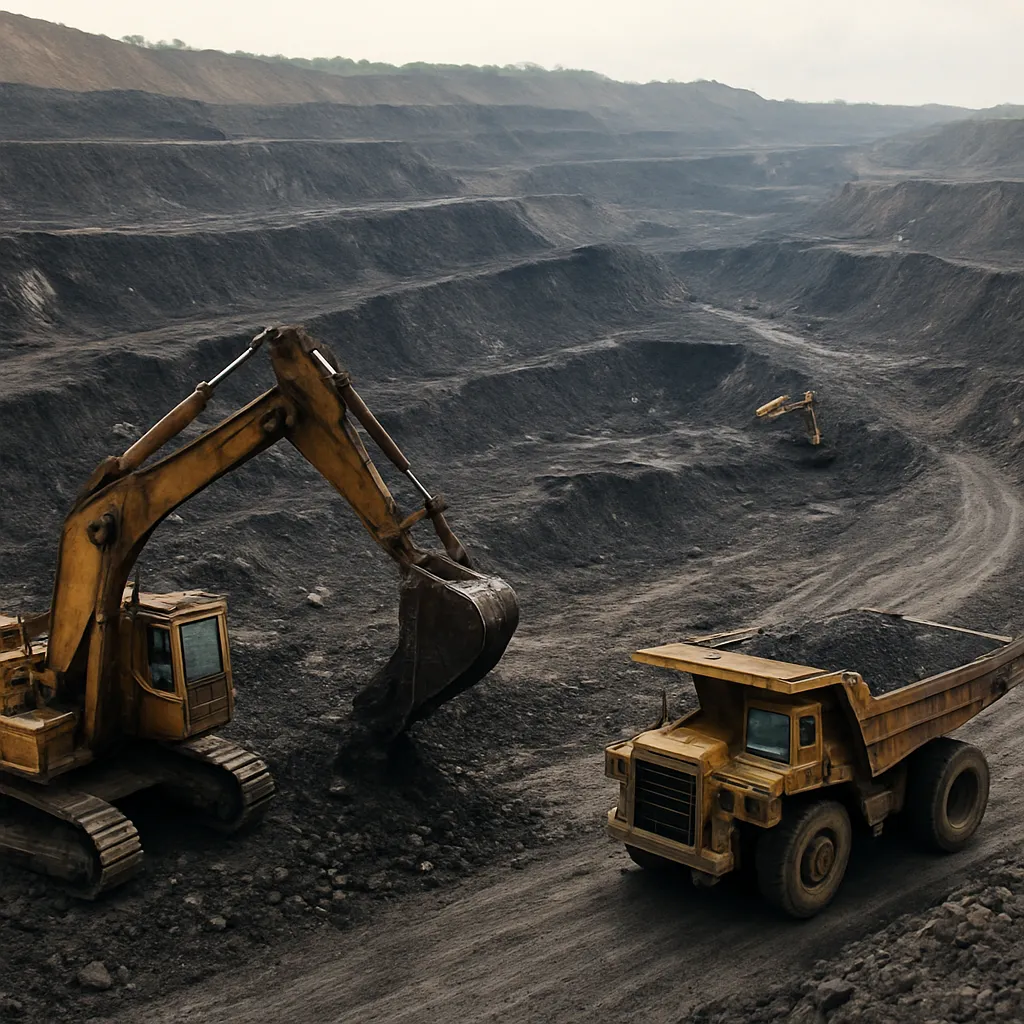
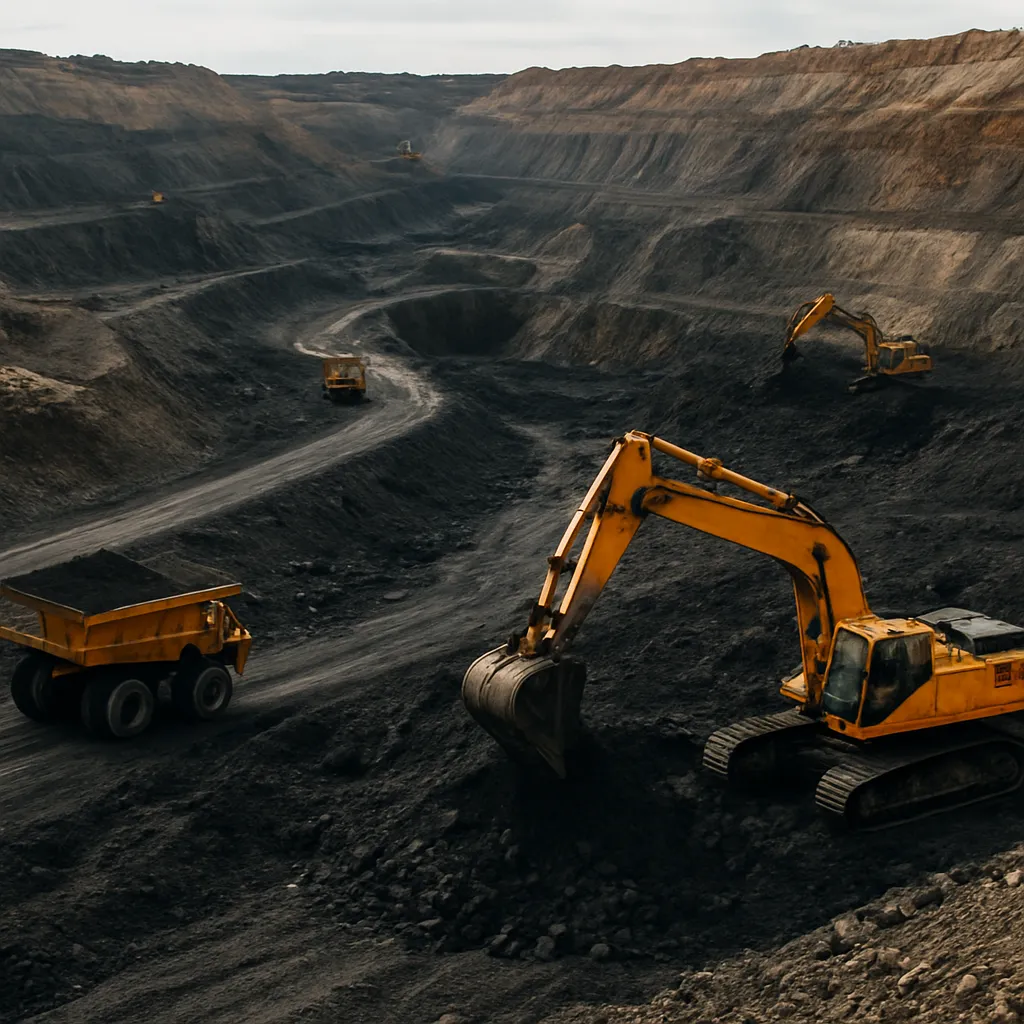
Mining at sites comparable to Khadia typically employs a mix of opencast (surface) and underground techniques depending on geology and seam depth. In India, the trend over recent decades has favored opencast mining where conditions permit because it offers higher productivity and lower unit costs. Where seams are deeper or constrained by surface features and habitation, underground methods such as bord-and-pillar or longwall systems may be used.
Key operational components
- Extraction systems — large excavators, draglines and haul trucks for opencast; mechanized coal cutters, roof support systems and conveyor networks for underground.
- Processing — coal may pass through screening and washing plants to reduce ash and improve calorific value for critical customers.
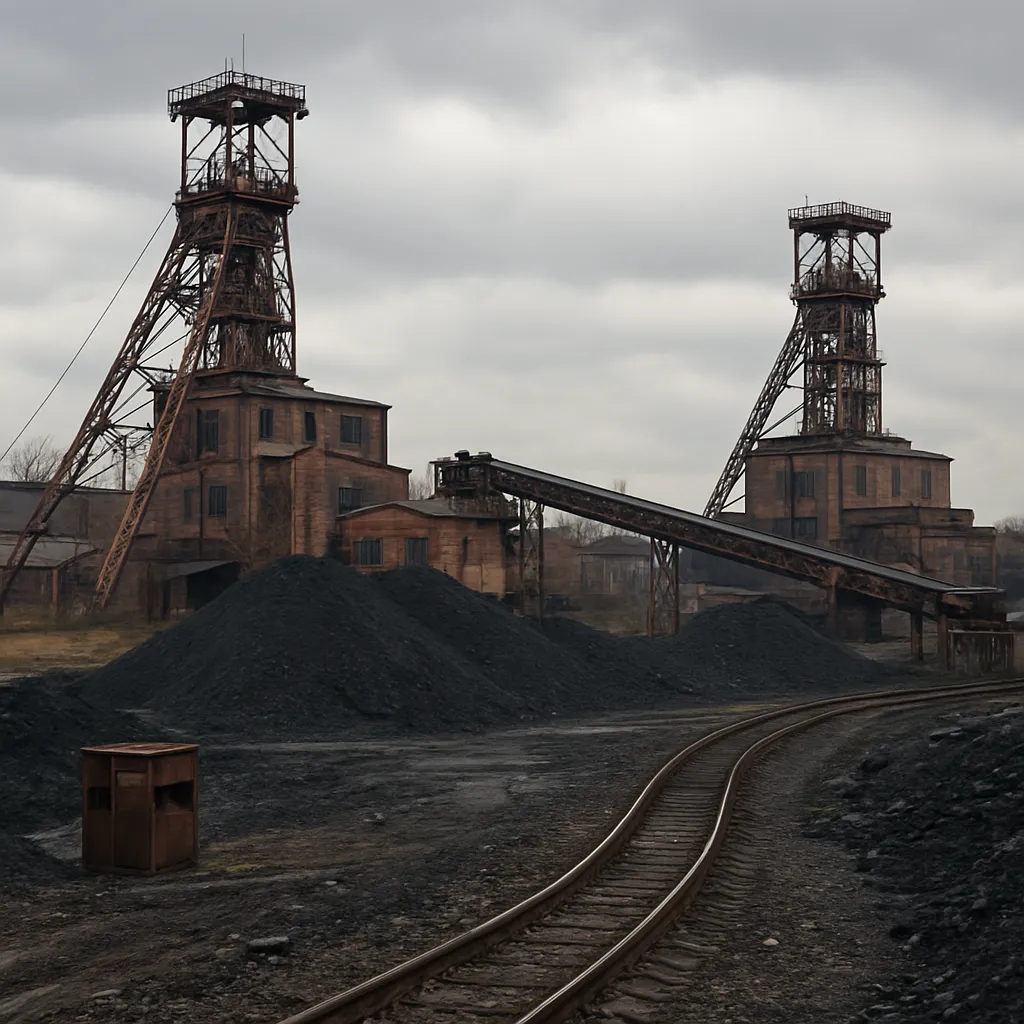
- Transport links — railheads, conveyor belts, dedicated sidings and road links are crucial. Many collieries maintain private rail spurs connecting to the national network to dispatch large volumes to power stations and industrial consumers.
- Power and water supply — onsite power for machinery and water for dust suppression, washing and processing.
- Safety and ventilation — mandatory systems in underground operations to manage air quality, methane and other hazards.
The logistical chain from mine-mouth to end user defines operational efficiency. For major thermal power plants and industrial clients, long-term offtake agreements and dedicated transportation reduce delivery risks. Mines like Khadia also interact closely with local contractors, labor unions and government agencies to coordinate production targets, environmental compliance and land-use arrangements.
Economic significance and industry role
Coal remains central to India’s energy mix: traditionally supplying around 70% to 75% of electricity generation and serving as an input for industries such as steel, cement and brick-making. A mine such as Khadia, therefore, plays a role as a regional supplier of energy and raw material. The economic impacts flow across several dimensions:
- Local employment — mines provide direct jobs (miners, engineers, technicians) and indirect employment in logistics, contracting, equipment maintenance and services.
- Regional development — infrastructure built for mining (roads, power lines, rail spurs) often benefits wider communities and industrial clusters.
- Government revenue — royalty payments, taxes and fees contribute to state and central budgets; in many regions mining revenues are significant to local coffers.
- Industrial feedstock — supplying thermal coal to power plants and industrial coal to manufacturing sectors underpins local and national economic activity.
At a national level, India’s coal production has hovered in the range of several hundred million tonnes annually. For perspective, Coal India Limited (the dominant state-owned producer) typically produces over 600–700 million tonnes per year, while national production (including captive mines and private producers) has in some years reached close to or above 800 million tonnes. These figures illustrate the scale at which collieries operate and the aggregate economic value of coal supply chains, even if any single mine like Khadia represents a small fraction of the national total.
Statistical context and available data
Direct, up-to-date numerical data specific to Khadia Coal Mine — such as proven and probable reserves, annual production tonnage, workforce size and exact quality indices — are not always publicly disclosed in centralized databases for every small or medium colliery. Data availability depends on the operating company, government reporting, and whether the site is part of a major public company portfolio (which often publish annual reports and mine-level statistics).
In lieu of mine-specific figures, the following statistical context is relevant:
- National production — India’s coal production in the last decade averaged hundreds of millions of tonnes per year, reflecting both domestic demand growth and policies to increase self-sufficiency in coal supply.
- Coal consumption — the power sector consumes the largest share, followed by steel and cement industries; captive power use by mines and industries also accounts for a portion.
- Quality ranges — typical calorific values for Indian thermal coal vary widely but are often lower than premium imported grades, which has driven blending strategies at many power plants.
- Reserves and resources — India’s demonstrated coal reserves and resources run into many billions of tonnes, with a long-term horizon for exploitation subject to environmental and policy constraints.
Stakeholders seeking precise Khadia figures should consult the operating company reports, district mining records, state geological surveys or official government portals that publish mine-wise statistics. Environmental impact assessments (EIAs) prepared for mining projects sometimes include seam-level technical data and projected production schedules.
Social and environmental considerations
Coal mining carries well-documented social and environmental consequences that are actively managed, regulated and contested. Mines like Khadia must navigate the following issues:
- Land acquisition and displacement — opencast operations can require large land areas, affecting agriculture, forests and human settlements. Rehabilitation, compensation and resettlement policies are therefore central to project planning.
- Air and water pollution — dust, particulate emissions, runoff carrying fine ash and changes in groundwater levels are common concerns. Dust suppression, ash ponds and effluent treatment are among mitigation measures.
- Biodiversity impacts — clearing for mine infrastructure can fragment habitats; environmental clearances typically require biodiversity assessments and mitigation plans.
- Occupational health and safety — mining is hazardous; safety protocols, health monitoring and mechanization lower risk but require continuous implementation.
- Community development — many operators undertake corporate social responsibility (CSR) activities in health, education and livelihoods to build local goodwill and offset negative impacts.
Regulatory frameworks in India — including environmental clearances, mine closure plans, pollution standards and labor laws — set obligations for operators. Increasingly, there is public scrutiny of new mining projects and demands for transparent environmental management and equitable benefit-sharing with affected communities.
Transport, logistics and markets
One of the defining features of successful coal mines is their integration into efficient transport networks. For Khadia and similar collieries, the logistical chain typically consists of road haulage to railheads, dedicated rail spurs to power stations or industrial consumers, and sometimes conveyor systems for short transfers. Rail transport remains the backbone of long-distance coal movement in India due to its cost-effectiveness for bulk freight.
Market dynamics for Khadia-style coal are shaped by offtake agreements (often with state power utilities), spot sales, and linkages to captive consumers such as cement or brick manufacturers. Seasonal demand fluctuations, monsoon impacts on access roads, and allocation mechanisms (for example, linkage policies for power plants) influence dispatch schedules and revenue flows.
Future prospects, policy environment and transition challenges
India faces a complex energy transition challenge: reducing greenhouse gas emissions while ensuring energy security and continuing development. Coal mines such as Khadia must therefore be seen in the context of evolving national policies:
- Demand trajectory — while renewables are expanding rapidly, coal is expected to remain part of the energy mix for years to come, particularly for firming power supply and industrial heat needs.
- Efficiency improvements — investments in cleaner combustion technologies, higher-efficiency power plants and better coal handling can reduce environmental footprints.
- Regulatory tightening — stricter emissions norms, ash utilization mandates and environmental compliance requirements can raise operating costs and spur modernization.
- Circular economy measures — ash beneficiation, use in construction materials and improved waste management offer pathways to reduce environmental liabilities.
- Just transition — phasing down coal use in the long run raises questions on livelihoods in mining regions; policy measures to support reskilling and alternative employment are critical.
For Khadia, future prospects depend on reserve quality, proximity to key consumers, cost competitiveness, and the mine operator’s ability to meet environmental and safety standards. Modernization and potential investment in mechanization or washing facilities could improve yield and marketability of the coal.
Interesting facts and broader relevance
- Local economies — small and medium collieries often anchor the economies of mining districts, providing not only jobs but also local procurement opportunities for goods and services.
- Technological adoption — Indian mines have been progressively adopting automation, remote monitoring and digital tools to improve safety and productivity; even smaller mines benefit indirectly from these advances.
- Rehabilitation practices — progressive mines implement sequential reclamation, afforestation and waterbody restoration to reduce post-mining liabilities.
- Coal blending — to meet thermal plant specifications and reduce emissions, operators often blend coals of differing grades — a common practice at coal supply centres across India.
Conclusion
The Khadia Coal Mine exemplifies the regional collieries that collectively power India’s industries and economy. While mine-specific public data may be sparse, the mine shares characteristics common to many Indian coal operations: production of thermal coal of bituminous to sub-bituminous rank, reliance on integrated transport infrastructure, significant local economic impacts, and obligations under an evolving environmental and regulatory framework. In the broader picture, Khadia and similar mines remain strategically important in the near and medium term for energy security and industrial supply chains, even as India navigates a gradual shift toward cleaner and diversified energy sources. For precise technical and statistical information about Khadia (reserves, annual output, seam parameters and ownership), interested readers should consult official reports from the operating company, state mining departments, geological survey publications and environmental clearance documents where available.