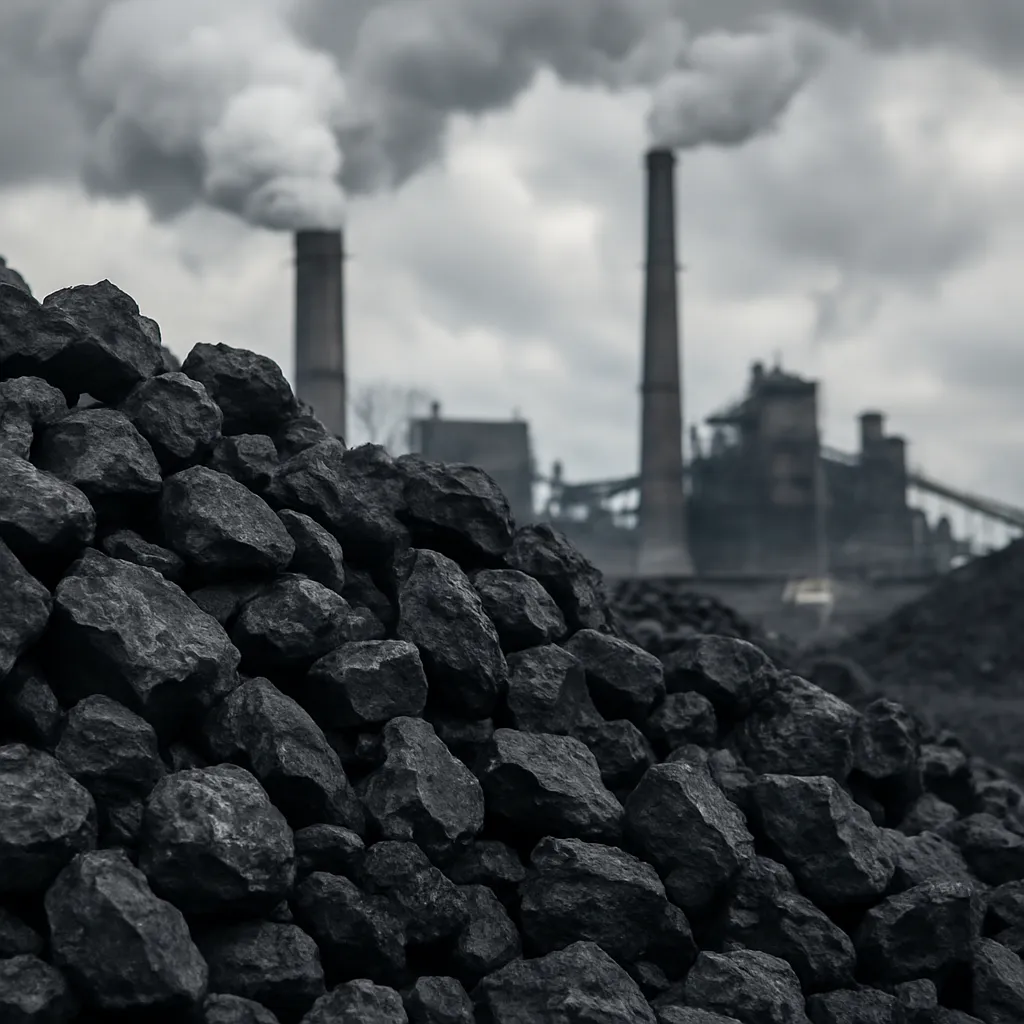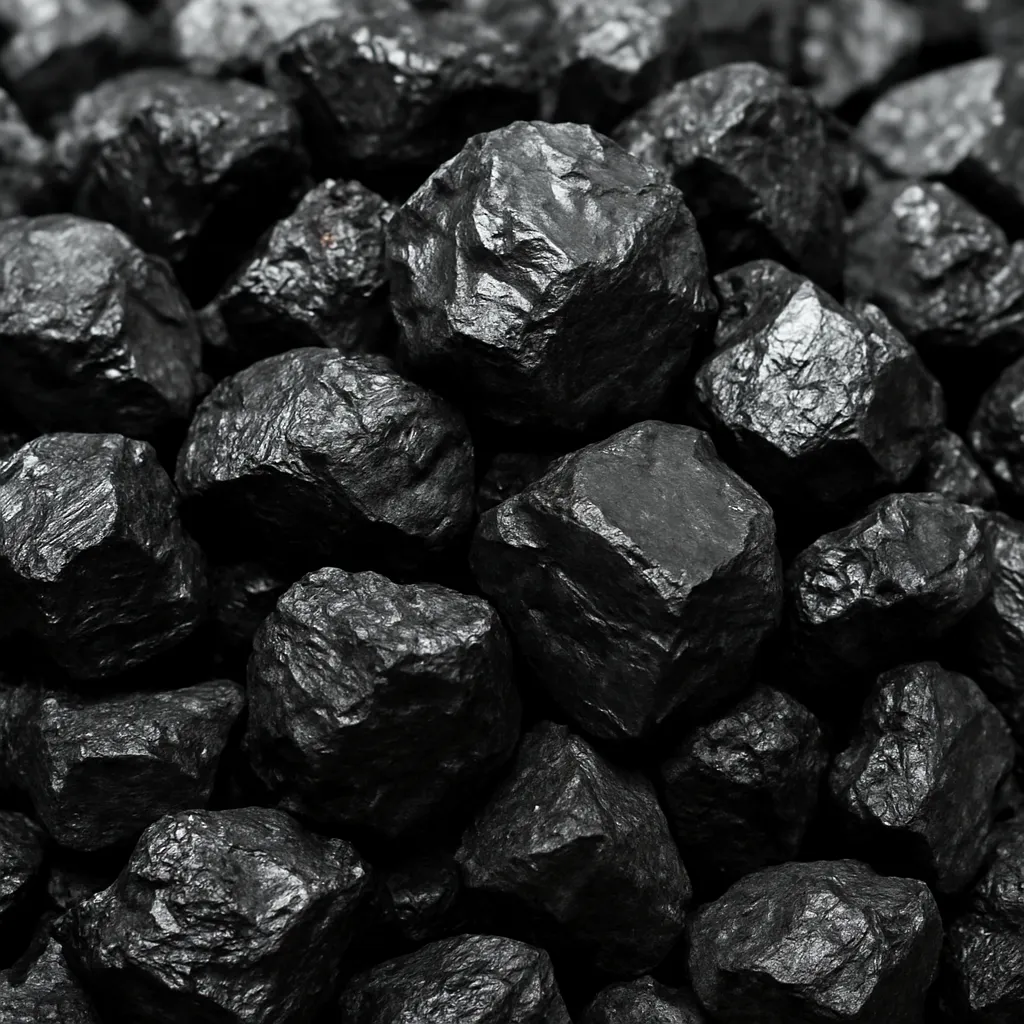
This article examines the phenomenon and market of ultra-pure carbon coal — a high-grade coal variety characterized by exceptionally high fixed-carbon content and low impurities — describing where it occurs, how and where it is mined, its economic and industrial significance, available statistics and market dynamics, as well as technical processes and future perspectives. The term is often applied to premium anthracite and other high-rank coals after specialized processing; these materials serve as feedstocks for advanced carbon products and critical metallurgical processes. Below you will find a comprehensive overview of geology, extraction, processing, uses, trade and policy drivers affecting this specialized segment of the coal sector.
Geology, occurrence and principal deposits
High-purity carbon coals generally originate from the highest rank of coalification, chiefly anthracite and certain highly metamorphosed bituminous coals that have undergone extended burial and thermal maturation. Over tens to hundreds of millions of years, plant material was progressively transformed under increasing temperature and pressure, driving off volatile compounds and concentrating fixed carbon. The result is a dense, hard material with a glossy lustre and a high calorific value.
Typical geological settings for such deposits include ancient foreland basins, folded mountain belts, and deeply buried Paleozoic coal measures. Well-known basins and regions that host high-rank, low-impurity coal include:
- Eastern Pennsylvania (USA) — historic anthracite fields; smaller modern production focused on specialty markets.
- Kuznetsk Basin (Russia) and parts of Siberia — extensive coal resources with zones of high-rank coal suitable for metallurgical and specialty uses.
- Donetsk and Dnipro basins (Ukraine) — traditionally important sources of hard coal and anthracite.
- Northeast and North China coalfields (e.g., Shanxi, Anhui regions) — large volumes of high-grade coal and anthracite layers.
- South Africa’s Highveld and some Karoo-region deposits — zones with relatively low ash and sulfur when selectively mined.
- Australia’s Bowen and Sydney basins — sources of premium metallurgical coals later upgraded via beneficiation.
- Smaller deposits in Western Europe and East Asia historically mined for anthracite and household use, now sometimes supplying niche industrial purposes.
Not all anthracite is automatically “ultra-pure.” Natural variations in mineral matter (ash), sulfur, phosphorus and trace elements determine how suitable a coal seam is for high-purity applications. Some deposits contain lenses or pockets of exceptionally clean coal, which command premiums when recovered selectively and processed.
Mining, beneficiation and purification techniques
Extraction and processing of ultra-pure carbon coal involves a combination of careful resource selection and advanced beneficiation. Two major mining methods are used depending on depth and seam geometry: underground mining (room-and-pillar, longwall) for deep, high-rank seams, and open-pit for near-surface deposits. For ultra-pure products, selective underground mining and precision geology are often preferred to minimize dilution with ash-bearing partings.
Beneficiation and mechanical upgrading
After extraction, raw coal is typically processed to remove mineral matter and impurities through:
- Crushing and screening to size fractions suited for downstream processing.
- Density separation (jigging, heavy media separation) to concentrate high-carbon particles and reject high-ash material.
- Float-sink and froth flotation to remove fine mineral matter and improve fixed carbon percentages.
- Thermal drying to reduce inherent moisture and increase calorific value.
These mechanical steps can raise fixed-carbon content substantially — often taking a good-quality high-rank coal from the low- to mid-90% fixed-carbon range into the mid-90s suitable for metallurgical and specialty markets.
Chemical and thermal purification
When even higher purity is required for advanced carbon materials, further processing is applied:
- Pyrolysis and carbonization to drive off residual volatiles and concentrate carbon.
- High-temperature graphitization (annealing at 2,500–3,000°C) to transform disordered carbon into graphitic structures; commonly used to produce synthetic graphite precursor from selected coals.
- Chemical leaching/acid washing to remove trace metals and mineral impurities.
- Electrochemical or plasma treatments for ultra-high purity applications (battery anodes, high-performance electrode materials).
By combining these steps, manufacturers can produce carbon products approaching industrial purity grades (>99% carbon) required for electronics, battery, and specialty metallurgy applications.
Industrial uses and significance
Ultra-pure carbon coals and their processed derivatives play a strategic role in several industries. Key end-uses include:
- Metallurgical processes: Production of metallurgical coke (from selected high-rank coals) used in blast furnaces and foundries; high fixed carbon and low impurities are essential to reduce deleterious effects in steelmaking.
- Carbonaceous electrodes: Feedstock for producing anodes and electrodes for aluminum smelting and electric furnaces; low sulfur and ash content prolong electrode life and reduce contamination.
- Graphite and advanced carbon materials: Precursors for synthetic graphite, carbon fibers, and graphene-like materials for batteries, aerospace and electronics.
- Activated carbon: High-purity carbon coals are excellent precursors for activation processes used in water and air purification, medical applications, and gas separation.
- Specialty chemicals: Carbon black, pitch, and other specialty carbon derivatives used in inks, coatings and industrial binders.
The strategic importance of ultra-pure coal is disproportionate to its tonnage: although it represents a small share of total coal production, it supplies critical inputs to high-value supply chains in steelmaking, aluminum, batteries and environmental technologies.
Economic and market dynamics
The market for ultra-pure carbon coal and processed carbon products is shaped by a mix of geological scarcity, processing intensity and demand from high-value sectors. Several economic features stand out:
- Price premiums: Premium grade coals command significant price uplifts relative to thermal coal because of their limited supply and stringent quality requirements.
- Volatility linked to steel cycles: Demand for metallurgical feedstocks and, indirectly, high-purity coals follows global steel production; recessions, stimulus-driven booms, and policy shifts (e.g., tariffs, trade disruptions) strongly affect prices.
- Value-added processing: Converting raw coal into synthetic graphite, electrodes or activated carbon increases margins but requires capital-heavy facilities and technical expertise.
- Trade concentration: A few exporters (notably Australia, Russia, and to a lesser extent the United States and South Africa) dominate the international trade in high-quality coals and coking coal, while major importers include China, India, Japan and South Korea.
Statistical perspective: global coal production across all grades remains in the order of several billion tonnes annually. As a broad estimate, global coal production in recent years has ranged around 7–8 billion tonnes per year (all coal types combined), with China responsible for roughly half of world consumption and a large share of production. The specialty segment represented by ultra-pure carbon coals is a small fraction of this tonnage but commands a high share of value in international coal trade. Metallurgical coal (coking coal) is estimated to account for a minority share of global production by mass but a substantially larger share by dollar value due to premium prices. Exact figures vary year-to-year and by source; producers typically report premiums and spikes in prices during supply tightness, such as the major price surges observed in 2021–2022 when seaborne coal and coking coal prices rose to multiple-times historical averages due to supply constraints and high demand.
Trade flows, major producers and consumers
International trade in high-grade coals tends to concentrate on seaborne routes from major exporters to industrialized and rapidly industrializing importers. Key patterns include:
- Australia — a dominant source of high-quality metallurgical coal destined for Asia and other markets; Australian mines in Queensland and New South Wales supply significant volumes of premium coking coal.
- Russia — large reserves and substantial export volumes, especially toward European and Asian buyers; geopolitical factors can introduce volatility to supply patterns.
- United States — while much US coal consumption is domestic, certain high-quality coals (including anthracite and semisoft coking coals) are exported or used in specialty domestic industries.
- Indonesia — major exporter of thermal coal, with selective shipments of higher-grade coals; important in the global seaborne market.
- China and India — largest consumers, with China being a major importer of premium coals despite large domestic production; India increasingly imports coking coal to supplement domestic feedstock for steel mills.
Market analysts track several price benchmarks (thermal coal Newcastle index, seaborne coking coal indices, metallurgical coal contract prices). Periodic supply shocks, shipping bottlenecks, and policy restrictions (export bans, environmental regulations) can rapidly change the economics of the specialty coal trade.
Environmental, regulatory and technological pressures
Although ultra-pure carbon coal provides indispensable inputs for certain industries, it shares coal’s environmental challenges — notably greenhouse gas emissions when combusted and local impacts from mining. Two related realities shape its future:
- Decarbonization pressure: Government policies, carbon pricing, and corporate sustainability commitments are pushing thermal coal out of power generation in many regions. For metallurgical and specialty uses that require carbon, alternatives are being developed (recycled scrap, electric arc furnaces, hydrogen-based reduction), but transition timelines vary.
- Technological mitigation: Carbon capture and storage (CCS), improvements in energy efficiency, and cleaner process technologies (e.g., replacing coal-derived coke with hydrogen-reduced iron) can reduce lifecycle emissions associated with coal-derived carbon products. Nevertheless, CCS deployment at scale for metallurgical applications remains limited and costly.
In response, the industry and researchers have invested in:
- Advanced beneficiation to minimize impurity content and associated emissions during downstream processing.
- Developing coal-to-carbon pathways that incorporate CCS and improve the carbon intensity profile of products.
- Alternative carbon precursors (biochar, petroleum coke, recycled carbon) where appropriate, though technical performance and supply constraints often keep high-purity coal-derived carbon in demand for specific uses.
Statistical snapshot and recent trends
Providing a precise numerical portrait of the ultra-pure coal segment is challenging because most public statistics aggregate coals by thermal vs. metallurgical categories or by energy content, rather than by “ultra-pure” specification. However, some useful observations can be drawn:
- Global coal production: roughly in the range of 7–8 billion tonnes per year (all grades) over recent years, with modest annual variation driven by demand and policy shifts.
- Share of metallurgical and coking coal: typically a minority of global production by volume but a disproportionate share of trade value; analysts often place metallurgical coal at perhaps 10–20% of traded coal tonnage (varies by year and reporting method).
- Price dynamics: premium coking coals and higher-grade anthracites have exhibited significant price volatility; observed peaks in 2021–2022 saw prices rise to multiple times historic averages before partially retreating.
- Regional production concentration: a handful of countries (China, Australia, Russia, United States, India, Indonesia) dominate production and/or trade flows, with China consuming about half of global coal overall.
Taken together, these statistics underscore that although ultra-pure carbon coal is a niche in volume terms, it is strategically significant and sensitive to global industrial cycles, policy shifts, and technological innovation.
Future outlook and emerging applications
Despite the broader downward pressure on thermal coal due to decarbonization, the market for high-grade carbon feedstocks is likely to remain important for several decades, though it will evolve:
- Steel and foundry demand: Conventional blast furnace steelmaking still requires coke and other carbon inputs; however, adoption of direct reduced iron (DRI) using natural gas or hydrogen and increased scrap recycling via electric arc furnaces could reduce demand for metallurgical coal in some markets.
- Battery and electronics materials: Demand for high-purity carbon precursors for synthetic graphite and advanced battery anodes is rising with electric vehicle and energy storage deployment; coals suitable for graphitization may benefit from this structural demand.
- Environmental markets: Activated carbon demand for water and air purification, gas separation and other environmental technologies provides a stable and growing outlet for high-purity carbon feedstocks.
- Circular and low-carbon pathways: Research into biomass co-processing, coal–biomass blends for carbon materials, and integrating CCS into carbon-product manufacturing could create lower-emission premium products that meet corporate and regulatory sustainability requirements.
In short, the role of ultra-pure carbon coal will increasingly be defined by its ability to serve high-value, lower-volume markets where technical properties cannot be readily substituted, and by how quickly the industry adapts to decarbonization imperatives.
Interesting technical and historical notes
A few additional points of interest:
- Anthracite’s historic role: In the 19th and early 20th centuries, anthracite was a prized domestic fuel in many countries for household heating and industrial uses because of its clean burn; much of that market has disappeared, leaving niche industrial demand.
- Coal-to-carbon transformation: Modern synthetic graphite production often begins with high-rank coal or petroleum cokes that are further purified and graphitized, illustrating how a geological material becomes a high-tech feedstock.
- Trace elements: Ultra-pure coal markets care deeply about trace impurities (e.g., phosphorus, heavy metals) because even small concentrations can poison catalysts, degrade electrodes, or affect metal quality in steelmaking.
- Value chain complexity: The path from mined seam to end-product often involves multiple partners — miners, beneficiation plants, chemical processors, electrode manufacturers and downstream industrial users — each adding value and cost.
Ultra-pure carbon coal occupies a unique niche at the intersection of geology, engineering and high-value manufacturing. While its mass share in the global coal balance is small, its economic importance in steelmaking, aluminum production, advanced materials and environmental technologies is large. The future of this segment will be shaped by supply geology, capital investments in purification and processing, and the pace at which industries adopt lower-carbon alternatives or retrofit production with carbon-management technologies. The combination of geologic rarity, processing intensity and critical industrial uses ensures that ultra-pure carbon coal will remain a topic of technical, economic and policy interest for years to come.