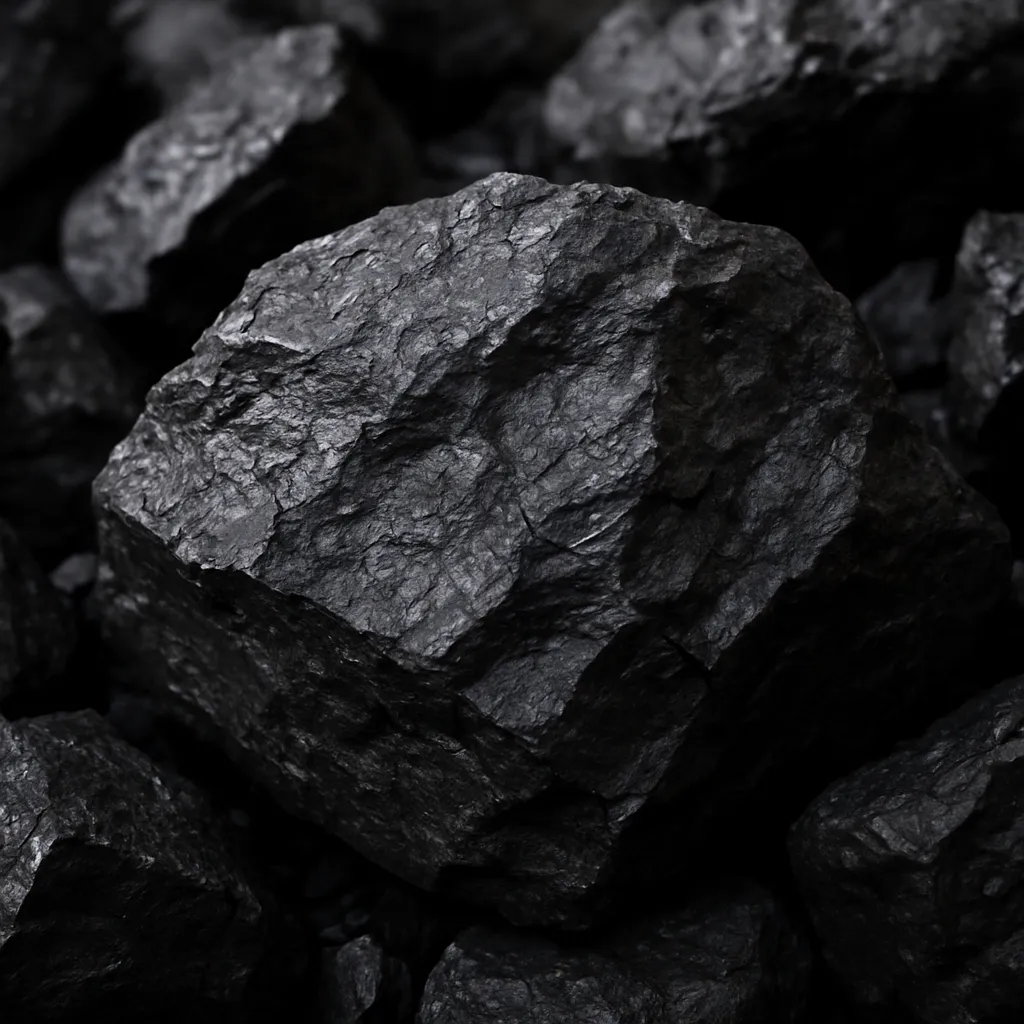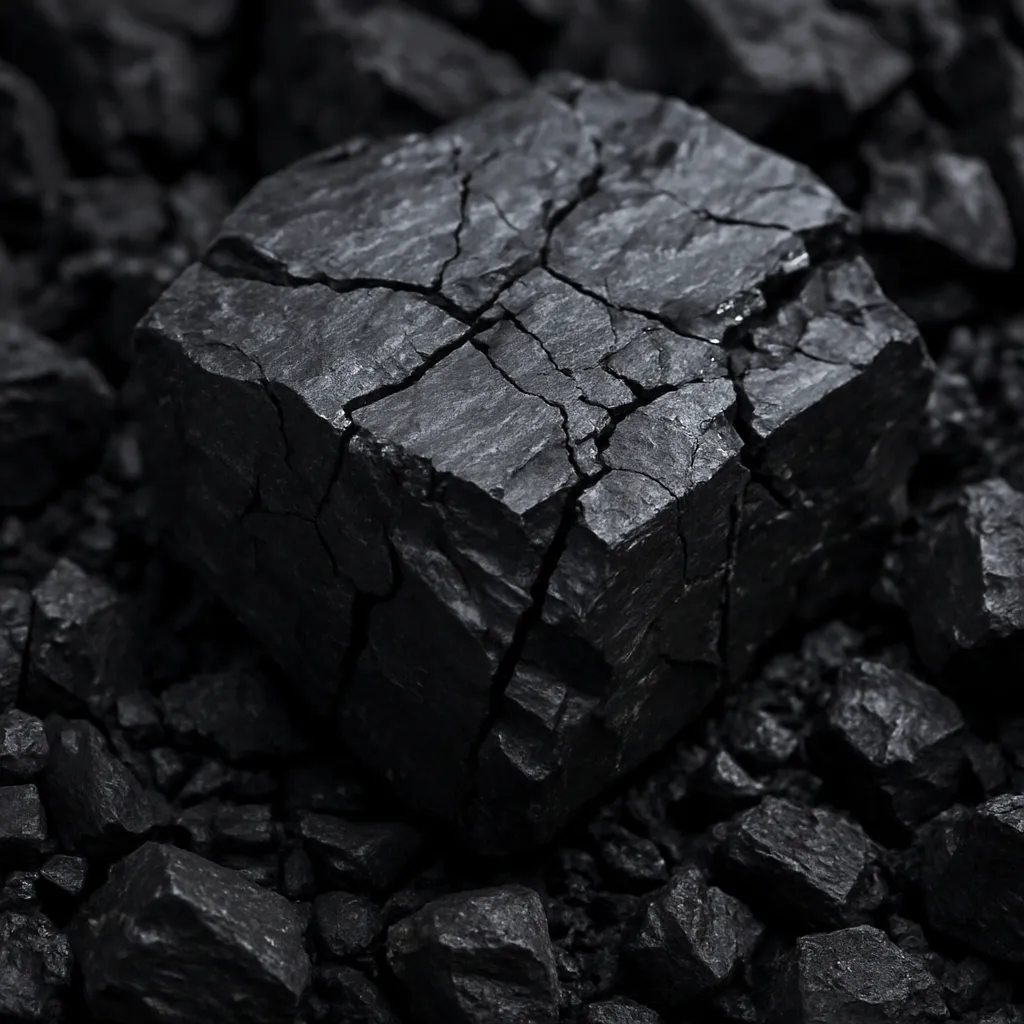
The term fractured coal refers to coal seams that contain pervasive natural cracks, joints and cleats which greatly influence their mechanical behavior, permeability and economic value. Fracturing may be the result of tectonic stresses, sediment compaction, mining-induced deformation or thermal processes. Understanding the geological, technical and economic aspects of fractured coal is essential for modern mining, methane management, resource evaluation and energy policy. This article examines where fractured coal occurs, how it is exploited, the economic and statistical context of coal globally, its industrial significance and some technological and environmental considerations associated with fractured deposits.
Geology and physical characteristics of fractured coal
Coal seams are not homogeneous blocks of carbonaceous matter; they commonly exhibit a dual-porosity system composed of the coal matrix and a network of natural discontinuities. Two primary fracture types are recognized: the face cleat and the butt cleat. Face cleats are continuous and more prominent in terms of connectivity; butt cleats are shorter and orthogonal to face cleats. Together these cleats, along with faults, joints and bedding-plane partings, define the permeability pathways that control fluid flow and gas migration.
Key physical characteristics of fractured coal include:
- Cleat geometry: spacing, continuity and orientation of cleats determine in-seam permeability anisotropy.
- Porosity and matrix storage: methane and other gases are largely stored by adsorption onto the coal matrix; the matrix porosity controls storage capacity while fractures control deliverability.
- Mechanical behavior: fractures can weaken coal, influence rockburst potential and determine support requirements in underground mining.
- Hydraulic properties: natural permeability of fractured coal commonly ranges widely and is the dominant control on gas and water flow during extraction.
The interaction between rank (lignite → sub-bituminous → bituminous → anthracite) and fracturing is complex: higher-rank coals may be harder and more brittle, sometimes leading to more pronounced fracturing under stress, while low-rank coals can exhibit different cleavage patterns. Fractures may open or close due to stress changes during mining, drilling or reservoir depletion.
Occurrence and major producing regions
Fractured coal is found in virtually all major coal basins, but its character varies with geological history. Basins affected by tectonic deformation—fold-thrust belts, rift margins and foreland basins—tend to host more intensely fractured seams. Examples of important coal-bearing regions where fractures strongly influence resource exploitation include:
- China: home to deeply buried, structurally complex and often highly fractured coals in basins such as the Qinshui, Ordos and North China basins; methane control is a major concern due to frequent outbursts.
- United States: the Appalachian and Powder River basins show variable fracturing; coalbed methane (CBM) production and longwall mining technologies adapt to different fracture regimes.
- Australia: the Bowen and Sydney basins host coal seams with economical coal seam gas (CSG) production; fractures and cleats are key to gas deliverability.
- Poland and Central Europe: structurally complex basins with fractured seams that have historically supported hard coal mining and now face transition challenges.
- Indonesia: extensive surface-mined deposits frequently exhibit weathered fracturing; major exporter of thermal coal.
Globally, coal occurrence spans from low-rank lignites near-surface to high-rank anthracite associated with intense metamorphism and deformation. Fracturing tends to be more significant where coal seams experienced tectonic uplift or proximity to igneous intrusions and fault systems.
Mining methods and how fractures affect extraction
Fractures influence both surface and underground mining. In open-pit operations, near-surface fracturing can increase rates of weathering, slope instability and overburden permeability. In underground mining, presence and orientation of cleats influences roof behavior, face stability and methane drainage strategies.
Common mining methods and interactions with fractured coal:
- Longwall mining: relies on controlled caving behind the face; natural fractures determine where and how the roof will fracture and cave, influencing subsidence and gas release.
- Room-and-pillar: coal blocks supported by pillars can be destabilized if fractures create weak planes or facilitate water inflow.
- Surface mining: fractured overburden may complicate dewatering and slope stability, and can increase the rate of spontaneous oxidation and combustion in some cases.
Fractures are central to gas management in coal mines. Ventilation alone may be insufficient in highly gassy, fractured seams; pre-drainage by drilled boreholes, using vacuum pumps or gas lift systems, is often required. Hydraulic fracturing (intentional) can be used to increase connectivity of the fracture network to enhance coalbed methane recovery or to relieve hazardous stress concentrations ahead of mining.
Coalbed methane, coal seam gas and fractured coal
One of the most important direct consequences of fracturing in coal is its effect on unconventional gas resources: coalbed methane (CBM), also called coal seam gas (CSG) in some regions. Methane is adsorbed onto the coal matrix and desorbs as pressure drops; fractures provide the flow pathways to production wells.
Highlights about CBM and fractured coal:
- CBM play viability is highly sensitive to cleat continuity; wells in well-fractured coal produce at higher rates.
- CBM has been commercial in the United States, Australia, China and Canada; production contributes to local gas supplies and can improve mine safety by reducing in-situ methane before mining.
- Enhanced recovery techniques, including CO2 injection (enhanced coalbed methane, ECBM), aim to increase methane displacement while storing CO2—fracture connectivity determines the success of such projects.
While CBM production peaked in some regions as conventional gas surged, it remains an important source of natural gas in basins where fractured coals are widespread and where infrastructure connects wells to markets.
Global production, reserves and economic statistics
Coal remains one of the largest energy commodities worldwide. Although trends are shifting in many countries toward decarbonization, coal continues to play a major role in electricity generation, steelmaking and industrial heat. The following figures summarize broad global trends (figures are approximate and refer to recent years around 2020–2023):
- Production: Annual global coal production typically ranges between 7 and 8.5 billion tonnes. Production decreased in some regions during pandemic years but rebounded with post-pandemic energy demand and supply disruptions.
- Consumption: Coal provides roughly one-quarter to one-third of primary global energy supply and about one-third to two-fifths of global electricity generation in recent years; its share varies year-to-year with fuel prices and policy changes.
- Reserves: Proven recoverable coal reserves globally are commonly quoted on the order of about 1 to 1.2 trillion tonnes, which at current production rates implies several decades to more than a century of supply (reserves-to-production ratios vary by country and reporting agency).
- Top producers: China is by far the largest producer and consumer—accounting for around 45–50% of global production and consumption. Other major producers include India, the United States, Indonesia and Australia.
- Trade: Seaborne coal trade is dominated by Indonesia and Australia as exporters; major importers include China, India, Japan and South Korea. Exports of thermal and coking coals total several hundred million tonnes annually for top exporters.
- Economy and employment: The coal industry directly employs millions globally when mines, transportation, processing and associated industries are counted; however, employment has been declining in many advanced economies due to automation and contraction of thermal coal demand.
Prices for thermal and metallurgical (coking) coal are volatile, influenced by policy (emissions restrictions and coal phase-out targets), exchange rates, shipping costs and alternative fuel availability. In years with constrained supply or strong industrial demand, prices for seaborne coal and coking coal can spike, affecting electricity costs and steelmaking expenses worldwide.
Industrial uses and economic importance
Coal’s industrial significance spans multiple sectors:
- Electricity generation: Coal-fired power plants remain a backbone of electricity systems in many countries; their ability to supply baseload and dispatchable generation has been a key economic attribute.
- Steel production: Metallurgical or coking coal is essential in blast furnace steelmaking, where coke made from coal serves as both fuel and reducing agent. Demand for high-quality coking coals is often more resilient than for thermal coal.
- Chemicals and materials: Coal is a feedstock for producing chemicals, activated carbon, carbon fibers, and, through gasification, synthesis gas for methanol and ammonia production.
- Local economies: Coal mining can underpin regional employment, infrastructure investment, and local tax revenues, making coal a politically and economically sensitive industry where communities depend on mines.
The economic importance is thus dual: globally as an energy commodity and locally as a driver of employment and infrastructure. However, the industry’s future economic role is affected by climate policy, competition from gas and renewables, and technological shifts in steelmaking (e.g., hydrogen-based direct reduced iron).
Environmental, safety and social considerations
Fractured coal introduces particular environmental and safety challenges:
- Methane emissions: Fractured seams allow methane migration to the atmosphere during mining and through abandoned workings; methane is a potent greenhouse gas with global warming potential much higher than CO2 over short timescales.
- Mine safety: Highly fractured seams have elevated risk of outbursts, sudden gas and coal expulsions, and rockbursts, which are violent failures in brittle rock. Effective monitoring and pre-drainage are essential to reduce risks.
- Water interactions: Fractures enhance pathways for groundwater flow, potentially leading to dewatering of aquifers, contamination through acid mine drainage in certain settings, and difficulty managing water inflows in mines.
- Subsidence: In underground mining of fractured coal, surface subsidence patterns are affected by the way fractured rock caves—impacts on infrastructure, agriculture and ecosystems are common concerns.
- Air pollution and health: Combustion of coal contributes to particulate matter, SO2, NOx and heavy metal emissions unless mitigated by emission-control technologies.
Modern regulation, methane capture projects and reclamation practices address many of these concerns, but legacy issues from historical mining persist in many regions.
Technologies and innovations for fractured coal
Advances in exploration, drilling, monitoring and reservoir stimulation have improved understanding and exploitation of fractured coal:
- Seismic and geophysical methods: 3D seismic, microseismic monitoring and borehole logging improve mapping of fractures and fault zones, enabling better mine planning and CBM development.
- Hydraulic fracturing and stimulation: Targeted stimulation can enhance permeability, increasing gas production rates from low-permeability seams, but must be managed to limit environmental impacts.
- Pre-drainage and degasification: Drilling ahead of faces to remove methane reduces outburst risk and can capture commercially usable gas.
- Gas utilization: Captured methane can be used for power generation, industrial fuel, or injected into pipelines—turning a safety hazard into an economic resource.
- ECBM and CO2 storage: Injecting CO2 to displace methane and sequester CO2 in coal seams is an area of active research and pilot projects; success requires favorable fracture networks for injectivity and storage security.
Regional case studies and examples
China
China’s coal basins exhibit complex fracturing due to intense tectonics and deep burial in many areas. Methane outbursts have historically caused mining fatalities, prompting wide-scale implementation of methane drainage and monitoring. China is also a major user of CBM technologies to supplement gas supply and improve mine safety.
Australia
Australia’s coal seam gas industry developed in basins like Bowen and Surat where well-developed cleat systems permit commercial gas extraction. CSG production has supplied domestic gas markets and export LNG through gas-to-liquid and pipeline linkages. Community concerns over groundwater and land use have shaped regulatory frameworks.
United States
In the US, coalbed methane was an important unconventional gas resource in basins such as the San Juan Basin. Fracture characterization has supported both methane recovery and safe longwall mining practices across Appalachia and Powder River regions.
Future prospects and policy context
The future of coal—and fractured coal specifically—is shaped by intersecting trends:
- Decarbonization policies are reducing demand for thermal coal in many OECD countries but growth in some developing economies can sustain demand in the near to medium term.
- Metallurgical coal demand for steelmaking remains important; unless green steel technologies scale rapidly, high-grade coking coals will retain value.
- Gas recovery and methane mitigation from fractured coal can provide transitional energy and climate benefits if methane is captured and utilized rather than vented.
- Technological innovation in carbon capture and storage, hydrogen metallurgy, and coal-to-chemicals pathways could alter the long-term role of coal assets, particularly where fractured seams can serve as storage reservoirs for CO2.
Policy choices, marketplace dynamics and technological breakthroughs will determine whether fractured coal sections of the industry shrink, adapt or transform into components of lower-carbon energy systems.
Concluding observations
Fractured coal presents both challenges and opportunities. From a geological perspective, fractures are the defining feature that controls permeability, gas behavior and mechanical response. Operationally, they determine mine design, safety measures and the feasibility of coalbed methane projects. Economically, coal remains a major global commodity with complex regional dynamics, while environmentally, fractured coal is central to methane risk and emission mitigation strategies. As energy systems evolve, the fate of fractured coal resources will be decided by a combination of local socioeconomic dependence, global decarbonization efforts and innovations that can turn geological complexities into manageable, and sometimes valuable, outcomes.