Tweefontein Coal Mine sits in the heart of South Africa’s coal-producing region and has played a notable role in the country’s energy and mining landscape. This article provides a comprehensive overview of the mine’s location, geology, the types of coal produced, operational and economic aspects, environmental and social issues, and its future prospects. Where specific public statistics for Tweefontein itself are limited, broader regional and national data are used to place the mine in context.
Location and geological setting
Tweefontein Coal Mine is located in the highveld region of Mpumalanga province in South Africa, within the broader basin commonly referred to as the Witbank (Highveld) coalfield. The mine belongs to one of the country’s most mature and extensively explored coal basins; the coal seams in this area formed during the Permian period and are part of the Karoo Supergroup. The geology of the region is characterized by multiple, relatively continuous seams with variable thicknesses, quality and depth. These geological features have allowed for a mix of mining methods across the field, from opencast operations where seams are shallow to deeper underground methods where seams extend below the surface.
The Witbank coalfield is a strategic geological asset for South Africa: it has high seam continuity, generally favorable seam thicknesses and a coal rank that is well suited to both domestic electricity generation and export markets. Tweefontein benefits from this setting by accessing seams that typically yield medium- to high-grade thermal coal, with localized variations in volatile matter and ash content depending on the seam and subcrop.
Coal types, mining methods and production
Coal produced in the Tweefontein area is predominantly used for power generation and, in some cases, for export markets. The dominant product has historically been thermal coal, which is burned in pulverized coal-fired power stations to produce electricity. The coal rank in the Witbank field and at Tweefontein is generally in the bituminous range, offering calorific values that make it suitable for both domestic consumption by utilities such as Eskom and for sale to international buyers through South African coal terminals.
Typical coal properties
- Calorific value: medium to high (varies by seam and beneficiation)
- Ash content: moderate — many seams in the field require washing to meet export specifications
- Sulfur: generally moderate; desulfurization or blending may be needed to comply with environmental and market standards
- Volatile matter and moisture: variable, influencing combustion characteristics and market classification
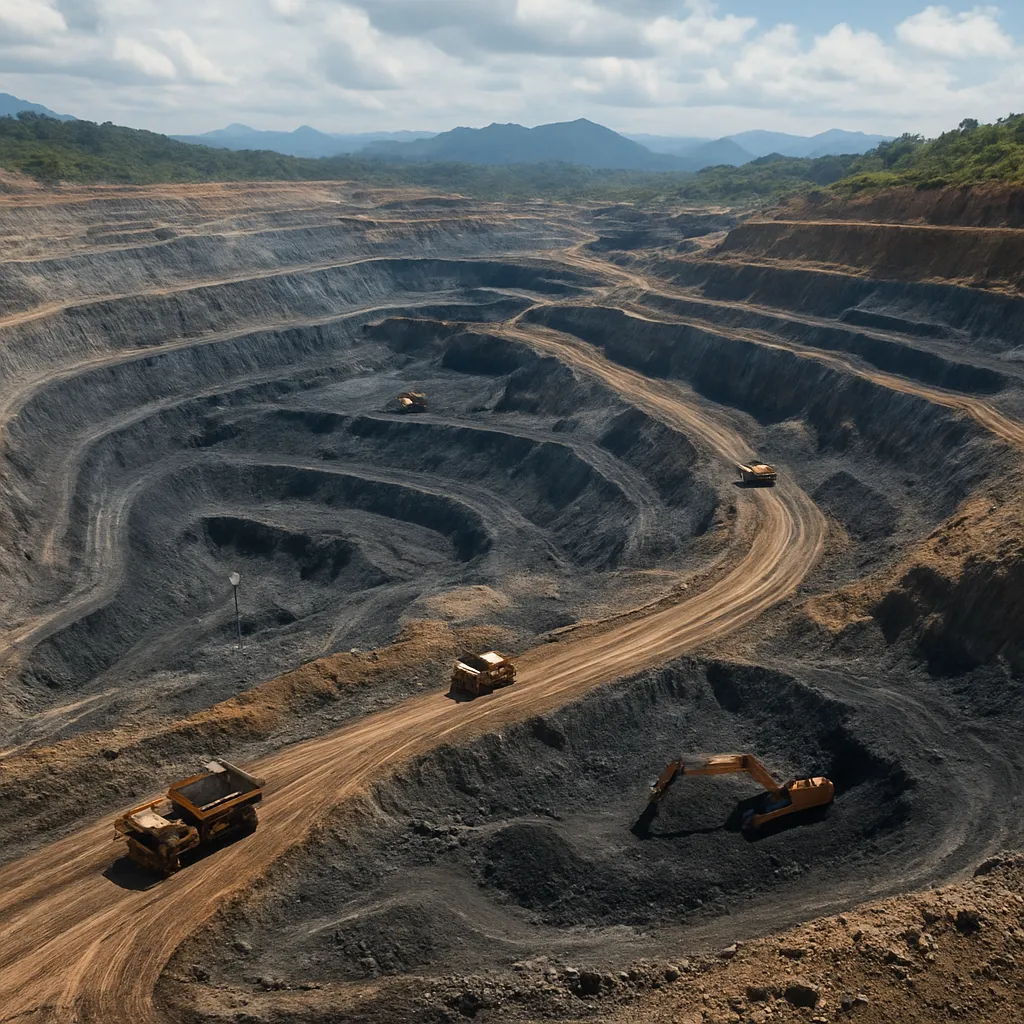
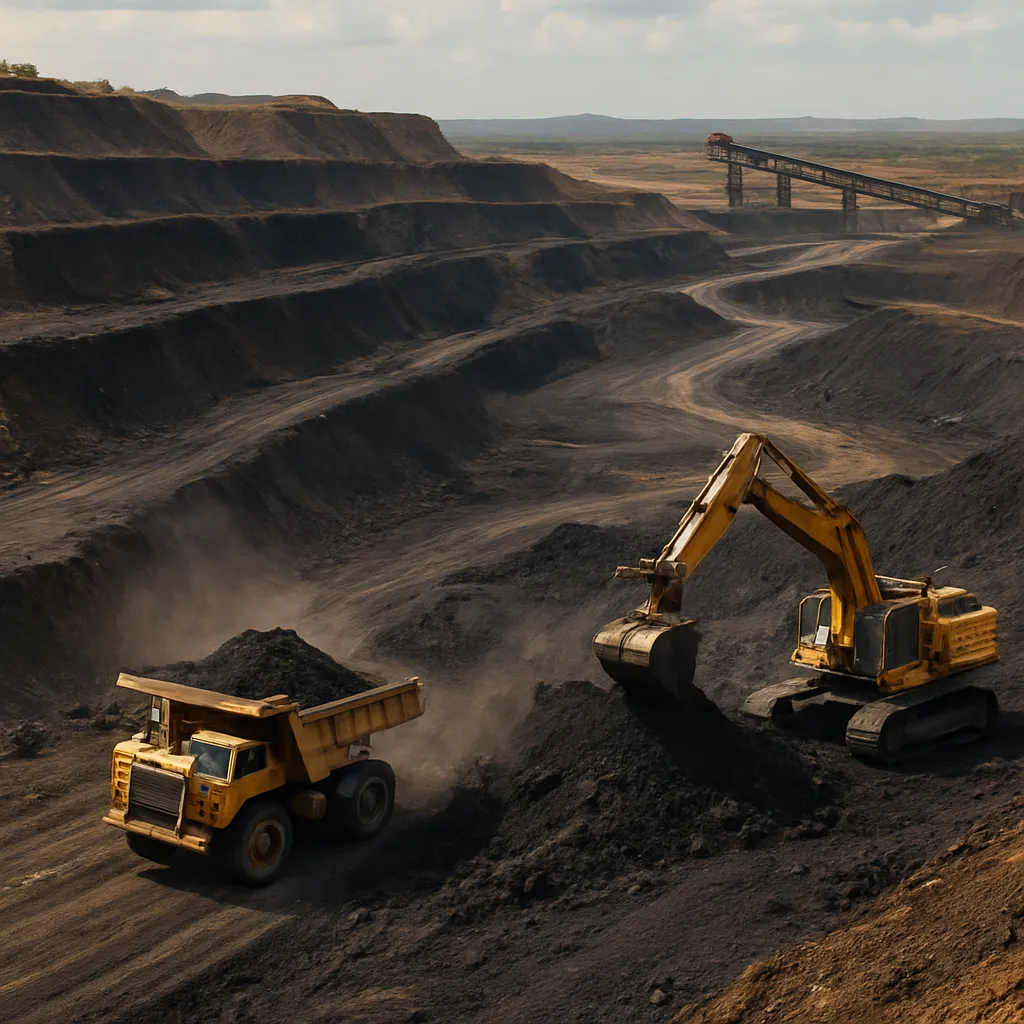
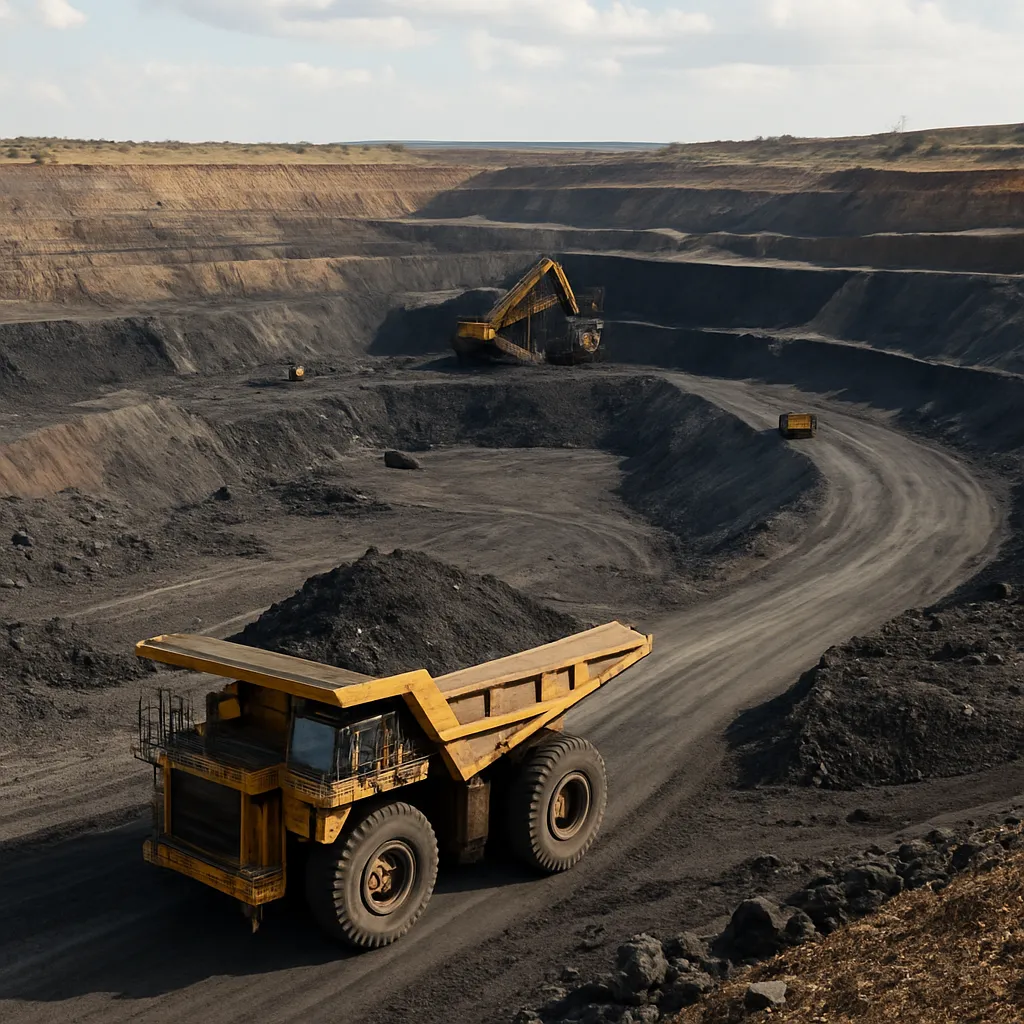
Mining methods used at Tweefontein and neighboring operations reflect seam depth, thickness and local topography. Many collieries in the Witbank region deploy a combination of underground and opencast mining. Underground practices historically included bord-and-pillar and, in some places, mechanized longwall systems where geology allowed. Opencast (open-pit) mining has been extensively used where seams outcrop or are near the surface, enabling higher production rates but necessitating large-scale land disturbance and progressive rehabilitation.
Production statistics and scale
Specific, up-to-date public production figures for Tweefontein vary by reporting period and operator disclosures; detailed mine-level data are sometimes limited in the public domain. At a regional level, however, context is clearer: South Africa’s annual coal production has in recent years typically ranged between approximately 200 and 260 million tonnes per year, with Mpumalanga producing the vast majority (often cited as over 70–80%) of the national output. Mines in the Witbank area historically range from small operations producing several hundred thousand tonnes per year to large collieries producing multiple millions of tonnes annually. Tweefontein has, in different operational phases, been characterized as a small-to-medium scale producer within this spectrum.
Coal from Tweefontein is transported by road and rail to customers. Rail is central to bulk movement, linking mines in Mpumalanga to inland power stations and to export terminals such as the Richards Bay Coal Terminal (RBCT) on the east coast, which handles a large share of South African coal exports. The mine thus plays a role both in supplying domestic electricity generation and in contributing to export volumes when production meets export quality standards.
Economic and industrial significance
The economic role of Tweefontein Coal Mine extends beyond the tonnage extracted. Coal mining is a vital economic activity in Mpumalanga and across South Africa, and even relatively small collieries contribute to local employment, procurement, and municipal revenues. Tweefontein provides jobs directly in mining, engineering, maintenance and administrative functions, and indirectly through service providers, transport companies and the supply chain that supports mining operations.
Employment figures at mine level vary by phase (development, full production, care-and-maintenance). Typical collieries in the region employ from several hundred to more than a thousand people; Tweefontein has historically provided significant local employment, sometimes augmented by contractors. In addition to wages, the mine stimulates local small business growth, fuels demand for housing and services, and contributes to local and provincial tax bases through royalties and company taxes.
Contribution to energy security and industry
South Africa relies heavily on coal for electricity generation — coal-fired power plants supplied roughly 70–90% of national electricity in recent decades (figures vary by year and operational status of the generation fleet). Mines such as Tweefontein, by supplying coal to utility and industrial customers, support national energy security and economic activity. Coal is used not only for grid electricity (Eskom) but also in industrial processes, including cement and metallurgical activities where appropriate coal grades are required.
Financial flows and market dynamics
- Mines sell coal under long-term contracts to power utilities and shorter-term contracts to traders and exporters.
- Coal prices are influenced by international demand (especially Asian thermal coal markets), domestic electricity demand, and logistics constraints (rail and port capacity).
- Operational costs include drilling and blasting (for open pits), mechanized underground equipment, water management, and beneficiation where coal washing is needed to meet grade requirements.
Capital intensity is significant: mining infrastructure, rail interfaces, and beneficiation plants often require large up-front investments. Smaller mines sometimes rely on custom mining contracts or partnerships with larger operators to share costs and market access.
Environmental, safety and social issues
Coal mining in South Africa, including operations at Tweefontein, brings environmental and social challenges that must be managed through regulation, corporate practice and community engagement. Key environmental issues include land disturbance, dust and particulate emissions, water use and quality impacts, and greenhouse gas emissions. Acid mine drainage (AMD) is a major legacy problem for older and abandoned mines in the Witbank area where exposed sulfide minerals can lead to acidic, metal-laden water requiring treatment.
Common environmental concerns
- Water: competition for water in a water-stressed region, need for mine water treatment and careful mine water management.
- Dust: particulate control is necessary for worker health and neighboring communities.
- Rehabilitation: progressive rehabilitation of mined areas is required by South African law and is a major cost.
- Methane and greenhouse gases: coal seams and associated methane emissions are a climate and safety concern; some operations investigate methane capture for power or flaring to reduce greenhouse gas intensity.
Safety is another critical area. South African collieries have a history of stringent safety regulation and ongoing improvement, but mining invariably carries risks. Operators at mines like Tweefontein are required to implement mine safety management systems, regular training, and emergency preparedness measures to protect workers.
Social licence to operate and community relations
Local communities expect employment opportunities, infrastructure development, and environmental protection in return for hosting mining activities. Corporate social investment (CSI) programs commonly focus on skills training, education, health initiatives, and local enterprise development. Community expectations also include rehabilitation of land after mine closure and long-term management of environmental liabilities.
Regulation, ownership and governance
Mining in South Africa is governed by a legal framework that includes the Mineral and Petroleum Resources Development Act (MPRDA), environmental legislation such as the National Environmental Management Act (NEMA), and sector-specific health and safety regulations. Mine operators must secure prospecting and mining rights, environmental authorizations, water use licenses and comply with labor and social regulations.
Ownership of collieries in the Witbank area has changed over the decades. Large mining houses, independent coal companies and black economic empowerment (BEE) partners have each played roles in the ownership mix. Tweefontein’s ownership history has reflected this broader pattern of consolidation, change and local partnerships. These shifts affect investment profiles, operational priorities and community relationships.
Future outlook and challenges
Tweefontein, like other coal mines in South Africa, faces both near-term operational challenges and long-term strategic change. Short-term challenges include volatile coal prices, logistics constraints (rail and port bottlenecks), fluctuating electricity demand, regulatory compliance costs, and the capital required to manage environmental liabilities. Longer-term challenges stem from the global energy transition, growing pressure to decarbonize, and evolving domestic energy policy.
Decarbonisation and market pressures
Global moves away from coal for power generation put pressure on export markets and increase uncertainty for long-life coal assets. South Africa’s domestic policy seeks a diversified energy mix, and there are plans to increase renewable energy capacity. However, coal will likely remain part of the electricity mix for years to come due to existing capital stock in coal-fired power plants and the social-economic role of the coal sector.
Adaptation and opportunities
- Mine rehabilitation and repurposing: end-of-life pit lakes, industrial land conversion, and renewable energy projects on rehabilitated mining land offer pathways for transition.
- Value-added processing: beneficiation and washing to meet higher-quality markets can extend the economic life of coal operations.
- Methane capture: reducing greenhouse emissions while capturing methane for power or sale is a potential mitigation and revenue avenue.
- Skills and economic diversification: retraining mining workforces for construction, renewable energy and environmental services supports a just transition for communities dependent on coal.
The success of these adaptation strategies depends on coordinated policy, private investment and community engagement. Tweefontein’s future will be shaped by these dynamics, its remaining reserves and the mine’s ability to manage environmental and social responsibilities while remaining economically viable.
Interesting facts and broader context
- Tweefontein is part of one of the world’s most geologically prolific coal basins; the Witbank field has powered South Africa’s industrial growth for over a century.
- The logistics chain (mine-to-rail-to-port) is a defining feature of South African coal economics; upgrades or failures in rail or port capacity directly impact mine revenues.
- Coal from Mpumalanga supplies both domestic utilities and global markets — fluctuations in Asian thermal coal demand often ripple back to mines like Tweefontein.
- Regulatory emphasis on mine closure planning and funding means mines allocate capital today to manage liabilities after mining ends, changing the investment case for continued extraction.
Concluding perspective
Tweefontein Coal Mine exemplifies the important but transitional role that coal mining plays in South Africa’s economy. Situated in Mpumalanga within the productive Witbank Coalfield, it produces primarily coal used for electricity generation and potentially for export. The mine supports local employment and regional industrial activity, while facing significant environmental and market pressures. Broader statistics show that South Africa remains a major global coal producer, and operations like Tweefontein continue to matter for national energy security. At the same time, the mine — and the sector it represents — must navigate the twin demands of economic relevance and environmental sustainability as the global and local energy landscapes evolve.