The Maritsa East mining complex, known in Bulgarian as Maritsa Iztok, is the largest coal mining and power generation center in Bulgaria and one of the most significant lignite basins in Southeast Europe. Located in the eastern part of the Upper Thracian Plain, in Stara Zagora Province, the complex has shaped the regional economy, energy system and landscape for decades. This article reviews its location and geology, the character of the coal extracted, economic and statistical data where available, its role in industry and electricity supply, and the environmental and social challenges that frame its future.
Location, geology and mining infrastructure
The Maritsa East complex lies in the southern part of the Bulgarian plain formed by the river Maritsa, roughly between the towns of Radnevo, Galabovo and Kazanlak in Stara Zagora Province. Its lignite deposits are part of the larger Maritsa-Iztok coal basin, created by Neogene sedimentation and characterized by thick sequences of brown-coal seams interbedded with clays and sands. The coal measures are shallow and extensive, which has favored large-scale open-pit mining.
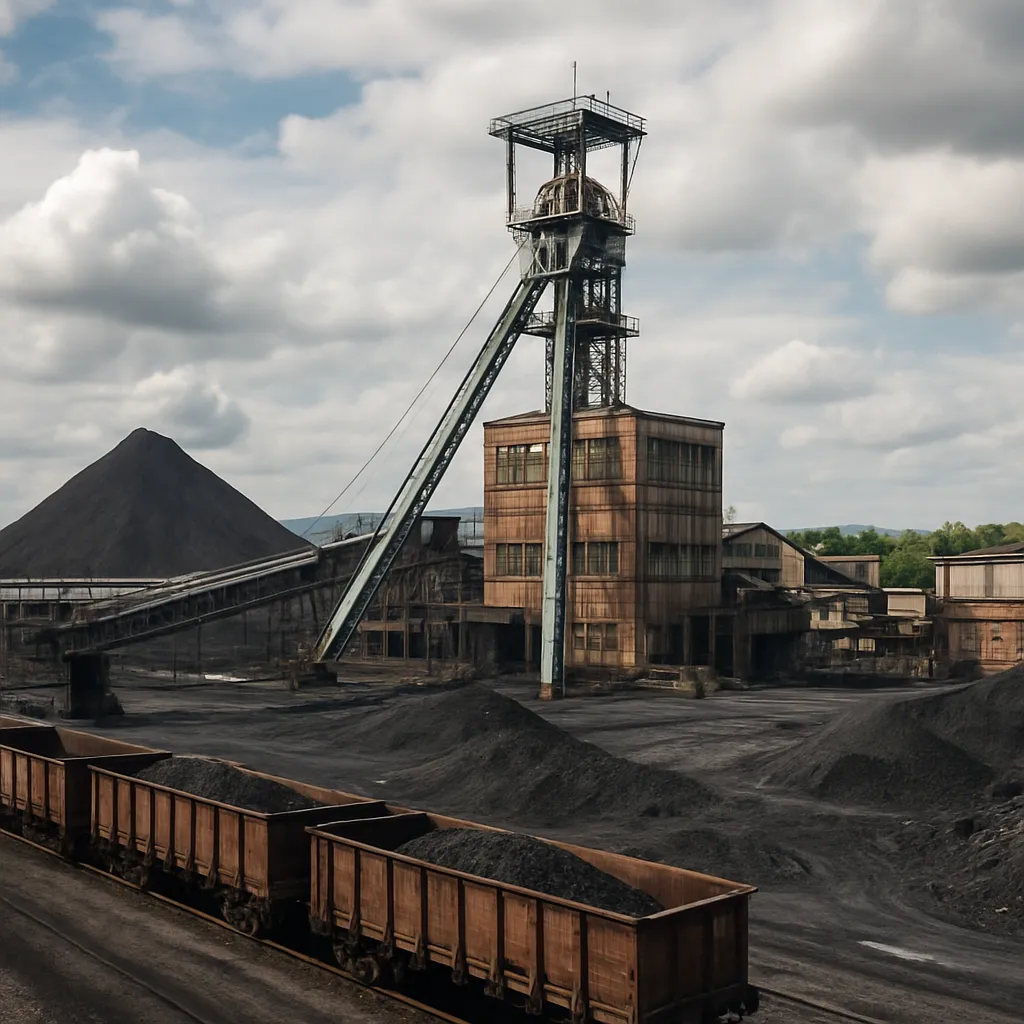
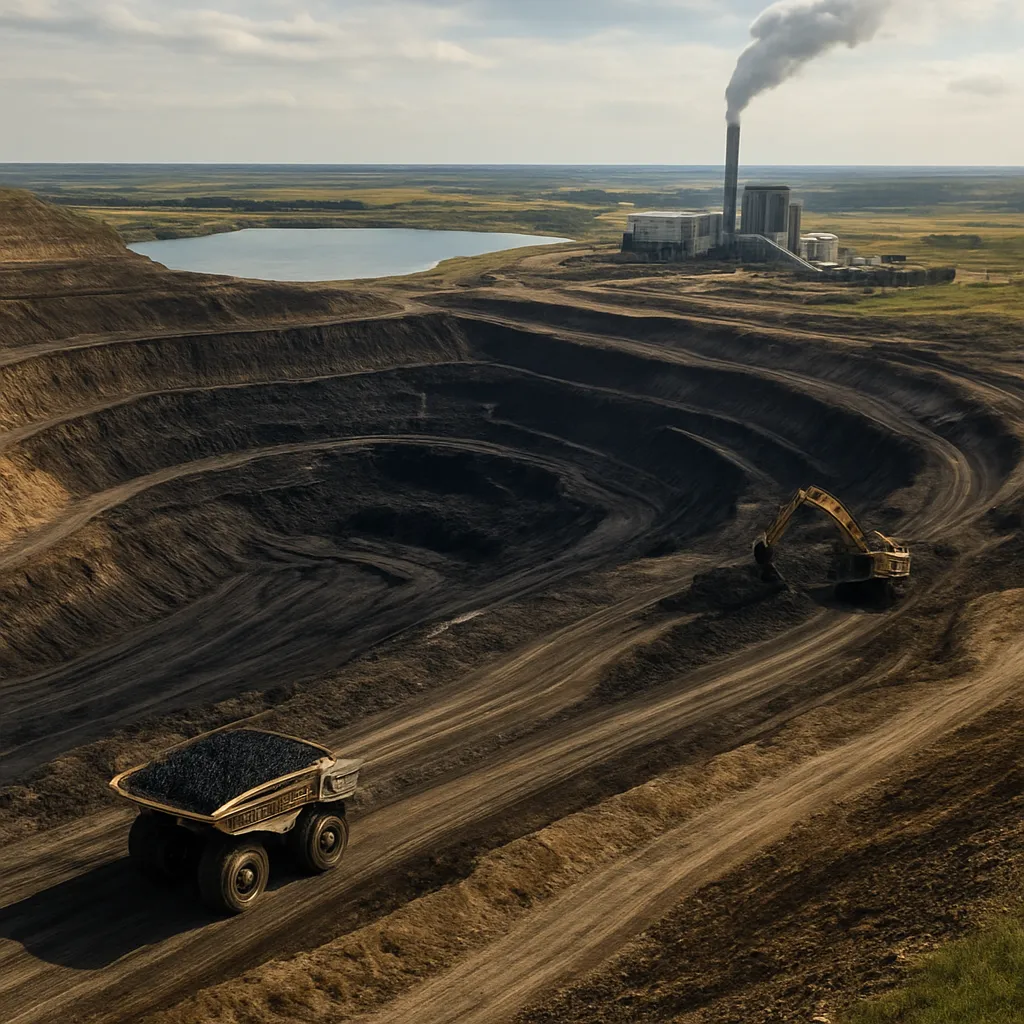
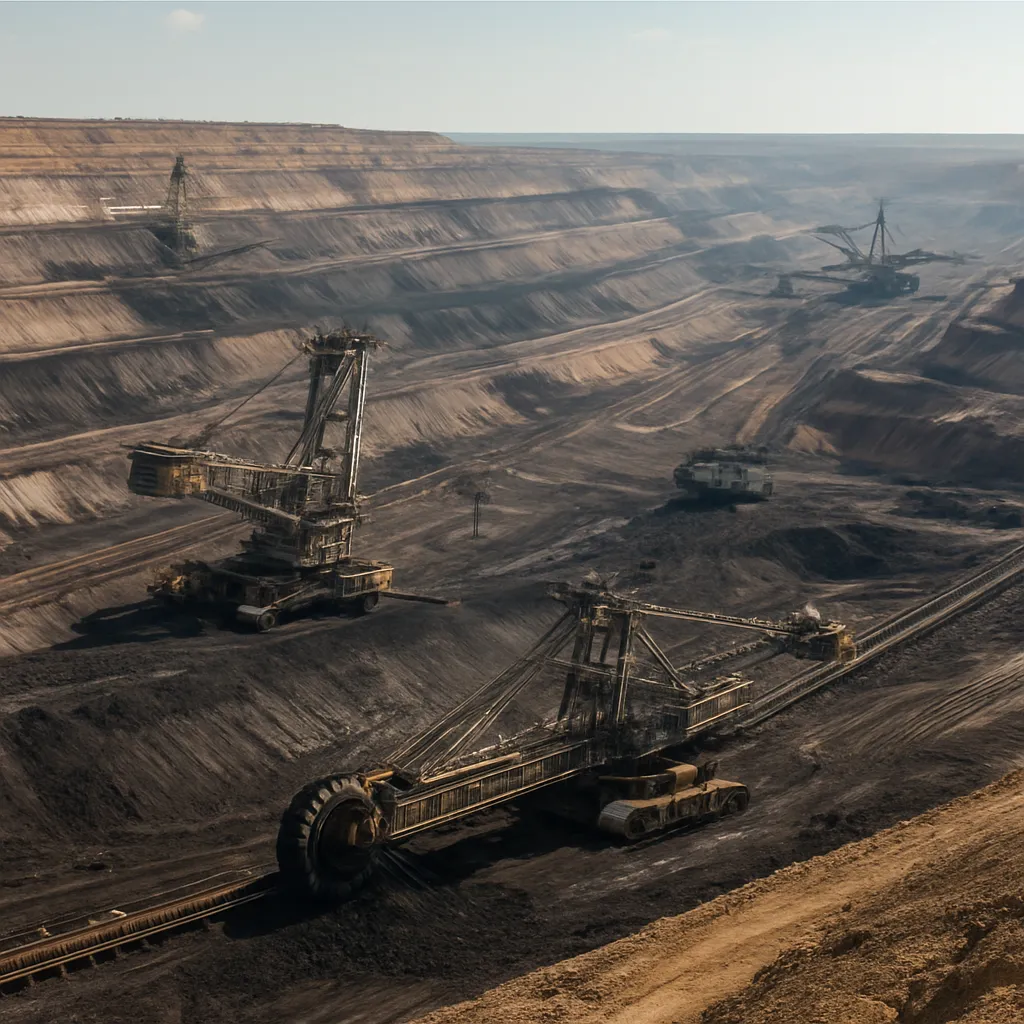
Mining at Maritsa East is dominated by surface operations using large mechanical excavators and conveyor systems. The scale of excavation is among the largest in Europe: continuous mining with bucket-wheel excavators and heavy overburden removal has enabled high annual extraction rates. The basin contains multiple pits and associated spoil dumps, with associated infrastructure including crushing plants, conveyor belts and dedicated railway spurs to deliver raw coal directly to adjacent thermal power stations.
Coal type and technical characteristics
The coal mined at Maritsa East is primarily lignite, commonly referred to as brown coal. Lignite differs from higher-rank coals (bituminous and anthracite) by having higher moisture content, lower fixed carbon and lower calorific value, which influences combustion behavior and emission profiles.
- Typical calorific value: approximately 8–12 MJ/kg (lower heating value), depending on seam and moisture content.
- Moisture content: generally high, often in the range of 30–60% on a wet basis.
- Sulfur content: typically low to moderate, which historically reduced local SO2 concerns compared with higher-sulfur coals.
- Ash content: variable, often moderate; power plants adjust boiler operation and ash handling to local coal quality.
Because of these properties, Maritsa East lignite is primarily used for large-scale, adjacent thermal power plants optimized for this fuel. Combustion systems, milling, and emission controls in the plants are tailored to handle high-moisture, low-rank fuel economically and reliably.
Production, reserves and statistical overview
Maritsa East is the dominant lignite producer in Bulgaria. Exact figures change year to year, but the following summarizes approximate and historically reported magnitudes to give a sense of scale:
- Estimated remaining geological reserves: in the order of several billion tonnes (commonly cited figures range ~3–6 billion tonnes for the Maritsa-Iztok basin as a whole).
- Annual lignite production: in recent decades often in the range of 30–40 million tonnes per year (annual output fluctuates with demand, plant availability and market conditions).
- Installed thermal capacity fed by the complex: roughly 2,000–3,000 MW across several power stations sited at Maritsa East (the exact installed capacity varies by plant unit status and modernization campaigns).
- Share of national electricity generation: historically substantial — the complex has contributed on the order of 30–40% of Bulgaria’s electricity production during periods of full operation, making it a cornerstone of domestic energy supply.
- CO2 and air pollutant emissions: the complex is among the largest point sources of greenhouse gases in Bulgaria and the EU; emissions are measured in the range of tens of millions of tonnes of CO2 annually for the entire complex, depending on annual generation and abatement measures.
These figures are approximate and sensitive to operational constraints, environmental retrofits and broader shifts in the Bulgarian power market. Nevertheless, they illustrate the strategic scale of Maritsa East for Bulgaria’s energy balance.
Economic and industrial significance
Maritsa East’s importance extends beyond raw numbers. The complex plays multiple economic roles:
- Energy security — by providing a large, domestically-sourced fuel supply, Maritsa East reduces Bulgaria’s dependence on imported fuels and supports grid stability through baseload generation.
- Employment — mining and power operations directly employ thousands of workers (direct employment estimates often cited in the range of 10,000–15,000 people across mining, power generation and plant services), with broader indirect employment supporting local service sectors, transport, equipment suppliers and contracting firms.
- Regional development — the towns around Maritsa East have grown and specialized economically around the complex: housing, social services and local procurement chains are interwoven with mining and power activities.
- Fiscal contribution — taxes, royalties and utility revenues generated by mining and generation help municipal and national budgets, while investments in infrastructure (roads, rail, electricity grid) have regional spillovers.
Power plants adjacent to the mines benefit from minimized fuel transport costs, making electricity from Maritsa East historically competitive in Bulgaria’s wholesale market. The complex has thus been central to Bulgaria’s industrial competitiveness, supplying electricity for manufacturing, mining and services.
Environmental impacts and mitigation efforts
Large-scale lignite mining and lignite-fired power generation carry substantial environmental footprints. At Maritsa East these include:
- Landscape change and land take: expansive open pits, spoil heaps, and infrastructure have reshaped the plain; land reclamation and rehabilitation are ongoing challenges.
- Air emissions: combustion of lignite emits CO2, particulate matter, NOx, and—depending on coal quality and abatement—SO2. The complex has been identified as a major stationary source of greenhouse gases and air pollutants in Bulgaria.
- Water impacts: mine dewatering, changes to groundwater dynamics and management of process water and ash ponds require careful control to protect local aquifers and surface waters.
- Human health: air quality impacts from particulate matter and gaseous pollutants can affect local populations; monitoring and mitigation have been priorities in recent decades.
Mitigation and modernization efforts have been pursued progressively: installation of flue-gas desulfurization (FGD) systems and selective catalytic reduction (SCR) units where economically feasible, particulate filters, and improved ash handling. Additionally, land reclamation programs seek to restore mined areas for agriculture, forestry or industrial reuse. The complex and national authorities have also engaged with European funding mechanisms and regulatory frameworks (including EU emissions standards and the Emissions Trading System) to finance retrofits and plan transitions.
Social dimensions and regional consequences
The presence of Maritsa East shapes local social structures. Benefits include stable employment, municipal revenues, and infrastructure investment. At the same time, communities face challenges:
- Economic dependence on a single industrial sector, making the region vulnerable to declines in coal demand or plant closures.
- Health and quality-of-life concerns tied to air pollution, noise and altered landscapes.
- Demographic shifts: employment trends, out-migration of younger people when opportunities decline, and the need for retraining and workforce diversification.
Policy responses have emphasized workforce retraining, investment attraction to diversify local economies, and social protection measures to buffer the impacts of any downsizing related to decarbonization. The concept of a just transition—ensuring workers and communities are supported during the energy transition—has been a focal point of national and EU-level planning for coal regions including Maritsa East.
Technological adaptations and modernization
To maintain competitiveness and comply with environmental requirements, many operators at Maritsa East have undertaken modernization projects. These include:
- Upgrades to turbine and boiler efficiency to reduce fuel consumption per unit of electricity generated.
- Installation or enhancement of emission control systems (FGD, dust collectors, low-NOx burners).
- Automation and digitalization in mining operations to improve safety and productivity.
- Research into co-firing biomass or using cleaner combustion technologies as transitional measures.
Modernization reduces emissions intensity and operational costs, but many of these measures require significant capital investment. The pace of retrofits is influenced by market prices, policy certainty about the future of coal, and access to finance and EU funding instruments.
Regulatory context and the energy transition
Bulgaria, as an EU member state, is subject to progressively tightening climate and air-quality policies. The EU’s Green Deal, national commitments under the Paris Agreement and the operation of the EU Emissions Trading System all place pressure on coal-fired generation. In this context:
- Long-term prospects for large lignite complexes are constrained by decarbonization targets and carbon pricing.
- Planning for decommissioning, site rehabilitation and economic diversification has gained prominence in national policy debates.
- EU funds (including cohesion and just-transition instruments) are potential sources of financing for repurposing infrastructure, retraining workers and remediating land.
The pace and sequencing of plant closures or conversions at Maritsa East will be shaped by a mixture of technical readiness, political decisions, social agreements, and available funds to mitigate socio-economic impacts.
Possible future pathways
Several plausible futures exist for Maritsa East, not mutually exclusive and often combined in regional planning:
- Phased retirement of coal units with strict timelines and social packages; reclamation of mined land combined with support for new industries.
- Gradual decarbonization through efficiency upgrades, co-firing with biomass or deployment of carbon capture technologies where viable.
- Transformation of the regional energy system toward renewables complemented by flexible gas-fired generation and energy storage, with transmission upgrades to integrate new resources.
- Development of industrial clusters (e.g., manufacturing, logistics, green hydrogen production) that can leverage local skills and infrastructure while providing new employment.
The chosen pathway will reflect national strategies, EU policy drivers, stakeholder negotiations and the availability of investment to support transitions.
Interesting facts and lesser-known aspects
- The Maritsa East basin is one of the largest single-source lignite regions in Europe, notable for its combination of very large reserves and proximity of fuel to generation units—this logistical advantage has shaped Bulgaria’s post-war industrialization.
- Because of the low sulfur content of the lignite, historical concerns about SO2 were regionally more tractable than in high-sulfur coal regions, but the volume of fuel burned still made sulfur and particulate control important.
- Open-pit mining has uncovered archaeological and paleontological finds from time to time; careful coordination between mining and cultural heritage authorities is required in some zones.
- Several international energy companies and domestic operators have engaged with the complex over the past decades, reflecting changing patterns of ownership, privatization and re-nationalization that are common in the European power sector.
Conclusions
Maritsa East remains a defining element of Bulgaria’s energy and industrial landscape. Its large lignite reserves and integrated mining–generation model provided decades of low-cost, domestically-sourced power, supporting regional economies and national energy security. At the same time, the environmental footprint, regulatory pressures and the EU’s decarbonization agenda present major challenges that require careful planning.
The future of Maritsa East will depend on decisions about modernization, timing of coal phase-out, the effectiveness of mitigation and retraining programs, and the ability of local and national institutions to attract investment for diversified, sustainable economic activity. Whether through technological adaptation, phased decommissioning with robust social supports, or a combination of both, the transition in Maritsa East will be a litmus test for Bulgaria’s broader energy and industrial transformation.