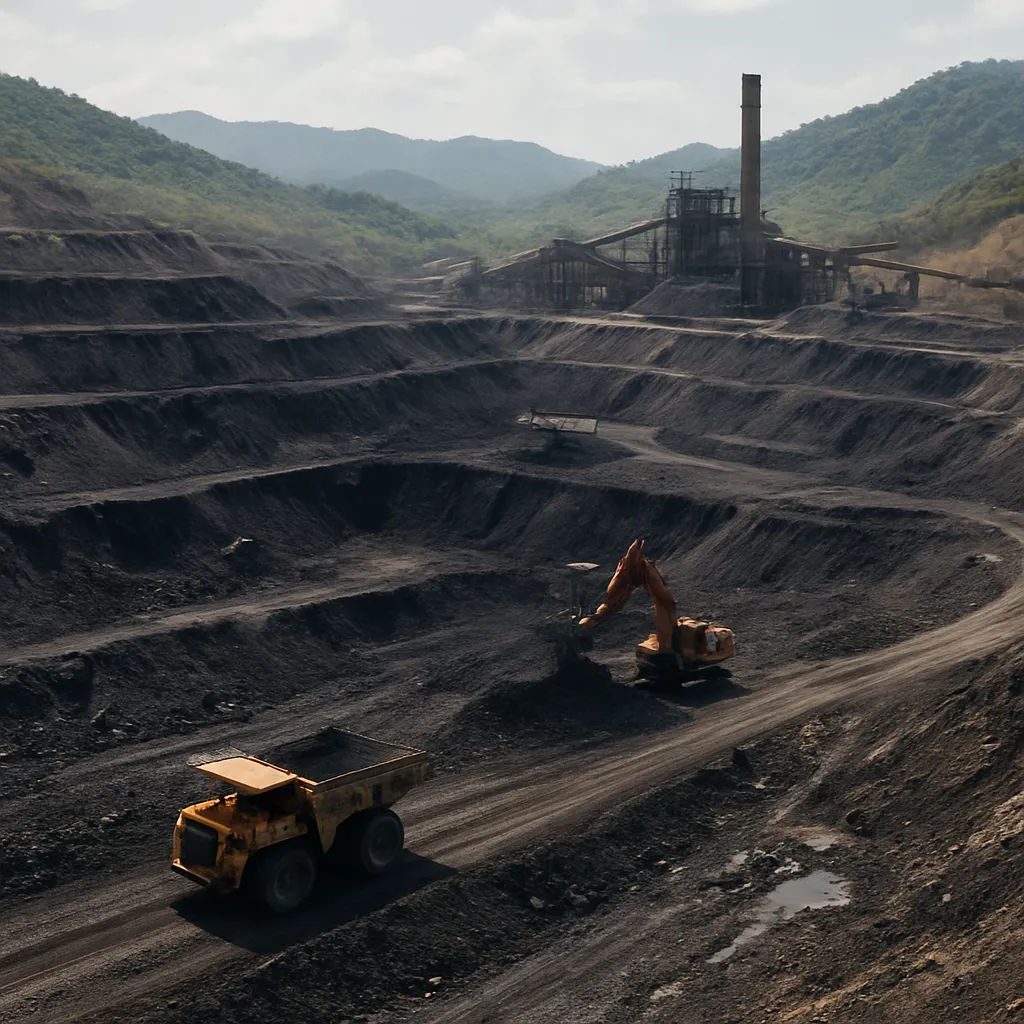
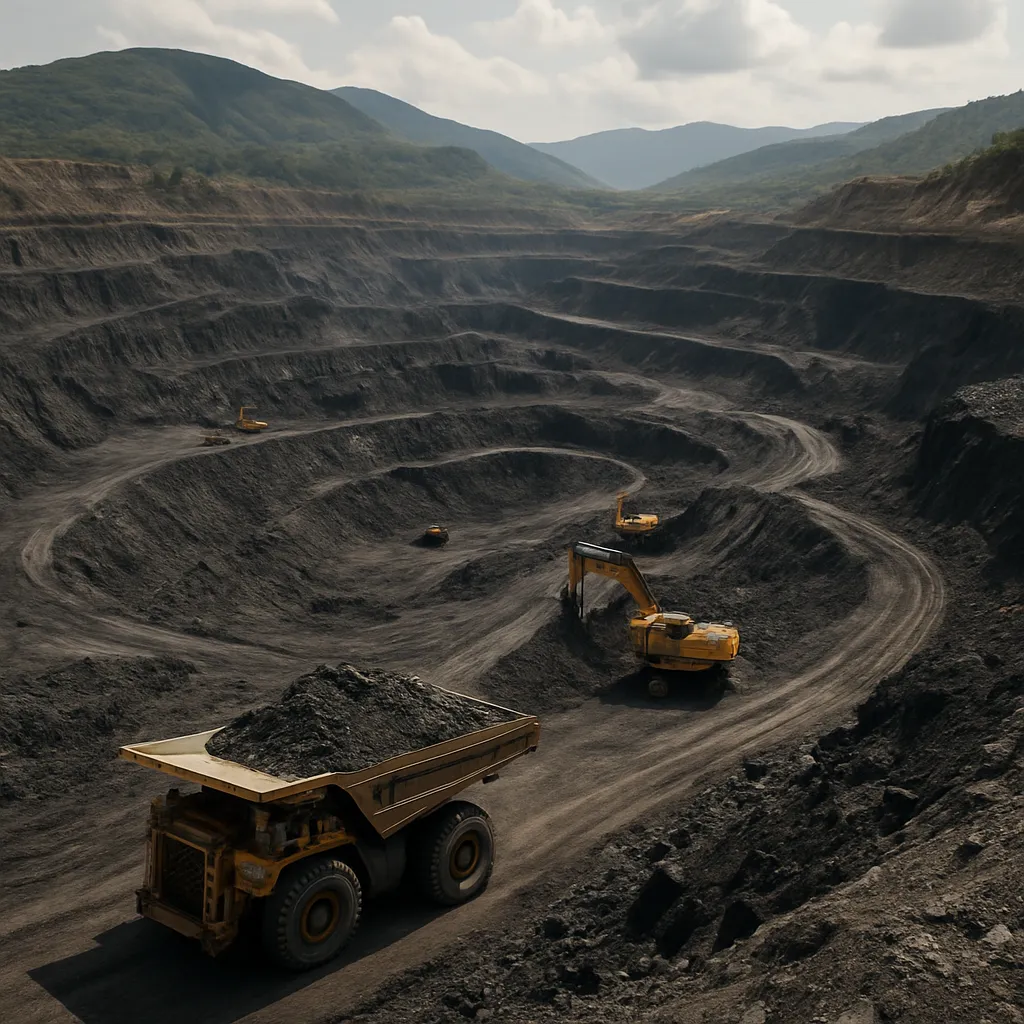
The Dorsfontein Coal Mine is part of South Africa’s extensive coal-mining landscape, representing both the historical importance and contemporary challenges of the country’s coal sector. This article describes the mine’s location and geologic setting, the types of coal produced and mining methods used, economic and industrial significance, social and environmental considerations, and current statistical context and outlook. Wherever possible, figures and regional statistics are offered; where specific mine-level data are not publicly available, broader regional and national data provide context for Dorsfontein’s role in the coal value chain.
Location and geological setting
Dorsfontein is a name used for a number of localities in South Africa, but in the coal-mining context it is commonly associated with sites located in the central Highveld and Witbank (eMalahleni) coalfields. These coalfields are primarily in the province of Mpumalanga and adjacent parts of the Free State and Gauteng. The area sits within the extensive Karoo–Permian coal measures that dominate South Africa’s coal-bearing basins.
Geologically, the coal-bearing sequence in the Highveld is characterized by multiple seam packages deposited in a Permian-age basin. Coals from this region are predominantly sub-bituminous to bituminous in rank, formed under conditions favorable to generating dense, energy-rich seams. The stratigraphy typically includes alternating sandstone, shale and coal horizons; local faulting and seam continuity determine the feasibility and method of mining.
The Dorsfontein sites are therefore situated in a landscape shaped by both mining and agriculture, with rail and road links developed to move coal to local power stations, nearby petrochemical plants and export terminals. Proximity to major consumers such as Eskom power stations and to export infrastructure is a defining logistical advantage for these collieries.
Types of coal, mining methods and operations
Dorsfontein-type operations in the Highveld primarily produce thermal coal used for electricity generation and industrial heat processes. The typical product grade is medium- to high-ash bituminous coal (sometimes marketed as steam coal), with calorific values and ash contents that vary by seam and beneficiation.
Key technical features include:
- Coal quality: Mostly bituminous/steam coal, suitable for pulverized coal-fired power stations; some seams may yield low-volatile or semi-soft coking fractions but thermal coal predominates.
- Mining methods: A mix of opencast (open-pit) and shallow underground (bord-and-pillar/pillar extraction) mining is common in the region. Many Dorsfontein-style operations have favored opencast techniques where seam geometry and overburden allow cost-effective stripping.
- Processing: Run-of-mine coal is often crushed and screened; dense medium beneficiation or jigging may be used at nearby preparation plants to reduce ash and improve calorific value for specific customers.
- Transport: Coal is typically transported by truck to rail-loading facilities or directly to industrial customers; rail connectivity to Richards Bay Coal Terminal and inland power plants is central to the value chain.
Economic and industrial significance
On both a local and national scale, collieries such as Dorsfontein contribute to South Africa’s energy security, employment and export earnings. Coal remains the backbone of South Africa’s power generation mix — historically supplying around 80–90% of electricity through the state utility, Eskom — and also underpins energy-intensive industries such as steel, chemicals and cement.
Key economic roles:
- Domestic power generation: Mines in the Highveld supply thermal coal to nearby Eskom stations and private power users, stabilizing fuel supply chains.
- Industrial feedstock: Coal is a feedstock for the petrochemicals sector (coal-to-liquids historically via Sasol) and for local manufacturing.
- Employment and local economies: Collieries create direct jobs (miners, plant operators, engineers) and indirect employment in transport, maintenance, and services. A small- to medium-sized mine may employ several hundred people on site and support thousands indirectly in surrounding towns.
- Export earnings: While Dorsfontein itself may mostly supply domestic markets, the broader region contributes to South Africa’s coal exports, which provide foreign exchange and balance-of-trade benefits.
Fiscal aspects include royalties, corporate taxes, employment levies, and local procurement. South African mining companies must operate within the legislative framework set by the Mineral and Petroleum Resources Development Act (MPRDA), pay mining royalties and meet Broad-Based Black Economic Empowerment (B-BBEE) and local community engagement requirements.
Statistical context and production figures
Specific, up-to-date production figures for a single small colliery named Dorsfontein are not always publicly disclosed; many such collieries are privately held or their output is reported in aggregated company filings. However, some relevant regional and national statistics provide context:
- South Africa’s annual coal production in recent years has typically been in the order of approximately 200–260 million tonnes per year (figures fluctuate due to demand, strike action, weather, and global market conditions).
- Domestic consumption (primarily for power generation) accounts for the majority of production, while a significant proportion—often tens of millions of tonnes—has historically been exported as steam and coking coal to markets in Asia and Europe.
- Individual small-to-medium collieries in the Highveld commonly produce at scales ranging from several hundred thousand to around one million tonnes per annum, depending on reserves, seam thickness and infrastructure.
- Employment at mine sites varies; an opencast operation producing on the order of 0.5–1.0 Mtpa might employ a few hundred workers directly, with contractor workforces fluctuating seasonally.
Where public reports exist for individual mines, production volumes, reserves, and life-of-mine estimates appear in company annual reports and regulatory filings. For many Dorsfontein-labelled sites, readers should consult the owning company’s disclosures or the Department of Mineral Resources and Energy for precise numbers.
Environmental, social and governance (ESG) considerations
Coal mining in South Africa faces growing scrutiny over environmental impacts and climate policy. Dorsfontein-style operations must contend with a suite of local environmental and social issues:
- Air quality and dust: Blasting, hauling and crushing generate dust that affects workers and nearby communities. Dust suppression, monitoring and buffer zones are standard mitigation measures.
- Water use and contamination: Coal washing and mining dewater operations consume and potentially contaminate water. Acid mine drainage (AMD) is a long-term risk where pyritic materials oxidize, and management plans and water treatment systems are crucial.
- Land rehabilitation: Progressive rehabilitation is required by law. Post-mining land use planning (agriculture, forestry, or recreation) is important to restore ecosystem services and community value.
- Greenhouse gas emissions: Coal extraction, transport and combustion contribute to CO2 emissions. Mines are increasingly asked to disclose emissions and to plan reduction strategies, such as energy efficiency and methane capture where feasible.
- Social license to operate: Local employment, community development projects, and meaningful engagement with traditional authorities and municipalities are essential to secure long-term social acceptance.
Companies operating Dorsfontein-type collieries often maintain corporate social investment (CSI) programs focused on local schools, health clinics, small-business development and skills training. Compliance with environmental management plans and regular reporting under national frameworks and investor-driven ESG standards is increasingly the norm.
Supply chain, markets and logistics
Logistics determine much of a mine’s commercial value. Dorsfontein operations connect to domestic and export markets via road and rail:
- Domestic market: The primary customer base includes Eskom power stations and industrial plants (cement, steel, chemicals). Price contracts may be long-term or delivered on spot terms depending on market conditions.
- Export logistics: For export-quality thermal coal, access to rail corridors (e.g., linking to the Richards Bay Coal Terminal) and port scheduling affects margins. Export markets have historically included India, China, Europe and other Asian buyers.
- Price drivers: International thermal coal prices, freight costs, currency exchange rates and domestic power-station procurement policies influence a mine’s revenue. Local policy — such as domestic coal supply obligations — can create preferential demand for proximate mines.
Industry challenges and future outlook
Several challenges shape the near- and medium-term outlook for mines like Dorsfontein:
- Market volatility: Global energy transitions and variable demand affect prices; speculative swings in seaborne coal markets can impact profitability for exporters.
- Regulatory and policy pressure: Climate policy, decarbonization commitments and potential shifts toward renewables put long-term demand for thermal coal into question. National energy policy choices will influence domestic demand trajectories for years.
- Infrastructure constraints: Rail reliability, port capacity and electricity supply stability are operational risks. Eskom load-shedding, for example, sometimes impacts coal mine operations and the broader value chain.
- Investment and financing: International lenders and insurers have tightened criteria for coal financing in many jurisdictions, pushing operators to demonstrate robust ESG performance and transition plans.
Despite these headwinds, certain factors support continued activity: South Africa’s near-term reliance on coal for electricity, industrial demand for steam coal, and the need for local employment and economic activity in coal-producing regions. Mines that can optimize costs, improve environmental performance and adapt to changing markets may maintain viability for several more decades, though life-of-mine economics will vary by asset.
Interesting facts and broader context
- Legacy of coal: Coal mining shaped the economic geography of the Highveld—towns, railways and industries grew up around collieries. Dorsfontein-type mines are part of that long-standing industrial fabric.
- Local beneficiation: Some collieries invest in nearby coal-preparation plants to upgrade product quality, enabling access to higher-value markets or specific industrial clients.
- Technological improvements: Automation, fleet management systems and enhanced mine planning tools are increasingly used to reduce costs and improve safety.
- Community transitions: With the global energy transition a policy focus, many coal communities are starting to explore economic diversification strategies—small-scale agriculture, renewable-energy projects, and service industries—to complement mining incomes.
Conclusion and practical notes
Dorsfontein Coal Mine, as representative of a group of small-to-medium collieries in South Africa’s Highveld, illustrates the complex interplay of geology, economics, logistics and social responsibility that defines the coal sector. While coal remains a significant energy source for South Africa, the sector faces evolving market dynamics, regulatory expectations and environmental imperatives. Mines that can balance efficient production with strong environmental management and community engagement will be better positioned amid a transforming global energy landscape.
For precise, current production, reserve, employment or financial data for a specific Dorsfontein operation, consult the operator’s public reports, the Department of Mineral Resources and Energy, or local municipal records where mining rights and environmental approvals are registered. Such sources provide mine-level detail needed for investment appraisal, academic study or policy analysis.