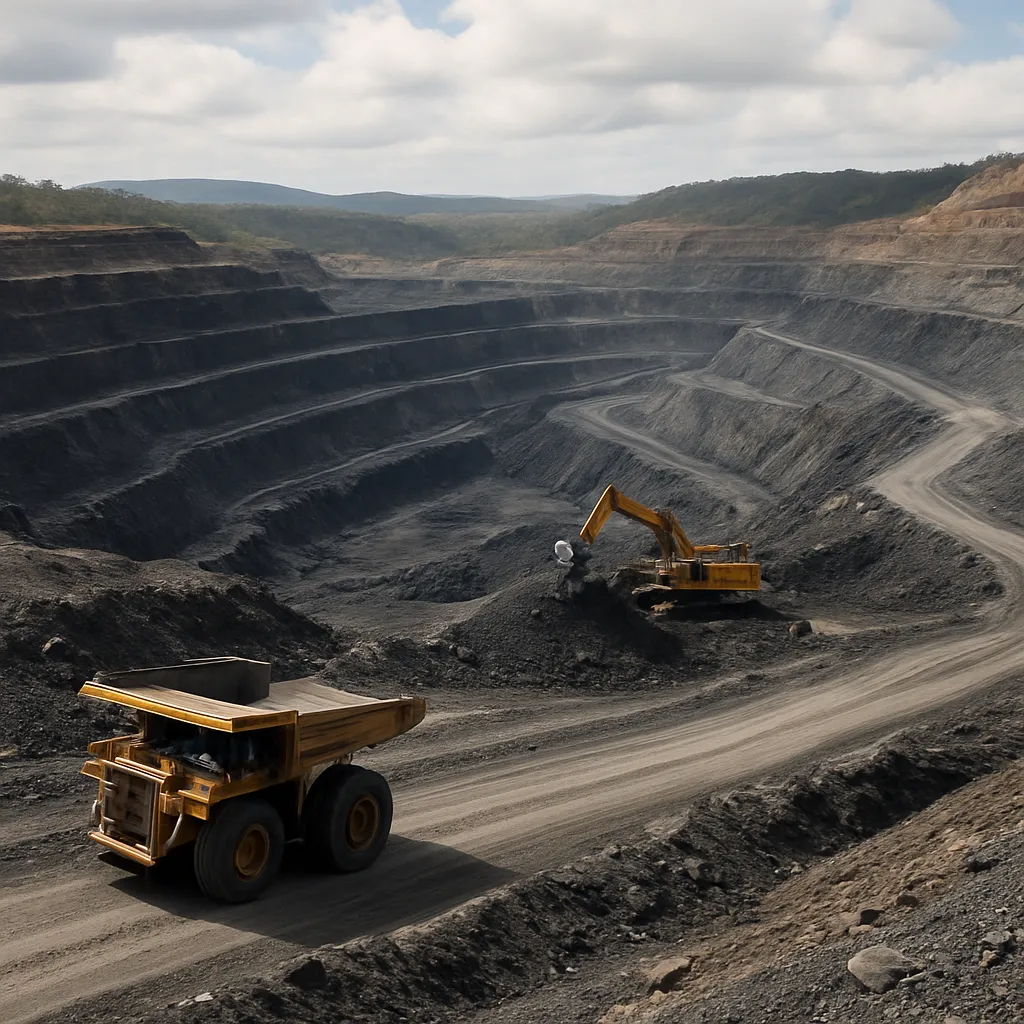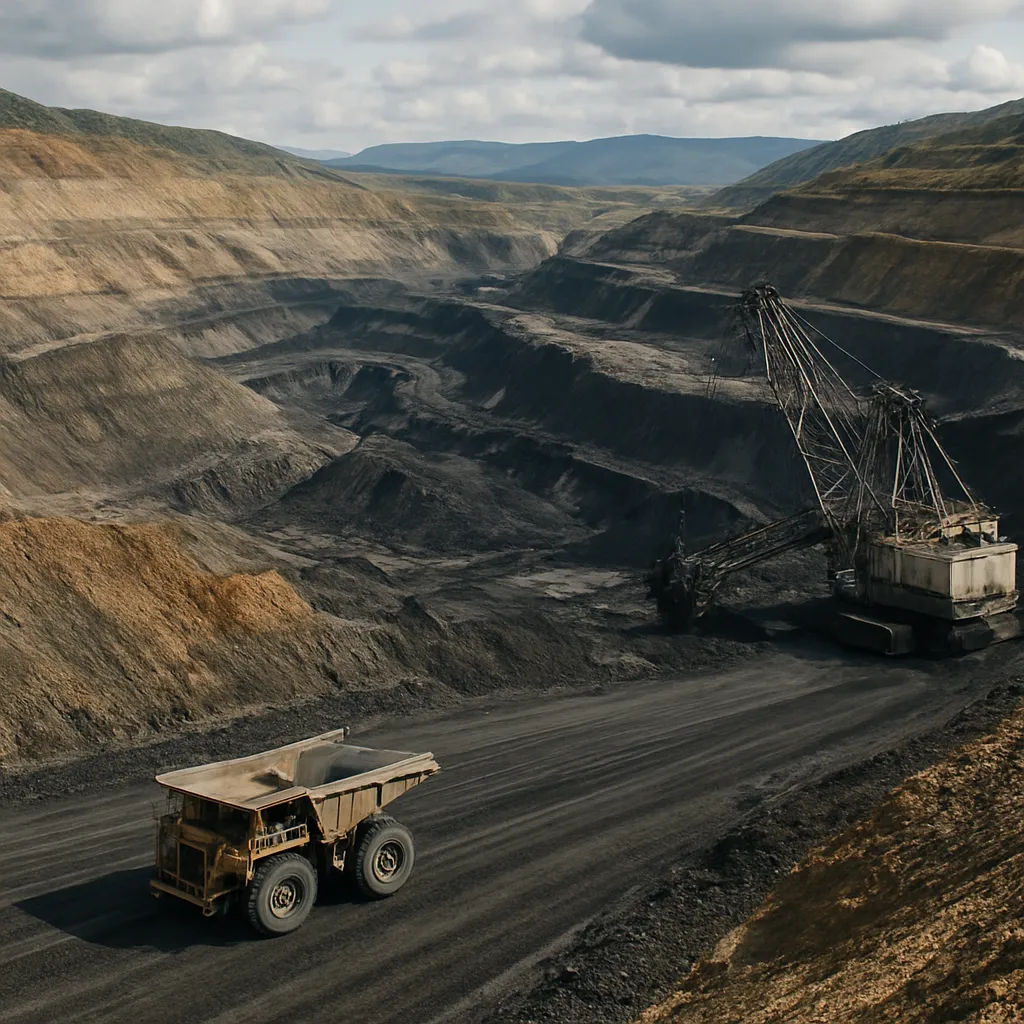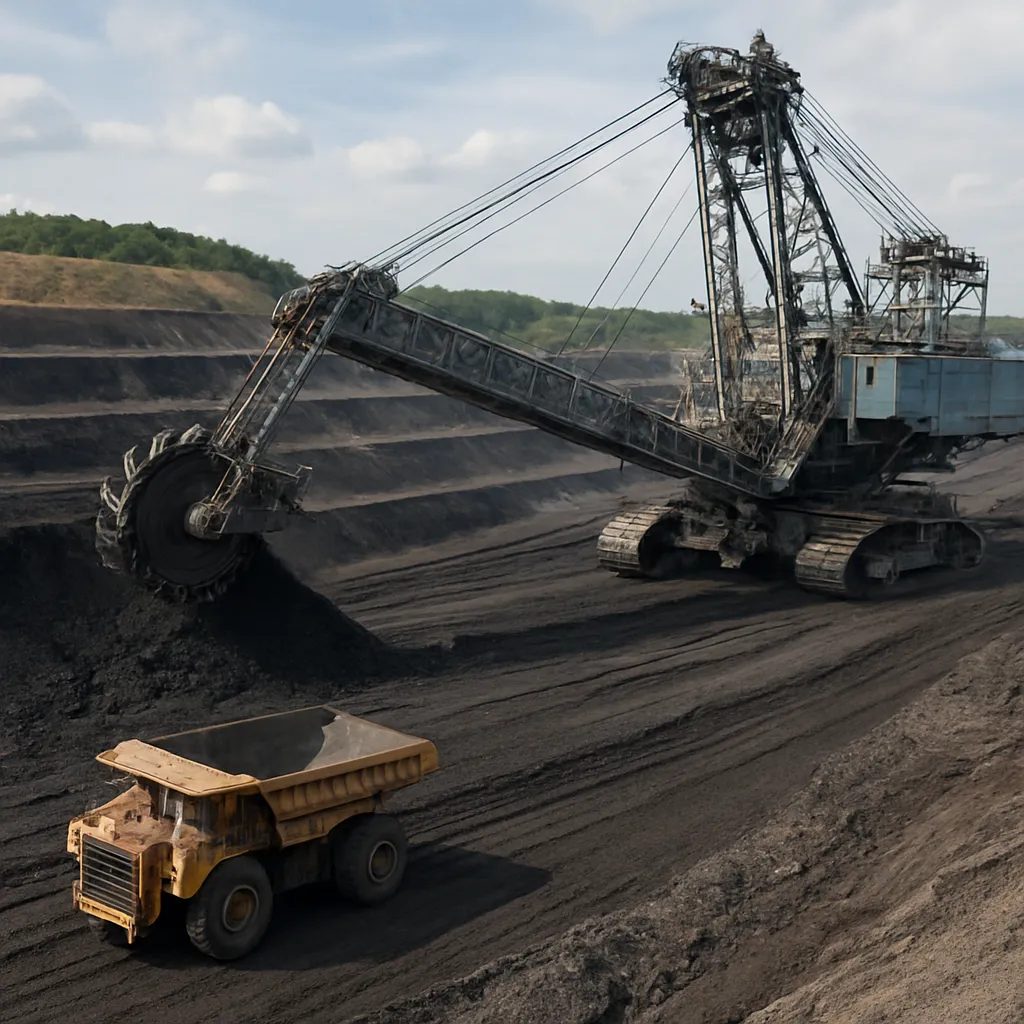
The Bogdanka coal mine, operated by Lubelski Węgiel “Bogdanka” S.A., is one of Poland’s most important and efficient coal production sites. Located in the east-central part of the country, within the historic and geologically distinct Lublin Coal Basin, Bogdanka has become a symbol of modern mining practices outside the traditional Upper Silesian mining area. This article presents a detailed overview of the mine’s location, geology, coal type, production and economic data, social and environmental aspects, and its role in the Polish energy and industrial landscape.
Location and Geological Setting
Bogdanka is situated in the Lublin Voivodeship, close to the town of Łęczna and the village of Bogdanka, approximately 20–30 kilometers east of Lublin, the regional capital. The mine lies within the Lublin Coal Basin, a sedimentary basin that is geologically separate from the major Upper Silesian coal deposits in southern Poland. The basin has historically attracted exploration because of its relatively shallow coal seams and favorable mining conditions compared with deeper, more geologically complex areas.
Geological characteristics
- The coal-bearing strata of the Lublin Basin are typically of younger Carboniferous to Permian age, with coal seams occurring at moderate depths compared with many Polish mines located in Upper Silesia.
- Seam thicknesses in the Bogdanka area can be relatively significant and often more continuous than in some other Polish basins, making extraction economically attractive.
- Coal from the Lublin Basin, and Bogdanka in particular, is generally characterized by lower sulfur and favorable ash properties compared with some Upper Silesian coals, contributing to its attractiveness for power generation and industrial use.
Products: Type and Quality of Coal
Bogdanka primarily extracts bituminous coal suitable mainly for steam (thermal) coal applications, i.e., power generation and heating, as well as some industrial uses. The coal produced is often described as higher-quality thermal coal with relatively good calorific value and lower impurities compared with some other Polish mines.
Chemical and calorific properties
- Calorific value: coal from the Lublin Basin generally falls into the medium-to-high calorific range for hard coals (typical values in practice often sit in the mid-20s to low-30s MJ/kg range, depending on the grade and washability).
- Impurities: Bogdanka coal tends to have lower sulfur content and acceptable ash characteristics, which improves combustion performance and reduces emissions per unit of energy.
- Grades: the company separates and sells different product grades according to size and quality after processing and washing, meeting both domestic energy needs and export requirements.
History and Corporate Structure
Lubelski Węgiel “Bogdanka” S.A. evolved from regional mining initiatives and later became a modern corporate entity listed on the Warsaw Stock Exchange. Over the past two decades the company has moved from being a regional producer to one of Poland’s more efficient coal mines in terms of productivity and unit costs.
Ownership and market position
- Bogdanka is a publicly traded company (historically listed on the Warsaw Stock Exchange). In the early 2020s the mine came under the strategic influence of the larger Polish energy group Enea, which acquired a significant stake, aligning coal production with a major power producer’s fuel needs.
- Because of its efficiency and favorable geology, Bogdanka has been recognized as one of the more economically competitive coal mines in Poland, often cited for relatively low extraction costs per tonne and high miner productivity compared with many state-run mines in Silesia.
Production, Reserves and Statistical Overview
Bogdanka has been a significant contributor to Poland’s coal output, especially as coal remains an important energy source for the country. Production volumes have varied with market conditions, contractual obligations to power producers, and broader energy policy shifts. Below are key statistical themes and general figures based on available company reports and industry data.
Production volumes
- Annual extraction at Bogdanka has in recent years typically ranged in the single-digit millions of tonnes. In the 2010s and into the early 2020s the mine routinely produced several million tonnes annually, reflecting consistent commercial-scale operations.
- Production trends have been influenced by demand from domestic power plants and industrial users, contractual deliveries to long-term clients, export opportunities, as well as fluctuations caused by macroeconomic factors and the COVID-19 pandemic.
Reserves and life of mine
- The Lublin coal deposits around Bogdanka contain substantial coal resources and recoverable reserves, measured in the hundreds of millions of tonnes at the broader basin scale. The company’s own proven and probable reserves have historically supported a multi-decade mining horizon under active development plans.
- Reserve figures are periodically updated based on exploration, economic cut-off criteria, and changing market conditions; ongoing exploration efforts aim at extending the mine’s operational life and preparing for new longwall panels.
Employment and productivity
- Bogdanka employs several thousand people, including miners, engineers, technical staff, and administrative personnel. Workforce size varies with production levels and project phases.
- The mine is often noted for higher-than-average productivity per miner compared with many traditional Polish mines, achieved through mechanization, modern longwall systems, and process optimization.
Economic and Industrial Importance
Bogdanka plays a multi-faceted role in the Polish economy. As a supplier of thermal coal it is a strategic fuel source for several power plants and district heating systems. Its operations also generate local economic activity and tax revenues for the Lublin region.
Supply chain and clients
- Key clients include thermal power stations, industrial consumers, and in some years export markets across Europe. The mine’s product mix and delivery patterns have reflected contractual relationships with major energy producers, particularly those seeking fuel with favorable combustion and emissions characteristics.
- Integration with energy companies—especially following stake acquisitions by larger utilities—has focused on securing stable coal supply contracts and optimizing logistics for bulk deliveries by rail and road.
Economic performance
- Historically, Bogdanka has recorded competitive operating margins relative to many Polish miners, driven by lower extraction costs and efficient management. Profitability, like that of other coal companies, is sensitive to coal prices, domestic demand, and regulatory costs related to emissions and environmental compliance.
- Revenues and net income have reflected both spot market sales and long-term contracts; cash flow management and capital expenditure planning are key to sustaining long-term extraction projects and modernization schemes.
Infrastructure, Technology and Modernization
Modern extraction at Bogdanka relies on up-to-date mining technologies, mechanized longwall systems, and investments in safety and processing. The mine’s infrastructure supports bulk transport, coal processing, and efficient underground operations.
Mining methods and safety
- Longwall mining is the primary extraction method, supported by continuous miners, roof supports, and advanced conveyor systems for material transport.
- Emphasis on safety, automation, and monitoring systems has improved workplace conditions and reduced accident rates compared with older technologies; the company routinely invests in training, ventilation systems, and gas monitoring.
Processing and logistics
- At-surface and near-surface processing facilities include coal washing and sizing plants, enabling the company to supply tailored product grades for different customers.
- Logistics rely heavily on rail connections to power plants and export terminals, as well as road transport for shorter-distance deliveries. Proximity to central-eastern Polish industrial markets reduces transit times and costs compared with more remote suppliers.
Environmental and Social Aspects
Like all large-scale coal operations, Bogdanka faces environmental and community responsibilities. The company has implemented measures to mitigate impacts, manage reclamation, and engage with local communities, while also navigating national and EU-level environmental policies aimed at reducing greenhouse gas emissions and improving air quality.
Environmental mitigation
- Common mitigation practices include water management, tailings and waste rock control, progressive reclamation of disturbed land, and dust suppression measures at surface facilities.
- Reducing emissions per tonne of coal is partly achieved through improved coal quality, washing to lower ash and sulfur content, and optimized logistics to minimize transport-related emissions.
Local community and socio-economic impact
- Bogdanka is an important employer and economic anchor in the Łęczna–Włodawa area, supporting local suppliers, infrastructure, and community initiatives.
- Social programs have included vocational training, cooperation with local governments, and support for regional development projects to diversify the local economy beyond mining.
Challenges and Strategic Outlook
The long-term outlook for coal mining in Europe is shaped by decarbonization policies, market trends, and technological changes. Bogdanka’s strategic planning therefore balances near-term commercial opportunities with the need to prepare for a lower-carbon energy landscape.
Regulatory and market challenges
- European and Polish climate policies aimed at reducing CO2 emissions, increasing renewables, and tightening emissions standards are key drivers of future demand for thermal coal.
- Market competition from imported coal, volatility in commodity prices, and potential carbon pricing mechanisms influence contract negotiations and investment decisions.
Adaptation and diversification
- Strategies to adapt include improving operational efficiency, diversifying product lines (e.g., supplying special fuel grades or industrial coal), and exploring co-generation or methane recovery projects where technically feasible.
- Longer-term community and corporate planning includes facilitating regional economic transition through workforce retraining, investment in alternative industries, and reclamation projects that enable new land uses.
Interesting Facts and Comparative Notes
Bogdanka stands out among Polish mines for several reasons, many of which reflect its geologic setting and corporate evolution.
- Eastern Poland location: Unlike most large Polish coal mines concentrated in Upper Silesia, Bogdanka operates in the Lublin Basin, providing local energy security to a different region of the country.
- Productivity: The mine has frequently been cited as having relatively high productivity per miner due to mechanization and favorable seam conditions.
- Quality: Bogdanka’s coal is noted for its favorable combustion properties (lower sulfur and acceptable ash), making it attractive for domestic power plants seeking to meet emissions requirements.
- Strategic partnerships: Integration with larger energy groups has aimed to secure stable demand while aligning mining operations with national energy policy priorities.
Data Notes and Sources
Specific quantitative figures for production, reserves and financial performance are published periodically in company annual reports, regulatory filings, and sector analyses. Key indicators—annual production (millions of tonnes), proven and probable reserves (millions of tonnes), employment (number of employees), and unit extraction costs—should be consulted directly from Lubelski Węgiel “Bogdanka” S.A. reports or market analyses for the most precise and up-to-date values. Broadly, the mine has produced several million tonnes annually in recent years and maintains reserves sufficient for multiple decades of operation under active development scenarios.
Concluding Observations
Bogdanka is a key example of a modern, regionally significant coal mine that combines relatively favorable geology, operational efficiency, and integration with major energy consumers to sustain commercial-scale production in Poland. While future demand will be influenced by broader decarbonization efforts and energy transition policies, Bogdanka’s role in providing reliable thermal coal, supporting local economies, and demonstrating advanced mining practices remains noteworthy. For up-to-the-minute statistics and financial metrics, consult the company’s most recent annual report and market disclosures.