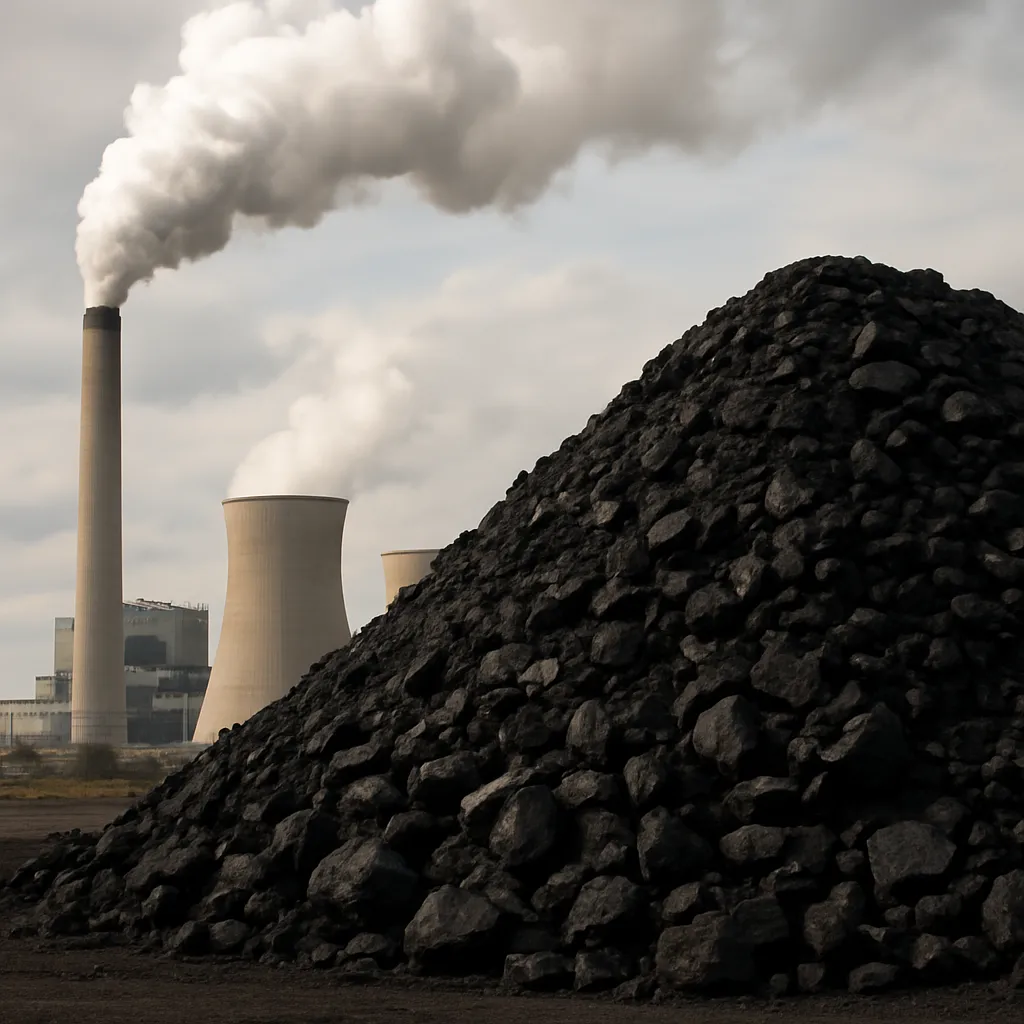
This article examines cleaned coal — both the material produced by beneficiation (washing and preparation) and the suite of technologies often marketed as “clean coal” aimed at reducing the environmental impact of coal use. It covers where cleaned coal occurs and is mined, the principal mining regions and export corridors, the economic and statistical context, industrial uses (especially power and steelmaking), the technologies used to clean and decarbonize coal use, and the environmental, social and technical challenges that accompany those approaches. The goal is to give a broad, factual overview useful for policymakers, industry professionals and interested readers.
Occurrence and Mining Regions
Coal is a sedimentary rock formed from accumulated plant material in ancient wetlands and peatlands that, over geological time, became buried, compacted and transformed into different coal ranks (lignite, sub-bituminous, bituminous, and anthracite). Cleaned coal in the practical sense is not a separate geological type but a product of mining and processing: natural coal that has been mechanically or chemically treated to remove impurities — rock, mineral matter, sulfur-bearing minerals, and other contaminants — to improve its heating value and handling properties.
Global coal resources are widespread. Major reserves and active mining regions include:
- China — the largest producer and consumer of coal; major basins include the Shanxi, Inner Mongolia and Xinjiang regions.
- United States — large reserves in the Powder River Basin (Wyoming/Montana), Appalachian Basin and Illinois Basin; both surface and underground mining produce coal for power and industry.
- India — substantial reserves in Jharkhand, Odisha, West Bengal and Chhattisgarh; domestic production supports a large coal-fired power fleet.
- Australia — world-leading exporter of thermal and metallurgical coal with major basins in Queensland and New South Wales.
- Indonesia — large-scale thermal coal producer and exporter, especially from Kalimantan and Sumatra.
- Russia, South Africa, Poland, Colombia and Kazakhstan — significant producers with sizable domestic use or export orientation.
Where cleaned coal is produced depends on both the geology and the market needs. Regions that supply high-quality coking (metallurgical) coal for steelmaking (e.g., parts of Australia, the U.S. and Canada) often apply more selective mining and processing to produce high-grade products. Large thermal-coal exporting countries (Australia, Indonesia, Colombia) operate extensive coal washing and preparation facilities near mines and ports to meet buyer specifications and reduce transport of inert material.
Technologies: Coal Cleaning, Beneficiation and “Clean Coal” Solutions
Coal cleaning — commonly called coal beneficiation — encompasses mechanical and chemical processes that remove mineral matter and impurities. The principal objectives are to increase the calorific value per unit mass, reduce ash content, decrease sulfur and mercury concentrations, and improve reliability in handling and combustion.
Common preparation techniques include:
- Physical separation: density-based methods (jigs, dense-medium separation), gravity separation and screening.
- Flotation: for fine coal particles, using reagents to separate carbon-rich material from mineral matter.
- Magnetic and electrostatic separation: to remove specific contaminants.
- Drying and dewatering: to adjust moisture content and shipping weight.
These operations produce a higher-quality clean product and a stream of rejects (rock, high-ash material) that require disposal or reclamation.
Beyond beneficiation, the term “clean coal” has been used to describe technologies that reduce emissions associated with burning coal. Key approaches include:
- Flue gas desulfurization (FGD) — removes SO2 from exhaust using wet or dry scrubbers.
- Nitrogen oxide control — selective catalytic reduction (SCR) or selective non-catalytic reduction (SNCR) systems reduce NOx formation.
- Particulate control — electrostatic precipitators and fabric filters capture fly ash.
- Carbon capture and storage (CCS) — captures CO2 from post-combustion, pre-combustion or oxy-fuel processes and stores it underground or uses it industrially. CCS is central to most definitions of “low-emission” coal power but adds significant cost and energy penalties.
- Advanced combustion and conversion: Integrated Gasification Combined Cycle (IGCC) converts coal into syngas for more efficient combustion and simplifies CO2 capture; fluidized-bed combustion improves burn efficiency for low-grade fuels.
Effectiveness and applicability vary: while FGD, SCR and particulate controls are mature and widely deployed, CCS and IGCC remain more expensive and less common. Coal preparation can reduce particulate and some trace metal emissions at the source, but it cannot eliminate CO2 emissions associated with carbon in the fuel.
Economic and Statistical Overview
Coal remains a major global commodity with complex regional dynamics. Some key high-level points (based on data and trends through the early 2020s) are:
- Global production: annual global coal production is measured in the order of several billion tonnes. While exact figures vary year by year, production on the order of 6–8+ billion tonnes per year has been typical in the 2010s–2020s range, driven principally by the energy needs of Asia.
- Electricity generation share: coal supplied roughly a third to 40% of global electricity in the early 2020s. Variation by region is large — in countries such as China, India and South Africa coal accounts for a majority of generation, while in parts of Europe and North America its share has declined sharply.
- Major producers: China leads by a wide margin in production and consumption. Other top producers include India, the United States, Indonesia, Australia and Russia.
- Exports and trade: coal is heavily traded. Australia and Indonesia are the largest exporters of thermal coal; Australia also leads in metallurgical coal exports. Export volumes for these countries are in the hundreds of millions of tonnes per year.
- Price volatility: coal prices experienced large swings in the early 2020s. Post-COVID demand rebound and supply constraints (plus geopolitical shocks) pushed prices up sharply in 2021–2022, followed by moderation as markets adjusted and demand growth slowed in some regions.
Specific quantitative metrics:
- Different coal products carry different calorific values; cleaned, high-grade bituminous coal suitable for power or metallurgical use typically ranges from about 5,500 to 7,500 kcal/kg (or higher for premium coking coals).
- Coal washing typically reduces ash content by a relative margin that depends on feed quality — in many plants ash reductions of tens of percent are achievable, enhancing calorific value proportionally and reducing transport costs per unit of energy.
- Coal-fired electricity remains a major source of affordable baseload power in many economies; closing or retrofitting coal plants has significant near-term economic implications for electricity prices, employment and energy security in coal-dependent regions.
Industrial Importance and Uses
Coal is used in several primary industrial roles:
- Power generation: the largest single use globally. Coal-fired plants provide dispatchable baseload power and, in some markets, operate with flexible regimes to balance renewables.
- Coking (metallurgical) coal: used to produce coke for blast furnaces in steelmaking. About two-thirds of steel globally is made via blast-furnace/basic-oxygen furnace routes that depend on metallurgical coal.
- Chemicals and materials: coal is a feedstock for coke, activated carbon, certain chemical intermediates, and can be converted via gasification to hydrogen, ammonia, methanol and other products.
- Cement and other industries: coal and coal by-products are used for heat in cement kilns and industrial boilers.
Where cleaned coal plays a vital role:
- Power plants fitted with high-efficiency boilers and emissions control systems perform better with lower-ash, lower-sulfur coal — washing reduces operating problems such as slagging and fouling and cuts maintenance costs.
- Steelmakers require detailed specifications for coking coal (volatile matter, ash content, sulfur, phosphorus). Beneficiated coals help meet those specs, supporting higher yields and better coke quality.
- Export markets often demand consistent quality; washed product commands a premium because of better combustion properties and lower disposal costs at the receiving end.
Environmental, Social and Technical Considerations
Cleaning coal reduces some environmental harms but does not eliminate the central climate challenge: CO2 emitted from carbon combustion. Key considerations:
- Emissions reductions and limits: Beneficiation lowers ash, sulfur and certain trace elements arriving at combustion units, reducing particulate, SO2 and heavy-metal emissions. However, CO2 per unit of carbon burned is not materially changed by washing; the total carbon content per energy unit can be modestly increased by removing inert matter, improving combustion efficiency slightly.
- Water use and waste: coal washing and wet scrubbers consume water and generate slurry and reject streams. Proper treatment, disposal and reclamation are required to avoid contamination of soils and waterways. In water-scarce regions, dry beneficiation and water-saving technologies are increasingly important.
- Rejects and land use: coal preparation yields tailings and coarse rejects that typically require storage in engineered facilities. Long-term stability, acid mine drainage risk (for sulfur-bearing waste) and land restoration obligations are significant costs and environmental liabilities.
- CCS challenges: carbon capture technologies can theoretically cut CO2 emissions by 80–90% for retrofit plants and potentially more for purpose-built facilities, but CCS increases electricity costs (sometimes by tens of percent), requires a secure CO2 transport and storage framework, and remains limited in deployment compared with other mitigation options.
- Socioeconomic impact: coal mining and coal-fired plants are major employers in many regions. Transitioning away from coal without social safeguards can produce job losses, economic disruption and political resistance. Conversely, coal-dependent communities can benefit from investment in coal washing plants (which create processing jobs) and rehabilitation programs funded by industry or authorities.
Policy, Market Trends and the Future of Cleaned Coal
Market and policy forces shape cleaned coal’s role:
- Decarbonization commitments: Many countries have net-zero or deep decarbonization targets that require a phase-down of unabated coal use. Where governments aim to keep coal in the energy mix, they often combine high-efficiency technologies, strict emissions controls and investments in CCS for remaining plants.
- Price and competitiveness: Renewables and battery storage have driven down costs of low-marginal-cost electricity in many regions, reducing the economic attractiveness of new coal plants. Existing coal plants with low operating costs or access to cleaned, high-quality coal can remain competitive in some markets.
- Supply chain and trade: Exporters of cleaned, low-ash coals are positioned to capture premium markets in Asia and elsewhere. Conversely, importers seeking to reduce local pollution may prefer washed products and stricter fuel specifications.
- Innovation: Research into low‑emission steelmaking (electrification, hydrogen direct reduction), hydrogen from coal with CCS, and improvements in beneficiation efficiency may change long-term demand for different coal products.
Practical Examples and Case Studies
– Australia: major mines produce both washed thermal coal and premium coking coal that meet stringent port and buyer specifications; beneficiation is widely applied to maximize export value.
– Indonesia: operates numerous large-scale washing plants to produce export-graded thermal coal from open-pit mines, though a significant share of exports remains minimally processed to meet low-cost markets.
– United States: Powder River Basin coal is often low in sulfur and requires less washing, whereas Appalachian coals frequently pass through preparatory plants to reduce rock and sulfur content before sale. Many U.S. plants also use FGD and SCR systems to meet air quality standards.
– Europe: declining domestic production and stringent emissions standards have led to increased use of higher-quality imported coals and a focus on closing or retrofitting older plants; coal washing plays a smaller role where mining has contracted.
Challenges and Opportunities
Key challenges:
- Balancing climate goals with energy security and economic realities in coal-dependent regions.
- Financing and scaling CCS and other advanced technologies to commercially meaningful levels.
- Mitigating local environmental damage from water use and waste disposal associated with washing and beneficiation.
Key opportunities:
- Upgrading coal quality through beneficiation to reduce transportation of inert matter and lower local pollution at combustion points.
- Integrating coal economics with industrial decarbonization pathways (e.g., using coal-derived syngas or hydrogen with CCS for chemicals or steelmaking during transition periods).
- Redeploying skilled labor and infrastructure toward reclamation, remediation and new low-carbon industries in coal regions.
Concluding Remarks
Cleaned coal — whether understood as washed, beneficiated coal or as coal used with emissions-control and carbon-management technologies — plays a complex role in the global energy and industrial systems. It provides tangible benefits: higher heating value per tonne, reduced ash and sulfur emissions, and improved performance for power plants and steelmakers. At the same time, it cannot by itself solve the climate challenge because CO2 from carbon combustion remains the dominant greenhouse gas. Effective use of cleaned coal therefore depends on combining best-practice beneficiation and emissions controls with broader strategies: energy efficiency, fuel switching, deployment of renewables, and the selective application of carbon capture where economically and technically viable. The future of cleaned coal will be shaped by policy choices, market dynamics, technological innovation and the pace of the global energy transition.