The following article examines the vast coal mining complex commonly referred to as the Shenhua Shendong mining area. It covers the location, geology, types of coal extracted, mining methods, economic and industrial importance, available statistics, environmental and social impacts, and the likely future trajectory of operations. The text aims to provide a comprehensive, balanced picture of this major Chinese energy resource and the industrial system built around it.
Overview and Geographic Setting
The mining area known as Shendong (often transliterated from Mandarin as “Shen-Dong”) is one of the largest coal production centers in China. Geographically it is located in the northern part of the Ordos Basin, covering parts of northern Shaanxi Province and adjacent areas of Inner Mongolia and the Ordos region. The district takes its name from a combination of local administrative areas and is closely associated with the state-owned enterprise historically known as Shenhua (later merged into the larger China Energy group). The complex comprises multiple collieries, integrated transport links, processing facilities and supporting industrial infrastructure, forming a major node in China’s national energy system.
The location within the Ordos Basin places the mines atop a thick sedimentary basin with substantial coal-bearing strata. The semi-arid continental climate, wide flat plateaus and large-scale open land make the area favorable for large mechanized mining operations and associated infrastructure such as raw coal stockyards, rail terminals and coal-to-chemicals plants. Administratively the area influences several counties and city-level jurisdictions and plays a major role in local employment and municipal revenues.
Geology, Coal Types and Reserves
Geological Context
The Shendong coalfield lies within Triassic to Permian sedimentary formations typical of the Ordos Basin. Coal seams are generally layered within thick sequences of sandstones and mudstones; the basin’s structural setting has allowed accumulation of very large coal volumes over geologic time. The depositional environments and diagenesis yield coals of varying rank across the field.
Coal Types and Quality
The area produces predominantly thermal coal used for power generation, though coal destined for chemical conversion and some higher-grade varieties suitable for metallurgical uses have also been produced. Broadly, the mined coal ranges from sub-bituminous to bituminous ranks, often characterized by moderate to high ash content, variable moisture, and energy content typical of North China coals. Key quality parameters include calorific value (gross calorific value often in the range common to mid-rank Chinese coals), ash and sulfur content, and volatility — properties that determine the coal’s market, processing needs and emissions profile when combusted.
Reserves and Resource Estimates
The Shendong area is notable for its very large in-situ resources. Conservative estimates put the coal reserves and resources in the tens of billions of tonnes, making it one of China’s strategic coal base regions. Reported figures vary by source and classification (proven, probable, inferred), and they change as exploration continues and economic thresholds shift. Historically, the combined Shenhua-developed blocks in the Shendong area were often cited as having recoverable reserves measured in the multiple tens of billions of tonnes, underpinning multi-decade production plans.
Mining Methods, Technology and Infrastructure
Mining Techniques
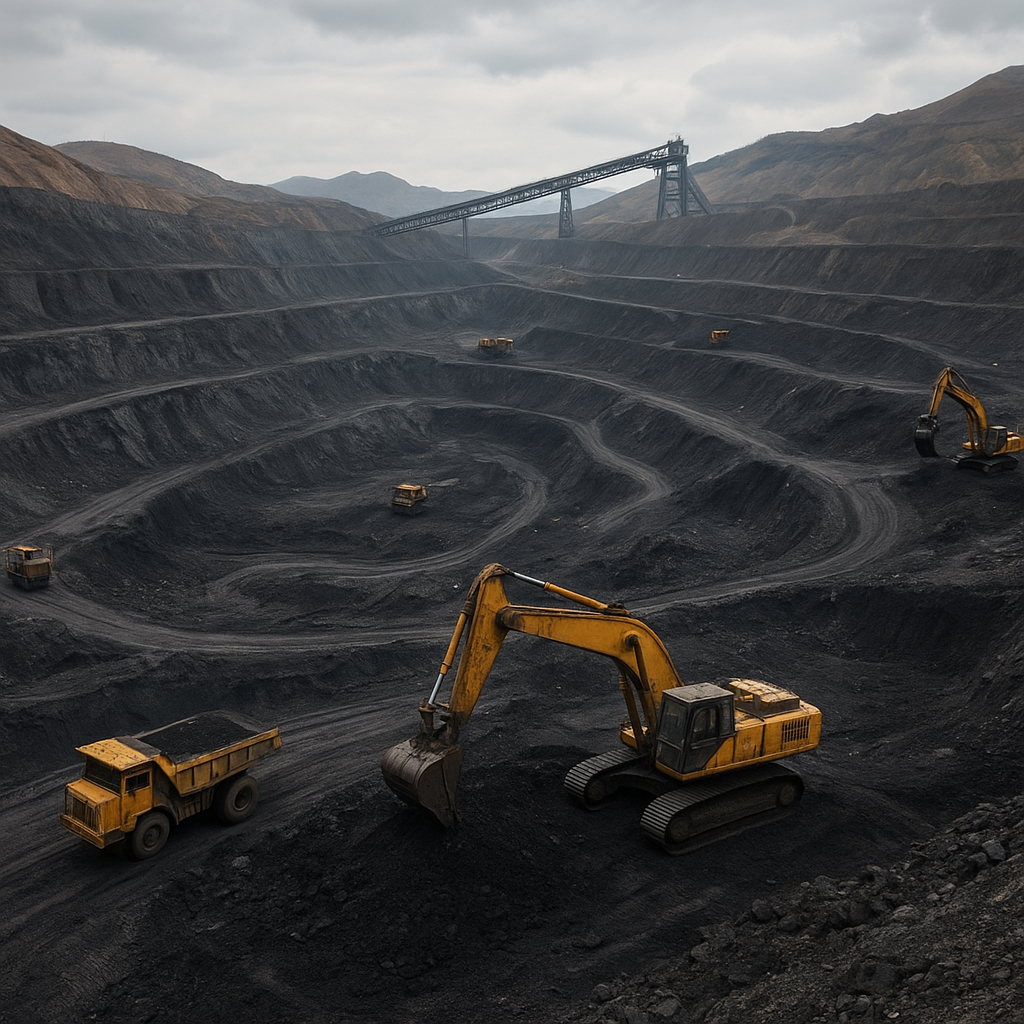
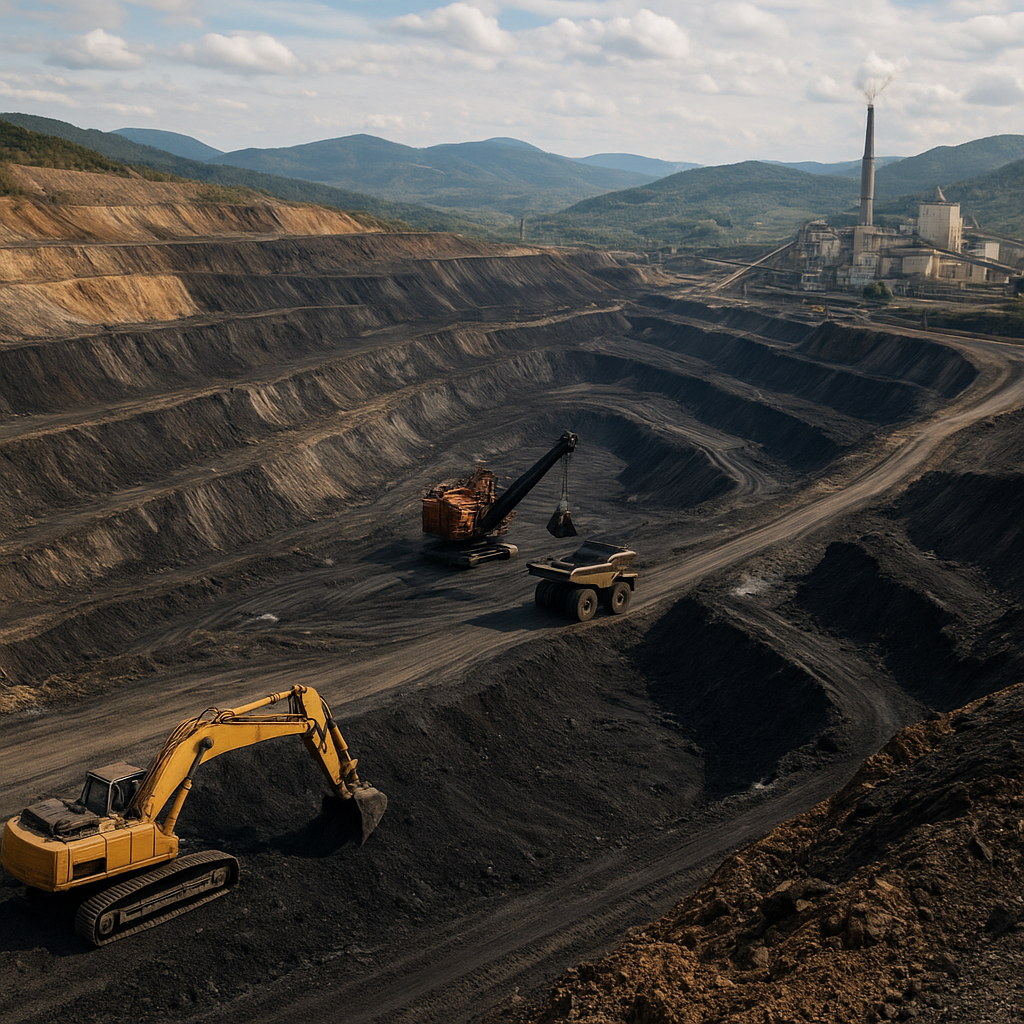
Mining in the Shendong complex is dominated by large-scale, mechanized operations. Both open-pit (surface) and underground longwall mining techniques are employed depending on seam depth and geometry. Mechanization includes draglines, high-capacity conveyor systems, shuttle cars, longwall shearers and roof supports in underground faces. The scale of operations has driven deployment of continuous improvement in productivity, safety instrumentation, and automation technologies such as remote monitoring and fleet telematics.
Processing and Handling
Raw coal from the mines undergoes primary cleaning, screening and blending to meet customer specifications. Coal wash plants and beneficiation facilities reduce ash and remove unwanted fractions. Clean coal is stored in large yards and transferred via conveyor corridors to rail loading terminals. Dust suppression systems, enclosed conveyors, and water-spray measures are used to mitigate fugitive dust impacts.
Transport and Logistics
A defining feature of the Shendong development has been integrated infrastructure. Large, purpose-built rail links connect mine terminals with major consumption centers, power plants and export nodes. Shenhua historically invested in rail capacity and dedicated coal lines to ensure reliable offtake. Trucking and conveyor belts provide shorter-distance movements within the mining complex. Several power plants, coal-to-chemical complexes and industrial customers are connected through this logistical network, reducing bottlenecks and lowering delivered coal costs to buyers in northern and eastern China.
Economic and Industrial Significance
National Energy Role
The Shendong mines have been central to China’s strategy of securing domestic energy resources. As a major source of thermal coal, Shendong supplies a substantial portion of northern China’s electricity-generation coal demand. The scale and continuity of supply help stabilize regional coal markets, reduce dependence on imported coal for some sectors, and anchor local and national energy security plans.
Industrial Integration
The Shenhua model historically pursued vertical integration: owning mines, railways, power stations and coal-conversion plants. In the Shendong area this vertical integration supports downstream projects such as coal-fired power generation, coal-to-liquids (CTL) and coal-to-chemicals facilities. These industrial linkages increase value capture in the local economy and create demand for a broader suite of services and manufacturing inputs beyond raw mining operations.
Local Economic Impacts
The mining complex is a major employer in the region. It generates direct jobs in extraction, processing and logistics, and indirect jobs in maintenance, services, construction and local supply chains. Municipal revenues benefit from taxes, royalties and company-led infrastructure spending. Large-scale mining projects have also prompted investment in worker housing, hospitals, schools and other social infrastructure, though the distribution of benefits varies among communities.
Statistical Snapshot
- Annual production: Across different reporting periods, Shendong’s combined annual coal output has been reported in the order of tens to over one hundred million tonnes. Exact annual production figures vary by year, mine configuration and reporting definitions, but the complex has often been cited among China’s highest-producing single mining regions.
- Reserves: Resource and reserve estimates commonly cited for the broader area run into the multiple tens of billions of tonnes (in-situ), of which a substantial portion is considered economically recoverable under current technologies and market conditions.
- Employment: The operation supports many thousands of direct employees when including the wider industrial cluster; precise numbers fluctuate with automation, contracting practices and mine closures or expansions.
- Economic output: Revenues linked to coal sales, power generation and chemical conversion from the Shendong complex represent a significant contribution to regional GDP and have been important in municipal fiscal planning.
Note: Numerical values reported by different sources may differ; mining companies, state statistical bureaus and independent analysts sometimes use differing classification systems (e.g., proven vs. probable reserves), so it is important to interpret statistics in context.
Environmental, Social and Regulatory Considerations
Emissions and Air Quality
Large-scale coal mining and combustion contribute to local and regional air quality concerns. Dust generation, particulate emissions from coal handling, and emissions from coal-fired power plants can affect public health. Shendong operations have been subject to regulatory controls and technology adoption aimed at reducing particulate and sulfur dioxide emissions at downstream combustion sites, as well as dust suppression on-site.
Water Use and Land Impact
The semi-arid setting of parts of the Ordos Basin makes water management a critical issue. Mining, coal washing and coal-to-chemicals operations require significant water inputs; operators implement water recycling, closed-loop systems and groundwater management to limit impacts. Surface disturbance from mining and associated infrastructure has required land reclamation, restoration of biodiversity where feasible, and monitoring of soil and groundwater quality.
Greenhouse Gas and Climate Policy
Coal extraction and use are major sources of CO2 emissions. China’s national commitments to emissions peaking and carbon neutrality by specified future dates have placed strategic pressure on coal operators to improve efficiency, reduce methane leaks in mining, adopt higher-efficiency power generation and explore carbon capture and storage (CCS) options. Some trials and pilot projects—both within the broader Shenhua/China Energy portfolio and in the region—have tested elements of carbon management, though large-scale CCS deployment remains limited and expensive.
Social Impacts and Community Relations
While the mining complex brings employment and fiscal resources, it also creates social challenges: resettlement for mining expansion, changing livelihoods for pastoral and farming communities, and health concerns arising from dust and water impacts. Companies and local governments have implemented mitigation through resettlement programs, compensation, employment programs and investments in local services. Effective community engagement remains a long-term priority.
Notable Projects and Innovations
Within the Shendong development, several notable initiatives reflect the industrial ambition of integrating coal resources with higher-value downstream activities. These have included:
- Coal quality improvement and beneficiation facilities to better match coal to specific industrial customers.
- Coal-to-liquids and coal-to-chemicals pilot projects and commercial plants aimed at converting solid coal into transport fuels and chemical intermediates (a controversial but strategically important technology for domestic resource use).
- Large-scale logistics investments—rail terminals and conveyor systems—that lower delivered costs and improve market access.
- Adoption of mechanized and automated mining equipment to raise productivity and improve safety outcomes.
Challenges and Future Outlook
Market and Policy Drivers
The future of the Shendong mines will be shaped by energy policy, market demand for coal, and the pace of China’s transition to lower-carbon energy sources. While short- and medium-term domestic demand—particularly for heat and power in northern regions—may sustain coal markets, longer-term coal demand will depend on policy trajectories, renewables expansion, energy storage adoption, and the financial viability of alternative technologies for industry and power.
Technological and Environmental Upgrades
To remain competitive and compliant, operations in the Shendong area are likely to continue investing in higher-efficiency mining equipment, improved dust and water management, methane capture programs and possibly carbon-mitigation technologies in power and chemical plants. Innovations that reduce the environmental footprint while sustaining production will be pivotal to maintaining social license to operate.
Socioeconomic Transition
As energy systems evolve, the region faces the challenge of economic diversification. Local governments and companies may need to plan for phased transitions: retraining of workers, repurposing infrastructure, and attracting new industries to replace or complement coal-based economic activity. The presence of established transport and industrial infrastructure could support such diversification if strategic plans are put in place.
Concluding Remarks
The Shendong mining complex, historically associated with Shenhua and now part of larger state coal and energy groupings, represents one of China’s most significant coal production hubs. Its vast reserves, integrated infrastructure, and industrial linkages give it outsized importance for regional economies and national energy security. At the same time, environmental, water and climate considerations create strong pressures to modernize operations, improve efficiency, and invest in mitigation measures. The next decades will likely see a balance between continued exploitation of the resource for economic reasons and an incremental shift toward cleaner technologies and diversified local economies.
Key terms emphasized: Shendong, Shenhua, coal, China, Inner Mongolia, Ordos Basin, reserves, production, energy, infrastructure.