The following article provides a comprehensive overview of the Palaran coal mining area in Indonesia. It covers the mine’s location and geology, the type of coal extracted, mining and transport practices, economic and social importance, environmental issues and remediation efforts, plus future prospects. Where precise mine-level statistics are not publicly available, broader regional and national data are used for context. This text highlights key concepts with bold formatting.
Location, geology and geological setting
The Palaran mining area is situated in the vicinity of Palaran, a district of Samarinda in the province of East Kalimantan, on the island of Borneo in Indonesia. The site lies within the greater Kutai Basin, one of Indonesia’s principal coal-bearing basins that has supported large-scale surface and underground coal mining for decades. The basin extends along the eastern side of Kalimantan and is drained by major waterways, notably the Mahakam River, which serves as an important transport corridor for coal barges and logistical services.
Geologically, the Kutai Basin hosts a succession of Tertiary-age sedimentary rocks, including sequences of peat, lignite, and progressively compressed coals that formed in coastal plain and deltaic environments. Coals mined in the Palaran area are typically part of these Tertiary deposits. The stratigraphy often includes alternating layers of sandstone, siltstone and mudstone interbedded with coal seams. Coal ranks present in the region range from low- to medium-rank coals — commonly classified as sub-bituminous to low-ash bituminous types depending on depth, thermal maturity and seam composition.
Type of coal and quality characteristics
The coal produced in and around Palaran is primarily used as thermal coal (coal destined for power generation and industrial heat), rather than metallurgical (coking) coal. Typical quality characteristics for coal from East Kalimantan, applicable to Palaran-area deposits, include:
- Calorific value: commonly in the range of approximately 4,000–5,500 kcal/kg (GAR) for many sub-bituminous seams, with local variability depending on seam thickness and ash content.
- Moisture: relatively high inherent moisture levels in lower-rank coals, affecting shipping and combustion efficiency unless dried or blended.
- Ash content: variable, often moderate to high in surface-mined seams, influencing market pricing and suitability for some power plants.
- Sulfur content: often low to moderate, which can be advantageous for meeting emissions regulations compared with higher-sulfur coals elsewhere.
These characteristics make Palaran-area coal suitable for domestic power plants and for export to markets that accept lower-rank thermal coal, especially in Southeast and South Asia.
Mining methods, infrastructure and logistics
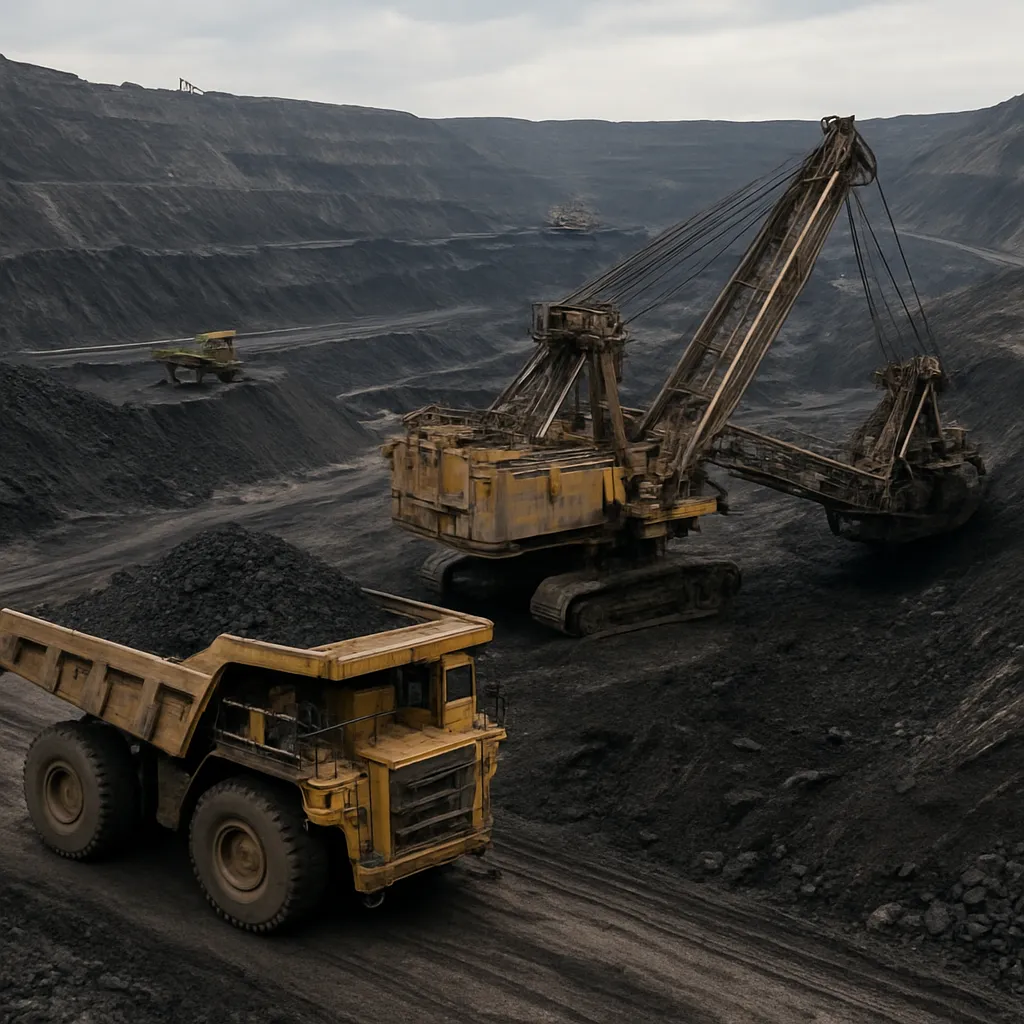
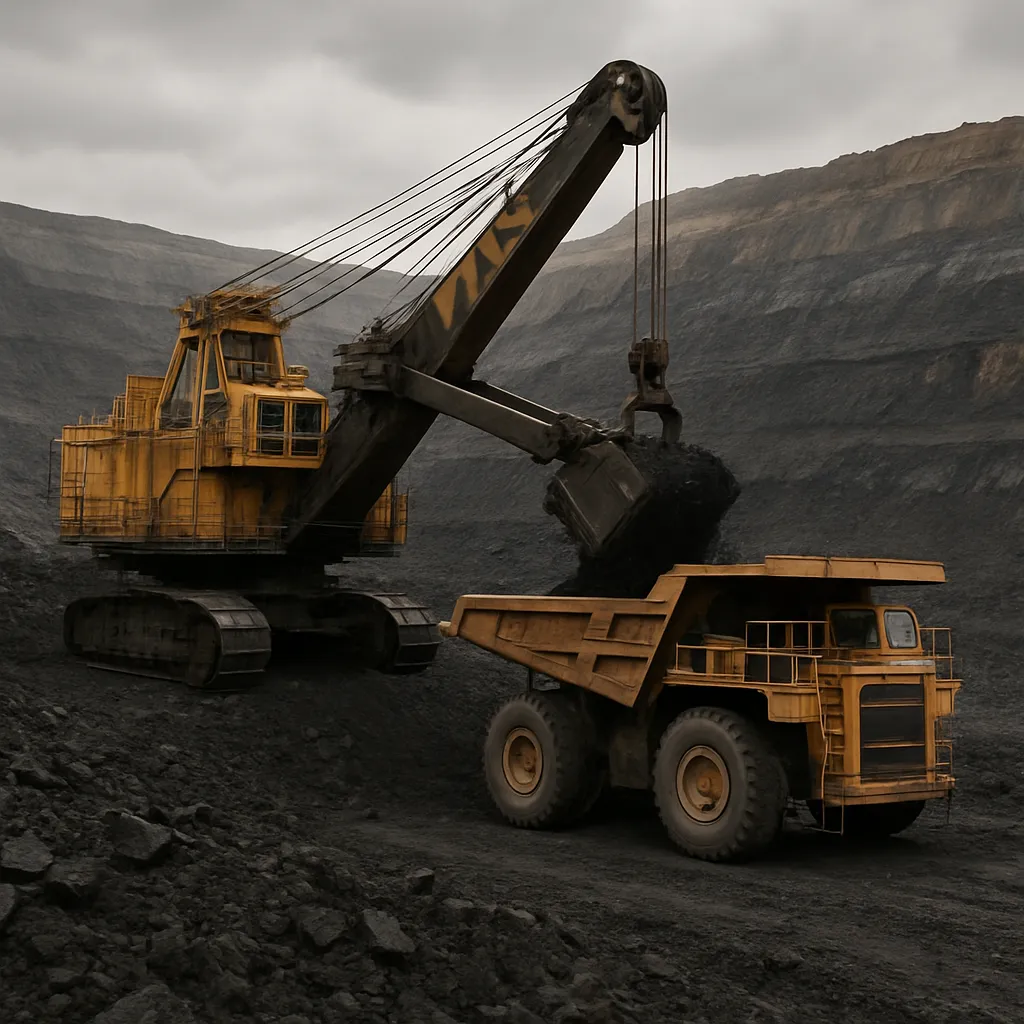
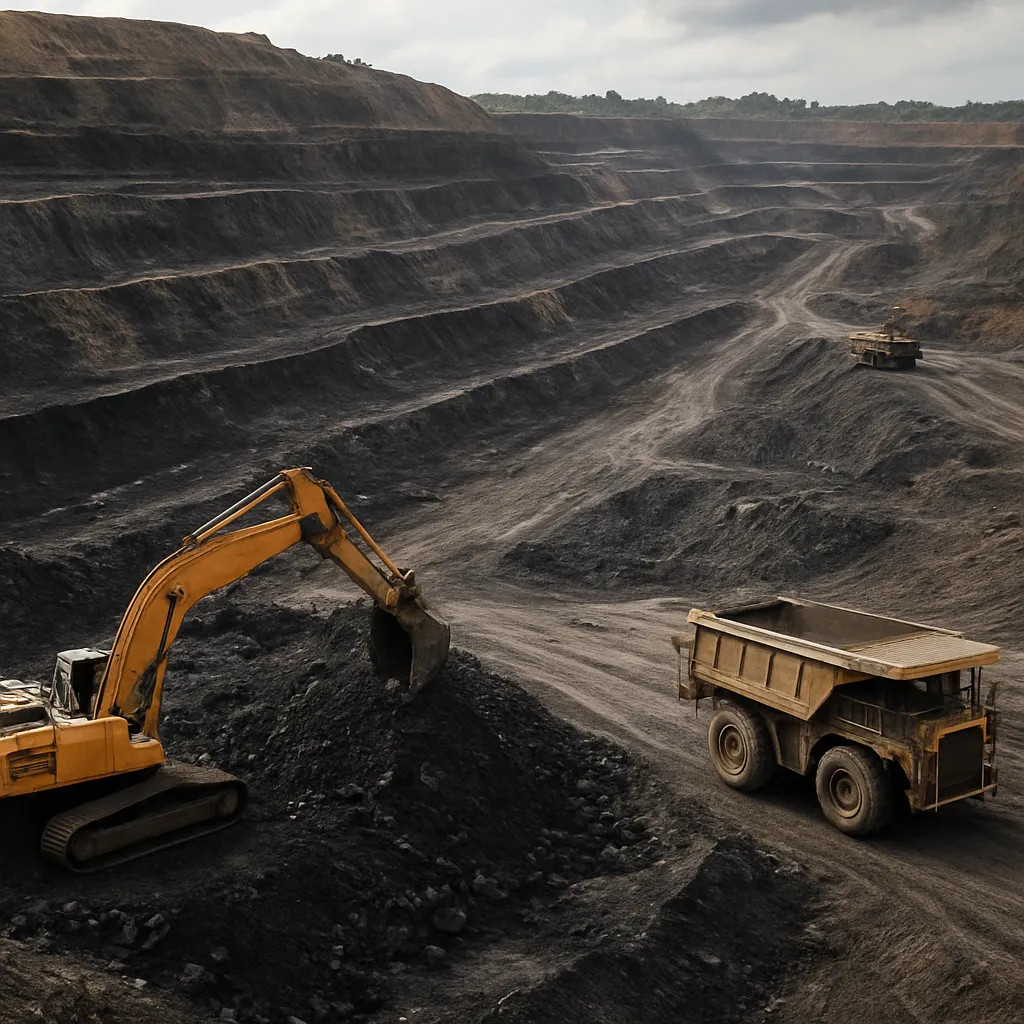
Mining in the Palaran area is typically carried out through open-pit (surface) mining methods. Open-pit operations are favored where seams are shallow and laterally extensive. Key operational elements include clearing of overburden, drilling and blasting (where necessary), excavation with large shovels and hydraulic excavators, and onward haulage with heavy-duty trucks. In some places, smaller excavators and conveyor systems are used where terrain and logistics permit.
Transport and export logistics are critical to the mine’s viability. The Palaran area benefits from proximity to riverine transport routes and local port facilities. Coal is commonly transported by:
- Truck and haul road networks that connect mine sites to river terminals.
- Barges on the Mahakam River, which move bulk coal to downstream transshipment points.
- Local port and wharf facilities near Samarinda and other coastal terminals, where coal is stockpiled and loaded onto ocean-going vessels.
- In some regional operations, rail infrastructure is used where available, but river and road transport are more typical around Palaran.
Associated on-site infrastructure typically includes coal washing and sizing plants (where beneficiation is economic), overburden dumps, water treatment ponds, workshops, and worker accommodation. Many mining operations also develop dedicated access roads and invest in port handling equipment such as conveyors, loaders and transshipment barges.
Production, reserves and statistical context
Detailed, mine-specific production and reserve figures for Palaran are not always publicly disclosed on a regular basis. However, understanding Palaran’s role is aided by placing it in the wider Indonesian and East Kalimantan contexts. Indonesia is one of the world’s largest producers and the largest exporter of thermal coal. East Kalimantan is one of the country’s most important coal-producing provinces and hosts a significant portion of Indonesia’s mineable coal reserves.
Key statistical context (national and regional) includes:
- Indonesia has historically produced hundreds of millions of tonnes of coal annually, with much of that designated for export.
- East Kalimantan has consistently been among the leading provinces in production, supplying domestic power plants and export markets via river and port logistics.
- At the mine level, production can range widely: small contract mines may produce a few hundred thousand tonnes per year, while larger operations in the Kutai Basin may produce several million tonnes annually. Exact figures for Palaran depend on concession size, seam thickness and operational scale.
Because mine-level statistics fluctuate with market demand, contract obligations and operational schedules, many project operators issue periodic production reports or include figures in corporate disclosures. For a precise and current figure for Palaran, one would typically consult company annual reports, Indonesian government mining databases, and local regulatory filings.
Economic and social significance
The Palaran coal mining area contributes to multiple layers of the local and national economy. Key economic and social roles include:
- Employment: Mines generate direct employment in operations, maintenance, administration and logistics, and indirect employment through services, supply chains and local vendors.
- Local revenue: Taxes, royalties and fees collected from coal operations help fund municipal and provincial budgets, infrastructure projects and public services.
- Export earnings: As part of Indonesia’s export supply chain of thermal coal, production from the Palaran area contributes to foreign exchange earnings and national trade balances.
- Industrial linkages: Coal supports domestic power generation, cement and other industries that rely on reliable supplies of thermal fuel.
On the social dimension, mining operations may invest in community programs, education, healthcare and local infrastructure as part of corporate social responsibility (CSR) initiatives. These interventions can produce tangible benefits, such as improved access to roads, schools and clinics, though community outcomes vary depending on company practices and local governance.
Environmental impacts and mitigation
Coal mining – including operations in Palaran – presents significant environmental challenges. Common impacts observed in the region and typical mitigation measures include:
- Land disturbance and deforestation: Open-pit operations remove vegetation and topsoil, changing landscape aesthetics and local ecosystems. Mitigation: progressive rehabilitation, topsoil stockpiling and replanting with native species after mining.
- Water quality and hydrology: Runoff from waste dumps and exposed strata can carry sediments and dissolved minerals into rivers and groundwater. Mitigation: sedimentation ponds, water treatment, controlled drainage and monitoring of the Mahakam River and tributaries.
- Air quality: Dust from blasting, hauling and coal handling affects nearby communities. Mitigation: dust suppression (spraying), covered conveyors, wheel-wash stations and schedule management.
- Greenhouse gas emissions: Coal mining and combustion contribute to CO2 and methane emissions. Mitigation: methane capture where feasible, energy efficiency measures, and participation in carbon management programs.
- Biodiversity impacts: Habitat loss affects flora and fauna. Mitigation: biodiversity offsets, protected area creation, and ecological surveys prior to development.
Regulatory oversight from Indonesian authorities requires environmental impact assessments (EIA/AMDAL), reclamation plans, and ongoing monitoring. Many responsible operators also develop mine closure plans and post-mining land uses (e.g., aquaculture ponds, reclaimed forest, agriculture or recreational areas) to provide long-term community value.
Social challenges and community relations
Community relations in coal-producing regions like Palaran must balance the economic benefits of mining with social concerns. Typical issues include:
- Land tenure and compensation disputes between mining companies and local landholders.
- Pressure on local infrastructure (roads, health services, housing) due to an influx of workers.
- Equitable distribution of economic benefits, including contract opportunities for local businesses.
- Maintaining livelihoods for communities dependent on agriculture, fishing or forest resources that may be affected by mining.
Best practices to address these challenges include transparent consultation processes, fair compensation mechanisms, local hiring and training programs, and long-term community development commitments embedded in mining agreements.
Technological and operational innovations
As the mining sector evolves, operators in areas like Palaran increasingly adopt technological and managerial innovations to improve efficiency, safety and environmental performance. Examples include:
- Fleet management systems and GPS tracking to optimize haulage routes and reduce fuel consumption.
- Remote sensing and aerial surveys (drones) for mapping, monitoring and reclamation planning.
- Automated and semi-autonomous equipment to enhance operational safety and productivity.
- Improved water treatment and sediment control technologies to limit downstream impacts.
- Blending and coal washing techniques to upgrade coal quality for specific market requirements.
Such advances can reduce costs, lower environmental footprints and extend the life-of-mine by enabling more accurate resource extraction.
Regulatory landscape and governance
Mining in Indonesia is governed by national and regional regulations that cover licensing, royalties, environmental protection and community engagement. Recent years have seen policy adjustments aimed at ensuring greater local value capture, government revenue optimization and environmental safeguards. Key governance elements affecting Palaran-area operations include:
- Concession licensing and permit conditions, including environmental impact assessments (AMDAL).
- Production reporting and royalty regimes that determine payments to central and local governments.
- Local content and employment requirements to encourage domestic participation.
- Closure and reclamation obligations to ensure that operators finance and execute post-mining landforms and rehabilitation.
Compliance with regulatory requirements is central to maintaining a mining operation’s social license to operate and long-term feasibility.
Future prospects and strategic importance
While global energy transitions are changing demand patterns for coal, the Palaran area and broader East Kalimantan region will remain strategically important in the near to medium term for several reasons:
- Ongoing demand in parts of Asia for thermal coal to fuel baseload power plants, especially where alternatives are not yet fully developed.
- Existing infrastructure and logistics networks (ports, rivers, roads) that support cost-effective production and shipment.
- Potential for mine-life extension through exploration, resource conversion and higher-efficiency mining practices.
- Opportunities for value-added services such as coal washing, blending, and local processing that can increase product competitiveness.
At the same time, operators and regulators face pressure to align mining development with environmental commitments and to prepare for long-term economic diversification in coal-dependent localities.
Notable facts and takeaways
- The Palaran area is representative of Indonesian riverine coal mining operations that rely heavily on barging and port logistics for export.
- Coal from this region is primarily thermal, serving power generation and industrial heating markets.
- Exact mine-level production and reserve numbers for Palaran are often proprietary or published irregularly; regional figures illustrate the scale and importance of the Kutai Basin.
- Environmental and social governance, including reclamation and community engagement, are integral to modern mining practice in the area.
- Technological adoption and improved operating practices present pathways to reduce environmental impact and optimize resource recovery.
Concluding observations
Palaran’s coal mining activity forms part of a wider network of production sites across the Kutai Basin and East Kalimantan that have long underpinned Indonesia’s standing as a major global supplier of thermal coal. The area’s combination of geology, riverine transport access and existing infrastructure has enabled sustained extraction of coal that supports domestic energy needs and international markets. Looking forward, the balance between continuing economic benefits and rising environmental and social expectations will shape how operations evolve. Effective regulation, transparent community engagement, technological improvements and robust reclamation programs will be central to ensuring that Palaran-area mining contributes lasting value to the region while addressing the environmental challenges associated with coal production.