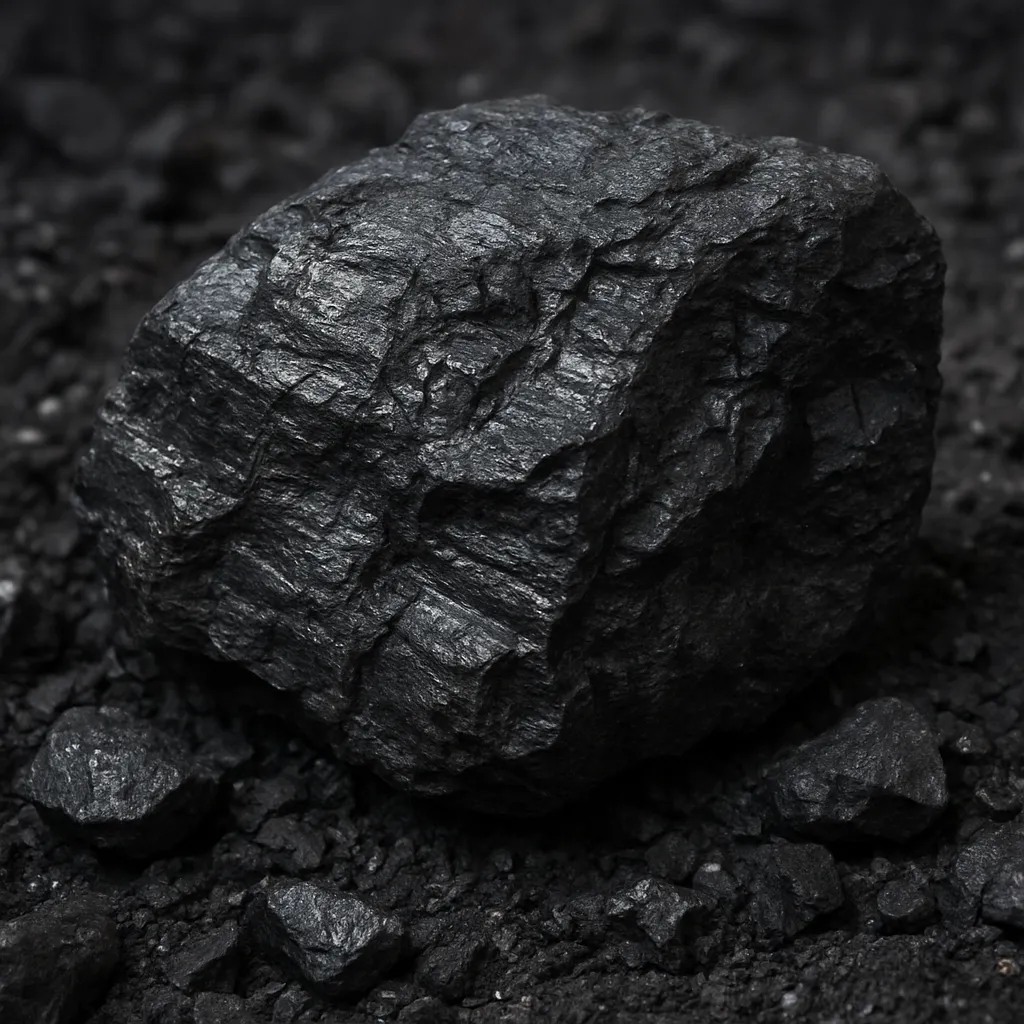
Low-mineral coal—commonly referred to as low-ash or low-mineral coal—is a category of coal prized for its relatively small proportion of non-combustible material. Its physical and chemical characteristics make it valuable for a range of industrial applications, from electricity generation to metallurgical processes. This article outlines where low-mineral coal occurs and is mined, its geological and chemical properties, economic and statistical context, industrial significance, methods of processing and quality improvement, environmental considerations, and prospects for the coming decades.
Occurrence, Geological Context and Major Basins
Low-mineral coal forms in sedimentary basins under geological conditions that favor the accumulation and preservation of organic matter with minimal inorganic contamination. During peatification and subsequent coalification, the admixture of mineral sediments (clay, silt, carbonate, and volcanic ash) determines the final ash content. Low-mineral coal is typically associated with seams that were protected from heavy clastic input or those that experienced post-depositional processes that isolated or flushed mineral matter.
Common geological settings
- Interdeltaic and coastal swamp environments with relatively stable water tables and low clastic influx, allowing organic-rich peat to accumulate with few mineral sediments.
- Closed-basin lacustrine settings where organic accumulation was isolated from large rivers, reducing mineral contamination.
- Beds subject to diagenetic alteration that promoted migration and removal of mineral matter, concentrating organic carbon.
Major coal basins known to host significant volumes of low-mineral coal include:
- Australia — Bowen Basin (Queensland) and the Hunter Valley (New South Wales) produce high-quality coking coal and low-ash thermal coal for export markets.
- Indonesia — Kalimantan and South Sumatra produce numerous export-grade seam coals, often with low ash and low sulfur suitable for power generation and blending.
- United States — Appalachian fields historically supplied low-ash, low-sulfur bituminous coals; the Powder River Basin (Wyoming/Montana) is noted for low-sulfur, low-ash sub-bituminous coal though with higher moisture and lower calorific value.
- Russia — Kuznetsk (Kuzbass) and other Siberian basins contain both metallurgical and thermal coals, some with low mineral content after beneficiation.
- South Africa — although parts of South African coal tend to be higher in ash, select seams in certain basins provide lower-ash coal used domestically and for export after washing.
- Canada — British Columbia and Alberta contribute coal suitable for metallurgical use and export markets.
Mining, Production and Global Statistics
Global coal production and trade are concentrated among a relatively small number of countries and companies. In the early 2020s, total global coal production was on the order of several billion tonnes annually; estimates from international energy agencies and national statistics put production generally in the range of about 7–8 billion tonnes per year for all coal types combined. Within that total, only a portion qualifies as low-mineral coal suitable for high-value markets.
Export dynamics shape production patterns: Australia is the world’s largest coal exporter and a major supplier of low-ash metallurgical coal, exporting on the order of a few hundred million tonnes per year (a large share of which is high-quality, low-ash product). Indonesia is another major exporter of thermal coal, much of it competitively priced and sometimes low in ash and sulfur. Other exporters include Russia, the United States, South Africa and Colombia.
Quality and market segmentation
- Low-ash coal (commonly defined as ash content below about 10%, with premium grades sometimes < 7–8%) commands higher prices because of its greater calorific value, lower handling costs, and desirability in metallurgical processes.
- Metallurgical coal (coking coal) must meet stringent quality parameters (low ash, low sulfur, appropriate volatile matter) and therefore holds a price premium relative to general thermal coal.
- Thermal power coals with low ash reduce slagging, fouling and fly ash production—factors that improve plant efficiency and reduce maintenance costs.
Precise global figures for the fraction of coal that is low-ash are not consolidated in a single public dataset, because grade definitions vary and many producers sell blended or beneficiated products. However, a significant share of international trade—particularly in the metallurgical segment—is composed of low-mineral coal sold at premium prices to steelmakers and utilities seeking higher-efficiency fuels.
Physical and Chemical Characteristics
Coal quality is assessed by proximate and ultimate analysis as well as petrographic composition. Important determinants include moisture, volatile matter, fixed carbon, sulfur and ash (mineral matter). Low-mineral coal exhibits the following typical characteristics:
- Lower ash content (commonly < 10%).
- Higher calorific value per unit weight (high heating value), often > 20–25 MJ/kg for premium bituminous and anthracitic coals.
- Lower concentrations of contaminants such as sulfur and certain trace elements, although this varies by seam.
- Better coking properties where carbon structure and volatile matter fall into appropriate ranges for coke formation.
Rank also plays a role: higher-rank coals like anthracite and high-volatile bituminous coals can have low ash and high fixed carbon, while low-rank coals (lignite, sub-bituminous) typically have higher moisture and sometimes higher mineral content. The interaction between rank and ash determines the end-use suitability.
Processing, Beneficiation and Quality Improvement
Many coals with initially higher mineral content can be upgraded to low-mineral products through coal washing and other beneficiation methods. Common techniques include:
- Dense medium separation (DMS): using a suspension to separate inorganic-rich particles from lighter organic coal.
- Hydraulic jigs and spirals: gravity-based separation to remove heavy mineral fractions.
- Flotation: especially useful for fine coal particles, using surface chemistry to separate coal from mineral grains.
- Dry beneficiation technologies: in arid regions or where water is scarce, electrostatic and air-based separators are used.
- Dewatering and drying: necessary to improve heating value and reduce transportation costs for high-moisture coals.
Beneficiation not only reduces ash but can also lower sulfur and trace element content, improving combustion behavior and reducing pollutant emissions. The trade-off is capital expenditure for washing plants and operational costs for consumables and water management, balanced against the price premium achieved for higher-quality product.
Industrial Uses and Importance
Low-mineral coal occupies a strategic place in several industries:
- Steelmaking: High-quality coking coals with low ash are essential inputs to blast furnace coke production. Coal injectors (PCI) also use low-ash pulverized coal to improve furnace efficiency.
- Power generation: Utilities prefer low-ash coals to minimize ash handling, fouling and slagging problems, and to maximize thermal efficiency per unit mass.
- Chemical industry and coal-to-chemicals processes: Higher-purity coals yield cleaner intermediates for gasification, methanol and other products.
- Cement and construction materials: Low-ash coal combustion produces fly ash that may be of higher quality for reuse as supplementary cementitious material.
Because of their desirability, low-mineral and metallurgical coals often form the backbone of export earnings for producing countries, and they directly influence competitiveness in industries such as steelmaking. For example, regions that can supply consistent low-ash coking coal gain long-term contracts with integrated steel producers and attract investment into port and rail infrastructure to serve export flows.
Economic and Market Dynamics
Market prices for low-mineral coal fluctuate with demand for steel, electricity, and geopolitical or logistical events. Key economic drivers include:
- Global steel demand: strong steel markets raise demand for coking coal and push up prices for low-ash grades.
- Decarbonization policies: shifting to lower-carbon steelmaking (electric arc furnaces using scrap, or hydrogen-based processes) may reduce long-term demand for metallurgical coal, though transitions will likely be gradual.
- Trade policy and logistics: export infrastructure bottlenecks, port congestion, and shipping costs directly affect delivered price and margin for exporters.
- Quality premiums: low-ash coals command higher per-tonne prices, and buyers may enter long-term contracts to secure consistent quality.
Historically, supply shocks (e.g., weather or industrial disruptions) and rapid recovery in industrial activity have produced pronounced price volatility for metallurgical coal. This volatility has consequences for steelmakers and national economies reliant on coal revenues.
Environmental Considerations and Mitigation
Although low-mineral coal can reduce solid residues and some operational impacts, coal combustion and mining remain associated with significant environmental challenges:
- Greenhouse gas emissions: per unit energy, coal combustion emits more CO2 than most other fossil fuels. Low-ash coal may slightly improve CO2 per unit of energy but cannot eliminate the fundamental carbon intensity.
- Air pollutants: sulfur oxides (SOx), nitrogen oxides (NOx), particulate matter and trace metals can be present; low-sulfur and low-ash coals reduce some of these emissions but must be paired with emission controls (scrubbers, filters).
- Mining impacts: land disturbance, water use and contamination, and waste rock management remain environmental concerns. Coal washing generates tailings and slurry that require careful management.
- Coal ash disposal: even lower-ash combustion produces fly ash and bottom ash; beneficial reuse (cement, construction materials) is preferable to landfill disposal.
Mitigation strategies include sorbents and flue-gas cleaning, co-firing with biomass, implementation of carbon capture and storage (CCUS) on coal-fired plants, tighter environmental regulation of mining operations, and improved reclamation practices. For metallurgical uses, development of alternative technologies—such as electric arc furnaces powered by renewable electricity or hydrogen-based direct reduced iron (DRI)—could reduce future dependence on coking coal.
Statistics and Illustrative Data
Below are illustrative, approximate figures and trends drawn from public energy and trade reporting in the early 2020s:
- Global total coal production: on the order of 7–8 billion tonnes per year (all coal types combined) in recent years.
- Coal exports: Australia leads global coal exports with export volumes on the order of a few hundred million tonnes annually; a significant share of these exports are high-quality, low-ash metallurgical coals.
- Electricity generation: coal provides a substantial share of global electricity generation, typically accounting for roughly a quarter to a third of generation depending on year and region.
- Price sensitivity: metallurgical coal prices have shown strong volatility during supply shocks; the 2020–2022 period demonstrated how quickly prices can rise when steel demand rebounds and logistics are constrained.
Because grade definitions and reporting practices vary, the fraction of world production that qualifies as low-mineral coal is not frequently tabulated as a single number; however, low-ash coals dominate the high-value export segment that supplies steelmakers and premium-power markets.
Technological Trends and the Future
Outlook for low-mineral coal intertwines technological innovations, policy, and market evolution:
- Coal beneficiation technologies continue to improve, enabling previously marginal seams to produce low-ash products adequate for premium markets.
- Advances in emissions control and CCUS could prolong use of coal in regions where energy security and industrial demand remain high, though economics will be crucial.
- In steelmaking, breakthroughs in hydrogen-derived iron and recycled steel could materially reduce demand for coking coal over multi-decade horizons.
- Markets may differentiate more finely between coals by emissions intensity and supply chain traceability, rewarding lower-embedded emissions and better environmental performance.
Producers of low-mineral coal will need to balance investment in cleaner mining and processing with potential structural declines in certain end-use markets. Yet in the near- to medium-term, high-quality low-ash coals are likely to remain strategically important for steelmaking and for power generation in regions where alternatives are limited.
Interesting Facts and Practical Notes
- Premium grading: Some coking coals are so highly sought after that long-term supply contracts with steelmakers form the backbone of regional mining investment decisions.
- Low-ash coal reduces wear on boilers and conveyors, lowering maintenance costs and downtime for utilities and industrial users.
- Coal can be blended: plants often mix low-ash coal with cheaper, higher-ash coals to achieve target combustion and cost metrics; this blending is a key commercial practice.
- Fly ash reuse is a major circular-economy opportunity. High-quality fly ash from low-ash coal combustion is prized in concrete production for improved strength and durability.
- Some anthracites and high-rank coals, naturally low in mineral content, are used in niche markets such as carbon electrodes and high-purity carbon products.
Concluding Perspective
Low-mineral coal is a high-value subset of global coal resources whose reduced inert content and often favorable chemical properties make it indispensable for certain industrial applications—especially metallurgy and premium power generation. While global energy transitions and decarbonization policies pose long-term challenges, in the near and medium term low-ash coal will continue to command market premiums and shape regional trade patterns. The interplay of beneficiation technology, environmental regulation, and alternative technologies for steel and power will determine how the role of low-mineral coal evolves over the coming decades.
Understanding the geological origins, processing pathways, market dynamics and environmental implications of low-mineral coal is essential for policymakers, industry stakeholders and communities that depend on coal-linked economic activity. Strategic investments in cleaner processing, reclamation, and emissions reduction could preserve economic benefits while addressing environmental imperatives.