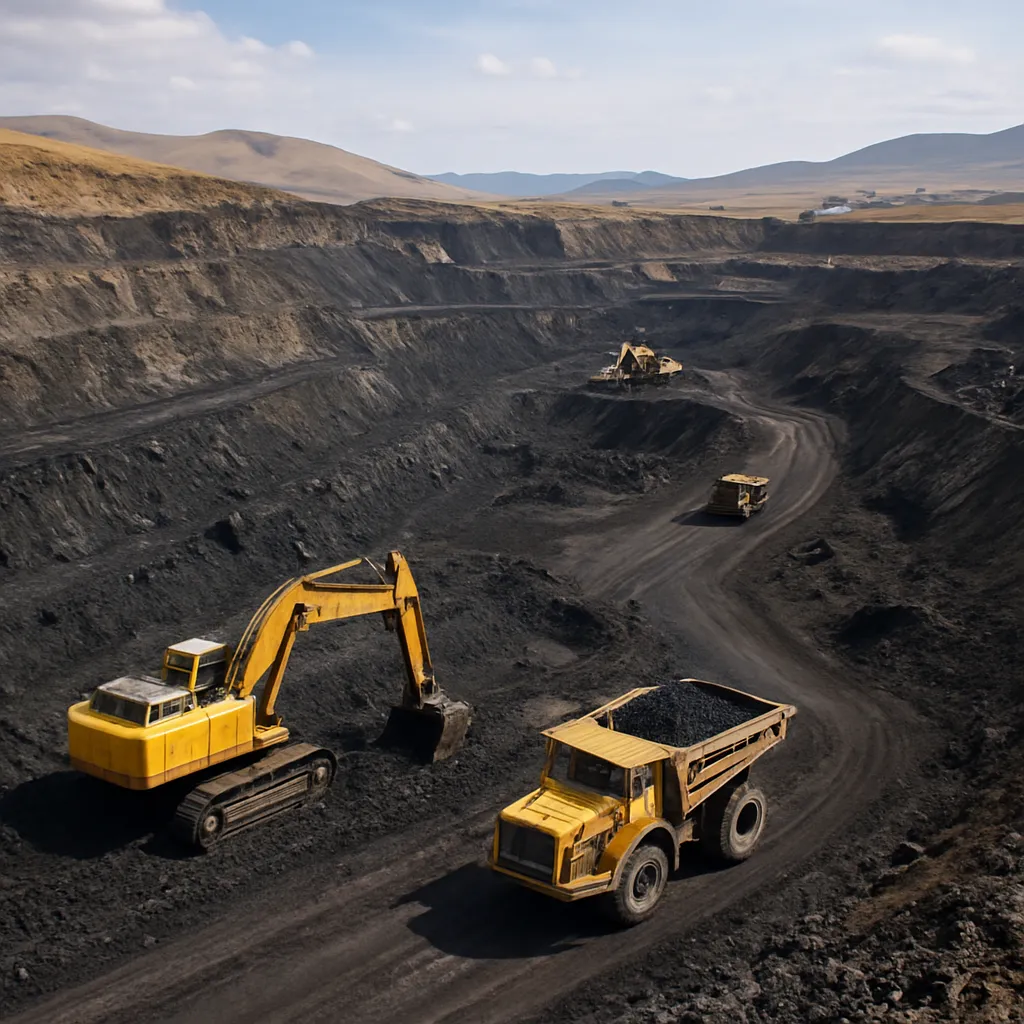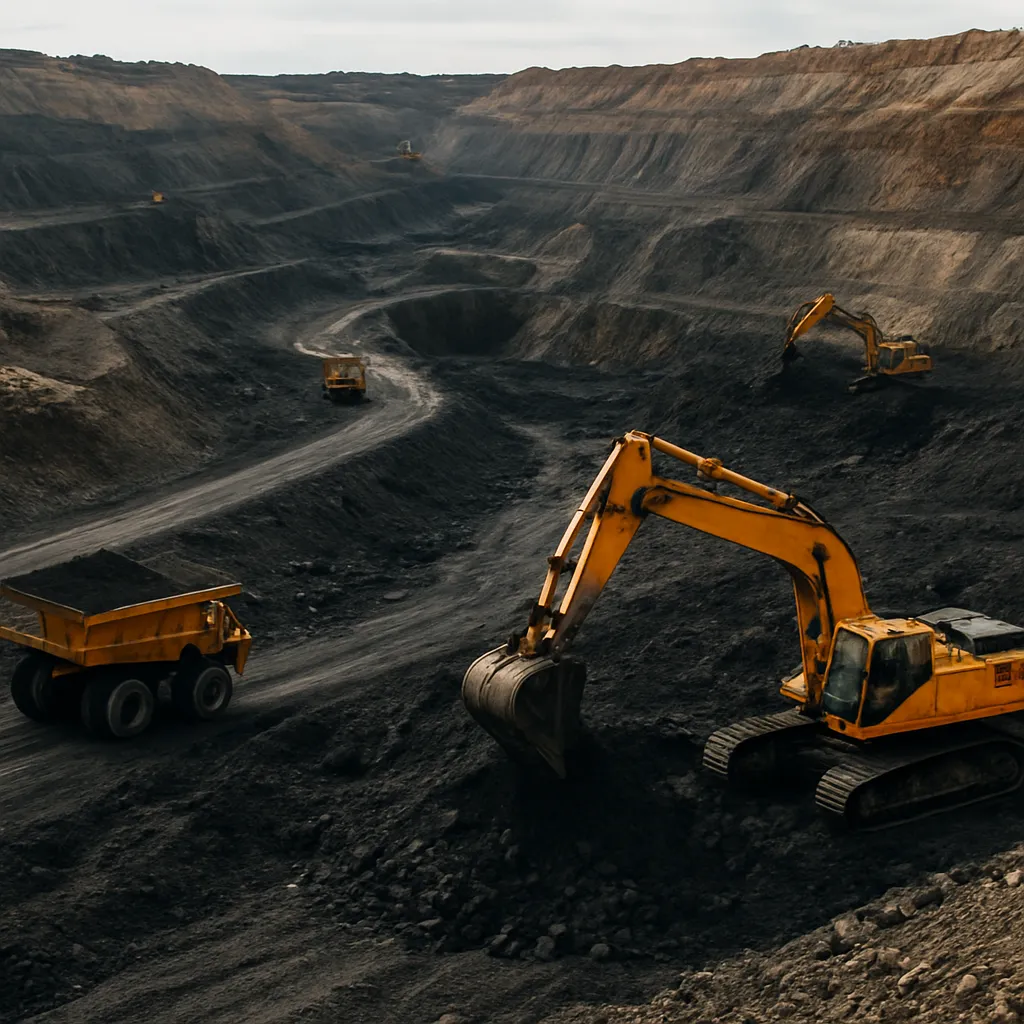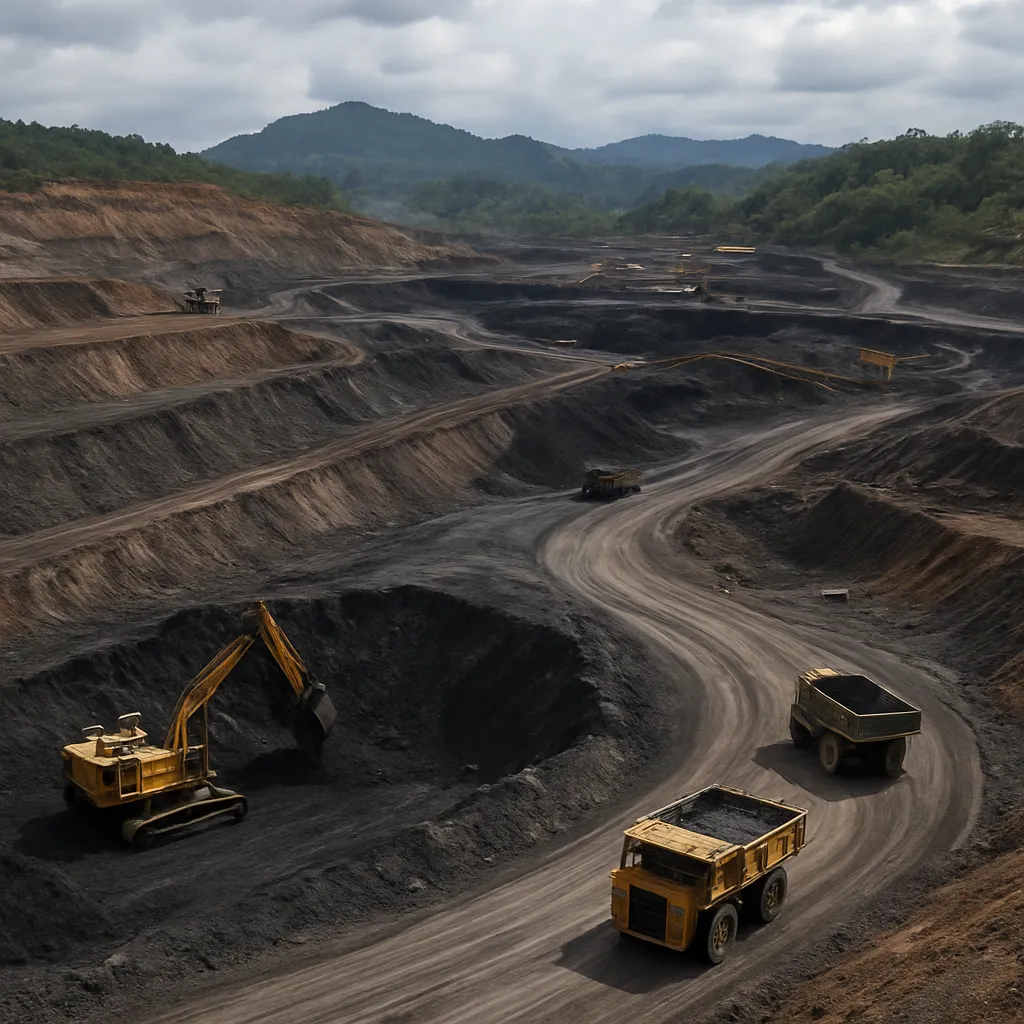
The following article provides a comprehensive overview of the Kintap coal mining area in Indonesia, covering its location, geological context, coal quality, economic significance, environmental and social impacts, infrastructure and logistics, and future outlook. The text synthesizes publicly available regional information, typical industry practice in Kalimantan coalfields, and observed trends in the Indonesian coal sector. Where specific mine-level statistics are not publicly disclosed, the discussion points to reliable contextual data and typical ranges for similar operations in the region.
Location and geological setting
The Kintap coal mining area is located on the island of Borneo in the Indonesian province of South Kalimantan. South Kalimantan is one of Indonesia’s principal coal-producing provinces and forms part of the broader Kutai and Barito basins that host extensive coal-bearing sequences. Kintap itself is situated near coastal lowlands, which has historically enabled relatively straightforward logistics for moving material to coastal ports and shipment points.
Geologically, the coal-bearing formations of South Kalimantan are composed of Tertiary sedimentary sequences, with interbedded sandstones, shales and coal seams deposited in deltaic and coastal plain environments. Coal seams in this region typically range from thin to thick beds and may occur at shallow to moderate depth depending on local tectonics and deposition history. Mines in the region are generally exploited by open-pit methods where topography and seam depth permit.
Coal extracted in and around Kintap is primarily used as coal for thermal applications. The regional character of the deposit usually indicates low- to medium-rank coals (sub-bituminous to high-volatile bituminous), formed under relatively low to moderate burial and thermal conditions. These coals are suitable for power generation, industrial heating and certain export markets.
History and development of mining activities
Mining in South Kalimantan expanded rapidly from the late 20th century into the 21st century as global demand for thermal coal rose. Concessions around Kintap were issued as part of a broader push to develop Indonesia’s mineral resources. Development typically involved clearing for open pits, establishing haul roads, construction of stockyards and building export or transshipment facilities along nearby coasts or river mouths.
Early development phases commonly focused on establishing accessibility — building access roads and small port facilities — followed by progressive ramp-up of production. As with many Indonesian mines, operations around Kintap have often combined large mechanized equipment such as hydraulic shovels, excavators and haul trucks with local support labor. Over time, companies operating in the area have undertaken progressive reclamation, community programs and improvements in environmental management as part of licensing and corporate responsibility efforts.
Coal quality, production characteristics and markets
Coal from the Kintap area is predominantly thermal (steam) coal used for electricity generation and industrial processes. While mine-specific analyses are necessary for precise figures, coal from South Kalimantan tends to exhibit the following general characteristics:
- Calorific value (gross as received / GAR): commonly in the range of ~3,500 to 6,500 kcal/kg, depending on seam and washing practices.
- Moisture: can be relatively high in lower-rank seams, affecting delivered calorific value.
- Ash content: variable—from low-ash seams below 10% to higher-ash seams above 20–30% depending on local geology and seam dilution.
- Sulfur: frequently low to moderate, which is advantageous for many power and industrial customers.
Market destinations for coal produced in Kintap-type operations include domestic power plants and industrial consumers as well as regional export markets. Indonesia is a major global coal exporter, and buyers in India, China, Vietnam, and other Southeast Asian countries have historically been significant recipients of Indonesian thermal coal. The local proximity of Kintap to coastal loading points facilitates both domestic coastal shipping and exports via transshipment.
Publicly available, mine-specific production and reserves figures for Kintap are limited in the open literature. Many concession-holders publish limited data in corporate releases or regulatory filings; when specific figures are not available, it is typical to characterize Kintap-scale operations as small to medium open-pit mines producing from several hundred thousand to a few million tonnes per year, though individual site output can vary widely depending on concession size, investment and market conditions.
Economic and social significance
The economic footprint of coal mining around Kintap extends beyond direct extraction. Coal activities generate local employment, stimulate demand for supporting services and contribute to regional fiscal revenues through taxes, fees and local government receipts. For many communities in South Kalimantan, mining operations are an important source of jobs both directly in the mine and indirectly through logistics, maintenance, and service sectors.
Employment created by mining ranges from skilled technical roles (engineers, surveyors, equipment operators) to administrative and contract labor. Mines typically engage local communities through hiring initiatives and training programs, accommodation construction, and procurement from local suppliers. Revenues derived from mining are used by local government bodies to finance infrastructure projects such as road upgrades, port improvements and public services, although the magnitude and distribution of those benefits depend on contract terms and governance quality.
At the national level, Indonesian coal — including coal sourced from regions such as Kintap — contributes to the country’s energy security and export earnings. Coal exports have historically formed a substantial share of foreign exchange inflows for Indonesia, though the exact share fluctuates with global prices and demand cycles.
Infrastructure, logistics and transport
One of the advantages for coastal mining areas like Kintap is proximity to shipping routes. Typical logistical arrangements include:
- Haul roads from pit to stockyard and port; where distances are limited, roads are paved and maintained to support heavy truck movements.
- Onshore stockpiles and conveyors for continuous loading.
- Port or transshipment facilities: smaller ports or riverine jetties can load barges that transport coal to larger mother vessels offshore.
- In some regional cases, railway infrastructure exists, but much Indonesian coal transport relies on road and barge networks, particularly for coastal Kalimantan operations.
Effective logistics are essential to maintain consistent cargo quality and meet contractual specifications of buyers. Infrastructure improvements around mining areas also have spill-over benefits for local communities, improving connectivity and market access for other industries.
Environmental, regulatory and social governance
Coal mining in tropical regions such as South Kalimantan presents significant environmental challenges. Common issues relevant to Kintap-like operations include:
- Land clearing and loss of vegetation cover, with potential impacts on biodiversity and local ecosystems.
- Soil erosion and sedimentation of rivers, affecting fisheries and water quality for communities.
- Dust generation and air quality impacts near mining and transport facilities.
- Alteration of groundwater regimes and risks to smallholder agriculture.
- Greenhouse gas emissions associated with coal combustion downstream and methane emissions during mining.
Indonesia’s mining regulatory framework requires environmental impact assessments (AMDAL), progressive rehabilitation plans, and financial assurance mechanisms to ensure reclamation. Enforcement is handled by national and provincial agencies, including the Ministry of Energy and Mineral Resources and local environmental authorities. Operators are expected to implement mitigation measures such as water treatment, dust suppression, progressive reclamation, and community engagement to secure and maintain a social license to operate.
Socially, mining can produce both benefits and tensions. Benefits include income opportunities and infrastructure development, while tensions can arise over land rights, resettlement, and distribution of economic gains. Effective stakeholder engagement, transparent revenue-sharing arrangements, and investment in local social services are critical to sustainable outcomes.
Industry significance and macroeconomic context
At the country level, coal has been central to Indonesia’s energy strategy, supplying a large share of domestic electricity generation and serving as a major export commodity. Indonesia has been one of the world’s largest coal exporters for many years, and demand from regional buyers has driven much of the production expansion. Coal-producing areas like Kintap contribute to this larger industry, supporting export revenues and employment. However, the international push to reduce carbon emissions introduces long-term policy and market uncertainty for thermal coal.
In the short to medium term, thermal coal demand in Asia — particularly for countries seeking reliable, dispatchable baseload power — is likely to support continued operations for many mines. In the longer term, transitions to lower-carbon energy sources, tighter emissions policies and potential carbon pricing could affect demand and pricing dynamics, prompting companies and governments to consider diversification and abatement measures.
Future prospects, challenges and opportunities
The future for Kintap-area mining will be shaped by a combination of market forces, regulatory developments, community expectations and technological change. Key factors include:
- Market demand and price volatility in major export markets. Regional energy policies and the pace of coal-to-gas or coal-to-renewables transitions will influence long-term demand.
- Environmental regulation and climate policy, which may accelerate requirements for reduced emissions, rehabilitation and biodiversity protection.
- Technological adoption: greater use of mechanization, mine planning tools, water treatment technologies and dust mitigation can improve efficiency and reduce local impacts.
- Value chain diversification: opportunities exist in coal washing to improve product quality, coal-to-chemical projects, or development of coalbed methane resources where technically viable.
- Community and corporate investment: strong corporate social responsibility and public-private collaboration can enhance local development outcomes and mitigate social risk.
Strategic planning that incorporates environmental safeguards, community development, and contingency for market shifts will determine whether operations remain sustainable and beneficial to the region over the coming decades.
Notable considerations and interesting facts
Geographic advantage: The coastal location of Kintap-type concessions makes shipping logistics relatively straightforward compared with more remote inland operations. Proximity to ports reduces transport costs and facilitates access to export markets.
Coal variety: Although termed mostly thermal, coal from South Kalimantan exhibits variability that can be managed through washing and blending to meet specific buyer requirements.
Small- to medium-scale operations: Many mines in the region operate at scales that enable local employment while allowing flexible responses to market conditions. This scale also creates opportunities for local contractors and service providers to participate in the supply chain.
Rehabilitation potential: Reclaimed mine sites in Kalimantan have sometimes been repurposed for aquaculture, agriculture, or community recreational uses when rehabilitation is well planned and executed.
Summary
The Kintap coal mining area sits within a productive coal-bearing province of Indonesia and typifies many of the opportunities and challenges associated with tropical coastal coal mining. As a source of energy and local livelihoods, it contributes to regional development and the national economy. At the same time, environmental management, social governance and long-term market trends will shape the sustainability of operations.
While specific mine-level statistics for Kintap — such as exact annual production or proven reserves — are not always disclosed publicly, the broader context of South Kalimantan coal production, Indonesia’s global export role, and typical coal quality ranges provide a clear picture of the mine’s likely characteristics and significance. Continued attention to best-practice environmental management, transparent benefit-sharing and adaptive planning will be essential to balance economic benefits with ecological stewardship and community well-being in the years ahead.