The following article examines the Indominco East Block coal mining sites in Indonesia, exploring their location, geological characteristics, operational methods, and the broader economic and social roles they play. It places the site in the context of Indonesia’s large and strategically important coal sector, outlines the typical coal types and market uses, and discusses infrastructure, environmental challenges, and future prospects. Where site-specific public data is limited, the article highlights typical patterns for similar Indonesian concessions and points to the kinds of statistics normally used to evaluate a mining operation.
Location and geological setting
The Indominco East Block refers to a coal concession area located on the island of Indonesia, within the resource-rich province of Kalimantan (Indonesian Borneo). Like many major Indonesian coal concessions, the East Block lies within a tropical, lowland basin where Tertiary sedimentary sequences host extensive coal seams. The concession is part of a broader belt of coal-bearing strata that stretches across Kalimantan and Sumatra, formed by ancient peat swamps that were progressively buried and transformed into coal by burial, compaction, and low-grade coalification.
Regional geology
Geologically, the area consists of interbedded sandstones, siltstones, shales and coal seams. Seam thickness and continuity vary by locality, but commercial seams are typically several meters thick and can be laterally extensive. The coal rank in this part of Kalimantan is commonly low to medium rank—typically thermal coal used for electricity generation—though local variability in ash, moisture and calorific value occurs.
Topography and climate
The terrain in and around the concession tends to be flat to gently undulating, with extensive river networks and wetlands characteristic of coastal and interior Kalimantan. The tropical climate produces heavy seasonal rainfall that influences both mining operations and environmental management, requiring well-planned drainage, road maintenance and erosion control.
Mining operations and coal quality
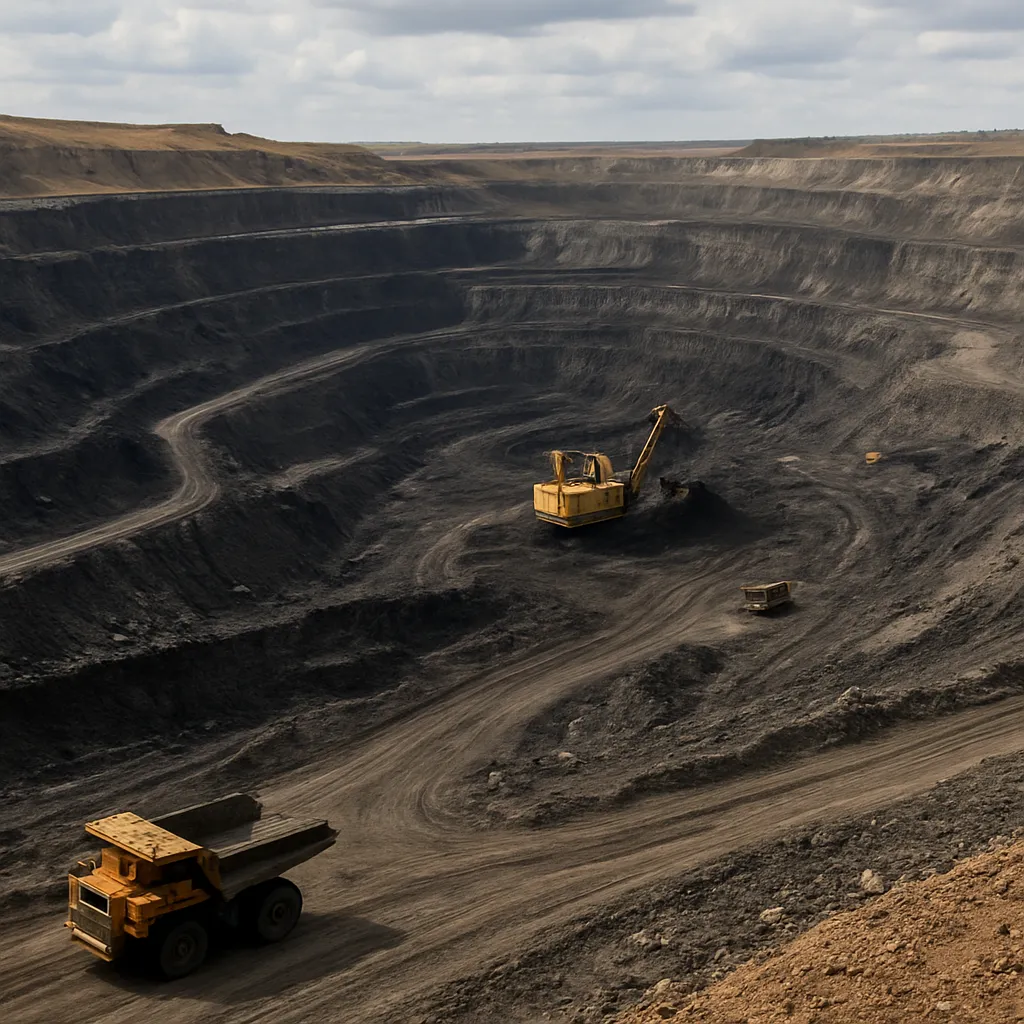
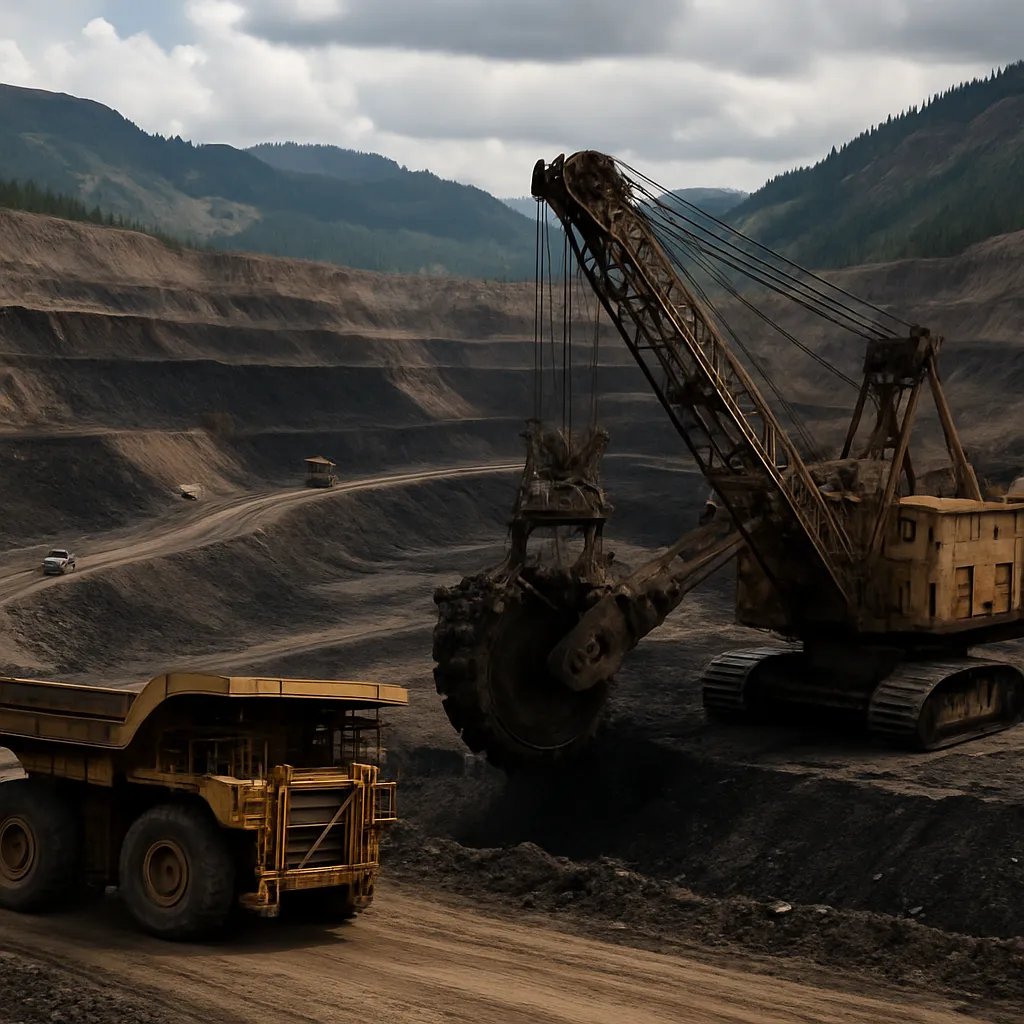
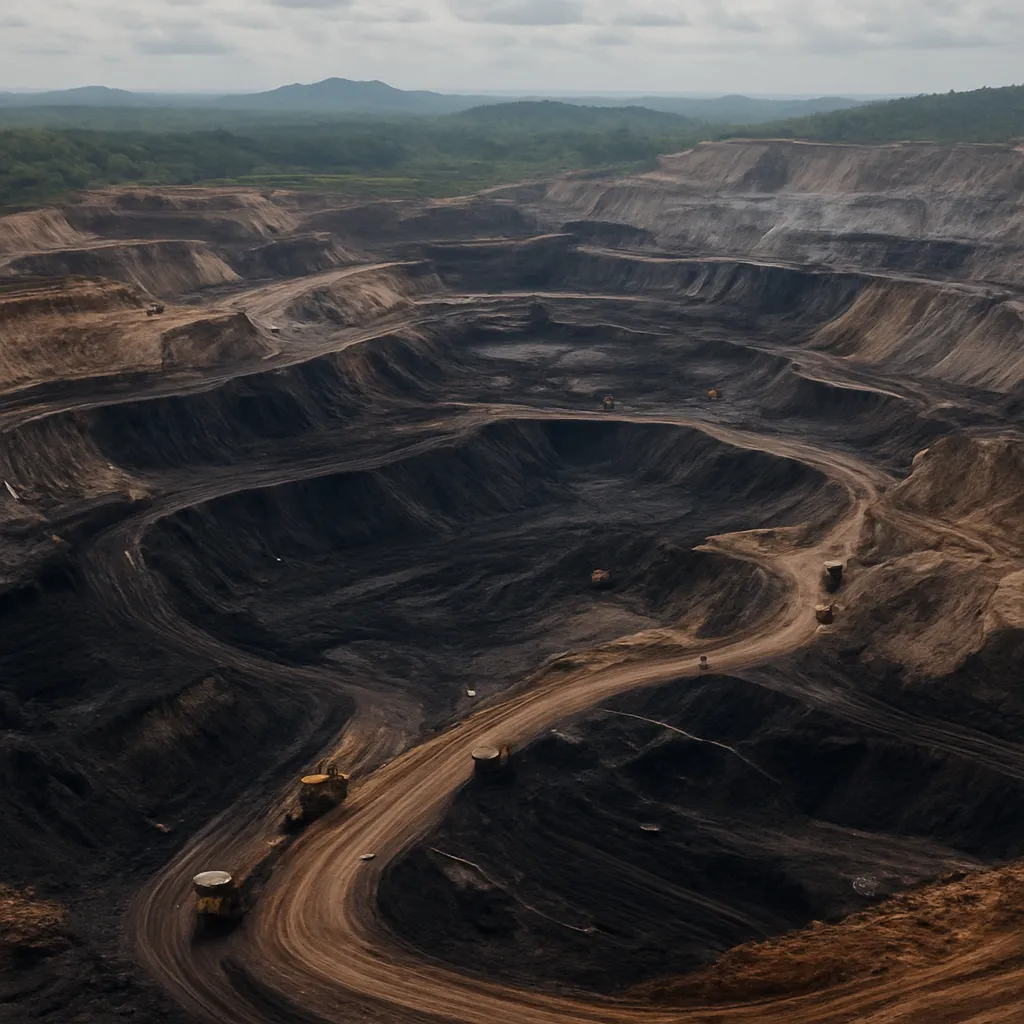
Operations at the East Block are run according to the typical Indonesian open-pit model: removal of overburden, benching of coal seams, and extraction using heavy equipment such as hydraulic excavators, bulldozers, haul trucks, and sometimes draglines. The extracted coal is processed through basic washing and sizing plants where feasible, then stockpiled and transported to loading facilities for domestic use or export.
Extraction methods
- Open-pit/strip mining is the dominant method because seams are relatively shallow and continuous.
- Standard equipment includes excavators (shovels), rigid-frame haul trucks, graders, and bulldozers.
- Some operations may use simple coal-washing to reduce ash and improve calorific value where economically justified.
Coal characteristics
Coal from Kalimantan concessions like the Indominco East Block is generally marketed as thermal coal. Characteristic properties often include moderate to high moisture, moderate calorific value, and varying ash content. Typical commercial descriptors that buyers look for are calorific value (kcal/kg), total moisture (TM), ash, volatile matter, and sulfur. For Kalimantan coals, calorific values commonly fall in the sub-bituminous range, suitable for power stations and for blending with higher-rank coals when required.
Economic importance and statistics
The Indominco East Block contributes to regional and national economies through direct extraction activity, employment, royalties and taxes, and by supporting downstream industries such as transport, port services and engineering. While specific company-reported production and reserve figures for the East Block may be limited in public disclosures, the role of such concessions can be contextualized within Indonesia’s broader coal industry.
Contribution to local and national economies
- Employment: Mining operations generate direct jobs in extraction, processing and maintenance, and indirect jobs in logistics, catering, and local services.
- Government revenue: Concessions pay royalties, corporate taxes, and local levies which fund public services at provincial and national levels.
- Infrastructure development: Mining often accelerates road, port and utility development that can benefit local communities and other industries.
Industry-scale context and statistics
Indonesia is one of the world’s largest coal producers and exporters, and concessions like Indominco East Block are part of that national output. In the mid-2020s, Indonesia’s annual coal production typically ranged in the high hundreds of millions of tonnes, with a substantial share destined for export markets across Asia. These national statistics underscore the strategic importance of individual concessions: even a modest production profile contributes to a sizeable national export pool and to energy security in the domestic market.
Typical performance metrics
When assessing a mining concession, analysts commonly review:
- Proven and probable reserves (tonnes)
- Annual production (run-of-mine tonnes and saleable tonnes)
- Average calorific value and quality parameters
- Operating cost per tonne (strip ratio, fuel, labor)
- Capital expenditure requirements (equipment, infrastructure, reclamation)
Markets, logistics and infrastructure
The market orientation for coal from the East Block typically includes both domestic power plants and international buyers in nearby countries. Logistics and infrastructure are critical determinants of project viability.
Transport and export routes
- River barging is common for inland concessions, transferring coal to coastal transshipment points or jetty facilities.
- Coastal ports and transshipment operations enable loading into Panamax and smaller bulk carriers for export.
- Where rail infrastructure exists, unit trains may be used; otherwise, road haulage supports local transport to waterways or ports.
Key export markets
East and South Asia are the primary markets for Indonesian thermal coal. Typical buyers over recent decades include utilities and independent power producers in China, India, Japan, South Korea, and countries in Southeast Asia. The exact portfolio for any concession depends on contractual relationships, coal quality, freight costs and geopolitical shifts.
Environmental and social considerations
Coal mining in tropical regions raises significant environmental and social responsibilities. The Indominco East Block is subject to national regulations as well as international expectations for environmental protection, social license to operate, and reclamation.
Environmental impacts
- Land clearing and habitat fragmentation: open-pit mining converts forested or peatland into worked areas, affecting biodiversity.
- Water management: heavy rainfall necessitates careful control of sediment, runoff and wastewater to prevent contamination of rivers and wetlands.
- Air quality: dust from blasting, hauling and stockpiling requires mitigation measures such as water spraying and windbreaks.
- Subsidence and long-term landform changes: planned final landforms and progressive reclamation are essential to restore ecosystem functions.
Social and community factors
Mining companies in Indonesia are expected to engage with local communities, provide employment and support development programs. Typical community programs include roads, healthcare, schools and small business development. Social impacts and benefits are often addressed in company social responsibility plans and through consultation with local adat (customary) communities where applicable.
Regulation, ownership and governance
Coal concessions operate under Indonesian mining law frameworks that define license types (e.g., IUP), environmental permitting (AMDAL), royalty regimes and obligations for reclamation and post-mining land use. Ownership structures vary: concessions may be operated by national companies, private Indonesian firms, or joint ventures with international investors. Governance and transparency are important considerations for investors and host communities alike.
Permits and environmental management
Before operations, companies must secure mining permits and an environmental impact assessment. During operations, compliance with environmental standards, monitoring and progressive reclamation are enforced by provincial and national authorities. Closure and post-mining land-use plans are increasingly scrutinized to ensure long-term sustainability.
Challenges and future prospects
The outlook for the Indominco East Block and similar concessions is shaped by a mix of market trends, regulatory changes and technological developments. Some of the principal considerations include:
Market dynamics
- Global and regional demand for thermal coal: short-term demand remains significant in Asia, but medium- and long-term trajectories are influenced by decarbonization policies and the pace of coal-to-gas or renewables transitions.
- Price volatility: coal markets are cyclical and responsive to supply disruptions, shipping costs and policy shifts.
Operational and environmental challenges
- Managing water and environmental liabilities in a tropical climate.
- Adapting operations to tighter environmental standards and community expectations.
- Maintaining workforce skills and safety in a remote setting.
Opportunities
- Upgrading coal quality through washing or blending to access higher-value markets.
- Investing in more efficient mining fleets to reduce unit costs and emissions footprint.
- Rehabilitation and post-mining land conversion (agroforestry, reservoirs, recreation areas) to create lasting community benefits.
Interesting facts and considerations
Some additional points that often interest observers and stakeholders:
- Strategic role: Indonesian coal concessions, including those like Indominco East Block, play a strategic role in regional energy supplies and in the export balance of the country.
- Supply chain complexity: A coal concession’s success depends not only on geological quality but also on reliable transport to ports, transshipment capacity, and stable market contracts.
- Technology adoption: There is growing use of digital monitoring, fleet telematics, and remote sensing for environmental compliance and operational optimization.
- Community partnerships: Successful projects increasingly rely on genuine partnerships with local communities, focusing on training, local procurement and sustainable development initiatives.
Data availability and how to verify site-specific figures
Publicly available, independently verified statistics for a single concession such as Indominco East Block are sometimes limited. For precise and current figures—reserves, annual production, sales volumes, and financial contributions—reliable sources include official company reports, Indonesian government agencies (e.g., Ministry of Energy and Mineral Resources statistics), regional environmental and mining authorities, and audited sustainability reports. Independent industry analysts and trade publications also provide periodic assessments that can help contextualize a concession’s performance.
In summary, the Indominco East Block exemplifies the characteristics of many Indonesian thermal coal concessions: it is situated within a geologically favorable coal belt, employs open-pit extraction, produces thermal coal for domestic and export markets, and presents both economic benefits and environmental challenges. Its future will depend on operational efficiency, regulatory compliance, community engagement, and how regional energy demand evolves in the context of global decarbonization trends.