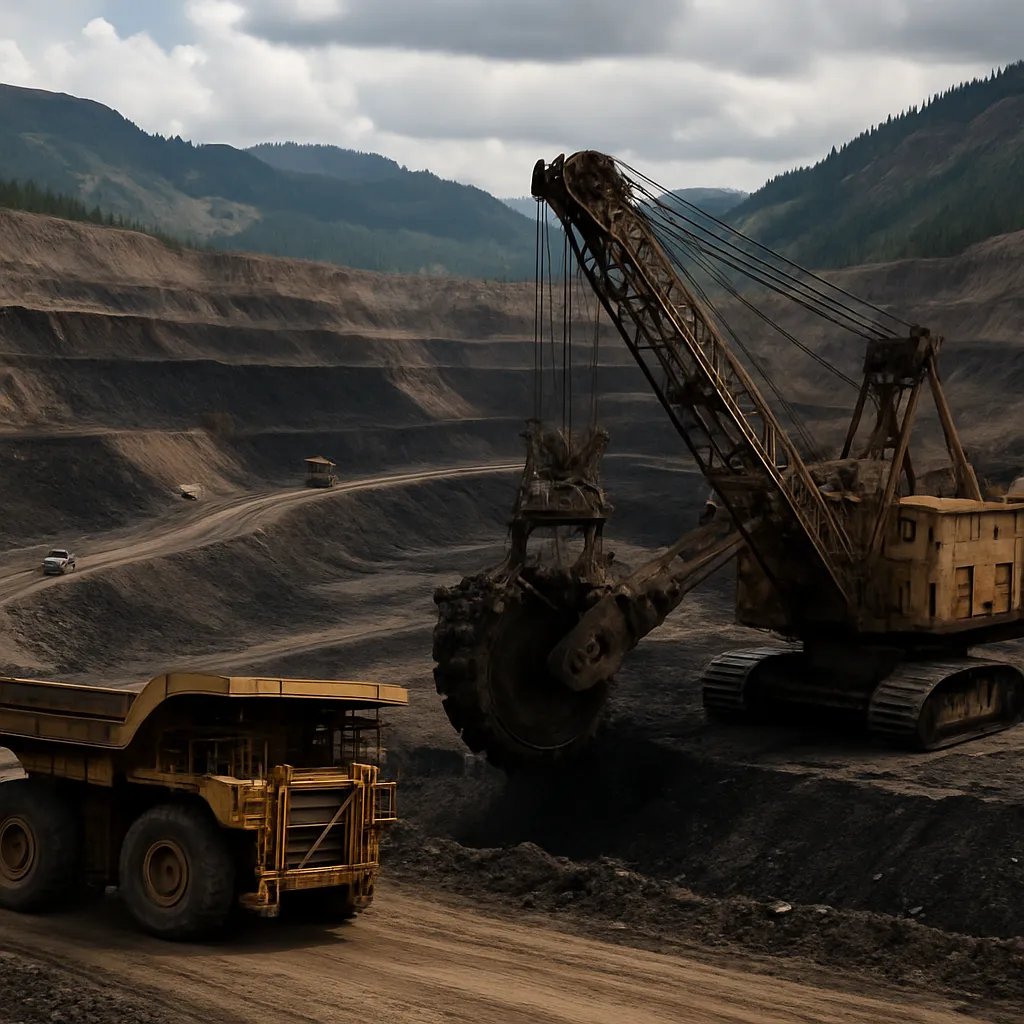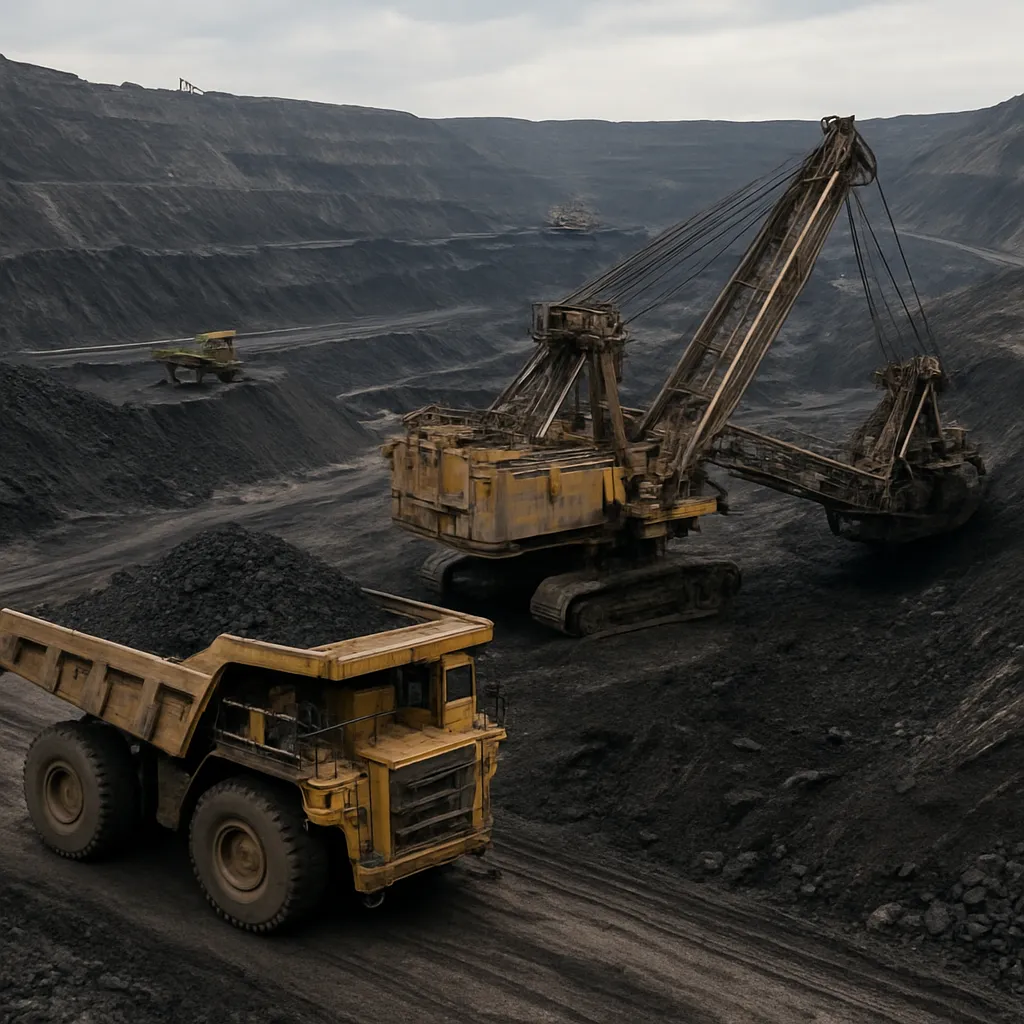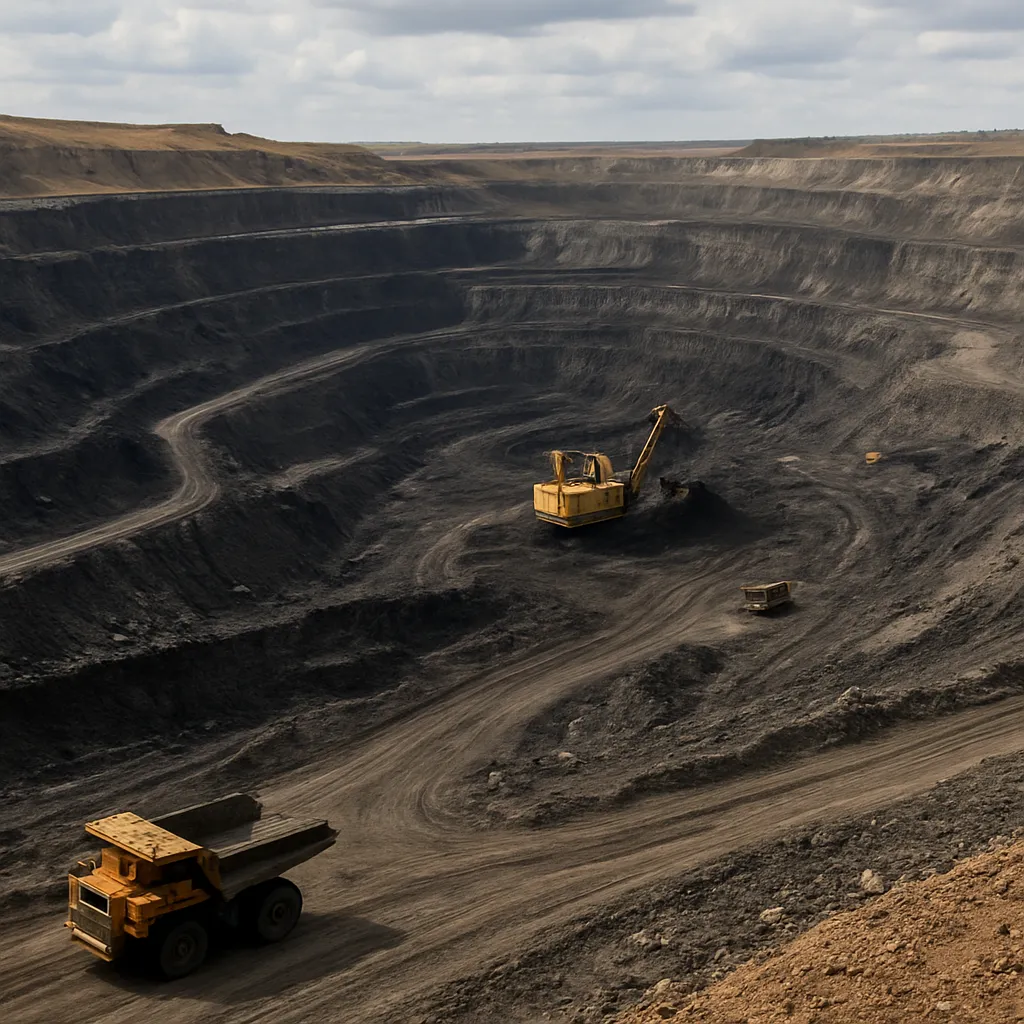
The Inaglinsky Open Pit is an example of the many coal extraction sites operating within the Russian Federation. Although detailed, independently verifiable site-level data for Inaglinsky are limited in the public domain, this article synthesizes available references with broader knowledge of Russian open-pit coal mining to describe likely location characteristics, the type of coal mined, operational and economic aspects, production and employment context, and environmental and social issues associated with such operations. Where exact figures for Inaglinsky are not publicly available, the article provides industry-level statistics and comparative data to place the mine in a wider perspective.
Location and geological setting
The exact, widely published coordinates and administrative jurisdiction of the Inaglinsky Open Pit are not consistently reported in open-source datasets. In Russia, major coal-bearing provinces include the Kuzbass (Kemerovo region), the Pechora Basin, the Kansk-Achinsk Basin, the South Yakutia fields, and the Far Eastern fields. Open-pit operations are most common where near-surface seams permit economical surface mining, typically in the Kansk-Achinsk and certain Kuzbass periphery zones.
Geological characteristics typical for Russian open-pit coal deposits that likely apply to Inaglinsky include multi-seam sequences of Carboniferous to Mesozoic age, overburden thickness varying from a few meters to tens of meters, and seam thicknesses that can exceed several meters in economically attractive areas. Coal rank in open-pit operations ranges from lignite and sub-bituminous in younger basins to high-volatile bituminous coal in older Carboniferous basins. Without site-specific drill logs or a government report, the precise seam rank at Inaglinsky must remain qualified as uncertain.
History and development
Many Russian open-pit mines have origins in Soviet-era exploration and large-scale development programs, later restructured during the post-Soviet privatization waves. Smaller pits and newer developments have often been initiated by regional companies or private investors to meet local fuel demand or supply coal to nearby power plants and industry.
For Inaglinsky, public documentation on the concession history, owners, or the year when commercial production began is sparse. Typical development phases for open-pit mines in Russia involve:
- Exploration and resource delineation (drilling, geophysics)
- Feasibility and permitting, including environmental impact assessment
- Construction of mine infrastructure (haul roads, benches, waste dumps)
- Commercial production and progressive reclamation
In many regional operations, infrastructure such as rail links, coal washing plants, and port access heavily influence the scale and longevity of the mine. If Inaglinsky serves a regional thermal power plant or an industrial hub, that would shape investment patterns and logistical arrangements.
Coal types and processing
The term coal covers a spectrum of material from low-grade lignite to high-grade anthracite. Russian mining operations commonly produce:
- Thermal coal (steam coal) used for power generation and heat—characterized by higher moisture and lower calorific value than metallurgical grades.
- Coking coal (metallurgical coal), used in steelmaking for coke production—higher fixed carbon and lower volatile matter.
- Intermediary grades (bituminous) that can serve either market depending on quality and beneficiation.
Open-pit mines frequently produce run-of-mine coal that is later beneficiated in nearby wash plants to improve ash and sulfur characteristics. Beneficiation improves marketability and reduces transportation costs per unit energy. Without mine-specific assays for Inaglinsky, a conservative description is that the site likely produces either thermal-grade coal or lower- to mid-rank bituminous coal typical of many Russian surface operations.
Mining methods, equipment and technologies
Open-pit coal mining in Russia typically employs large-scale mechanical excavation, with equipment such as draglines, hydraulic shovels, truck-and-shovel fleets, and continuous miners in some contexts. Modernization trends include automation, fleet optimization, real-time fleet tracking, and improved blasting and slope-stability monitoring.
Key operational elements commonly found at surface sites:
- Sequential bench mining with progressive depth increases
- Overburden removal and storage in external dumps or used for reclamation
- Primary crushing, screening, and washing facilities where needed
- On-site laboratories for grade control and quality assurance
If Inaglinsky follows regional norms, it would rely on heavy earthmoving fleets, on-site quality control, and logistical arrangements to rail or road nodes for onward shipment to either domestic consumers or export terminals.
Economic and industrial significance
At the national level, coal remains an integral part of Russia’s energy matrix and an important export commodity. Russia is consistently among the world’s top coal producers and exporters. For context:
- Russia’s total coal production is typically in the range of several hundred million tonnes per year (historical values often cited between ~350–450 million tonnes annually, subject to market conditions and reporting year).
- Major export markets include European customers (historically), Turkey, North Africa, and increasingly Asian destinations via Pacific ports.
On a local and regional scale, a site like Inaglinsky would contribute to:
- Regional energy security by supplying thermal coal to nearby power plants and heat-and-power complexes
- Raw material deliveries to industrial users—cement plants, brickworks, and small-scale metallurgical consumers
- Employment and fiscal benefits via royalties, local taxes, and vendor contracts
Economic performance of individual mines is governed by coal quality (calorific value, ash, sulfur), transport costs, proximity to end users or export facilities, and the regulatory and tax environment. For smaller open-pit operations, profitability can hinge on low stripping ratios and efficient trucking/rail logistics.
Production statistics and workforce
Site-level production and employment statistics for Inaglinsky are not readily available in major public datasets or industry reports. Many private or regional mines do report annual output to governmental registries, but access can be limited. Therefore, rather than present potentially inaccurate numeric claims, the following describes typical ranges for similar open-pit operations in Russia:
- Annual production: small open-pit operations often produce tens of thousands to a few million tonnes per year, while larger surface complexes can exceed 5–10 million tonnes annually.
- Workforce: employment figures correlate with mechanization—highly mechanized pits may employ a few hundred permanent workers plus contractors; less mechanized operations can employ several hundred to over a thousand people including seasonal staff.
- Capital and operating costs: surface mines generally have lower per-ton capital intensity than deep mines, but operating costs are strongly influenced by stripping ratio (volume of overburden to coal), fuel prices, labor costs, and transport distances.
To place this in national context, the Russian coal sector employs hundreds of thousands directly and indirectly across mining, processing, logistics and related services. A single operation like Inaglinsky would represent a small fraction of national employment but an important economic node within its immediate region.
Logistics, markets and export potential
Market destination for coal from any Russian mine depends on three interlinked factors: quality (which determines whether coal is fit for power generation or metallurgical use), proximity to rail or port, and contractual relationships with buyers. Mines that can link cheaply to trans-Siberian rail corridors or to Pacific/Arctic ports gain better access to export markets.
Typical logistics features to note:
- Role of rail: Bulk rail transport is the predominant method for moving large coal volumes to power plants or export terminals.
- Storage and blending: On-site yards and intermodal terminals allow blending to achieve consistent thermal value and ash content.
- Export channels: European, Mediterranean and Asian markets—specific access depends heavily on port capacity and geopolitical conditions.
An operation such as Inaglinsky, depending on its infrastructure linkages, could be primarily focused on domestic supply or have potential for exports if linked to major rail arteries.
Environmental and social impacts
Open-pit coal mining produces a range of environmental pressures that require active management. Common impacts and mitigation strategies include:
- Land disturbance: Extensive excavation and overburden disposal alter landscapes; progressive reclamation and reshaping of spoilbanks can restore landforms and reduce erosion.
- Water impacts: Acid drainage risks (especially in coal seams with sulfide minerals), sedimentation of local streams, and changes to groundwater regimes—mitigated by water management plans, sedimentation ponds, and treatment facilities.
- Air quality: Fugitive dust from blasting, excavation and stockpiles—managed through dust suppression, enclosures for conveyors, and green belts.
- Noise and vibration: From blasting and heavy machinery—controls often involve restricted working hours, blast design improvements and distance buffers.
- Socio-economic effects: Employment opportunities and local contracting balanced against changes to land use, community health, and sometimes resettlement requirements.
Environmental regulation in Russia requires environmental impact assessments and permits; enforcement and standards evolve over time, and mines increasingly adopt international best practices, especially when exporting to markets with strict sustainability expectations.
Rehabilitation, closure planning and future prospects
Good practice in modern mining includes planning for eventual closure from the start of operations. Rehabilitation approaches for open-pit mines include reshaping benches and spoil, topsoiling, revegetation with native species, and creating new land use (lakes, wetlands, recreational areas, or industrial zones).
Economic drivers for the medium-term future of coal in Russia involve domestic power demand, prices on global markets, and competition from gas and renewables. Mines with low production costs, high-quality coal, and good logistics are more likely to remain viable. For Inaglinsky, future prospects would therefore depend on:
- Operational efficiency and cost control
- Access to reliable transport links
- Ability to meet environmental and quality specifications demanded by buyers
Notable challenges and opportunities
Challenges commonly faced by surface coal operations in Russia—and likely relevant to Inaglinsky—include fluctuating global coal prices, regional infrastructure bottlenecks, environmental compliance costs, and social license to operate in local communities. Opportunities include modernization and automation, vertical integration with beneficiation and logistics, and diversification into coal-by-products or land reclamation projects with alternative uses.
Key strategic considerations
- Investing in washing and blending to improve product value and widen markets
- Developing predictable logistics solutions to reduce costs and delivery times
- Engaging proactively with communities to secure workforce and social stability
- Adopting environmental mitigation and monitoring to reduce regulatory and reputational risk
Data availability and recommended further steps for deeper research
Detailed, mine-level statistics for Inaglinsky Open Pit—such as proven reserves, annual production volumes, exact employment numbers, ownership structure, and detailed environmental monitoring results—are not widely available in international public databases that were consulted in preparing this piece. For authoritative, site-specific data the following sources are recommended:
- Regional mining authority or federal resource registries in Russia
- Company reports and local enterprise registries if the mine is operated by a private or public company
- Satellite imagery and remote sensing data to estimate pit size and activity trends
- Academic and technical publications or environmental impact statements filed during permitting
Access to up-to-date regulatory filings, environmental permits, and production declarations would enable precise reporting on reserves, production trends, and the mine’s contribution to local economies.
Summary
The Inaglinsky Open Pit, as a named coal site in Russia, exemplifies the mix of opportunities and challenges typical of surface coal mining in the country. While site-specific public data are limited, the mine would likely produce thermal or mid-rank coal, employ a regional workforce, and be integrated into local logistical networks for supply to power plants or industry. The broader Russian coal sector remains a significant component of national energy and export portfolios, and individual mines like Inaglinsky play a role in regional employment, energy supply, and industrial activity. Key considerations for the long-term viability of such operations include cost efficiency, quality control, transport access, and robust environmental and social management practices.
Inaglinsky, open-pit, coal, thermal, coking, reserves, production, employment, environmental, Russia