The story of coal is not merely one of a black rock fueling furnaces; it is a tale of transformation that reshaped economies, redefined power structures, and wove the foundations of modern global trade. From the smoky hearths of early European towns to the vast stockpiles lining the docks of major ports, coal’s journey has spanned continents and centuries. This article explores how the rise of coal and the emergence of coal stock markets not only propelled the engines of industrialization but also charted new maritime routes, forged critical infrastructure, and triggered debates about environmental cost and sustainability.
The Rise of Coal as a Dominant Energy Source
Long before petrol and natural gas took center stage, coal was the undisputed king of energy. With deposits sprawling across regions such as Britain’s Yorkshire, Germany’s Ruhr, China’s Shanxi, and the Appalachian Basin in the United States, coal’s abundance and relative ease of extraction provided the critical spark for the early phases of industrial growth.
Historical Context
In medieval Europe, wood had been the primary fuel for heating and forging metal. But deforestation and growing demand prompted miners to delve deeper beneath the earth’s surface, discovering rich veins of coal that offered more consistent heat and longer burn times. The subsequent development of the steam engine by innovators like Thomas Newcomen and James Watt transformed coal from a local commodity into the lifeblood of mechanized production. Textiles mills, ironworks, and emerging railways all demanded steady coal supplies, creating a feedback loop of demand that would set the stage for global trade.
Technological Advancements and Coal Extraction
Between the 18th and 19th centuries, improvements in mining techniques—shaft sinking, ventilation systems, and mechanized cutting equipment—dramatically increased output. Steam-powered pumps drained deep shafts, while rail lines carried tons of raw coal to coastal ports. This technical revolution not only lowered the cost of coal but also emphasized the importance of maintaining strategic stockpiles near major industrial centers and along emerging trade corridors.
Coal Markets and the Evolution of Global Trade
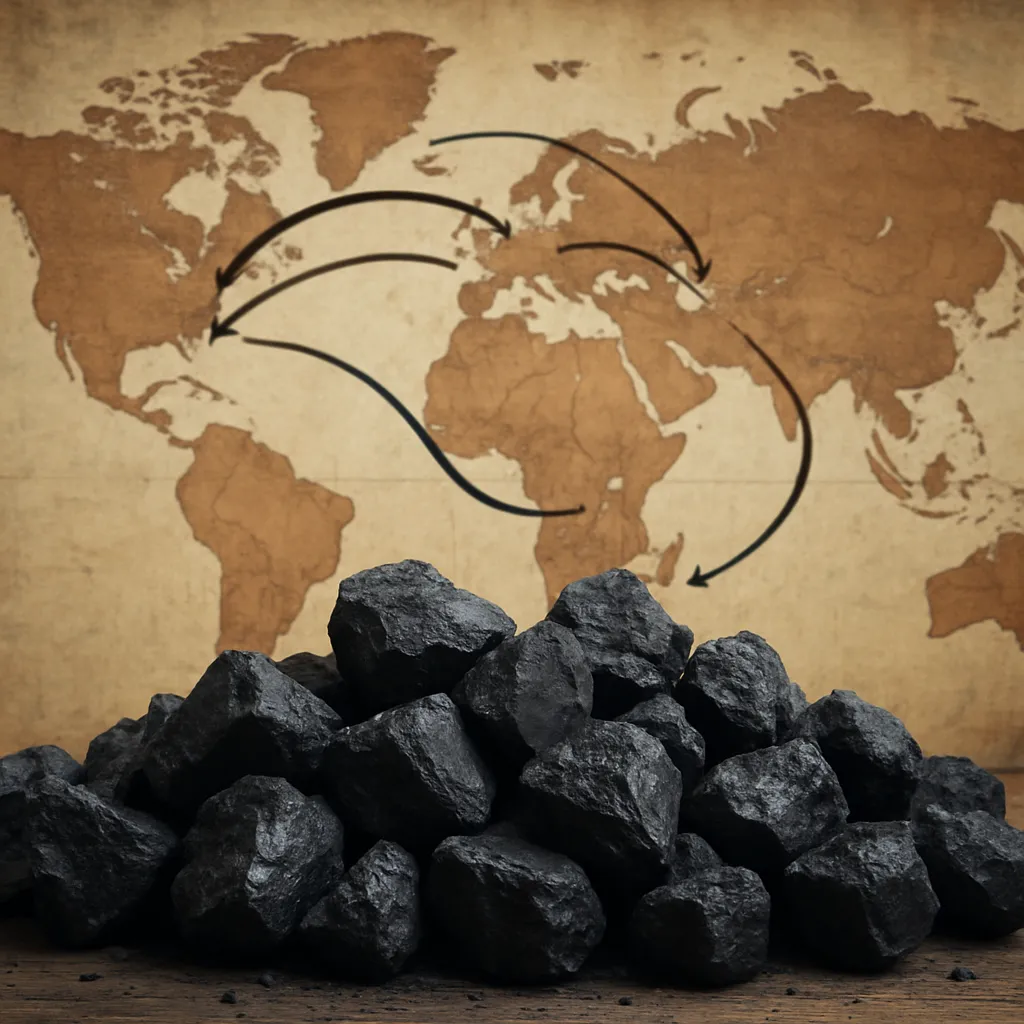
As industrial powerhouses competed for energy security, coal quickly became a key export commodity. It catalyzed the creation of specialized logistics networks, shaping the routes that merchant vessels would follow for decades.
- British Dominance: By the mid-19th century, Britain was exporting millions of tons annually to European neighbors and the Americas.
- Transatlantic Routes: Coal refueling stations mushroomed along the Atlantic coast, from Nova Scotia to the Azores, enabling steamships to cross the ocean with reliable fuel stops.
- Eastern Expansion: Coal from Newcastle and the Ruhr Basin traveled via the Suez Canal, linking European industries with Asian markets and altering the balance of colonial supply chains.
While major ports erected vast coal yards, commodity exchanges began to list coal futures and spot contracts. Traders speculated on price fluctuations, governed by seasonal demand and shipping constraints. This early market innovation mirrored grain and metal exchanges, cementing coal’s status as a critical financial asset as well as an industrial necessity.
Coal Stockpiles and Inventory Management
Maintaining optimal coal reserves required careful planning. Overly large stockpiles risked spontaneous combustion or weather damage, while shortages could halt factory production. Enterprise managers turned to dedicated warehouses, covered bunkers, and environmental controls. Railway companies, shipping lines, and port authorities collaborated on joint storage facilities to refine logistics, synchronize deliveries, and balance supply with industrial calendars.
The Role of Colonial and Emerging Economies
Imperial powers recognized that controlling coal deposits equated to controlling industrial growth. In India, Australia, South Africa, and Canada, colonial administrations invested in mining infrastructure, exporting both raw coal and processed briquettes. Emerging economies such as Japan and Brazil later developed their own mines, reducing reliance on foreign suppliers and fostering regional trade hubs.
Challenges and Modern Transition in Coal Trade
Despite coal’s historic prominence, the 20th and 21st centuries have introduced significant headwinds. New energy sources, environmental regulations, and changing consumer attitudes have forced the coal industry to adapt.
Environmental Concerns and Regulation
Coal combustion generates the highest emissions of any major fossil fuel, releasing carbon dioxide, sulfur dioxide, and particulate matter. As awareness of air pollution and climate change grew, governments imposed stricter limits, carbon pricing schemes, and emissions trading systems. Coal-dependent regions faced public pressure to reduce reliance on black rock.
- Clean Air Acts in the UK and US targeted sulfur content and airborne particulates.
- Kyoto Protocol and Paris Agreement spurred national commitments to cut coal usage.
- Technological solutions like flue-gas desulfurization and carbon capture and storage (CCS) emerged as potential mitigators.
These measures raised production costs and prompted the closure of high-polluting mines. Simultaneously, coal-exporting nations sought new markets in Asia, where industrialization still demanded robust energy inputs.
Economic Pressures and Investment Trends
Global investment patterns in energy have shifted. While some financiers divest from coal projects in Europe and North America, others fund expansions in Indonesia, Russia, and Mongolia. The proliferation of sustainability-themed investment funds and strict lending criteria from international banks have limited financing for coal, altering the geographic flow of capital.
Technological Innovation and Diversification
In response to environmental and financial challenges, the coal sector is exploring ways to remain viable:
- Coal-to-Liquids (CTL) plants that convert solid coal into synthetic fuels.
- Integrated Gasification Combined Cycle (IGCC) facilities aimed at cleaner power generation.
- Hybrid systems combining coal-fired boilers with renewable sources to improve efficiency.
While these technologies aim to reduce the carbon footprint, widespread adoption depends on cost competitiveness and supportive policy frameworks.
Redrawing Trade Routes and Future Prospects
Coal’s influence on global logistics did not end with steamships. Modern dry bulk carriers and dedicated coal terminals have created a web of transport channels linking mines, ports, and power plants around the world.
Maritime Corridors and Infrastructure Upgrades
The busiest corridors today include the Pacific route connecting Australia’s Queensland fields to China and Japan, and the Northern Sea Route opening near-Arctic shipping lanes. Massive investments in deepwater ports, conveyor systems, and automated loading cranes illustrate the ongoing strategic importance of coal in global trade.
Energy Transition and the Role of Coal in a Low-Carbon Economy
Despite the export slowdown in some regions, coal remains vital in many emerging markets. It is likely to serve as a transitional fuel as economies build renewable capacity. Researchers argue that without pragmatic coal usage strategies—including efficiency improvements and CCS—energy access and economic growth in developing countries could stall.
In parallel, national policies and international support programs aim to accelerate clean energy rollout. The International Energy Agency (IEA) projects that by 2040, coal’s share of global electricity generation will decline sharply, but will still account for a significant minority of power supply. The precise balance will depend on technological breakthroughs, market forces, and geopolitical decisions.
The saga of coal illustrates how a single resource can shape centuries of trade, power dynamics, and technological advancement. As the world seeks greener alternatives, the lessons from coal’s historic journey—its ability to spark innovation, drive investment, and transform markets—remain deeply relevant to all sectors navigating tomorrow’s energy landscape.