The Guamacho Coal Mine is one of the many operations contributing to Colombia’s long-standing role as a major global coal supplier. While specific, widely published technical and production data for Guamacho itself can be limited in public sources, the mine sits within the broader context of Colombia’s extensive coal industry. This article describes the mine’s likely geological setting and products, places Guamacho in an economic and industrial framework, discusses environmental and social dimensions, and summarizes regional and national statistics that clarify its importance. Throughout the text, several key terms are emphasized to help readers quickly identify the most significant concepts related to this mine and its sectoral context.
Location and geological context
The Guamacho Coal Mine is located in Colombia’s coal-bearing region, part of the northern Andean–Caribbean sedimentary basins that host the country’s commercial coal deposits. These basins—most notably in the departments of La Guajira and Cesar—contain thick sequences of sedimentary rocks in which economically exploitable coal seams have formed. The precise administrative municipality and coordinates for the Guamacho site are often available through company reports or local mining registries, but general geological context is consistent with major Colombian coalfields.
Coal in this region commonly formed in coastal plain, swamp, and deltaic environments during the Late Cretaceous to Paleogene time intervals. Typical characteristics of these coal-bearing successions include
- interbedded sandstones, siltstones and shales,
- multiple coal seams of variable thickness, and
- presence of laterally discontinuous peat and paleosol horizons reflecting fluvial-deltaic dynamics.
Colombian coals are widely known for relatively low sulfur content and variable ash yield. Depending on depth and rank, the coal may be classified as sub-bituminous to bituminous, with calorific values that make it attractive for both domestic power generation and international thermal coal markets.
What is produced: coal quality and end uses
At Guamacho, the primary commodity is coal, intended predominantly for thermal energy use (steam generation and electricity production). Coal grade in Colombian mines commonly falls into the following categories:
- Thermal coals with moderate to high calorific value, suitable for power plants.
- Low-sulfur coals favored by export markets seeking to meet environmental emissions constraints.
- Variably ash-bearing coals; processing (washing) can reduce ash content before sale.
Although metallurgical (coking) coal is globally valuable, the majority of Colombia’s exported coal is thermal. Guamacho’s coal is therefore most likely used in power generation plants domestically and exported to countries with high demand for steam coal. Coal may be sold in raw run-of-mine form or after beneficiation (coal washing) to improve calorific value and reduce impurities.
Mining methods, infrastructure and logistics
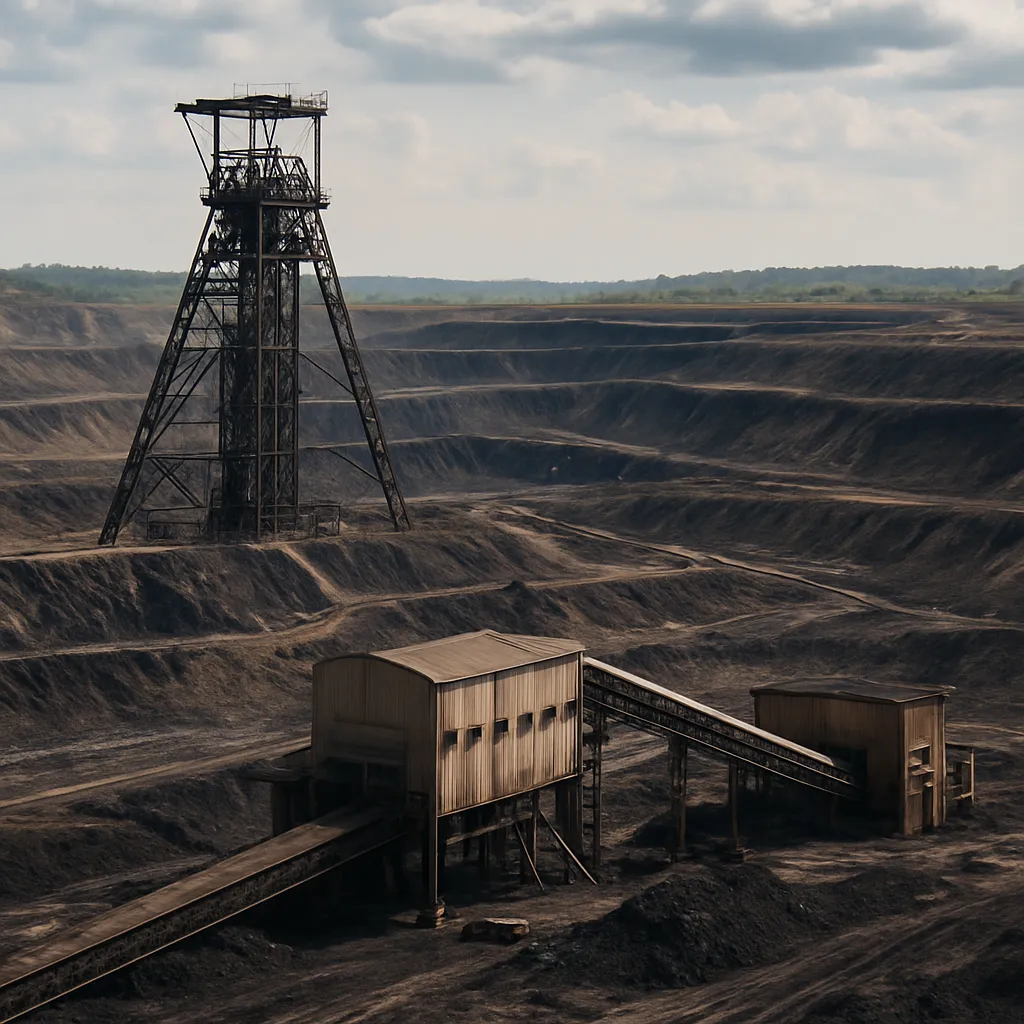
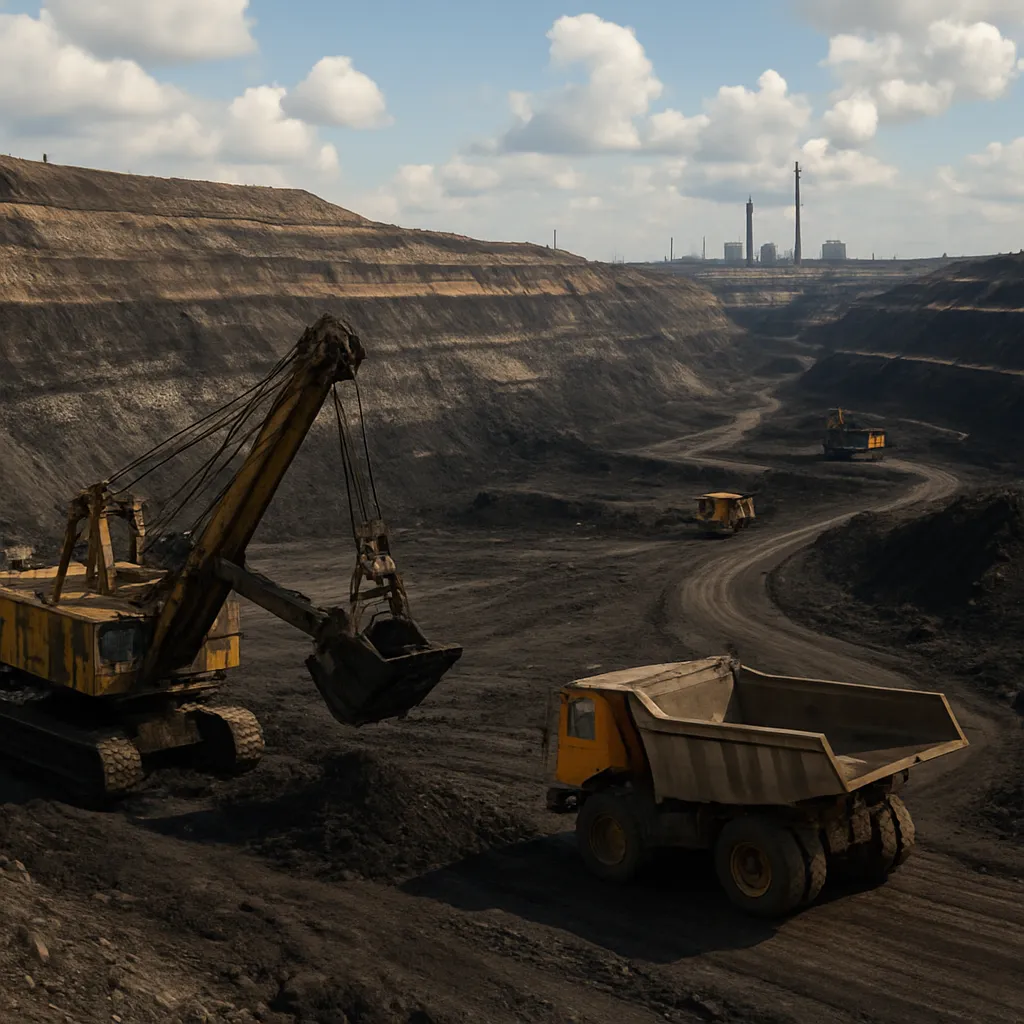
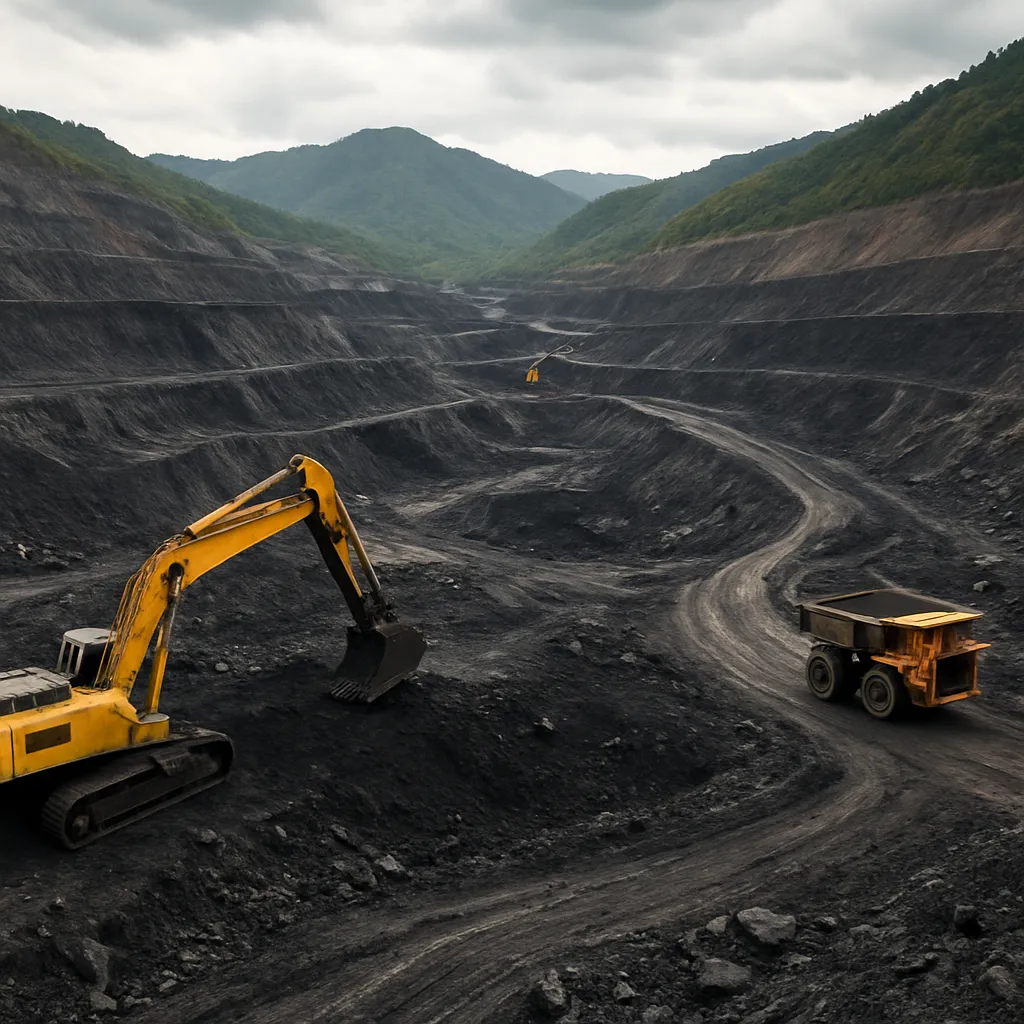
Coal extraction in Colombia uses a mix of open-pit (surface) and, less commonly, underground methods. Many of the larger deposits in northern Colombia are developed by open-pit techniques because of relatively shallow seam depth and the economics of removing overburden versus accessing seams by underground methods.
Typical infrastructure and logistics elements for a mine like Guamacho include:
- open-pit excavators, haul trucks and earthmoving equipment for extraction,
- on-site or nearby coal preparation plants for washing and sizing,
- conveyor systems and haul roads linking pits to stockyards,
- rail or truck linkages to ports—Colombian coal exports are commonly shipped through major Caribbean ports in northern Colombia,
- storage facilities and ship-loading terminals for export, and
- local access roads and utilities supporting operations and workforce housing.
Because of the export orientation of the Colombian coal industry, proximity to port infrastructure is a key determinant of competitiveness. Efficient transport reduces costs and improves the marketability of coal on international markets.
Economic and statistical perspective
Colombia is a globally significant coal exporter. While exact production numbers for Guamacho may not be publicly disclosed in standardized datasets, understanding national and regional metrics helps frame the mine’s economic relevance.
National context:
- Colombia has consistently ranked among the world’s top coal exporters, with annual exports typically ranging in the tens of millions of tonnes. In recent years, aggregate Colombian coal exports have commonly fallen within roughly 60–90 million tonnes per year, depending on global demand and logistical factors.
- Coal is one of Colombia’s principal mineral exports and a major source of foreign exchange revenue, contributing billions of dollars to export earnings annually.
- The coal sector supports a significant share of fossil-fuel energy supply and underpins industrial activities and power generation within Colombia as well as meeting overseas demand.
Regional and mine-level perspective
Individual mines in the country range from very large open-pit complexes (producing tens of millions of tonnes annually) to medium and smaller operations with more modest outputs. Guamacho, depending on its scale, would contribute to regional employment, local fiscal revenues (royalties and taxes), and supply chains. Typical economic impacts associated with a coal mine include:
- direct employment (technical, operational and administrative positions),
- indirect employment in services, transport, and goods supply,
- local procurement of materials and contracting services, and
- royalties and taxes paid to municipal, departmental and national governments.
Because public mine-level statistics vary and are sometimes proprietary, it is common to find detailed figures in company disclosures, government mining cadastres, and export records. If precise annual production, reserve volumes, or revenue figures for Guamacho are required, these are best obtained from the mine operator’s technical reports or the Colombian Mining Authority listings.
Socio-economic significance
The presence of a coal mine like Guamacho has multiple social and economic implications at the local and regional levels.
Employment and local economies
Coal mines create direct jobs for miners, engineers, geologists, technicians and administrative staff. In addition, indirect employment arises through contractors, logistics providers, maintenance services and local suppliers. For many municipalities in coal-producing regions, mining is a cornerstone of the local economy, supporting:
- household incomes and consumer spending,
- local infrastructure development (roads, schools, health centers when companies invest), and
- municipal budgets through taxes and royalties.
Government revenues and royalties
Mining royalties and taxes contribute to departmental and national coffers. Colombia has established frameworks for collecting royalties from mineral extraction which are intended to support development projects, though debates continue about the distribution and effectiveness of those funds.
Environmental and social challenges
Coal mining, including operations like Guamacho, presents several environmental and social challenges that require active management. Key considerations include:
- Land-use change: open-pit mining alters landscapes, requiring reclamation and rehabilitation plans to restore ecosystems and productive uses after mine closure.
- Water management: mines must manage surface and groundwater impacts, control sedimentation, and avoid contamination from tailings or acid-generating materials (although Colombian coals’ typically low sulfur reduces acid mine drainage risk).
- Air quality and dust control: dust from blasting, hauling and crushing can affect nearby communities and requires mitigation measures (sprinklers, covered conveyors, buffer zones).
- Social impacts: resettlement, community health, and labor relations need careful governance to avoid conflicts and ensure equitable benefits.
Colombian mines operate under environmental permitting regimes that require environmental impact assessments (EIAs), social management plans, and reclamation commitments. Increasingly, stakeholders—investors, lenders and buyers—expect higher standards of environmental, social and governance (ESG) performance.
Industry significance and market role
Within the Colombian mining industry, coal occupies a prominent position. Major producing regions supply international buyers across Latin America, Europe and Asia. The global demand for thermal coal is shaped by power generation trends, environmental regulation and competition from gas and renewables.
For a mine like Guamacho, market dynamics that determine long-term viability include:
- global thermal coal demand and price volatility,
- freight and logistics costs to port and international shipping rates,
- quality parameters such as calorific value, ash, moisture and sulfur content, which influence price and buyer preference, and
- regulatory and reputational pressures as countries and companies pursue decarbonization.
Despite the global energy transition, many countries retain coal-fired capacity and rely on coal imports for energy security. Mines in Colombia have adapted by focusing on high-quality, low-sulfur thermal coal that retains marketability. At the same time, diversification and longer-term transition planning are becoming important for regional economies historically dependent on coal.
Technology, safety and working conditions
Modern coal mines employ technologies to improve productivity and safety. Common measures include:
- fleet management systems and telematics to monitor equipment and optimize haulage,
- automated or semi-automated loading and processing equipment to reduce manual exposure to hazards,
- rigorous health and safety management systems, training and personal protective equipment to reduce injuries, and
- environmental monitoring networks to track air, water and noise impacts in real time.
Occupational health remains a priority, with programs aimed at reducing respiratory illness, ergonomic risks and workplace accidents. Strong labor relations and compliance with national and international safety standards are central to sustaining operations and community trust.
Future outlook and transition considerations
Looking ahead, the future of individual mines such as Guamacho is influenced by a mix of market, regulatory and social drivers:
- near- to medium-term demand for thermal coal in Asia and Latin America may sustain operations,
- buyers and financiers increasingly apply environmental and social criteria, affecting access to capital and markets,
- technological improvements—e.g., higher-efficiency combustion, coal washing and emissions controls—can extend coal’s competitiveness in certain markets, and
- local and national policies around decarbonization will shape long-term planning, reclamation obligations and economic diversification strategies for coal-dependent regions.
For stakeholders, balancing short-term economic benefits with long-term sustainability is the central challenge. Effective mine closure planning, investment in local skills and infrastructure, and transparent revenue management are critical parts of ensuring that communities benefit beyond the life of the mine.
Statistical snapshot and data sources
Although mine-specific statistics for Guamacho may require operator disclosure or government registry queries, broader data give context to the mine’s environment:
- Colombia’s coal exports have historically been a major source of export revenues, often totaling tens of millions of tonnes per year. Year-to-year variation depends on global demand, prices and logistical constraints.
- Coal contributes significantly to regional employment in the main producing departments, generating direct and indirect jobs and supporting local supply chains.
- Revenue from coal exports supports national and subnational budgets through taxes and royalties, though the exact fiscal contribution varies by mine size and contract terms.
For authoritative, up-to-date statistics on production volumes, export tonnages, revenues, employment and environmental performance, the following types of sources are recommended:
- official Colombian government publications (Ministry of Mines and Energy, national statistical agencies),
- company annual reports and technical reports for specific mines,
- international trade databases and commodity market reports, and
- peer-reviewed geological and environmental studies focused on Colombian coal basins.
Interesting facts and broader context
Several noteworthy aspects of Colombia’s coal industry—and by extension mines like Guamacho—include:
- Low sulfur levels: Colombian coals often have relatively low sulfur content compared with some global sources, which increases their attractiveness to markets aiming to limit SO2 emissions.
- Strategic export orientation: Northern Colombia’s ports and rail/road corridors are critical arteries that connect inland coalfields to international buyers.
- Local development potential: Mining companies sometimes invest in social programs, infrastructure and skill-training initiatives that can leave lasting benefits when managed transparently and in partnership with communities.
- Environmental scrutiny: Coal mining faces increasing scrutiny from civil society, regulators and international financiers, pushing for stronger safeguards, rehabilitation commitments and transparency in royalty allocation.
Conclusion
The Guamacho Coal Mine operates within a region and industry of substantial economic importance for Colombia. Producing primarily thermal coal, the mine contributes to local employment, export earnings and energy supply chains. While mine-specific public statistics may be limited, the mine’s relevance can be understood through national coal production and export trends, the geological setting of northern Colombian coal basins, and the evolving market and regulatory dynamics that shape the coal sector.
As global energy markets and environmental policies change, the future trajectory for mines such as Guamacho will depend on their ability to meet stricter environmental standards, adapt to shifting demand, and contribute sustainably to local development. Emphasizing strong environmental management, transparent governance and economic diversification will be key to maximizing benefits and mitigating impacts for communities and the broader Colombian economy.