The following article examines the Cerrejón coal mining complex in northern Colombia, with particular emphasis on its southern sector often referred to as Carbones del Cerrejón Sur. It covers location and geology, the type and quality of coal produced, economic and statistical data where available, infrastructure and logistics, social and environmental impacts, and the strategic role of the mine in Colombia’s mining sector and global coal markets. Where numerical data are cited they are presented with qualifiers — estimates and historic ranges — because production and ownership details have shifted over time.
Location, scale and geological setting
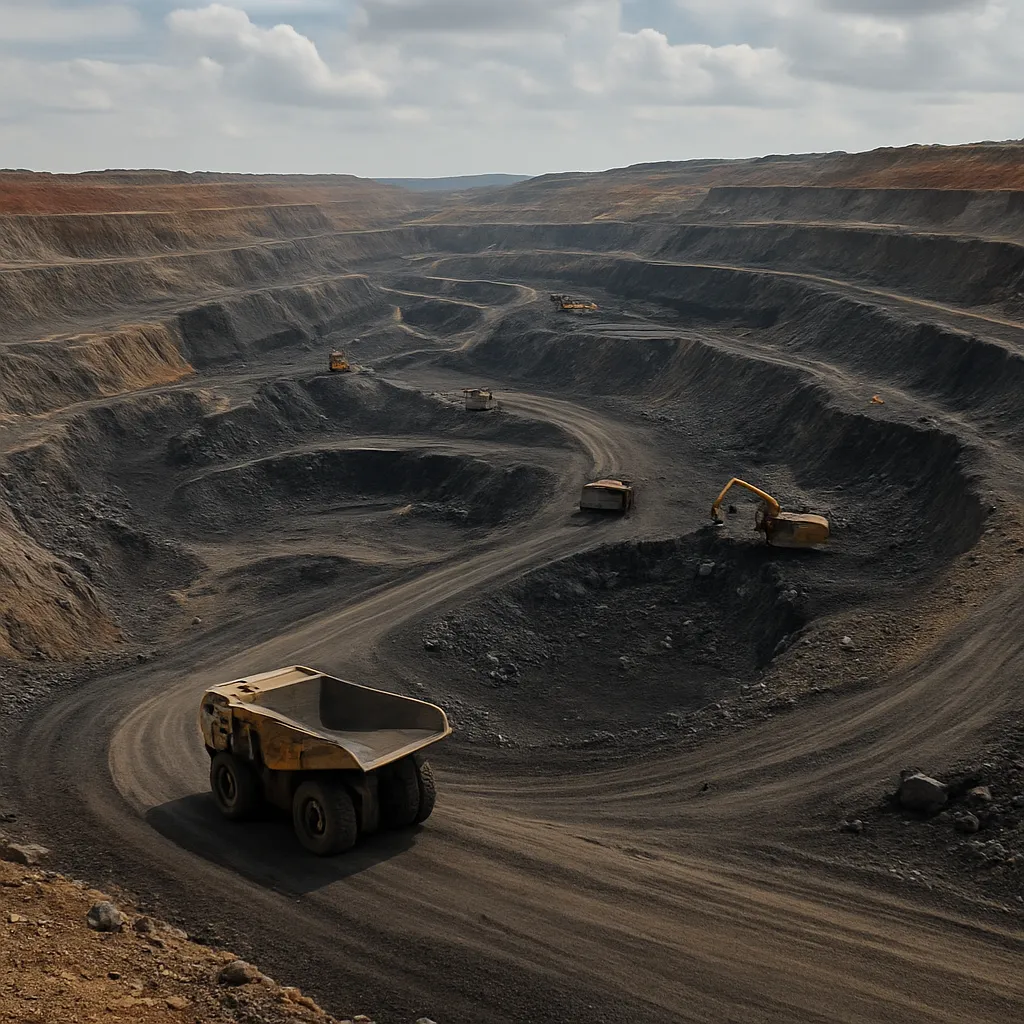
The Cerrejón mining complex lies in the northeastern Colombian department of La Guajira, within the arid to semi-arid Guajira Peninsula. The operation occupies a large area of low-lying plains and belongs to one of the world’s largest open-pit coal mines. The mining concessions are distributed across a number of pits historically referred to as Norte, Central and Sur, with Cerrejón Sur denoting the southern portion of the concession area.
Geologically, the coal seams of the Cerrejón basin formed during the Paleocene epoch and are associated with extensive fluvial and deltaic deposits. The coal-bearing formation is often termed the Cerrejón Formation. Coals here are typically found in laterally extensive, relatively thick seams that allow large-scale surface mining by contiguous pit expansion. The region’s geologic continuity and seam thickness have made Cerrejón economically attractive for large-bucket excavators and truck-and-shovel operations.
Key geological characteristics
- Thick, laterally persistent seams within a Paleocene-age formation.
- Coal rank: primarily used as thermal coal (steam coal) for electricity generation.
- Coal chemistry: relatively low in sulfur and (in many lots) low in ash compared with other global supplies, which has contributed to its marketability.
- Relatively shallow overburden in many areas, enabling large-scale open-pit mining methods.
What is mined: coal type and quality
Cerrejón produces primarily non-coking, steam or thermal coal used for electricity generation. The coal is generally valued for traits that make it attractive for many utility markets:
- Lower sulfur content relative to many other thermal coals, helping utilities meet emissions limits.
- Competitive calorific value suitable for power plants (ranges are typically quoted in source documentation and vary by seam and screening, but Cerrejón coals are positioned in the steam-coal market).
- Marketable particle-size distribution after washing and screening; the mine operates coal preparation plants to produce exportable grades.
The mine historically produces multiple product grades after beneficiation (washing and sizing): export thermal coal lumps and fines, with specifications tailored to major customers. These specifications often emphasize calorific value (kcal/kg or kcal/kg on an as-received/dry basis), moisture, ash, sulfur, and volatile matter. Exact typical numbers fluctuate by lot and year, but Cerrejón’s coal is widely marketed as a relatively low-sulfur, low-ash thermal coal appropriate for coastal and international utility markets.
Production volumes, reserves and ownership
Cerrejón is commonly cited among the world’s largest single open-pit coal operations by installed capacity and cumulative production. Over the last two decades the operation has produced tens of millions of tonnes per year. Historical peak annual production has exceeded 30 million tonnes in certain years (early 2010s), while in other years production has been lower — typically ranging between roughly 20 and 30 million tonnes annually depending on market demand, project plans, and regulatory or operational constraints. These figures refer to the entire Cerrejón operation and therefore include the combined output of its pits (Norte, Central and Sur).
Reserve estimates for the Cerrejón deposit vary by reporting methodology and the year of evaluation. Publicly cited figures over time have described multi-hundred-million to multi-billion tonne resources and recoverable reserves, with some estimates placing total coal resources and reserves at well over a billion tonnes. Because reserve and resource statements are updated and reinterpreted, and depend on price assumptions, technology and permitting, specific numbers should be read in context of the reporting date.
Historically, Cerrejón has been (and is often described as) jointly owned by major international mining companies—Glencore, BHP and Anglo American—or their corporate predecessors. Ownership structures have changed at times due to corporate transactions, so it is important to consult the most recent corporate filings for up-to-date shareholding percentages.
Economic and export statistics (historic context)
- Cerrejón has been a major contributor to Colombia’s coal exports, often accounting for a substantial portion (sometimes quoted as a third or more) of the country’s total thermal coal exports in peak years.
- Primary export markets have included Europe, North America and, in more recent years, demand from Asia (including India and other Asian buyers) has grown in certain periods.
- Export logistics rely on a private rail connection to a dedicated port terminal (Puerto Bolívar), enabling large bulk shipments by Panamax and larger vessels.
Because of price volatility in international coal markets, changes in energy policies, and shifts in demand among importing countries, Cerrejón’s year-by-year revenue and export tonnages have varied. The mine’s contribution to national export earnings has, at times, made it strategically significant for Colombia’s foreign exchange earnings and local economic activity in La Guajira.
Infrastructure, logistics and processing
One of Cerrejón’s defining features is its vertically integrated logistics chain. The operation includes large-scale mining equipment, on-site coal handling and processing plants, a private railroad connecting the mine to the coast, and the Puerto Bolívar export terminal.
Mining and processing
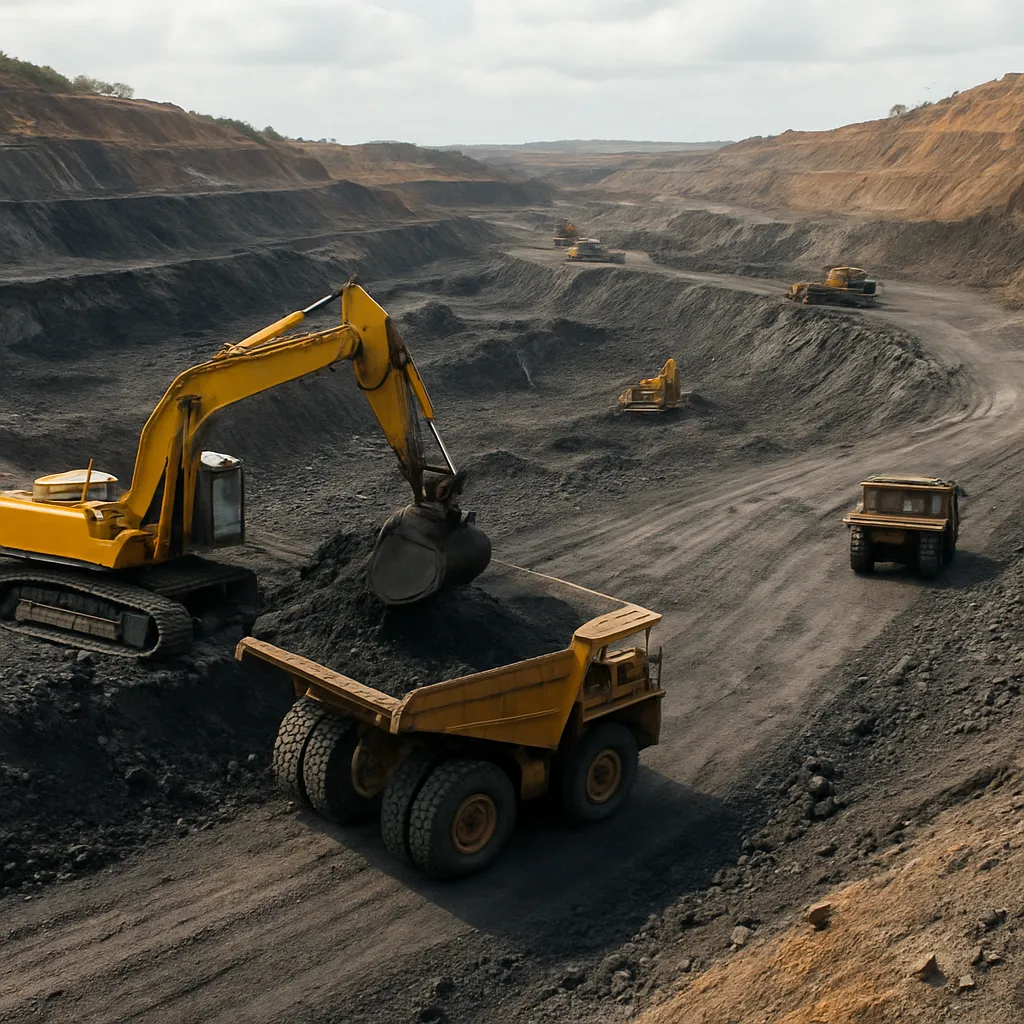
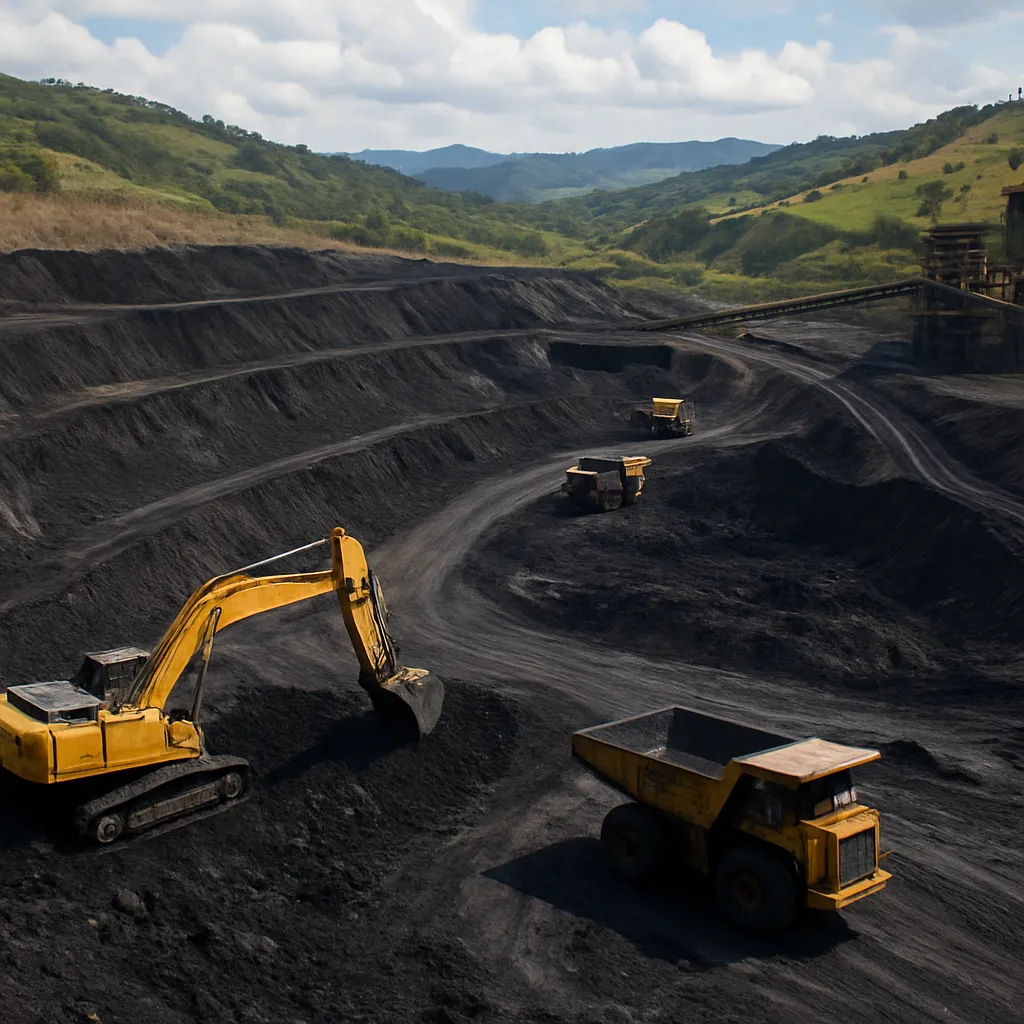
- Surface mining employs large shovels/excavators, haul trucks, and dragline or shovel operations depending on pit design and overburden.
- Coal is processed in wash plants to remove impurities and produce exportable grades with controlled ash and moisture content.
- Stockpiling, blending, and quality control ensure consistency for customers with contractual specifications.
Rail and port
- Cerrejón operates its own rail link that transports coal from the mine to the port at Puerto Bolívar on the Caribbean coast. The railway is a key asset enabling year-round exports even in a region with seasonal weather patterns.
- Puerto Bolívar is a specialized bulk terminal designed to load large bulk carriers efficiently; it is one of Colombia’s main coal export facilities.
- Because the mine is integrated into the supply chain from pit to ship, operational efficiency and reliability of the rail and port are critical for meeting customer contracts and for financial performance.
Economic impact and regional importance
Cerrejón has been a major economic actor in La Guajira and for Colombia’s mining sector. The mine’s footprint affects employment, local procurement, municipal revenues, and regional infrastructure development.
- Employment: The mine has historically provided thousands of direct jobs and many more indirect jobs through contractors, suppliers, transport services, and local commerce. Even as mechanization and market cycles change workforce size, Cerrejón remains an important employer in the region.
- Local economies: Procurement of goods and services from local businesses and contractors has supported secondary economic activity in nearby towns and cities.
- Fiscal contributions: Taxes, royalties and contributions have been significant sources of public revenue at municipal, departmental and national levels.
- Foreign exchange: Through coal exports, Cerrejón has contributed to Colombia’s foreign currency earnings, supporting macroeconomic balances in periods when coal prices and demand were strong.
Social, environmental and human rights considerations
Cerrejón’s large-scale surface mining has brought significant social and environmental challenges. The mine’s expansion and operations intersect with the territories and livelihoods of Indigenous Wayuu communities and local campesino populations. Environmental impacts include land use change, dust and particulate matter emissions, potential impacts on water resources, and changes in biodiversity and landscape.
Social issues and community relations
- Resettlement: Expansion of open pits has required resettlement processes for some communities. Resettlement policies, compensation packages, and their adequacy have been the subject of significant controversy, litigation, and negotiation.
- Indigenous rights: Wayuu communities have raised concerns about ancestral land rights, cultural impacts, and the long-term sustainability of livelihoods, leading to legal actions and public protests.
- Employment and social programs: The mine has operated educational, health, and development programs and has invested in local infrastructure; critics and community representatives have debated the sufficiency and long-term effectiveness of those programs.
Environmental concerns and mitigation
- Dust and air quality: Dust from blasting, haul roads, and coal handling can affect air quality in surrounding areas. The company operates dust suppression and monitoring programs, but community complaints have persisted.
- Water resources: In an arid region where water is scarce and livelihoods are sensitive to hydrological changes, water use by mining and potential impacts on groundwater and surface flows have been contentious.
- Biodiversity and reclamation: Progressive reclamation and revegetation are practiced on exhausted areas, but restoring ecosystems with similar services to pre-mining conditions is complex and time-consuming. The area’s ecosystems are unique and restoration is a long-term commitment.
These social and environmental dynamics have resulted in a concentrated body of legal cases, complaints to national and international human rights mechanisms, and prolonged dialogues involving community leaders, national institutions, and the company. The situation underscores the broader global challenge of balancing large-scale resource extraction with human rights and environmental stewardship.
Regulation, compliance and litigation
Cerrejón operates under Colombian mining, environmental and land-use regulations. Compliance with environmental licenses, resettlement protocols, and labor laws forms part of the operational framework. At various points, regulators, courts and international bodies have been engaged in disputes or mediation processes related to impacts and compensation.
Public scrutiny and litigation have influenced project planning, financing terms, and corporate social responsibility approaches. The mine’s history demonstrates how legal and institutional frameworks can shape project timelines, community relations, and reputational risk management for multinational operators.
Technological and operational aspects
Operationally, Cerrejón has adopted large-scale surface mining technologies appropriate for high-capacity open-pit operations. Key technological elements include:
- High-capacity shovels and haul truck fleets designed for the scale of material movement required in contiguous-pit mining.
- Coal-processing plants that use washing techniques to improve product quality and comply with customer specifications.
- Integrated operations management systems for scheduling, maintenance, safety, and supply-chain coordination with the rail and port.
- Environmental monitoring networks for air, water and noise, together with remediation and reclamation technologies.
As energy transition pressures rise globally, coal operations have faced increasing scrutiny regarding emissions and future demand. For operators like Cerrejón, this has led to considerations about efficiency improvements, methane management (if applicable), dust control, and potential diversification of investments by parent companies.
Markets, pricing and global context
As a producer of thermal coal, Cerrejón’s fortunes are tied to global demand for coal for power generation, which is influenced by:
- International coal prices and freight rates.
- Energy policy and coal-to-gas or coal-to-renewables switching in major consuming countries.
- Import demand, particularly in Asia, Europe and other markets where Colombian coal has been competitively priced due to quality and shipping logistics.
During periods of high international coal prices, the economic contribution of Cerrejón increases; during prolonged demand declines or strong decarbonization policies, the mine faces pressure to reduce operations, restructure, or shift corporate strategy. The evolution of global coal markets therefore strongly influences investment, employment and operational planning at Cerrejón.
Reclamation, closure planning and sustainability initiatives
Large surface mines are required to prepare closure and reclamation plans. Cerrejón has public commitments to progressive reclamation and to post-mining land uses that aim to restore ecological functions and provide benefits for local communities. However, reclamation of such large disturbed areas is a multi-decadal challenge and requires sustained funding, technical capacity and community coordination.
Sustainability initiatives also include community development programs, health and education projects, and investments in local infrastructure. Effectiveness and community perceptions of these initiatives remain an area of active debate and oversight by civil society and institutions.
Interesting and lesser-known facts
- Cerrejón’s private rail and port system is a strategic logistical asset in a region where road and transport infrastructure can be limiting factors for large-scale exports.
- Because the mine’s coal has been characterized by relatively low sulfur content, it has historically been attractive to utilities constrained by emissions regulations.
- The mine sits within an environmentally sensitive and culturally rich area, which has led to sustained attention from human rights organizations and researchers interested in the interaction between extractive industries and Indigenous communities.
- Cerrejón has been a focal point for debates about Colombia’s development model—balancing natural-resource exports, local economic benefits and environmental/social costs.
Future outlook and strategic questions
The future of Carbones del Cerrejón Sur and the broader Cerrejón operation will be shaped by several interlinked factors:
- Global energy demand trajectories: If coal demand contracts due to decarbonization and coal-to-gas/renewables substitution, long-term markets may shrink and require adaptation or phased closure planning.
- Regulatory and social license: Continued operations depend on regulatory compliance, community consent, and mitigation of social and environmental impacts. Effective, transparent engagement with local communities—especially Indigenous groups—is core to long-term viability.
- Corporate strategies of parent companies: Ownership decisions, portfolio balancing, and investment priorities set by major shareholders will influence capital allocation and any transitions away from coal-focused revenue streams.
- Technological and operational adaptability: Improvements in efficiency, environmental controls, and rehabilitation technologies can reduce impacts and potentially extend the operational life under stricter environmental standards.
Summary
Carbones del Cerrejón Sur is part of one of the world’s largest open-pit thermal coal mining complexes, located in La Guajira, northern Colombia. The complex has historically produced tens of millions of tonnes of export-grade thermal coal annually, shipped through the dedicated Puerto Bolívar terminal by a private rail link. The coal’s relatively low sulfur and favorable shipping position have made it a key export commodity.
At the same time, the mine’s scale has produced persistent social and environmental concerns—resettlement, impacts on Indigenous Wayuu communities, water and air quality issues, and biodiversity loss—leading to legal disputes and continuous public scrutiny. Economically, Cerrejón has been a major regional employer and a significant contributor to Colombia’s export earnings in coal-rich years. The operation’s future will be determined by global energy market trends, corporate strategies, regulatory landscapes and the ability to manage and mitigate social and environmental impacts in collaboration with local communities.
Given the dynamic nature of ownership, production levels and regulatory developments, readers seeking precise up-to-date figures (annual production by year, current ownership percentages, latest reserve statements, employment numbers and environmental monitoring reports) should consult the most recent corporate disclosures, Colombian government mining and environmental agencies, and independent monitoring reports for the latest validated statistics and official documents.