The following article provides a comprehensive overview of the Bulga Coal Mine in Australia, describing its location, the kinds of coal produced, operational and economic details, environmental and social aspects, and its place in the broader coal industry. The text synthesizes public knowledge, company-reported information and regional context to present a rounded picture of the mine’s significance to the Hunter Valley and to the Australian coal sector.
Location, Ownership and Regional Context
The Bulga mine complex is located in the eastern part of New South Wales within the renowned coal-producing region of the Hunter Valley. Situated near the village of Bulga and close to the regional centre of Singleton, the operation sits within one of Australia’s most important coal basins, a landscape dominated by a network of open-cut and underground mines that feed coal to domestic power stations and export terminals. The mine has been operated in recent decades by large coal-industry players; currently the operation is managed as part of the portfolio of Glencore in Australia following industry consolidations over the last two decades. The site is linked to the national rail network and relies on regional infrastructure to move product to export facilities, especially the major coal shipping point at the Port of Newcastle.
Geology and Coal Type
The Bulga operation extracts sedimentary coal seams typical of the Sydney Basin sequence. The coal produced at Bulga is principally used for power generation and industrial energy, and falls predominantly into the category of thermal coal. Coal seams in this part of the Hunter Valley exhibit variable rank and quality, with coal characteristics that can include moderate calorific value, volatility and ash content that reflect deposit heterogeneity. While the Hunter Valley region also produces significant quantities of metallurgical (coking) coal, Bulga’s output historically has been oriented toward thermal grades—coal used in electricity generation and some industrial processes—destined for both domestic consumption and export markets.
Mining Methods and Site Infrastructure
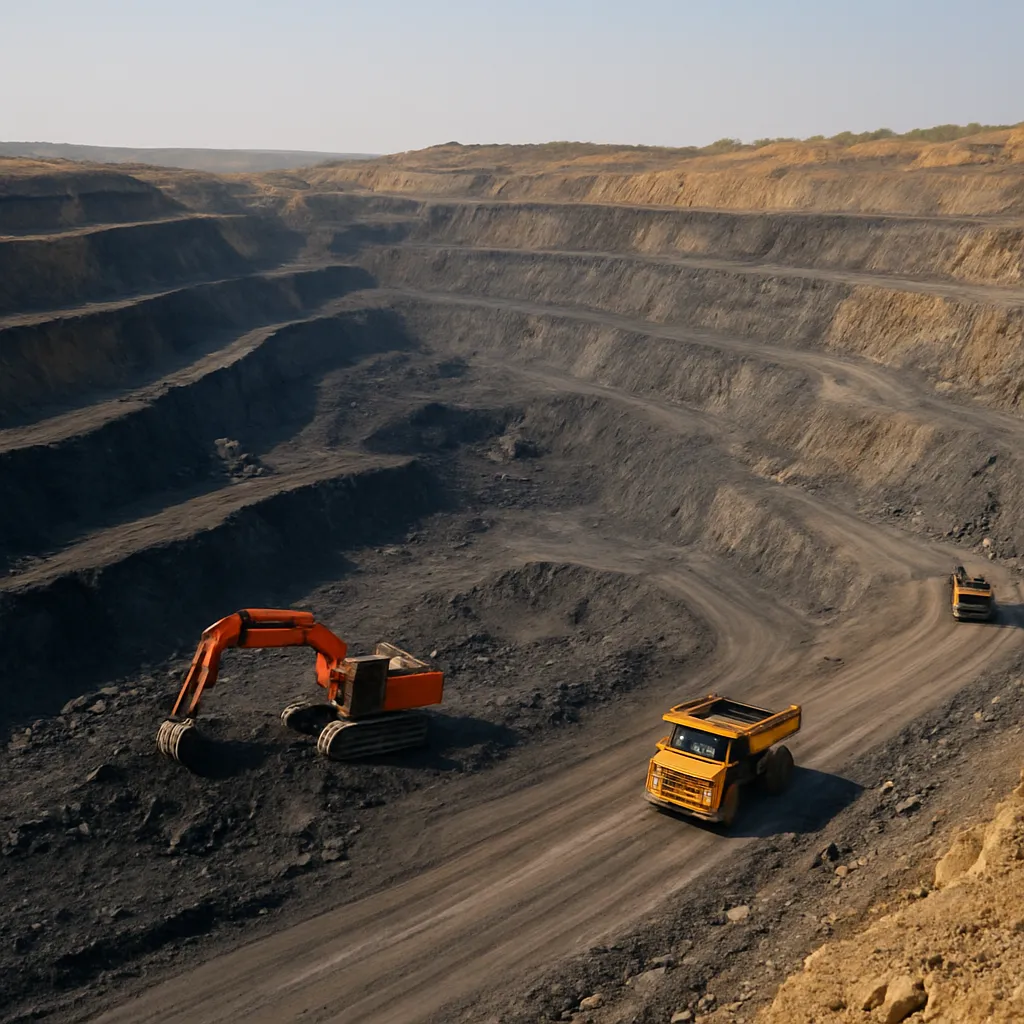
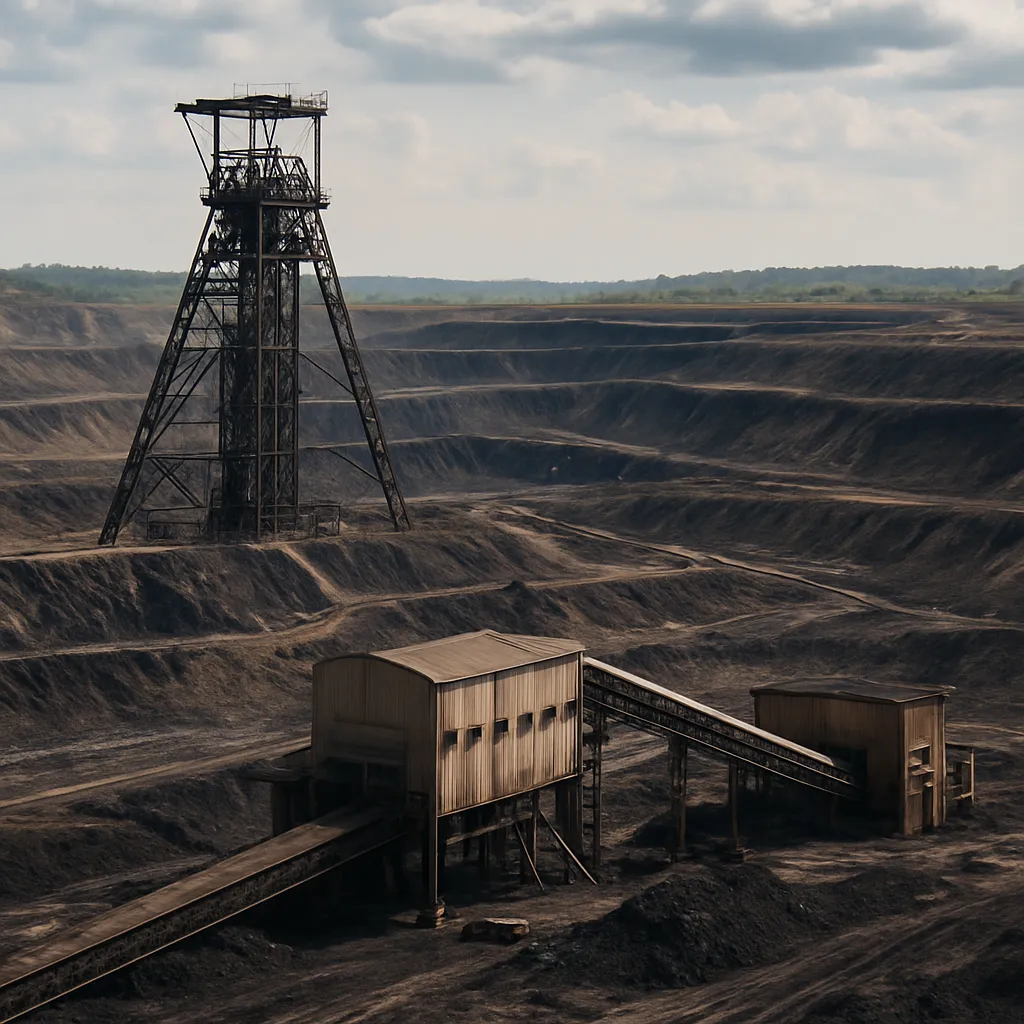
Bulga operates a combination of surface (open-cut) and smaller-scale underground workings depending on the area and coal seam geometry. Open-cut mining at Bulga typically uses large earthmoving fleets—draglines, hydraulic excavators, haul trucks and supporting equipment—to remove overburden and extract coal. Where underground operations exist, they employ bord-and-pillar or longwall techniques based on seam thickness and local geology. The site’s processing infrastructure generally includes run-of-mine coal handling, coarse sizing, stockpiles, and load-out facilities to transfer coal onto dedicated rail wagons.
Key infrastructure links include local haul roads, rail connections to the main Hunter Valley coal export rail lines, and access to port handling at Newcastle. The mine’s logistics and transport arrangements are critical: efficient rail loading and scheduling determine the mine’s ability to meet export contracts. Coal quality management—blending stockpiles to meet customer specifications—is an important day-to-day activity on-site.
Production, Reserves and Statistical Snapshot
Publicly-available figures for the Bulga complex have varied over time due to changes in operational strategy, market demand and regulatory approvals. Company reports and regional resource statements suggest the site has historically produced several million tonnes per annum. Exact production in any given year depends on market conditions, weather, and operational constraints.
- Production: Historically in the low- to mid-single digit millions of tonnes per year range (commonly reported as several million tonnes annually); actual annual output may vary year to year.
- Reserves: Proven and probable reserves at Bulga have been reported as significant but finite—measured in the tens to low hundreds of millions of tonnes depending on the scope (mineable reserves vs. geological resources). Reserve estimates are revised periodically through exploration and feasibility work.
- Employment: The mine supports a regional workforce including direct employees and contractor staff; depending on activity levels, dozens to several hundreds of workers may be directly engaged on-site, with broader regional employment created through supply chains and service industries.
- Exports: The majority of exportable product is shipped overseas, primarily to Asian power markets, via the Port of Newcastle and other coastal terminals.
Because public data sources and company disclosures vary, these figures should be regarded as indicative rather than precise. The mine’s production profile has been responsive to global thermal coal demand and price cycles; in periods of high international demand, output usually ramps up within the limits of environmental approvals and equipment capacity.
Economic Impact and Industry Role
Bulga Coal Mine plays several important roles in regional and national economies. On the regional level, the mine contributes to local employment, royalties and rates, and supports a supply chain of contractors, equipment suppliers, and service businesses. At the state level, coal royalties and corporate taxes from coal operations contribute materially to public revenues in New South Wales, funding infrastructure and services.
At the national and global level, Bulga’s exports form part of Australia’s broader coal export portfolio. Australia is a leading supplier of thermal and coking coal globally, and operations like Bulga help maintain export volumes that underpin trade balances and foreign exchange earnings. The mine’s ability to deliver consistent volumes of thermal coal supports Asian electricity generation needs, especially in countries where coal-fired generation remains a significant share of the energy mix.
Economic multipliers are notable: for every direct job on-site there are multiple indirect jobs in logistics, maintenance, engineering, and services. Local businesses—from accommodation and retail to heavy equipment maintenance—benefit from the presence of the mine. However, those benefits are balanced by debates about long-term sustainability and the economic transition away from fossil fuels in the decades ahead.
Environmental Management and Community Relations
Coal mining in the densely settled Hunter Valley requires active environmental and community management. The Bulga operation is subject to state-level environmental approvals and monitoring, which set conditions for water management, dust control, noise mitigation, progressive rehabilitation, and biodiversity offsets. Key areas of environmental focus include:
- Water management: managing groundwater and surface water interaction with mining activities, treating and reusing water where possible, and ensuring downstream water quality compliance.
- Dust and air quality: continuous dust suppression measures, weather-dependent operations planning, and monitoring at receptor locations to limit particulate impacts.
- Biodiversity and rehabilitation: progressive rehabilitation of disturbed land, nesting habitat management, and native vegetation offsets to meet statutory commitments.
- Noise mitigation: scheduling, bunding, and equipment noise controls to comply with approved noise levels at nearby residences.
Community relations are a constant priority. The proximity of Bulga to rural residents and local communities has led to ongoing dialogues about mine expansion proposals, buffer zones, and the cumulative impacts of multiple mines in the Hunter Valley. Social licence issues—concerns over health impacts, property values, and the long-term future of agricultural land—are negotiated through public consultation, community benefit programs and, in some cases, voluntary land acquisition mechanisms.
Regulatory and Social Controversies
Like many operations in the Hunter Valley, Bulga has been subject to environmental and planning controversies at various stages of its life. Expansion proposals have often required environmental impact statements, public hearings and negotiated conditions. Issues that have attracted public and political attention include:
- Proposed expansion of open-cut areas near residential or culturally sensitive sites.
- Concerns about cumulative impacts from multiple nearby mines, including cumulative noise, dust and surface water impacts.
- Cultural heritage protections and the need to consult with Aboriginal groups about known or potential heritage sites.
- Long-term land use and post-mining rehabilitation promises—how faithfully they are implemented and how land is ultimately repurposed.
These debates reflect broader tensions between the economic benefits of coal mining and environmental and social concerns. The mine’s operators typically respond by investing in additional monitoring, community programs, and adaptive management measures to address identified risks.
Logistics, Markets and Customers
Bulga’s coal primarily moves by rail to coastal export terminals, with the Port of Newcastle being a major outward gateway. From the port, coal is shipped to diverse international buyers—electric utilities and industrial coal users in Asia are typical customers for Australian thermal coal. Contract structures can include both spot sales and longer-term offtake agreements, and the mine’s commercial performance is influenced by global seaborne coal prices, freight costs and foreign demand.
In market downturns, operational plans can be adjusted—stockpiling coal, mothballing sections of the mine, or scaling back production. Conversely, when prices rise, the mine typically seeks to maximize output within permitted limits. Port logistics, rail capacity, and seasonal weather patterns (e.g., heavy rainfall affecting rail or loading operations) also influence how much coal reaches the market in any given quarter.
History and Ownership Evolution
Over decades the Hunter Valley’s mine ownership landscape has shifted through acquisitions, mergers and divestments. Bulga’s assets have passed through several corporate structures as part of wider consolidation in the coal sector. Company mergers and industry restructuring—especially transactions involving major miners—have influenced investment in the site, technology adoption and operational strategies. Since becoming part of a large multinational miner’s Australian portfolio, Bulga has benefited from integrated logistics, corporate risk management, and access to international sales channels.
Rehabilitation and End-of-Mine Planning
End-of-mine planning is a statutory requirement in Australia. Bulga’s rehabilitation plan generally commits the operator to progressively restore disturbed areas to agreed post-mining land uses—these may include native vegetation, pasture, or other agreed outcomes. Rehabilitation involves reshaping landforms, replacing topsoil, revegetation, and long-term monitoring of ecological outcomes and water balance. Financial bonds or guarantees are typically set to ensure funds are available for rehabilitation if the operator cannot complete the commitments.
Rehabilitation performance is carefully scrutinized by regulators and community groups because it determines whether the landscape can be safely and sustainably returned to other uses after mining ceases. Successful rehabilitation can create new biodiversity values, stabilised landscapes and usable land; poor outcomes can leave legacy issues for decades.
Future Outlook and Industry Trends
The future of Bulga Coal Mine will be shaped by a combination of market forces, regulatory conditions and the broader energy transition. Several key trends to watch include:
- Global thermal coal demand: continued demand in parts of Asia keeps mines like Bulga economically relevant in the medium term, but long-term decline in thermal coal demand is a recognized risk.
- Decarbonisation and emissions policy: tightening climate policy and shifts to renewables and gas can reduce demand for thermal coal and influence investment decisions.
- Technology and efficiency: ongoing improvements in mining productivity, water recycling, dust control and emissions monitoring can lower per-tonne environmental footprints and operating costs.
- Regional cumulative management: the interplay of multiple mines in the Hunter Valley means regulators and communities will increasingly assess cumulative effects and require integrated management strategies.
Operators and regional stakeholders are already planning for eventual mine closures and community transitions by exploring economic diversification, retraining programs, and redeployment of infrastructure where feasible.
Interesting Facts and Broader Significance
- Bulga is part of one of Australia’s most productive coal regions: the Hunter Valley supplies coal to both domestic power generation and large export markets, making the area strategically important to Australia’s mining sector.
- Local logistics coordination is a complex operation: scheduling rail paths to ports, blending coal to meet buyer specifications, and managing stockpile quality are critical day-to-day tasks.
- Community engagement often extends beyond compliance: mine operators run community grants, local infrastructure projects and employment initiatives to maintain relationships with nearby towns and landholders.
- Regulatory approvals are typically detailed: environmental impact assessments for expansions include groundwater studies, air quality modelling and biodiversity impact assessments, reflecting the multi-disciplinary scrutiny applied to the mine.
Statistical Snapshot (Indicative)
- Typical annual production (indicative): several million tonnes per annum (actual year-to-year figures vary).
- Reserves (indicative): tens to low hundreds of millions of tonnes when considering total mine life and stage definitions.
- Workforce (indicative): direct and contractor employment ranging from dozens to several hundred people depending on operations and activity level.
- Export pathway: predominantly by rail to the Port of Newcastle for international markets.
Concluding Remarks
Bulga Coal Mine is an established component of the Hunter Valley coal landscape, producing thermal coal that contributes to regional employment, export earnings and supply chains. Operated within a stringent regulatory framework, the mine balances production with environmental management and community relations. Its future will be shaped by global coal markets, climate and energy policies, and the evolving priorities of regional stakeholders. As part of Australia’s broader mining narrative, Bulga illustrates both the economic benefits and the environmental and social challenges that accompany long-term coal production.