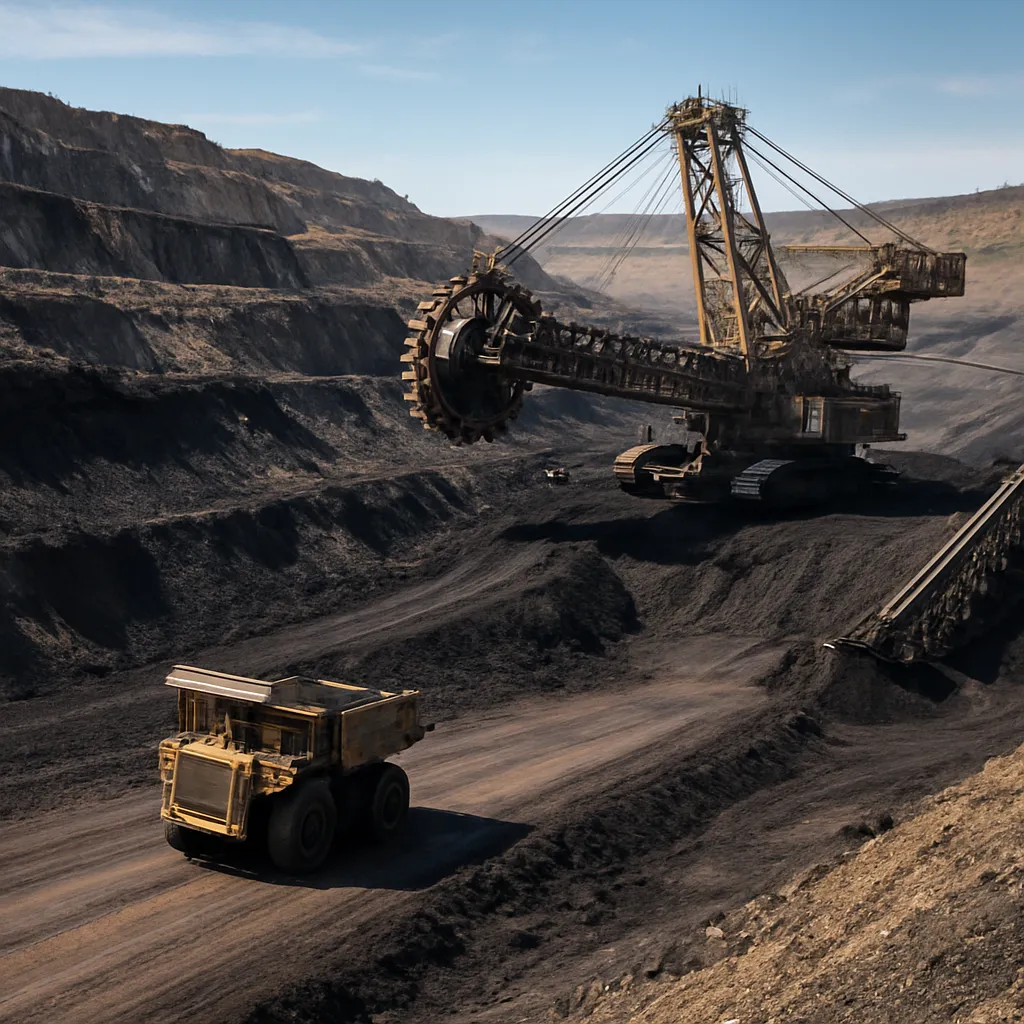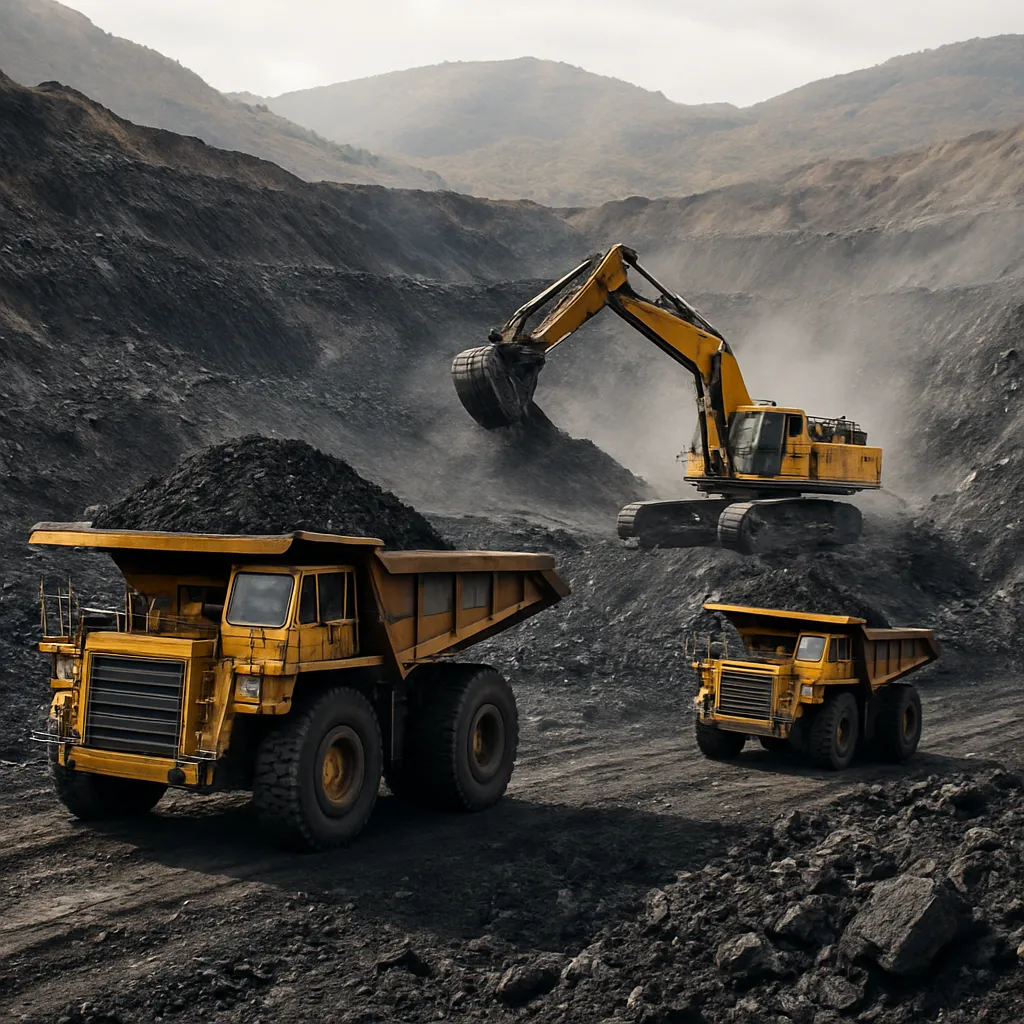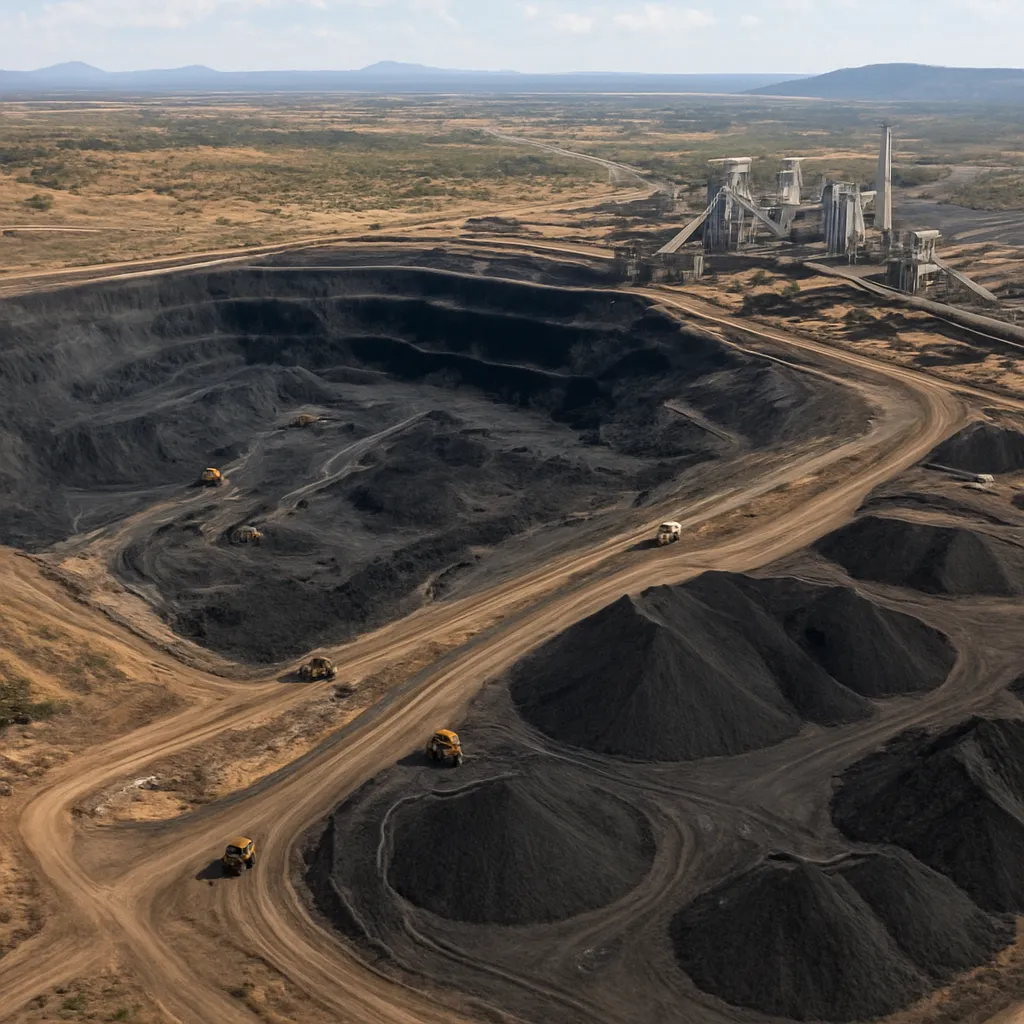
The Komati Coal Mine is one of the many mining operations situated within South Africa’s rich coal-bearing basins. Located in the heart of the Highveld coalfields of Mpumalanga, the mine forms part of a landscape where coal has underpinned energy generation, heavy industry and export-driven commerce for more than a century. This article provides a comprehensive overview of the Komati operations — its geological setting, the type and quality of coal produced, economic and industrial significance, environmental and social implications, and the logistical networks that connect the mine to domestic and international markets. Where precise public data is limited, indicative figures and widely accepted industry context are presented to provide a realistic picture.
Location and Geological Setting
The Komati Coal Mine is located in the Mpumalanga province, within the broader Witbank/Highveld coal basin — one of South Africa’s primary coal-producing regions. This area is characterized by extensive Permian-age sedimentary sequences that host multiple coal seams of variable thickness and rank. The region’s deposits have been intensively studied and exploited because of their accessibility and proximity to both domestic power stations and export corridors.
Geology and Coal Seams
- The coal seams in the Komati area belong to the Karoo Supergroup, predominantly the Permian-aged coal measures. These seams typically include multiple horizons with interbedded shale and sandstone.
- Coal rank in the Highveld is generally in the sub-bituminous to bituminous range, with variations depending on depth and local geological history. The Komati deposit primarily yields thermal coal suitable for electricity generation and, in some cases, lower-rank feedstock for industrial heat.
- Thicknesses of productive seams can vary significantly, from thin economic layers to multi-meter intervals enabling room-and-pillar or bord-and-pillar underground mining, or open-pit extraction where overburden is shallow.
Mining methods applied in the Komati area are determined by seam depth, continuity and economic factors: shallow deposits are often open-pit, while deeper seams may be worked by underground techniques. This geological versatility has shaped both the operational life and the environmental footprint of the mine.
Mining Operations and Coal Characteristics
Operations at Komati are typical of South African coal mines in structure but reflect local conditions and market orientation. Mining includes a sequence of exploration, development, extraction, processing and closure planning. The mine’s facilities usually comprise ROM (run-of-mine) stockpiles, coal preparation plants (if needed), water management systems and transport interfaces.
Coal Quality and Types
- Thermal coal: The dominant coal product is thermal coal with calorific values effective for steam generation in power stations. Typical properties include moderate to high volatile matter, intermediate ash contents and variable moisture.
- Low-ash/PCI fractions: Some seams or run-of-mine blends can produce higher-quality fractions suitable for pulverized coal injection (PCI) or certain industrial uses, though the primary market remains domestic power generation.
- Blending: To meet specifications for utility customers, Komati coal is frequently blended and beneficiated to manage ash and sulfur content, improving combustion performance and reducing downstream emissions.
The specific geochemical profile (ash, sulfur, moisture, calorific value) of Komati coal may vary between seams and mining blocks. As with many mines in the Highveld, producers aim to balance yield with quality control through screening, flotation and washing processes.
Production Methods and Scale
Production scale at Komati-class mines ranges from small operations supplying local power plants to medium-sized mines exporting through Richards Bay or supplying regional industry. Typical mining workflows include:
- Drilling and blasting (for open-pit sites) or continuous-miner/longwall methods (for underground workings).
- Primary crushing and screening, followed by coal washing where economically justified to reduce ash.
- Stockpiling, blending and dispatch via rail or road to customers.
While public reporting on Komati’s exact annual tonnage may be limited, South Africa’s coal sector historically produced around 200–250 million tonnes per year in pre-pandemic years, with the Mpumalanga province accounting for the vast majority of that output. A single medium-sized mine in the region commonly produces in the range of a few hundred thousand to several million tonnes annually, depending on reserves and infrastructure.
Economic and Industrial Significance
Coal from Komati contributes both locally and nationally across several dimensions: high-impact employment, revenue to companies and governments, fuel for electricity generation and inputs to industry and export markets. The mine’s role must be understood in the context of South Africa’s coal-dependent energy system and export-driven mining economy.
Role in Energy Supply
- Electricity generation: A major share of Komati-type coal is consumed domestically by Eskom and independent power producers. Coal-fired power stations in Mpumalanga form the backbone of South Africa’s grid, making local mines strategically important for fuel security.
- Industrial feedstock: Coal is also used in cement, steel and petrochemical processes. While coking coal remains a separate niche, thermal coal mines in the region provide process heat and power for industrial clusters.
Employment and Local Economies
Coal mines in Mpumalanga, including Komati, are notable local employers. Employment impacts include:
- Direct jobs in mining, processing, maintenance and administration.
- Indirect employment across supply chains: transport, contract services, catering and local commerce.
- Public revenue through royalties and corporate taxes that support municipal and provincial budgets.
Nationally, the mining sector supports hundreds of thousands of jobs; coal-specific employment has fluctuated with mechanization, commodity prices and regulatory pressures. Mines like Komati typically support communities through wages and targeted social investment, although social benefits can be uneven and depend heavily on company policy and local governance.
Trade and Export
South Africa is a major coal exporter, and Mpumalanga mines are linked to export channels via rail to terminals such as Richards Bay Coal Terminal (RBCT). Komati coal, when meeting export-quality specifications, may enter international markets in Asia and Europe. Domestic deliveries remain significant, however — supplying power stations and local industries often takes priority over export contracts, particularly during periods of constrained domestic supply.
Infrastructure, Logistics and Markets
Efficient logistics are essential to the Komati mine’s commercial viability. Coal is a bulky commodity; moving it from pit to power station or port relies on reliable infrastructure.
Transport Links
- Rail: Transnet Freight Rail is the backbone of bulk coal transport in South Africa. Mines connect to mainlines that serve both domestic power plants and export terminals. Rail capacity, maintenance and congestion are frequent drivers of operational cost and export volumes.
- Road: Road haulage provides flexibility for shorter distances and niche deliveries, but it is more expensive per tonne-kilometre and increases wear on local infrastructure.
- Ports and export terminals: RBCT and other coastal facilities enable bulk shipments overseas. Access to slot allocations at terminals affects a mine’s ability to export competitively.
Market Dynamics
Komati coal’s markets are shaped by several intersecting trends:
- Domestic electricity demand and Eskom’s procurement policies determine the baseline need for thermal coal.
- Global coal prices influence the profitability of exports; price volatility drives investment decisions and operational adjustments.
- Environmental regulations and carbon pricing pressures influence demand growth trajectories and long-term contract structures.
Environmental, Health and Social Considerations
Coal mining has significant environmental and social footprints. The Komati operation faces the same risks and mitigation challenges common to the region.
Environmental Impacts
- Land disturbance and rehabilitation: Open pits and surface infrastructure alter landscapes. Successful mines must implement progressive rehabilitation and final landform restoration to reduce long-term liabilities.
- Water management: Mines interact with surface and groundwater systems, requiring careful management to avoid pollution. Acid mine drainage (AMD) is a notable regional risk where sulfide-bearing material is exposed to air and water.
- Air quality: Dust from mining and coal handling, as well as emissions from combustion downstream, affect local air quality. Dust suppression and emission controls are typically part of operational practice.
Occupational Health and Safety
Mining remains hazardous despite technological advances. Safety protocols, ventilation systems for underground workings, and health surveillance for respiratory and noise-related conditions are critical. South African legislation enforces safety standards, but compliance and enforcement vary across operations.
Community and Social License to Operate
A mine’s long-term viability often depends on maintaining a social license. This includes:
- Local employment and skills development programs.
- Community investment in education, healthcare and infrastructure.
- Transparent engagement about closure plans and post-mining land use.
Regulatory, Financial and Ownership Aspects
The Komati mine operates within South Africa’s legal framework for mining, which includes the Mineral and Petroleum Resources Development Act (MPRDA) and environmental regulations. Licensing, royalties, and community beneficiation requirements form a complex compliance environment that affects project economics.
Ownership and Investment
Ownership structures for mines in the Mpumalanga coalfields range from large listed mining companies to local or international private operators and joint ventures. Financial viability depends on capital access, commodity prices, operational efficiency and regulatory compliance. Investment trends in recent years have been influenced by shifting global demand for coal and increased scrutiny of environmental footprints.
Taxes, Royalties and Local Revenues
- Mining companies pay royalties based on the value of minerals extracted, corporate taxes, and often municipal levies.
- These revenues support public services but depend on transparent and efficient governance to translate into community benefits.
Statistics, Trends and Context
Precise, mine-level statistics for Komati may not always be available in the public domain; nevertheless, the mine is part of a larger statistical context that helps understand its scale and significance:
- South Africa historically produced in the order of 200–250 million tonnes of coal per year during the pre-COVID period, with fluctuations in 2020–2022 due to demand changes and operational disruptions.
- Mpumalanga contributes the bulk of national coal output — often more than 70–80% of total production — because of the extensive Highveld coalfields.
- Exports historically accounted for roughly 20–40% of South Africa’s coal production depending on year and domestic demand, with Richards Bay being the main export hub.
At the mine level, medium-sized operations typically report annual production between several hundred thousand to a few million tonnes. Cost structures vary but are driven by labour, beneficiation requirements, logistics and regulatory compliance. Capital expenditure for expansion or modernization can be tens to hundreds of millions of rand depending on scope.
Challenges and Future Outlook
Like many coal operations worldwide, Komati faces both short- and long-term challenges:
- Market transition: Global and domestic transitions toward lower-carbon energy systems create uncertain long-term demand for thermal coal. This affects access to capital and strategic planning.
- Environmental compliance: Increasingly stringent environmental rules and community expectations require investment in emissions control, water treatment and rehabilitation.
- Infrastructure constraints: Rail capacity, port logistics and energy supply reliability influence competitiveness.
- Socioeconomic pressures: Managing job stability while modernizing operations and preparing for eventual closure requires long-term, multistakeholder planning.
Opportunities for mines like Komati include diversification into higher-value coal products, integration with local industrial users, or participation in reclamation and land-use projects post-closure (agriculture, biodiversity offsets, renewable energy sites). Proactive environmental management and community engagement can preserve value and reduce long-term liabilities.
Interesting and Lesser-Known Facts
- Historic ties: The Highveld coalfields have supplied energy to South Africa since the early 20th century, shaping settlement patterns and industrialization in Mpumalanga.
- Dual-use land potential: Post-mining landscapes can be repurposed for solar farms, aquaculture or managed wetlands, provided rehabilitation is prioritized early in life-of-mine planning.
- Technological improvements: Remote sensing and automation improve safety and reduce costs; some operations now use remote haulage and advanced processing to lower environmental impacts.
- Water stewardship: Integrated water-resource management is increasingly critical; some mines invest in passive treatment systems for mine-impacted water and circular water use strategies.
Conclusion
The Komati Coal Mine exemplifies the complexity of modern coal operations in South Africa: geologically endowed and economically significant, yet facing environmental, social and market pressures. Its coal — predominantly thermal and used mainly for electricity generation — ties it closely to regional power systems and export corridors. While precise mine-level statistics may vary by reporting period, the broader context shows an industry that continues to provide vital economic benefits while simultaneously navigating a global energy transition. The future of Komati will depend on adaptive management, investment in cleaner and more efficient practices, robust community engagement and strategic responses to shifting market demands.