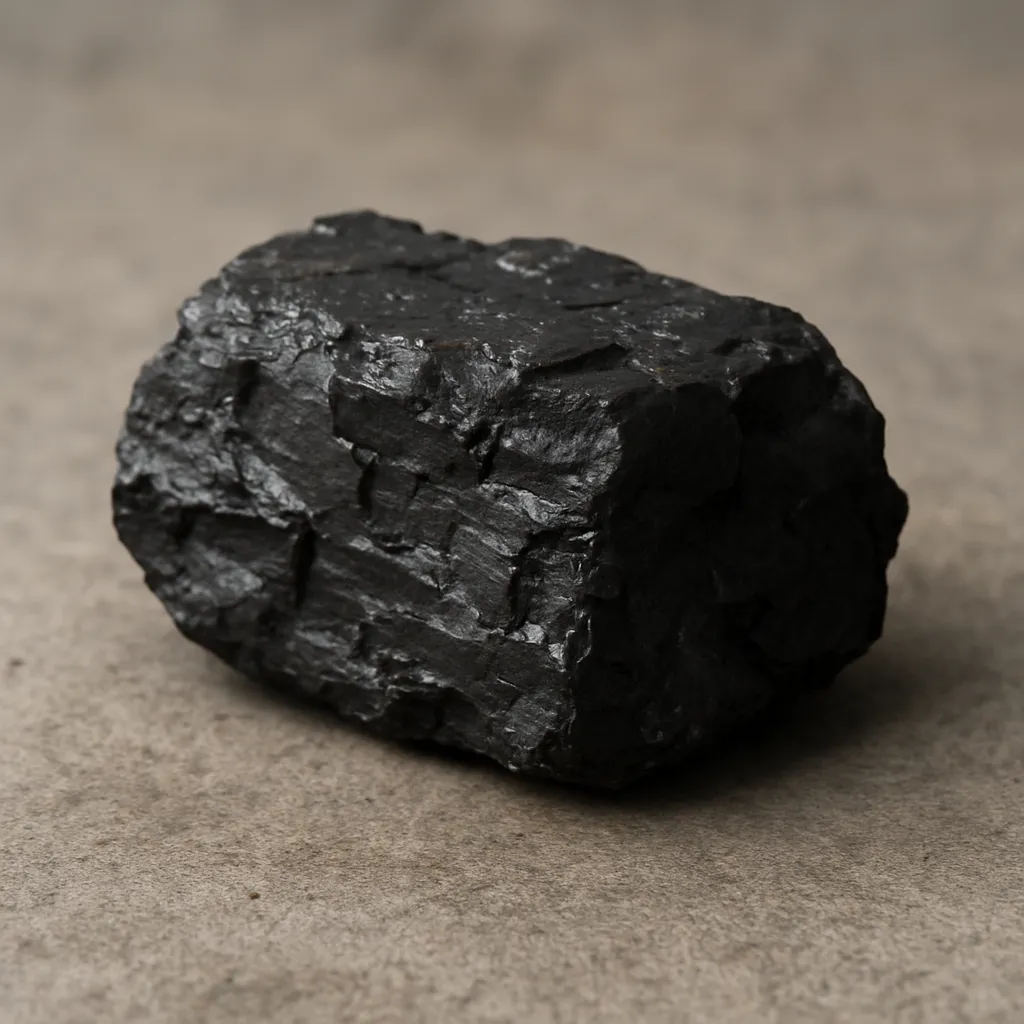
Fuel-grade coal is a cornerstone of the global energy system and many industrial processes. This article examines what “fuel-grade” coal means, how and where it forms and is mined, its physical and chemical characteristics, global production and trade figures, economic significance, industrial uses, environmental and health impacts, and likely future trajectories. Throughout the text, key technical and economic terms are emphasized to help readers quickly identify the most important concepts.
What is fuel-grade coal and how is it classified?
Fuel-grade coal generally refers to coal used primarily for combustion to produce heat and electricity, rather than metallurgical or coking uses. It is sometimes called thermal coal or steam coal. The term covers a range of coal ranks from low-grade lignite through sub-bituminous and bituminous coal to lower-grade anthracite when the primary application is burning for energy rather than for coke production in steelmaking.
Basic classification and key properties
- Calorific value (often quoted in MJ/kg or kcal/kg) — the amount of energy released on combustion. Typical ranges: lignite ~8–16 MJ/kg (2,000–3,800 kcal/kg), sub-bituminous ~16–23 MJ/kg, bituminous ~24–35 MJ/kg, anthracite >35 MJ/kg.
- Volatile matter — influences ignition and combustion behaviour; higher volatile content eases ignition but affects flame stability.
- Ash content — non-combustible residue that affects boiler fouling, ash disposal needs and heat content.
- Sulfur content — determines potential for SOx emissions and the need for flue gas desulfurization.
- Moisture — high moisture (as in lignite) reduces effective calorific value and increases transport costs on an energy-per-tonne basis.
These physical-chemical parameters determine how a coal will be used, how economically it can be transported, and what environmental controls are required at combustion facilities.
Geology, occurrence and global distribution
Coal forms from ancient plant material that accumulated in swampy, anoxic environments and was buried, compacted and chemically transformed over millions of years. The regional geology (age, temperature, pressure, and tectonic history) determines coal rank. Coal-bearing basins are widespread across all continents except Antarctica, giving rise to abundant global reserves of different coal types.
Major coal-producing regions
- East Asia: China holds the world’s largest production and reserves, with extensive deposits in Shanxi, Inner Mongolia, and other provinces. China is both the largest producer and the largest consumer of fuel-grade coal.
- South Asia: India has significant coalfields in Jharkhand, Odisha, Chhattisgarh and West Bengal; coal is crucial to India’s electricity mix.
- North America: The United States has substantial bituminous and sub-bituminous resources in the Powder River Basin (Wyoming and Montana), Appalachia, and the Illinois Basin.
- Australia and Indonesia: Australia has high-quality thermal and metallurgical coals and is a dominant seaborne export supplier; Indonesia is a major exporter of lower-rank thermal coal aimed at Asian markets.
- Russia, South Africa and Colombia: Important producers and exporters with regional specializations and strategic roles in global coal markets.
- Europe: Germany, Poland and the Czech Republic historically had large coal sectors (lignite and hard coal); production in some countries has declined but reserves and active mining persist.
Global coal distribution is not uniform—production tends to cluster where large sedimentary basins and suitable geological histories coincide with accessible seams.
Mining methods and processing of fuel-grade coal
Mining methods for fuel-grade coal vary according to seam depth, geology, seam thickness and environmental or regulatory constraints. Two broad categories dominate: surface (open-pit or strip) mining and underground mining.
Surface mining
- Used where seams are relatively shallow and extensive. Techniques include open-pit, strip, and mountaintop removal (in specific regions).
- Advantages: lower operating cost per tonne, high recovery rates, mechanization and safety advantages relative to deep mining.
- Environmental and social costs: larger surface footprint, habitat destruction, significant landscape alteration and the requirement for progressive rehabilitation.
Underground mining
- Methods include longwall mining and room-and-pillar. Longwall offers high productivity in thick, laterally extensive seams.
- Used where seams are deep or surface disturbance must be minimized. Higher capital and operating costs can be offset by premium quality coal and constraints on surface mining.
- Risks include subsidence, methane emissions and specific safety challenges for miners.
Processing and preparation
After extraction, coal is often processed in preparation plants. Common steps are crushing, screening, washing (to reduce ash and sulfur), and sizing to meet boiler or market specifications. For seaborne trade, drying and dewatering may be important for lower-rank coals to reduce moisture content and shipping costs.
Economic and statistical overview
Coal markets are shaped by energy demand, national policies, transport infrastructure, and international trade. Although global momentum toward decarbonization affects coal’s long-term prospects, fuel-grade coal remains a major commodity with substantial near-term economic impacts.
Global production and consumption
- Global coal production in recent years has been on the order of several billion tonnes per year (including hard coal and lignite). Production figures typically fall in a range around 7.5–8.5 billion tonnes annually, depending on the year and measurement conventions.
- China contributes roughly half of global production and is the largest consumer — often accounting for 50% or more of global coal-fired electricity generation.
- Other major producers include India, the United States, Indonesia, Australia, Russia and South Africa — together these countries dominate both production and trade flows.
- Thermal coal remains a major fuel for electricity generation, accounting for around one-third to over one-third of global electricity generation in many recent years (commonly cited figures are in the 30–40% range, varying annually and by data source).
Seaborne trade and prices
A substantial portion of thermal coal is traded internationally by sea. Seaborne thermal coal trade is substantial — frequently cited at about 1.0–1.5 billion tonnes per year in recent years. Major exporters on the seaborne market include Australia, Indonesia, Russia, the United States and Colombia. Major importers are typically Asian economies: China, India, Japan and South Korea.
Coal prices are volatile and track energy demand, exchange rates, shipping costs and policy shifts. Benchmark indices such as the Newcastle (Australia) price and API2 (Northwest Europe) and API4 (Richards Bay/Newcastle equivalents) reflect market sentiment. Prices experienced sharp volatility during the global energy crisis in 2021–2022, with seaborne thermal coal prices briefly reaching several hundred US dollars per tonne before moderating with changing demand and supply responses.
Employment and regional economies
Coal mining supports employment in producing regions, often in locations with few alternative industries. The industry provides direct mining jobs, peripheral jobs in logistics, port operations and equipment supply, and contributes to local and national tax revenues and export earnings. In many developing economies, coal revenues finance infrastructure and social services, making the commodity politically significant even as long-term demand faces headwinds from climate policy.
Industrial uses and technological dimensions
The primary use of fuel-grade coal is in electricity generation, but it also supplies heat for industrial processes, district heating and some chemical feedstocks. The specifics of use depend on the coal’s properties and local industrial structure.
Power generation
- Coal-fired power plants employ a range of technologies — subcritical, supercritical, ultra-supercritical and fluidized bed combustion — with progressively higher thermal efficiencies and lower CO2 emissions per unit of electricity. Typical thermal efficiencies range from about 33% for older subcritical units to over 45% for the most advanced ultra-supercritical plants.
- Combustion performance depends heavily on calorific value, ash behavior and sulfur and trace elements.
Industrial heat and other uses
- Coal furnaces and boilers supply heat for cement kilns, brickworks, pulp and paper mills, and other thermal processes.
- Some coals, particularly lower-ash bituminous grades, are used in boilers and co-generation facilities close to mining regions to reduce transport inefficiencies.
Emission control and mitigation technologies
Because coal combustion emits particulate matter, sulfur oxides (SOx), nitrogen oxides (NOx), mercury and CO2, a variety of control technologies are commonly deployed:
- Electrostatic precipitators (ESP) and fabric filters for particulate removal.
- Flue gas desulfurization (FGD) systems to reduce SO2 emissions.
- Selective catalytic reduction (SCR) and catalytic systems for NOx control.
- Activated carbon injection and other systems for mercury control.
- Carbon capture and storage (CCS) — technically feasible at large scale but still economically challenging and limited in deployment. Some demonstration projects integrate CCS with coal-fired generation, but high costs and infrastructure needs constrain rapid rollout.
Environmental, health and social impacts
The environmental footprint of fuel-grade coal spans the entire supply chain: land disturbance from mining, dust and particulate emissions, water contamination, greenhouse gas emissions from combustion, and social impacts on communities.
Greenhouse gas emissions
Burning coal is one of the most carbon-intensive ways to produce energy. Emission factors vary by coal rank and combustion technology, but rough ranges are instructive:
- Per tonne of coal combusted, CO2 emissions typically fall in the range of about 2.2–3.8 tonnes of CO2, depending on carbon content and moisture level. Lower-rank coals with higher moisture often release more CO2 per unit of useful energy.
- Per unit of electricity, coal-fired generation commonly emits in the range of about 800–1,100 kg CO2 per MWh for conventional plants; advanced higher-efficiency units and CCS can reduce this metric significantly, while plants with poor efficiency exceed it.
Local air pollution and health
Particulate matter (PM2.5 and PM10), SOx, NOx and heavy metals from coal combustion contribute to respiratory and cardiovascular disease, acidification of ecosystems and contamination of soils and waters. Mitigation via pollution control is widespread in developed contexts but remains uneven globally, with significant public health implications in regions with lax emissions control.
Water and land impacts
Coal mining and combustion produce wastewater and ash residues that require careful management. Fly ash and bottom ash must be stored or repurposed; failures of ash ponds and leachate can cause major environmental disasters. Mining reclamation and rehabilitation are increasingly regulated requirements but vary in enforcement and effectiveness.
Market trends, trade dynamics and policy influences
Coal markets are sensitive to policy changes (carbon pricing, phase-out targets), energy substitution (gas, renewables), and macroeconomic cycles. The interplay of national energy security priorities and global climate commitments creates complex, sometimes contradictory market signals.
Trade patterns
- Seaborne trade is concentrated along predictable routes: Australian and Indonesian supplies feed East Asian demand; Russia supplies European and Asian markets; Colombian and US exports supply the Americas and select overseas buyers.
- Supply disruptions, port bottlenecks, shipping costs and geopolitical events can cause sharp price swings and shift trade flows quickly.
Policy drivers and decarbonization
Many countries have implemented coal phase-out timetables, strengthened air quality regulation, or introduced carbon pricing — all of which reduce long-run coal demand. Conversely, short-term demand surges may occur during energy crises or when alternative fuel supplies are constrained. The pace of decarbonization in power systems, the deployment of renewables plus storage, and investments in CCS will largely determine coal’s long-term role.
Statistics snapshot and illustrative numbers
Below are approximate figures intended to provide a sense of scale and recent trends. Because data vary by source and by year, these should be treated as indicative rather than exact:
- Global coal production (hard coal + lignite): roughly 7.5–8.5 billion tonnes per year in recent years, with annual variability tied to demand and policy.
- China’s share of production: roughly 45–55% of global output in many years, making it by far the largest producer and consumer.
- Seaborne thermal coal trade: approximately 1.0–1.5 billion tonnes per year, concentrated on Asian importers.
- Coal’s share in global electricity generation: commonly around 30–40% in recent years, declining in some regions but steady or rising in others depending on policy and economics.
- Major exporters: Australia and Indonesia commonly lead seaborne exports (each hundreds of millions of tonnes annually, depending on year); Russia, the United States and Colombia are also major players.
- Price volatility: benchmark prices (e.g., Newcastle) have ranged from under $50/tonne in weak markets to several hundred dollars per tonne during supply shocks (notably in 2021–2022), before moderating.
Future outlook: challenges and potential paths
The near-term future of fuel-grade coal will be shaped by the balance between persistent energy demand in developing markets, the economics of alternative fuels, national energy security priorities, and global climate commitments. Several possible trajectories exist:
- Gradual decline in many OECD and some emerging economies as renewables, gas and storage expand and as aging coal plants retire.
- Continued demand in parts of Asia for baseload power and industrial heat, especially if alternatives remain costly or constrained by infrastructure limits.
- Selective retention of coal in power systems coupled with investments in emissions controls and potentially in carbon capture to allow continued use with lower emissions.
- Structural shifts in trade patterns driven by geopolitics: new supply chains and regional safeguards for energy security may emerge.
Transition strategies likely involve diversification of regional energy mixes, targeted investment in cleaner coal technologies where coal use persists, and comprehensive social policies to support workers and communities affected by mine and plant closures.
Interesting technical and historical notes
Several additional points highlight coal’s enduring technical and cultural footprint:
- Coal rank is a geologically determined continuum — the same original plant material can yield different ranks under differing burial and thermal histories.
- Historically, coal powered the Industrial Revolution and continues to underpin industrial development in many regions; thus, its contraction or transformation has deep socioeconomic implications.
- Innovations such as coal gasification and high-efficiency low-emissions (HELE) plants attempt to reduce environmental impacts while retaining coal’s energy services.
- By-products of coal combustion (fly ash, bottom ash) are increasingly used in construction materials (e.g., cement and concrete additives), offering partial waste valorization opportunities.
Concluding summary
Fuel-grade coal remains a major global commodity with complex geological, technical, economic and environmental dimensions. It supplies a significant share of global electricity and industrial heat, supports regional economies and trade flows, and presents important challenges for climate and local environmental management. While long-term trends point toward reduced reliance in many regions, the short- to medium-term picture is heterogeneous: demand persists in parts of Asia and other developing markets, and supply chains and market prices will continue to respond to geopolitical dynamics and energy transitions. Understanding the detailed properties of coal (such as calorific value, ash and sulfur contents) alongside policy drivers is essential for stakeholders making investment, regulatory and social decisions in the coming decades.