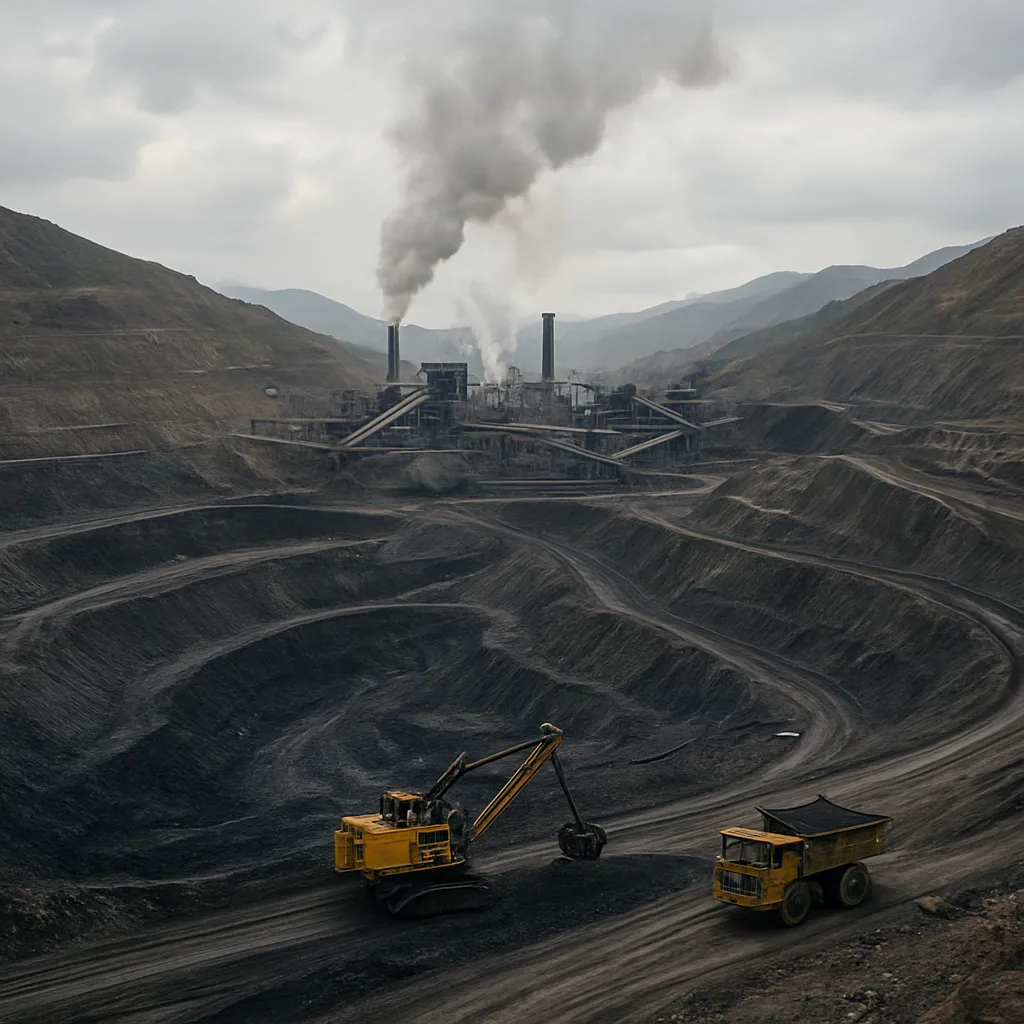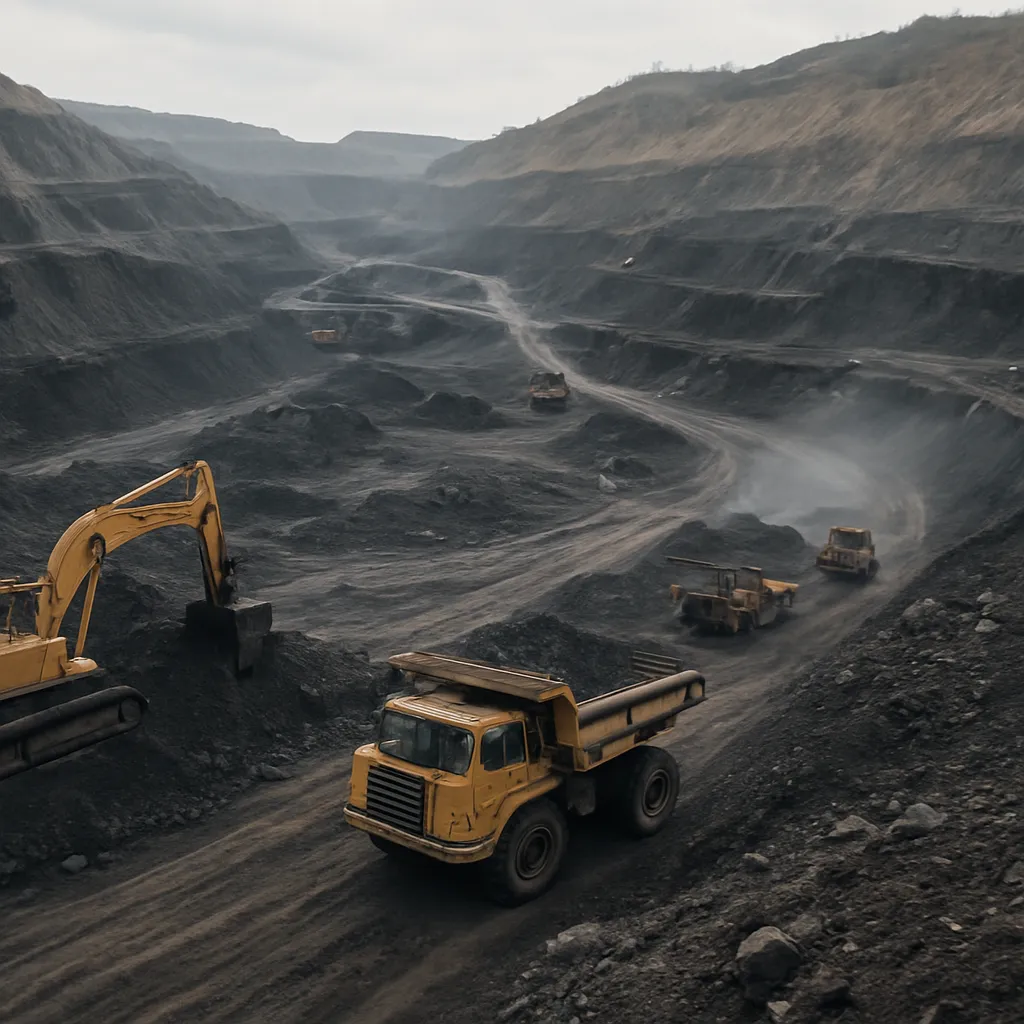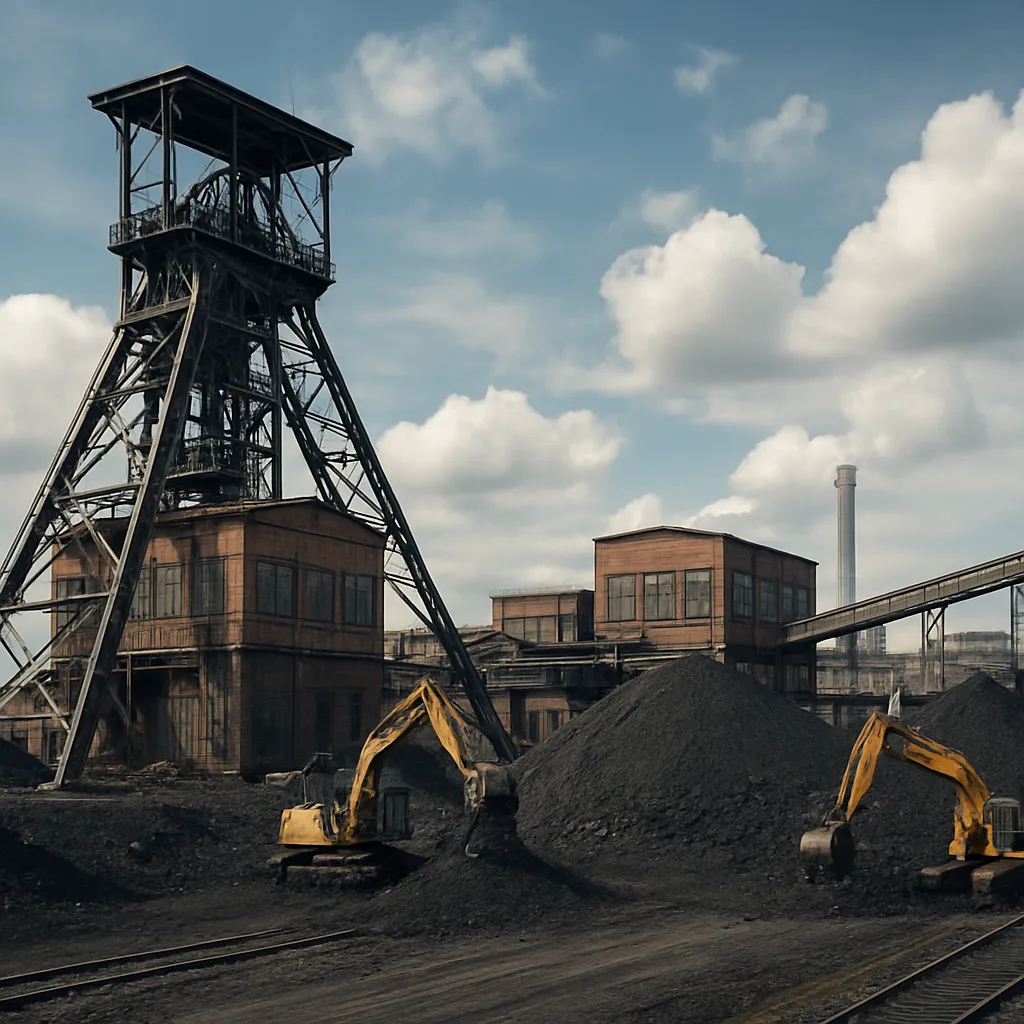
The Halemba Coal Mine, located in the heart of Upper Silesia, has been one of Poland’s long-standing industrial sites tied to the country’s coal-mining tradition. This article provides a comprehensive overview of the mine’s location, geology, history, types of coal produced, economic and social significance, safety and environmental aspects, and future prospects. Where possible, statistical and operational data are given to help understand the mine’s role within the regional and national mining sectors.
Location and geological setting
The Halemba Coal Mine is situated in the city of Ruda Śląska in the Silesian Voivodeship of southern Poland. It lies within the industrialized Upper Silesia basin, one of Europe’s most important coal-bearing regions. The basin hosts numerous layers of Carboniferous coal seams and extensive mining infrastructure developed over more than a century.
Geologically, the Halemba deposit is part of a complex of seams typical for the Upper Silesian Coal Basin. The coal seams exploited at Halemba are generally of the Carboniferous age and include layers of bituminous coal used primarily for energy and industrial applications. Seam thickness and depth vary, with productive horizons commonly found at depths ranging from a few hundred to about a thousand meters in the broader region. The area is also characterized by faulting and variable methane content, common challenges for mining operations in the region.
History and development
The history of the mine is intertwined with the industrialization of Silesia. Halemba’s development accelerated in the 20th century as coal demand rose for both domestic energy production and metallurgy. Over decades the mine expanded its underground workings, modernized equipment, and integrated into larger mining companies that consolidated many Polish mines.
Over time Halemba has been operated under different organizational structures and ownerships as the Polish coal industry underwent nationalization, restructuring, and privatization efforts. In more recent decades the mine was part of broader corporate entities formed to manage Polish hard coal production, with integration into national groups that sought to rationalize and modernize the sector.
Type of coal and mining methods
Halemba predominantly produced hard coal, chiefly bituminous grades used for power generation (steam coal) and in some cases for industrial processes. The mine’s coal quality typically featured energy values and ash content consistent with other Silesian deposits—suitable for local power plants and industrial consumers.
Mining was carried out by modern underground techniques common in Polish longwall mining operations. Longwall faces, supported by mechanized roof supports and powered shearers or plows, allowed relatively high productivity on thick, continuous seams. Because of methane presence in some horizons, the mine employed ventilation systems, methane drainage and monitoring, and other gas-control measures to reduce the risk of underground gas accumulation.
Production, reserves and statistics
Exact annual production and proven reserve numbers for Halemba have varied over time depending on market conditions, technical decisions, and industry restructuring. Historically, the mine’s output was measured in hundreds of thousands to low millions of tonnes per year—typical for medium-sized Silesian collieries. Production figures for single mines in the region have commonly ranged from under 1 million tonnes to several million tonnes annually depending on working plans and consolidation.
- Estimated output: Historically in the range of several hundred thousand to over one million tonnes annually in peak years (figures varied with market demand and restructuring).
- Reserves: The mine exploited multiple seams with remaining reserves that were periodically reassessed; lifetimes depend on extraction rates and economic feasibility.
- Workforce: Employment levels historically numbered in the low thousands for many Silesian collieries; technological modernization has reduced manpower needs over time while maintaining or increasing mechanized output.
- Depth of workings: Typical seam depths in the region ranged from several hundred to close to a thousand meters; Halemba’s operations included workings at depths where robust ventilation and safety systems were required.
Note: precise up-to-date numbers for production and reserves change frequently with re-evaluations and corporate decisions. For current, official statistics on annual tonnage or proven reserves, the operator’s or national statistical office’s publications should be consulted.
Economic and regional significance
The Halemba Coal Mine played an important role in the regional economy of Upper Silesia. As part of a dense network of mines, power plants, and heavy industry, Halemba supplied coal to local power stations and industrial customers, contributing to energy security and local industrial activity. The mine’s economic importance can be considered under several aspects:
- Employment: Mining operations provided direct jobs underground and aboveground and supported numerous indirect jobs in supply chains, maintenance, transportation, and local services.
- Local economies: Payroll and procurement supported local businesses, while municipal revenues benefited from taxes and fees associated with mining operations.
- Energy supply: Coal from Halemba and neighboring mines fed coal-fired power plants and heat-and-power systems that historically formed the backbone of Poland’s electricity and district heating systems.
- Industrial feedstock: In certain periods and seams, coal suitable for coking or metallurgical uses contributed to steelmaking and other heavy industries.
At the national level, Halemba was one of many collieries that together made Poland one of the largest hard-coal producers in Europe for much of the 20th century. The mine supported regional stability and employment in Silesia, where mining has cultural and social significance beyond pure economics.
Safety record and notable incidents
Like many underground coal mines, Halemba faced risks related to methane, rock falls, water inflow, and the hazards of deep excavation. Methane accumulation is a common challenge in the Upper Silesian Coal Basin, requiring continuous monitoring and preventive measures. Over its operational life, the site experienced incidents typical of deep coal mining—ranging from small workplace accidents to more serious events in the broader region.
Polish mining regulations require extensive safety systems: ventilation networks, methane drainage, gas and dust monitoring, explosion-proof equipment, emergency shelters, and trained rescue teams. The mine’s management and oversight authorities worked to implement such measures, with improvements in technology and practice reducing certain types of risk over time. Still, mining remains inherently hazardous, and safety improvements are a continual priority in operations and in industry regulation.
Environmental aspects and mitigation
Coal mining produces a range of environmental impacts—land subsidence, spoil deposits, water management issues, dust and air emissions, and greenhouse gas emissions associated with coal use. Halemba’s operations were part of these broader environmental considerations in Silesia. Mines in the region implemented mitigation measures that included:
- Managed water drainage and treatment systems to protect surface and groundwater quality.
- Reclamation of waste heaps and post-mining land, where feasible, for industrial, recreational, or natural uses.
- Dust suppression and monitoring to reduce local air-quality impacts.
- Methane capture and utilization where technically and economically feasible, both for safety and to reduce greenhouse gas emissions.
Modern environmental regulation in Poland and the EU has increasingly influenced mining practice, imposing stricter standards on emissions, land reclamation, and community engagement. For mines like Halemba, balancing economic utility with environmental stewardship has been a key challenge, particularly as national energy policy evolves toward decarbonization.
Social and cultural importance
Beyond economic metrics, coal mines in the Silesian region carry deep social and cultural meaning. Mining traditions shape local identity, community institutions, and civic life. Halemba contributed to that fabric through worker communities, social infrastructure (such as housing and sports clubs), and cultural memory. Mining anniversaries, patron saints of miners, and local museums and memorials preserve the social history linked to coal extraction.
Integration with national and regional energy policy
Halemba’s role must be understood in the context of Poland’s broader energy policy. For many decades Poland depended heavily on domestically produced coal for electricity and heat. That reliance brought political emphasis on sustaining coal production while also grappling with the environmental consequences of coal use.
In recent years, Poland has been under pressure from EU climate targets and internal debates about the pace of transition away from coal. This affects planning for mines, potential closures, or conversions to other uses, and social policies to support affected communities. Mines like Halemba therefore operate under a shifting policy environment that balances employment, energy security, climate commitments, and economic viability.
Economic challenges and restructuring
The coal sector in Poland has faced structural challenges: declining domestic demand for coal in some years, competition from imported fuels, cost pressures, and the need for modernization. Many mines underwent consolidation to achieve economies of scale, while some less profitable shafts were closed. Investment decisions at Halemba have been shaped by these pressures—balancing continuing extraction with efficiency measures, cost management, and compliance with environmental and safety standards.
Restructuring policies often included social programs: early retirement packages, re-training initiatives, and support for diversification of regional economies to reduce dependence on mining employment. The effectiveness of these programs varies by locality and over time.
Statistics and contextual figures
Below are representative, contextual statistics to give a sense of scale. These are illustrative and should be verified against official, up-to-date sources for precision:
- Poland’s historical hard coal production: tens of millions of tonnes annually during peak decades; in the 21st century, production generally declined from higher levels in the 1990s–2000s toward lower but still significant volumes, reflecting market and policy changes.
- Typical medium-sized Silesian mine output: commonly in the range of several hundred thousand to a few million tonnes per year at various times, depending on seam size and operational decisions.
- Employment: single collieries often employed from under a thousand to several thousand workers depending on scale and level of mechanization.
- Mine depth and workings: seams frequently exploited at depths of a few hundred meters up to around 1,000 meters in the basin, requiring advanced ventilation and safety technologies.
For current and exact data on Halemba’s annual production, proven reserves, and workforce, consult the mine operator’s reports or Poland’s Central Statistical Office (GUS) and energy sector publications.
Future prospects and transition
The outlook for Halemba and similar mines is shaped by multiple factors: national energy policy, EU climate objectives, global energy markets, the relative economics of coal versus gas and renewables, and social-political choices about the pace of transition. Possible futures include:
- Continued operation for a finite period while managing decline and safety, with an emphasis on efficient extraction and environmental mitigation.
- Gradual winding down of extraction with targeted social and economic transition policies to support workers and communities.
- Repurposing of mined land and infrastructure for other industrial, commercial, or recreational uses after closure and reclamation.
- Potential technological measures such as methane capture and utilization to reduce greenhouse gas impact during remaining operational years.
International and national funds, as well as EU structural and cohesion programs, have been used in some regions to assist just transitions—helping former mining communities diversify and invest in new industries.
Interesting facts and local legacy
- Halemba is part of the dense network of Silesian collieries that together represent a century of industrial history in southern Poland.
- Mining culture in the Halemba area is reflected in local museums, miners’ choirs, and social clubs—expressions of a unique industrial heritage.
- Post-mining landscapes in the Silesian area are sometimes transformed into parks, lakes, or industrial parks after reclamation, illustrating adaptive reuse of former mining land.
Summary
The Halemba Coal Mine in Ruda Śląska stands as an example of a Silesian coal operation that has been important for the regional economy, employment, and energy supply. It produced hard, mostly bituminous coal using underground longwall methods and faced typical challenges of deep mining such as methane management and environmental impacts. While specific production and reserve numbers vary over time, the mine’s significance lies equally in its economic outputs and its social-cultural imprint on the local community. The future of Halemba, like that of many European coal mines, depends on energy transition policies, market economics, and managed social support for affected communities. For the most up-to-date numerical statistics on production, workforce, and reserves, consult the operator’s official publications and national statistical sources.