This article provides a detailed overview of the Haerwusu East coal mining area in China. It covers the mine’s location, geological setting, the types of coal produced, production and reserve estimates, economic and regional significance, infrastructure and logistics, environmental and social impacts, and the technological and regulatory trends shaping its future. Where precise figures are uncertain or vary between sources, estimates and commonly reported ranges are given and clearly described.
Location and Geological Setting
The Haerwusu East mining area is located in the northern part of the People’s Republic of China, within the broad coal-bearing provinces of northern China. The site lies in the industrially important region of Inner Mongolia, a region known for extensive coalfields that feed China’s thermal power plants, industrial boilers, and coal-chemical complexes. The mine is part of a larger coal district that includes several sizeable open-pit operations and adjacent processing and transportation facilities.
Geologically, the seams exploited at Haerwusu East are typical of the northern Chinese basins: they belong to Cenozoic and Mesozoic sedimentary sequences that host relatively thick, laterally extensive coal layers. The most commonly extracted seams here are low- to medium-rank coals—primarily lignite and sub-bituminous grades—though stratigraphic variability can include higher-rank bands in certain pockets. Seam thicknesses in this part of Inner Mongolia often range from a few meters to over ten meters, and many seams are close enough to the surface to allow efficient open-pit extraction.
Regional Geology and Coal Quality
- Coal rank: predominantly lignite to sub-bituminous, with calorific values usually lower than higher-rank bituminous coals used in metallurgy.
- Typical calorific value: commonly in the range of ~8–16 MJ/kg for lower-rank seams; specific values for Haerwusu East vary by seam and coal processing applied.
- Impurities: variable ash and sulfur content; washing and beneficiation are often used to improve fuel quality for power-generation or chemical feedstock.
- Structural setting: thick, laterally persistent seams amenable to large-scale surface mining methods.
Mining Method, Operations and Production
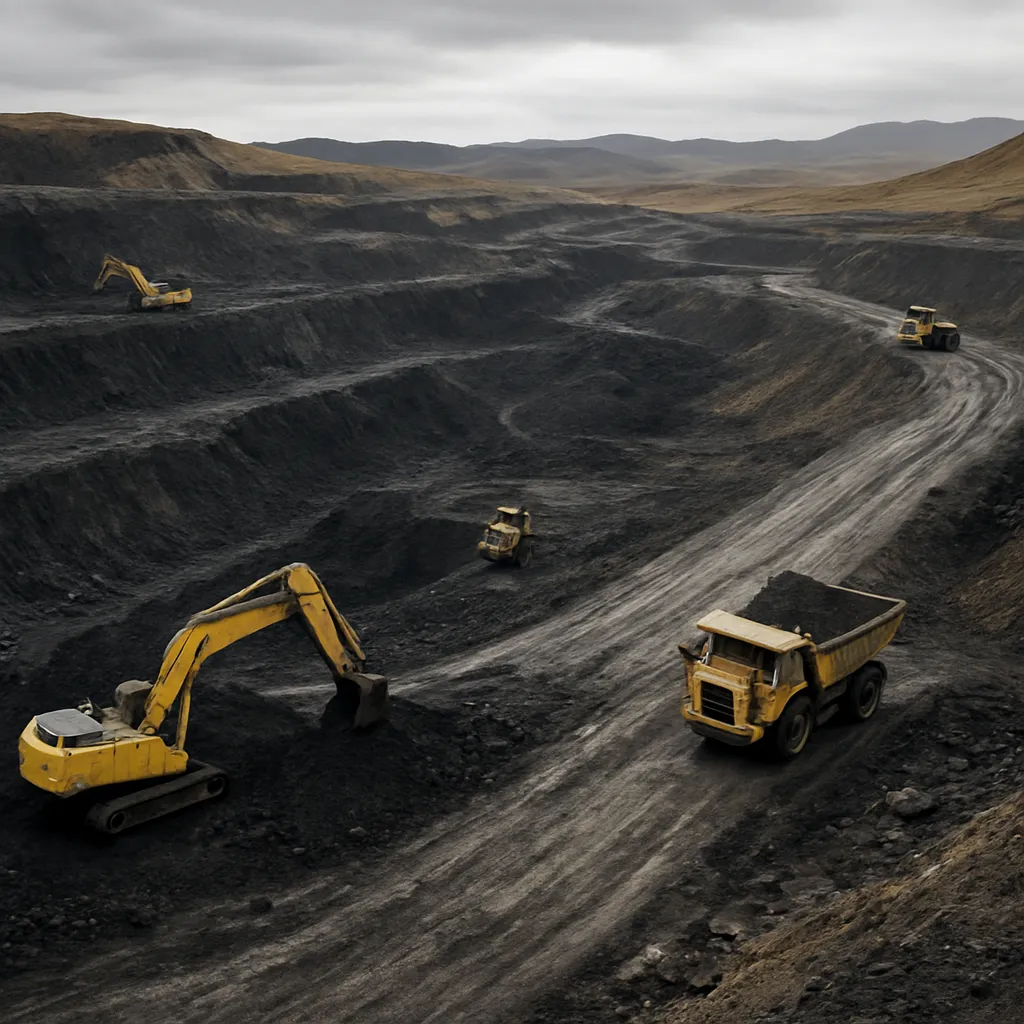
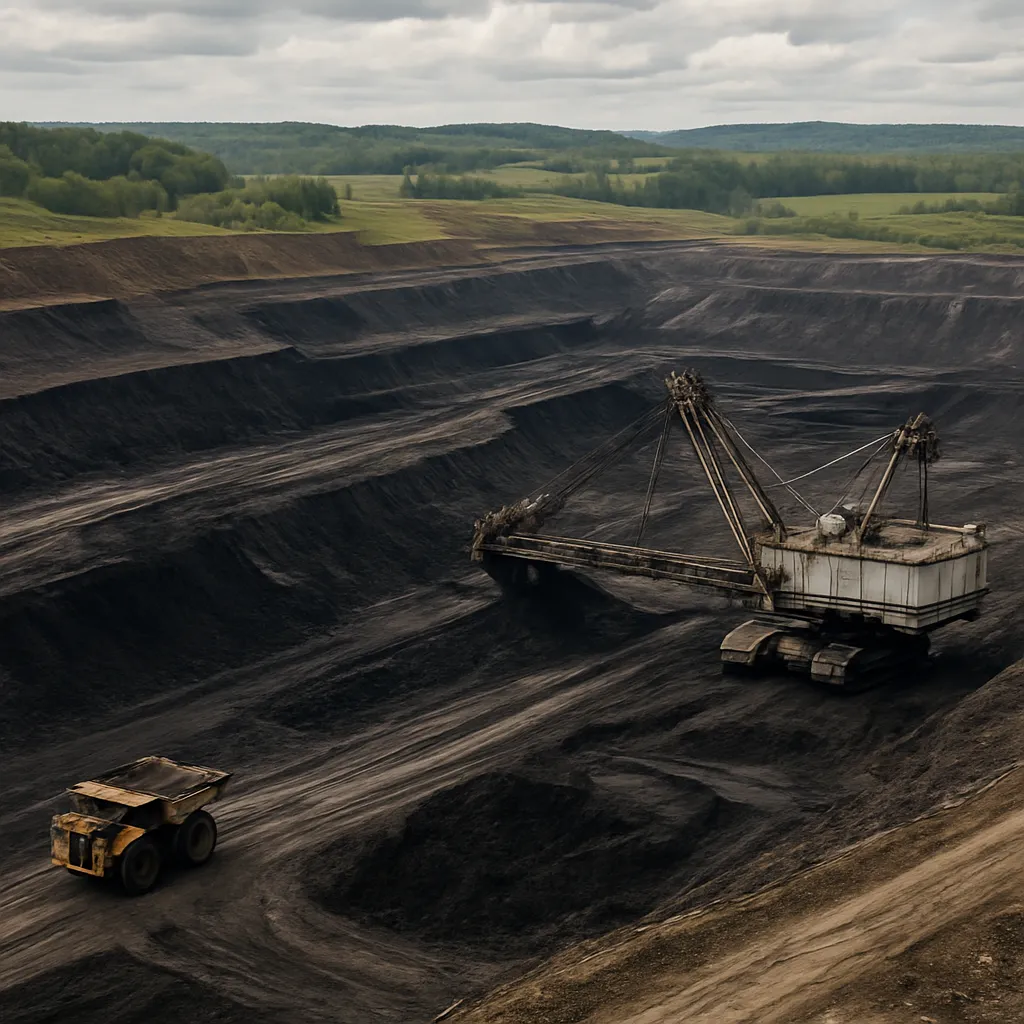
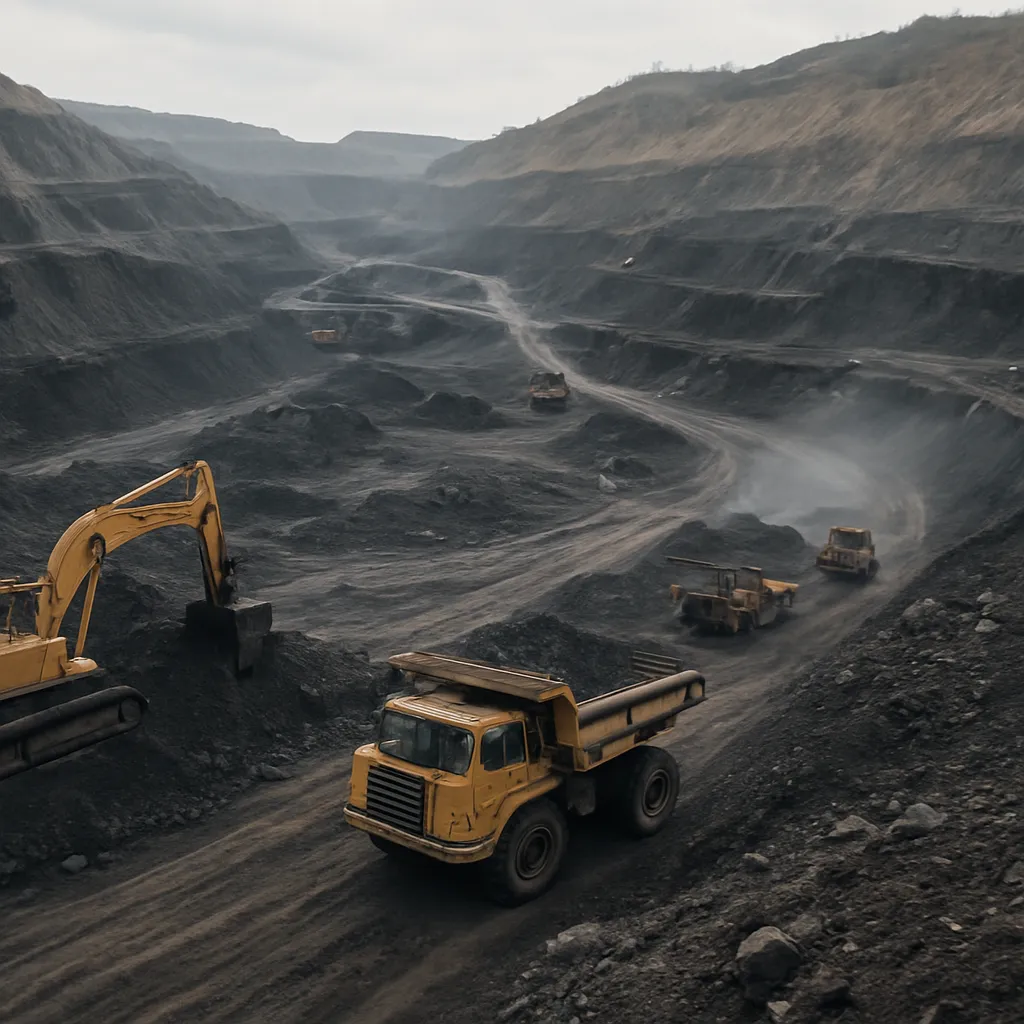
Haerwusu East is organized around large-scale surface mining operations typical of the region: high-capacity open-pit benches, heavy-duty excavators or continuous mining systems, and large haulage fleets. Over the last two decades, Chinese surface coal mines have increasingly adopted mechanized and semi-automated equipment—draglines, electric shovels, conveyor systems and high-tonnage haul trucks—to maximize throughput and lower unit costs.
Extraction and Processing
- Primary method: large-area open-pit extraction using bench mining techniques and high-capacity earthmoving equipment.
- Material handling: combination of truck-and-shovel and fixed-conveyor systems, depending on bench configuration and proximity to processing plants.
- Beneficiation: on-site washing plants and screening units to reduce ash and sulfur content and to produce various marketable coal products (power coal, industrial coal, and feedstock for coal-chemicals).
Reported production figures for Haerwusu-area operations vary by year and by the precise concession or sub-mine considered. Publicly circulated estimates and industry summaries typically place annual outputs for major open-pit operations in Inner Mongolia in the tens of millions of tonnes. For Haerwusu East specifically, commonly cited production ranges are in the order of tens of millions of tonnes per year during full-capacity periods, with output fluctuating according to market demand, policy controls, and mine life-stage. Estimates and historical reporting sometimes indicate annual production in the rough range of 10–40 million tonnes for large working pits in the broader Haerwusu complex; exact annual tonnages for the “East” section will depend on company reports and government statistics for the relevant period.
Reserves and Mine Life
Reserve estimates for the wider Haerwusu resource area are substantial—typical descriptions indicate reserves measured in the hundreds of millions to over a billion tonnes for combined concessions in the district. The long lateral continuity of seams and substantial seam thicknesses support extended mine lives when operations are aggregated across multiple pits. The practical mine life of any specific sub-unit like Haerwusu East depends on annual extraction rates, cut-off grades for economically recoverable coal, and approvals for expansion.
- Reported reserve category: inferred and proven reserves often reported at large scales for the district; single-pit proven reserves may be hundreds of millions of tonnes.
- Mine life: running into multiple decades at typical extraction rates if full concession reserves are realized and permitted.
Economic and Regional Significance
The Haerwusu East operation forms part of a network of coal production sites that have historically underpinned the energy and industrial economies of northern China. Its significance can be assessed across several dimensions: contribution to energy security, local and regional employment, fiscal revenues, and supply relationships with power generation and industrial users.
Contribution to Energy and Industry
- Fuel supply: The mine supplies thermal coal used primarily for electricity generation and district heating in northern China, and may also supply coal for industrial boilers and coal-chemical plants (coal-to-liquids, coal-to-gas, or chemical feedstock).
- Downstream integration: Many large Chinese coal concessions are vertically integrated with power plants, coke and chemical plants, or rail-linked distribution hubs—improving value capture and logistical efficiency.
At the regional level, Inner Mongolia has become one of China’s largest coal-producing areas, commonly accounting for roughly a quarter of national production in recent years (percentage varies by year). Mines such as Haerwusu East support industrial clusters and are often core employers in otherwise sparsely populated zones, contributing materially to local economic output and government revenues through taxes and royalties.
Employment and Local Economy
Large open-pit operations typically employ a mix of direct mine labor, contractors, engineers, logistics and maintenance personnel, and ancillary service providers. While mechanization reduces the need for very large workforces compared with underground operations, the presence of the mine stimulates local economies through housing, services, and secondary industries (equipment maintenance, transport, and coal processing). Typical employment for a major surface complex can range from several hundred to a few thousand direct jobs, with several times that number engaged indirectly.
Logistics, Infrastructure and Markets
Efficient transport and logistics are central to the commercial viability of remote large-scale coal mines. Haerwusu East is linked into regional transport corridors that connect coalfields in northern China with major demand centers and export ports.
Transport Routes
- Rail: Heavy-haul rail lines are the backbone for bulk coal transport in China. Mines in Inner Mongolia commonly feed into regional rail arteries that transport coal to northern and eastern power hubs as well as to coastal export or processing terminals.
- Road and conveyor systems: Short-haul road networks and conveyors move ore from pit to plant or rail load-outs. Conveyor belts are often used where pits are contiguous with processing plants.
- Ports and export: While many northern Chinese coals are consumed domestically, some high-quality products are moved to coastal ports for export, depending on market conditions and logistics.
Logistics constraints—availability of rail slots, seasonal restrictions, and inland bottlenecks—can influence the effective delivered price of coal and therefore mine production scheduling.
Environmental, Social and Regulatory Issues
Large open-pit coal mines like Haerwusu East operate at the intersection of economic development and environmental stewardship. The environmental footprint of a major surface coal operation includes land disturbance, dust and particulate emissions, water consumption and potential contamination, and greenhouse gas emissions from coal combustion downstream.
Environmental Impacts
- Land disturbance: Open-pit mining removes soil and overburden across large surface areas. Progressive reclamation and backfilling are industry practices intended to reduce long-term environmental damage, restore terrain, and rehabilitate vegetation.
- Air quality: Dust control is a major operational concern at the pit, in processing yards, and along transportation corridors. Water spraying, enclosures, and vegetative barriers are commonly used mitigation measures.
- Water usage: Coal processing and dust control can be water-intensive—important in the semiarid parts of northern China. Water sourcing, recycling, and treatment are regulated and monitored.
- Greenhouse gas emissions: While the mine itself emits carbon via fuel usage and fugitive methane release, the dominant emissions associated with coal are those from combustion at power plants and industrial facilities supplied by the mine. This creates long-term climate implications for coal-dependent regions.
Social and Regulatory Context
The Chinese government has increasingly emphasized environmental assessments, mine safety standards, and planned reductions in excess capacity in certain coal sectors. This regulatory environment affects operational approvals, permitted output, and investment in mitigation technologies. Community engagement is also part of modern project management, with companies often investing in local infrastructure, health and education initiatives as part of social license to operate.
Technology, Safety and Innovation
To improve efficiency and reduce costs, many large Chinese coal mines have embraced modern mining technologies—automation, digital monitoring, advanced beneficiation processes, and methane capture systems. Haerwusu East, as part of a trend in regional mining, benefits from these developments in several ways.
Automation and Digitalization
- Automated haulage and dispatching systems reduce fuel consumption, improve cycle times, and enhance safety.
- Remote monitoring and predictive maintenance of equipment lower downtime and reduce the risk of critical failures.
- Geotechnical monitoring using drones and sensors improves slope stability management in large benches.
Safety and Environmental Technologies
- Methane mitigation: Where coal seams are methane-bearing, capture and utilization systems can reduce greenhouse gas release and supply gas for local power generation or processing.
- Water recycling: Advanced tailings and wash-plant water recycling reduce freshwater withdrawals.
- Land reclamation: Progressive backfilling and soil reconstruction programs aim to return mined land to grazing, agricultural or other post-mining uses.
Statistical and Market Context
While exact, up-to-date figures for Haerwusu East require access to operator disclosures or government mine-level statistics, the mine operates within a national context dominated by large volumes. Key contextual facts that illuminate the role of a major Inner Mongolian mine include:
- Production context: Large open-pit operations in Inner Mongolia commonly produce in the tens of millions of tonnes per year; some of the largest pits in the region have historically reported annual outputs exceeding 20 million tonnes in peak years.
- Reserves: District-level reserves are often reported in the hundreds of millions to over a billion tonnes—supporting multi-decade operations for combined concessions.
- National role: Inner Mongolian mines contribute a substantial share of China’s coal output, typically cited as around one-quarter of national production in recent years, though percentages fluctuate with policy and market shifts.
- Market dynamics: Domestic demand (power generation, industrial use, and coal-chemical conversion) drives much of the supply; international export plays a smaller but sometimes important role depending on price and logistics.
Future Outlook and Challenges
The future trajectory of Haerwusu East will be shaped by several interacting factors: China’s national energy policy (including commitments to reduce coal intensity and increase renewables), local economic needs, environmental regulations, technological adoption, and global market conditions.
Key Uncertainties and Opportunities
- Policy shifts: Stricter environmental rules or constraints on new coal-fired capacity could limit future domestic demand for thermal coal and influence mine planning.
- Decarbonization pressures: Long-term commitments to lower carbon emissions create incentives for coal producers to diversify into lower-emissions activities (e.g., coal-to-chemicals with carbon capture, or rehabilitation and land reuse projects) or to invest in methane capture.
- Technological modernization: Continued automation, improved beneficiation and water-saving technologies can improve the commercial viability and environmental footprint of mining operations.
- Community and ecosystem rehabilitation: Successful reclamation and development of alternative land uses after mining can preserve social license and create lasting regional benefits.
Additional Interesting Facts
Several broader observations and interesting points apply to Haerwusu East and similar large-scale surface coal operations in China:
- Many of China’s largest surface coal mines are so large that they reshape local landscapes for kilometers—open pits, spoil piles and processing yards are visible in satellite imagery and are sometimes among the largest human-made changes to the environment in those regions.
- Vertical integration: Chinese coal companies often integrate mining, rail logistics, and downstream power or chemical plants to control margins and manage quality; this integration can be seen in the supply patterns around major Inner Mongolian mines.
- Seasonal and weather impacts: Semiarid climates and extreme winter conditions in northern China pose operational challenges—dust control is harder in dry conditions, while very cold temperatures affect machinery and transport.
- Transition pathways: Some coal regions in China are experimenting with post-mining redevelopment—solar farms on reclaimed land, industrial parks, and ecological restoration pilot projects are examples of possible futures for areas around big pits.
Haerwusu East represents a typical modern large-scale coal mining site in northern China: geologically endowed with substantial lower-rank coal seams, economically significant to its region, operationally intensive and technologically evolving, and environmentally consequential. Its precise production and reserve figures are reported variably in different public and private sources; however, its role as part of the broader Inner Mongolian coal complex is clear—supplying thermal energy and industrial inputs while illustrating the complex trade-offs faced by resource-dependent regions in an era of growing environmental and policy pressures.