The Haerwusu South coal mining area is one of the prominent large-scale mining sites in northern China. Located in the northern reaches of the country, this mining complex has played a significant role in regional energy supply, local economic development, and China’s broader coal industry. The following article provides a comprehensive overview of the site’s location and geology, mining methods, the qualities of coal produced, economic and statistical indicators, environmental and social impacts, and prospects for the future.
Location and Geological Setting
Haerwusu South sits in the northern part of China, within the larger Inner Mongolia region, an area that hosts a number of major coal basins and open mining operations. The geology of the site reflects the sedimentary basins common to this part of China: thick sequences of Permian, Carboniferous and younger strata that host extensive coal seams. The deposit exploited at Haerwusu South is part of a broader coal-bearing province that supplies both domestic thermal power plants and industrial consumers across northern China.
The location advantages of Haerwusu South include proximity to rail networks and established logistics corridors that link Inner Mongolia with major demand centers in north and northeast China. In terms of landform, the mine occupies a landscape modified by centuries of sedimentation and more recently by large-scale surface mining. Local climate is typically continental — cold, dry winters and relatively warm summers — which influences mining schedules, reclamation practices and dust control measures.
Mining Methods and Operations
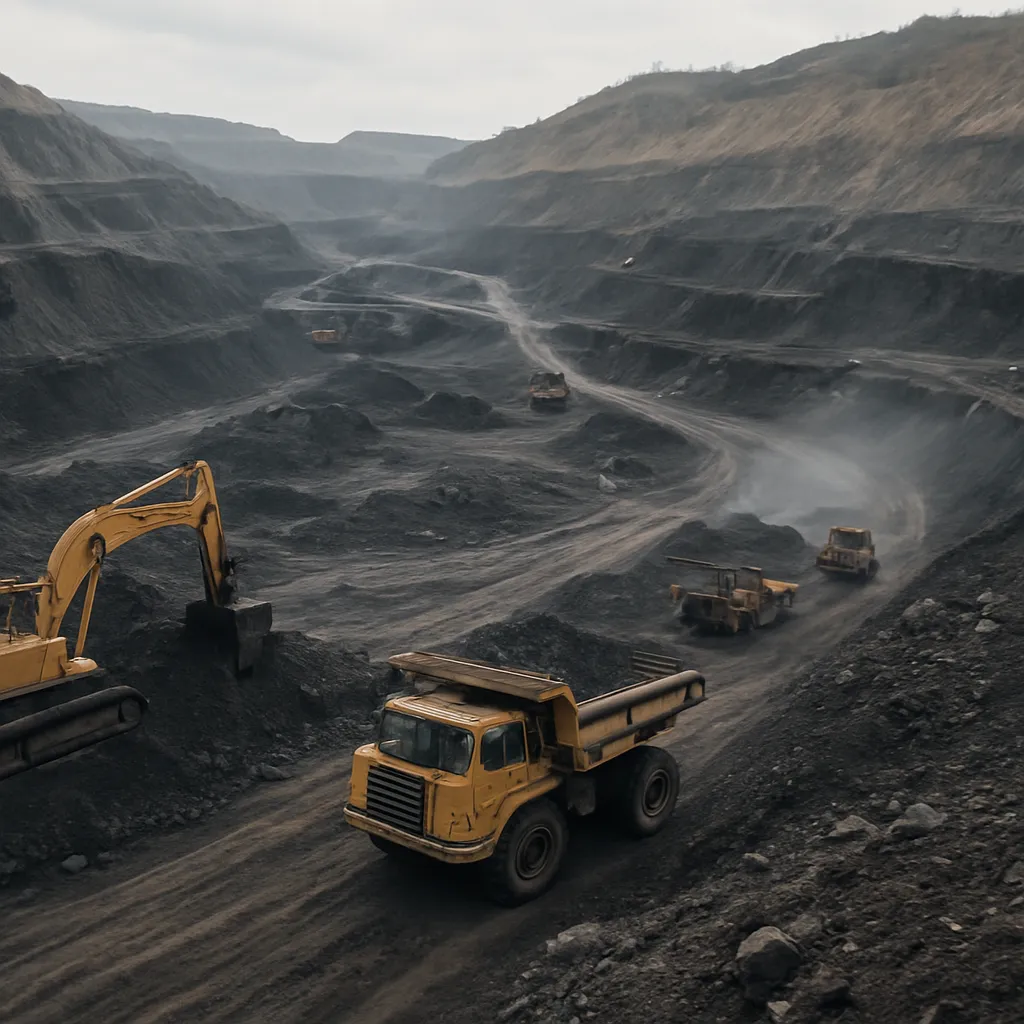
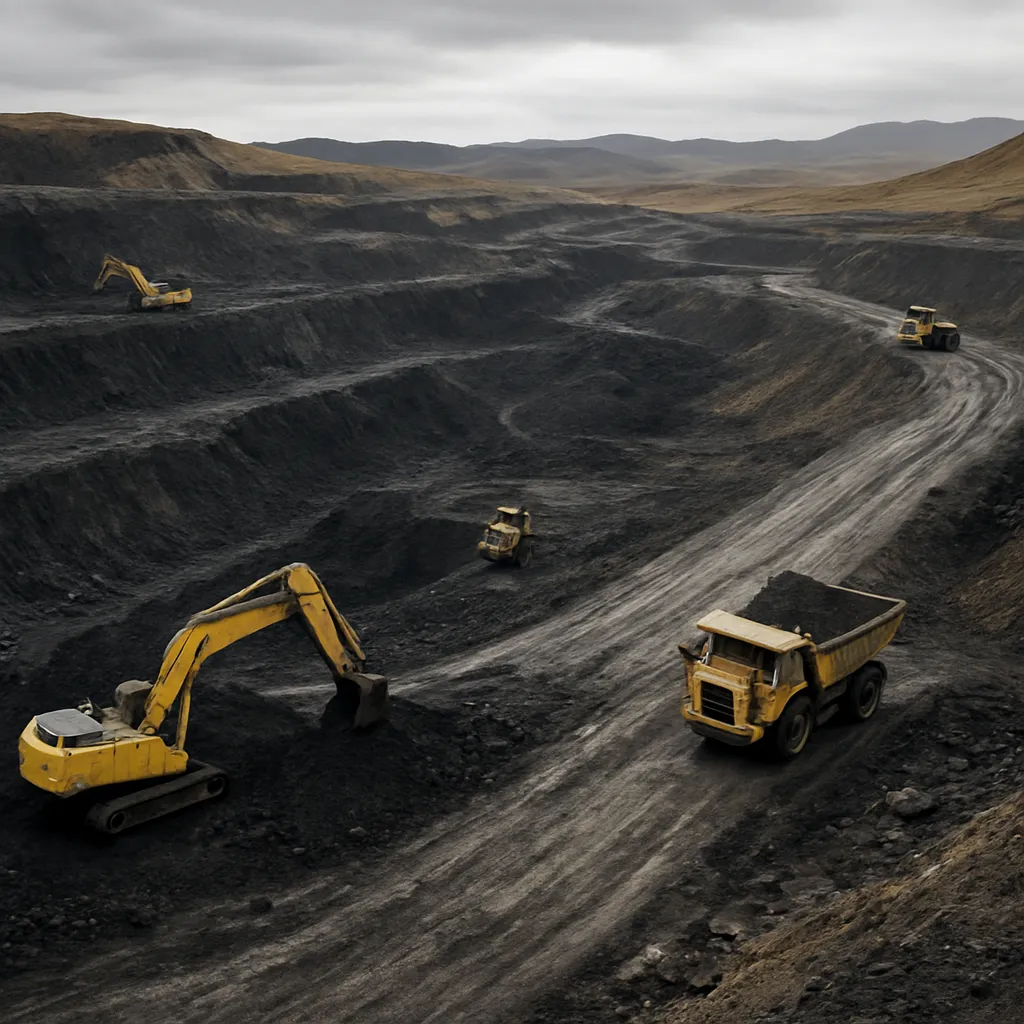
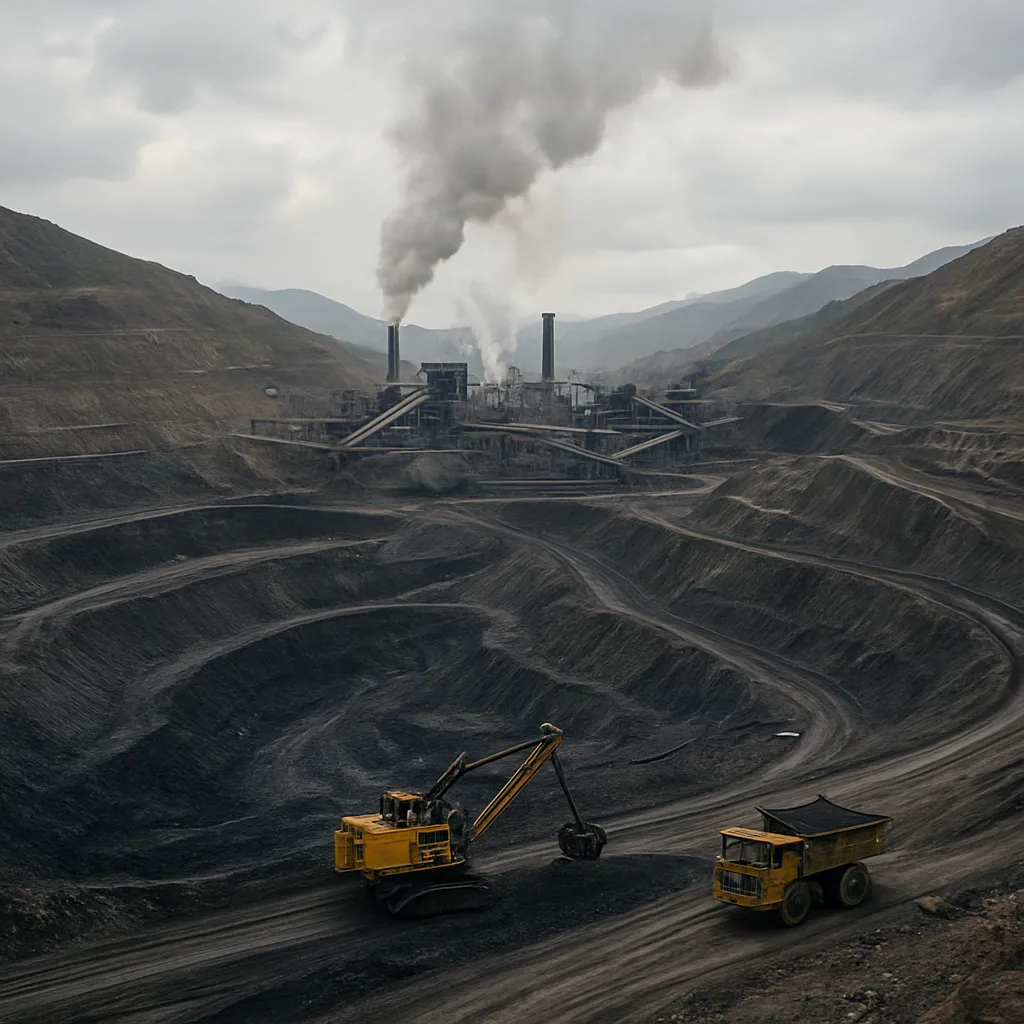
Haerwusu South is primarily developed as a large-scale open-pit operation. Modern open-pit methods are used at the site: benches are carved into the coal seam, large electric or hydraulic shovels and draglines remove the overburden and load haul trucks, and heavy haulage fleets transport coal from pit to processing plants or to conveyor systems that feed screening and washing facilities.
Typical equipment and operational features include:
- High-capacity shovels and face equipment for rapid overburden removal;
- Large haul-truck fleets (100–300 tonne class) and in some cases conveyor systems for continuous material handling;
- Surface coal-washing and preparation plants that reduce ash and improve product quality for thermal use;
- Progressive benching and staged reclamation to reduce environmental footprint over the life of the mine.
The mine’s scale requires integrated mine planning, which balances stripping ratios (the volume of overburden removed relative to coal recovered), bench stability, hydrology management, and coal-quality sorting. Haerwusu South’s operations are managed to maintain consistent throughput throughout the year despite seasonal constraints common to Inner Mongolia.
Coal Type and Quality
The coal produced at Haerwusu South is primarily used as thermal coal for electricity generation and for heating in nearby industrial and urban centers. Depending on the seam, the coal ranges from bituminous to sub-bituminous ranks, with calorific values that make it suitable for pulverized coal-fired power plants after washing and blending. Typical quality characteristics across similar northern Chinese deposits include:
- Medium to low calorific value compared with high-grade metallurgical coals (but sufficient for thermal power generation after preparation);
- Ash content that often necessitates washing to improve combustion efficiency and reduce emissions;
- Variable sulfur content — many northern deposits are relatively low in sulfur compared to some southern deposits, which is advantageous for meeting emissions standards;
- Moisture content that can be significant in lower-rank seams, affecting transport and handling economics.
Processed coal from Haerwusu South is typically blended to achieve target specifications for customers and to optimize furnace performance in power stations. While not primarily a coking (metallurgical) coal source, some higher-rank material within the deposit can be allocated to industrial uses that require better calorific properties.
Economic and Industrial Significance
Haerwusu South contributes to both the local and national energy supply chain. It supports regional power generation, provides thermal coal to industrial consumers, and acts as a significant employer in a sparsely populated area where mining forms a central pillar of the local economy. The mine’s output helps reduce reliance on coal transported from more distant basins, improving supply security for northern China.
Key economic impacts include:
- Direct employment for thousands of workers in mining, processing, logistics and administration;
- Indirect employment via contractors, transport providers, equipment suppliers and service industries;
- Significant contributions to local government revenues through taxes, royalties and infrastructure-related investments;
- Stimulation of regional development through road and rail improvements that also facilitate other industries.
At a national level, mines like Haerwusu South are important components of China’s historically coal-dominated energy mix. They support base-load power generation and provide fuel security, particularly in winter months when heating demand rises sharply in northern provinces.
Statistics and Production Figures
Exact figures for Haerwusu South vary with the reporting year and the source. Publicly available information and industry reporting generally describe the site as one of the larger open-pit operations in China. Reported and estimated statistical highlights (presented as ranges where precise numbers are not consistently published) include:
- Production: Annual coal output has been reported in the range of approximately 10 to 30 million tonnes in various publicly accessible industry summaries and regional production data. Actual annual tonnage depends on market demand, permitted mining rates and operational scheduling.
- Reserves: Geological assessments and company reports for comparable mines in the region indicate reserves measured in the hundreds of millions to over a billion tonnes of in-situ coal, of which a substantial portion is recoverable under current mining plans.
- Mine footprint: The active worked area and associated facilities cover many square kilometers; total disturbed land including waste dumps, processing plants and infrastructure can reach several tens of square kilometers over the life of the operation.
- Overburden movement: Overburden removal is a major operational metric and is typically measured in tens to hundreds of millions of cubic meters cumulatively over many years; annual stripping volumes depend on seam thickness and mining depth.
Because mine production is often included in broader company or regional outputs, it is common to find Haerwusu South’s figures aggregated with other adjacent mines in corporate reports. For precise annual numbers, the operator’s public disclosures or regional mining bureau statistics provide the most reliable source, when available.
Environmental and Social Issues
Large open-pit mines such as Haerwusu South present multiple environmental challenges that must be managed to meet regulatory standards and community expectations. Key issues include:
- Dust and particulate emissions during blasting, overburden removal and coal handling, which require suppression measures such as water spraying, enclosures and vegetative barriers;
- Water management in a relatively arid environment: preventing contamination of groundwater, controlling runoff from waste dumps and ensuring adequate supply for dust control and processing;
- Land disturbance and habitat loss: large surface mines permanently alter landscapes and require staged reclamation and post-mining land-use planning;
- Greenhouse gas emissions: coal extraction and combustion contribute to CO2 emissions; methane released from coal seams during mining is another greenhouse gas source requiring capture or mitigation;
- Social impacts: relocation of communities or pastoral activities, changes in local employment patterns, and the need for community investment in education, healthcare and alternative livelihoods when mines close or downscale.
Chinese regulations and corporate policies increasingly emphasize environmental mitigation: progressive reclamation, post-mining land rehabilitation, and investment in emission control technologies at coal-fired power plants. Mines like Haerwusu South are part of broader regional efforts to modernize operations and to comply with national targets on air quality and carbon intensity.
Infrastructure and Logistics
Efficient transport and processing infrastructure is central to Haerwusu South’s viability. Key logistical features include:
- Rail connections linking the mine to regional power plants, industrial hubs and national rail networks that carry coal to distant demand centers;
- On-site coal preparation plants that wash and size the product to meet contractual specifications;
- Dedicated roads and haulage corridors designed for heavy vehicles and to minimize community disruption;
- Energy and water supply systems to support high-consumption processes such as washing, dust control and processing.
Investments in conveyor systems and automated handling can reduce transport costs and the environmental footprint compared with long-distance trucking. In addition, improved rail capacity in northern China has been a priority to move large volumes of coal efficiently without excessive road congestion.
Role in Regional and National Energy Strategy
Haerwusu South functions within a national context where coal remains a major source of electricity generation despite China’s growing investments in renewables. Important strategic roles include:
- Providing secure, baseload fuel for power generation, particularly for northern provinces with high winter heating demand;
- Supporting industrial processes that rely on thermal coal for heat and energy;
- Contributing to strategic reserve stocks and balancing supply during seasonal peaks;
- Serving as a regional employer and fiscal contributor that supports broader socio-economic objectives in Inner Mongolia and neighboring provinces.
At the same time, national policy shifts toward emissions reduction and energy transition are influencing long-term planning. Mines are increasingly evaluated not only on immediate production economics but also on closure plans, reclamation liabilities and potential for diversification of local economies.
Future Outlook and Developments
The future of Haerwusu South will be shaped by a combination of market demand, regulatory trends and technological change. Several likely directions include:
- Operational optimization: continued adoption of automated equipment, digital mine planning and more efficient coal preparation to reduce costs and emissions;
- Environmental compliance and remediation: stepped-up dust control, water recycling, methane capture where feasible, and progressive land rehabilitation to meet stricter standards;
- Integration in multi-energy systems: potential role as a supplier to cleaner, more efficient coal plants or facilities that co-fire biomass or employ carbon mitigation technologies;
- Social transition planning: investments in local skills, diversification of the regional economy and support for communities as mining intensity changes over time.
Given the large scale of the deposit and the established logistics, Haerwusu South is likely to remain an important asset for some years. However, evolving environmental policy and China’s longer-term decarbonization goals will affect investment profiles and operational priorities.
Additional Relevant Observations
It is useful to note several wider themes connected to mines like Haerwusu South:
- Large open-pit mines are capital intensive but deliver economies of scale in coal supply; their profitability depends on coal prices, stripping ratios and access to markets.
- Data transparency varies: exact annual production, reserve classification and environmental performance may be disclosed differently across company reports, regional bureaus and independent assessments.
- Technological upgrades (automation, drone monitoring, precision blasting) are gradually improving safety and lowering operating costs in large surface mines.
- Local engagement and benefit-sharing are increasingly important for social license to operate; companies typically invest in infrastructure, healthcare and education in host communities.
Overall, Haerwusu South exemplifies a major northern Chinese coal operation: large-scale surface mining producing primarily thermal coal, integrated with regional logistics, economically important to its locality, and facing growing environmental and social expectations. The balance between continued coal supply and the transition imperatives will determine the site’s trajectory over the coming decades.
Haerwusu • Inner Mongolia • coal • open-pit • thermal • China Shenhua • reserves • production • environment • infrastructure