The Boundary Dam mining area, closely associated with the Boundary Dam Power Station near Estevan in southeastern Saskatchewan, Canada, occupies an important place in the province’s coal and energy history. This article describes where the mine is located, what type of coal is produced, how the operation fits into the local and provincial economy, relevant statistics where available, environmental links (notably carbon capture at the nearby power station), and broader significance for the energy sector. The text draws together geological, operational and socio-economic aspects to give a comprehensive picture of the site and its role in regional energy production.
Location, geology and brief history
The Boundary Dam mine sits in the vicinity of Estevan, a city in southeastern Saskatchewan, near the Canada–United States border. The area is part of the broader Western Canadian sedimentary basin, where Paleocene and Cretaceous strata contain economically exploitable coal seams. Locally, the coal-bearing formations in the Estevan region are largely composed of low-rank coals: peat-derived deposits that have undergone limited coalification and are commonly referred to as lignite or low-grade sub-bituminous coal.
Coal mining in the Estevan area dates back to the early 20th century, with growth tied to regional development, railways and the demand for local electricity generation. Over time, surface (open-pit) and some shallow underground mining methods have been used to extract coal. The Boundary Dam mine supplies coal primarily to nearby power generation facilities, including the Boundary Dam Power Station operated by SaskPower, which has been among the focal points of innovation in coal plant emissions control in Canada.
What is mined: coal type, quality and uses
The principal commodity mined in the Boundary Dam area is low-rank coal commonly classified as lignite or low-grade sub-bituminous coal. Characteristics of this coal include:
- Relatively high moisture content compared with higher-rank coals.
- Lower energy density per tonne, which affects how it is handled and combusted for power generation.
- Typically higher volatile matter content and fewer minerals associated with metallurgical uses.
Because of these properties, the primary commercial use of coal from the Boundary Dam area is electricity generation in nearby thermal plants. Lignite is less suitable for long-distance shipping or metallurgical processes; instead it is most economical when used close to the mine to reduce transport penalties. The coal is generally combusted in pulverized coal boilers or in units adapted to burn high-moisture low-rank fuel.
Mining operations, methods and logistics
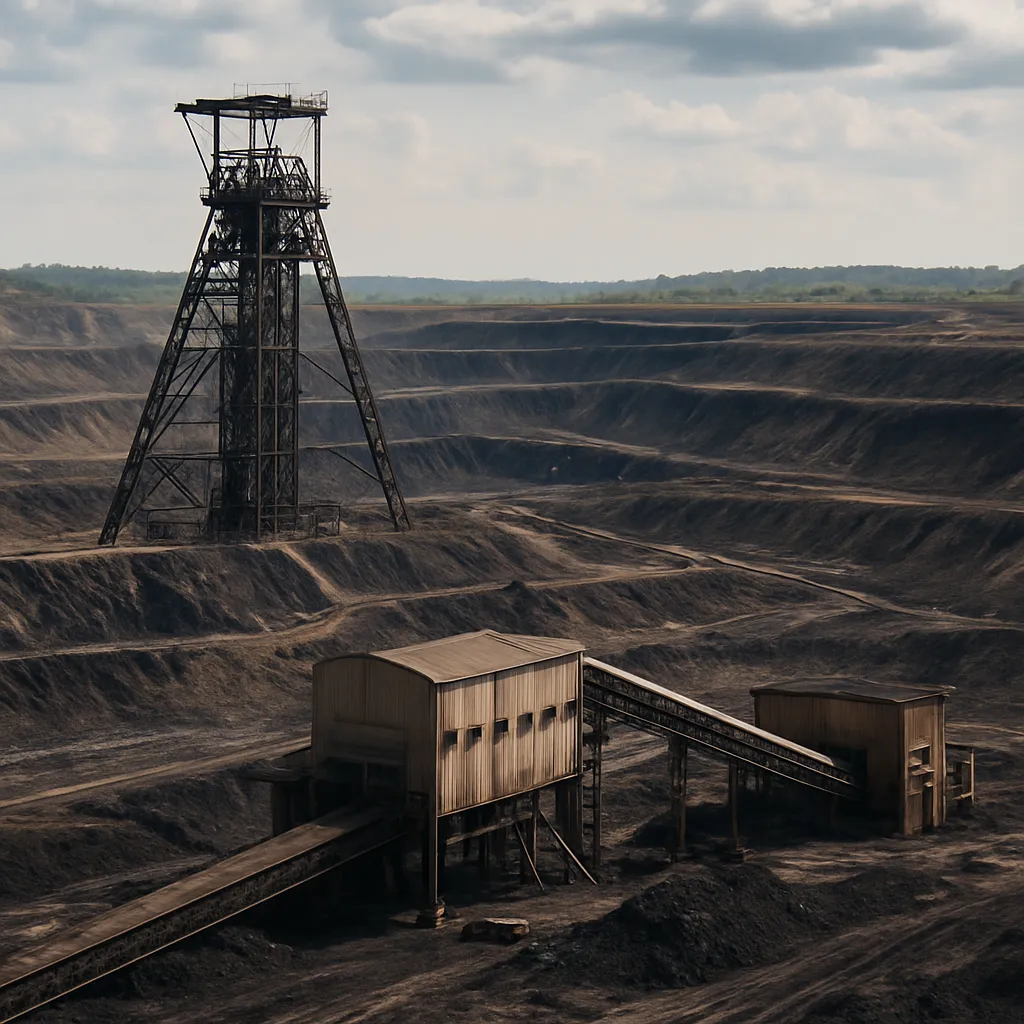
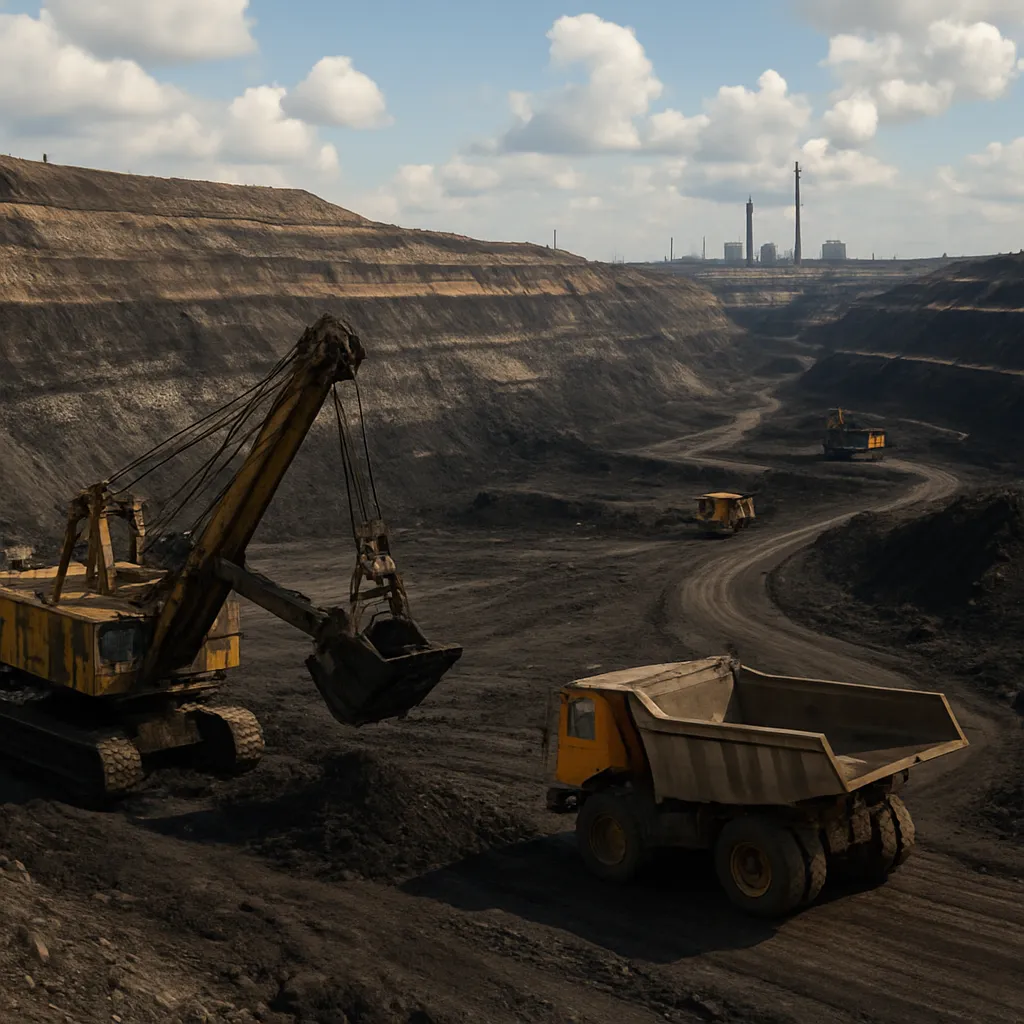
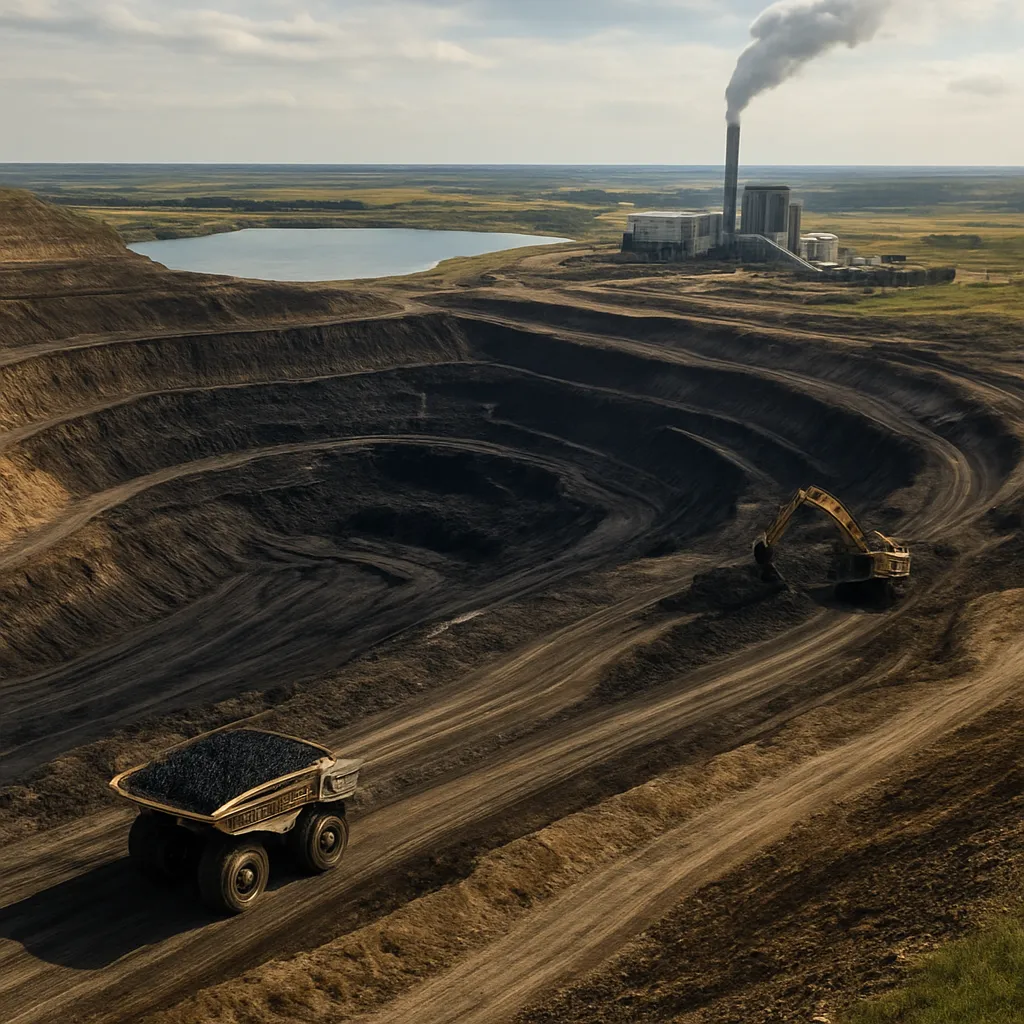
Operations in the Boundary Dam mining area typically involve surface mining methods where overburden is removed to expose shallow coal seams. Equipment and logistical details commonly include draglines or large excavators for overburden removal, haul trucks for coal transport, and conveyors or truck routes that deliver feedstock directly to local power stations. Key operational considerations are moisture control, handling of relatively friable coal, and managing the environmental footprint of spoil and reclamation activities.
Because the main end-use is local power generation, logistics emphasize short-haul delivery and reliable, consistent tonnage. Mines serving the Estevan-area plants are integrated into local supply chains; stockpiling and blending are used to manage fluctuations in seam quality and seasonal variations in mining conditions.
Economic and industrial significance
The Boundary Dam mine and associated coal operations are strategically important to the local and provincial economy for several reasons:
- Employment: Coal mining and associated power generation provide direct jobs in mining, maintenance, transportation and plant operations, and indirect employment in services and supply industries. For many rural communities, this represents a major source of stable employment.
- Energy security: Local coal resources have historically provided a reliable, dispatchable generation fuel for Saskatchewan, reducing dependency on imported fuels and contributing to grid stability.
- Value chain: Coal-to-power operations create an integrated value chain — from extraction through to electricity sales — that supports municipal revenues, provincial tax receipts and local businesses.
- Infrastructure investment: The presence of mines and coal-fired plants encourages investment in transport, utilities and industrial support services that benefit the wider region.
At the provincial level, coal-fired generation historically supplied a significant share of Saskatchewan’s electricity needs. Over the decades, that reliance shaped energy policy, workforce skills and local economies in southeastern Saskatchewan. Even as energy systems evolve, legacy coal assets and the workers and communities dependent on them remain economically important.
Boundary Dam Carbon Capture project and environmental context
One of the most notable developments associated with the Boundary Dam site is the carbon capture, utilization and storage (CCUS) initiative implemented at the Boundary Dam Power Station. While the capture facility is attached to the power plant rather than the mine itself, the mine’s output is integral to the operation’s fuel supply and therefore to the environmental performance of the combined site.
The Boundary Dam Carbon Capture Project, led by SaskPower, was among the first large-scale post-combustion carbon capture retrofits at a commercial coal-fired power unit. Important points about the project:
- It was designed to capture approximately one million tonnes of CO2 per year from the flue gas of a retrofitted unit, demonstrating large-scale capture capability in an operating coal plant.
- The captured CO2 has been used for enhanced oil recovery (EOR) operations in nearby oilfields and in permanent geological storage, creating a CO2 utilization and storage pathway linked to regional hydrocarbon operations.
- The project has been widely reported as reducing CO2 emissions from the retrofitted unit significantly (capture rates on the order of tens of percent to the majority of the specific unit’s CO2 emissions, depending on operational conditions); it has also had ancillary reductions in other pollutants due to integrated emissions control upgrades.
This linkage between a coal mine, a coal-fired power plant and a CO2 capture and utilization chain makes the Boundary Dam complex an important case study in efforts to reconcile fossil-fuel-based generation with emissions reduction objectives. It illustrates both the technical possibilities and the economic and operational complexities of deploying CCUS at scale in commercial settings.
Statistical picture and production figures
Exact, year-by-year production figures for the Boundary Dam mine may vary and depend on reserve access, plant demand, and broader market conditions. General statistical points of interest include:
- Regional coal production in Saskatchewan has historically been measured in the low millions of tonnes per year; a notable portion of that output has been directed to the Estevan-area power plants.
- The Boundary Dam Carbon Capture facility was designed for a CO2 capture capacity of roughly 1 million tonnes per year for the retrofitted unit, a headline statistic that has been reported in numerous public sources and used to benchmark large-scale CCUS projects.
- Employment and economic multipliers: mining and coal-fired generation historically supported hundreds to low-thousands of direct and indirect jobs in the region depending on the scale of operations and contracting cycles.
Because mine output is closely tied to the demand from local thermal units, production can fluctuate with plant outages, seasonal consumption patterns and policy shifts. Provincial policies that phase out or retrofit coal units, evolving market prices for electricity and natural gas, and carbon pricing or regulation can all have meaningful impacts on mine tonnages and operations.
Social, community and reclamation aspects
Coal mining around Boundary Dam is embedded within rural communities where multi-generational ties to mining and power generation exist. Social and community dimensions include:
- Workforce communities — Estevan and surrounding towns have developed skills, institutions and businesses aligned with mining and thermal generation.
- Municipal revenues and services — Property taxes, sales taxes and payments in lieu of taxes from mining and power operations contribute to local budgets and services.
- Reclamation and environmental management — Modern mining permits require progressive reclamation, water management and tailings/spoil handling. Companies operating in the region typically work under provincial regulatory frameworks designed to return land to a stable condition and to manage water and dust impacts.
- Community engagement — Operators and utilities engage with local stakeholders on employment opportunities, community sponsorship and environmental monitoring.
Challenges and opportunities
The Boundary Dam mining area, like many coal regions worldwide, faces both pressures and opportunities that will shape its near-term future:
- Market and policy pressure: Provincial and national climate policies, carbon pricing and commitments to reduce greenhouse gas emissions create a long-term headwind for unabated coal-fired electricity generation. Saskatchewan has been adjusting its energy mix and policies in response to national targets and local needs.
- Technological opportunity: The Boundary Dam CCUS demonstration showed that CO2 capture at coal-fired plants is technically feasible. Further advancements, cost reductions, and integration with industrial CO2 utilization or storage could prolong the operational life of some facilities or enable new revenue streams tied to carbon services.
- Economic diversification: Communities dependent on coal mining face the challenge of diversifying local economies as energy systems evolve. At the same time, mining experience and industrial infrastructure can be redeployed to other mineral or energy projects, including potential roles in carbon transport and storage networks.
- Environmental legacy: Managing the long-term environmental legacy of coal mining — groundwater, spoil, and reclaimed land uses — remains a continuing focus requiring investment, monitoring and community involvement.
Regional and industry significance
The significance of the Boundary Dam mine and associated facilities extends beyond local employment to touch several broader themes:
- Energy transition demonstration: The Boundary Dam site is frequently cited in discussions about how fossil-fuel infrastructure can be adapted to reduce emissions through carbon capture and utilization. It serves as a practical example of the complexities and costs of retrofitting legacy assets.
- Supply chain integration: The proximity of mine to plant highlights the economic logic of mine-mouth coal operations and the value of integrated supply chains for low-rank coals.
- Policy testing ground: Because of its scale and public profile, the Boundary Dam complex has been a testing ground for policy instruments that try to balance climate objectives with regional economic realities.
Future outlook
Looking ahead, the fate of the Boundary Dam mine and similar operations will depend on multiple interacting factors: energy policy decisions at provincial and national levels, global and domestic market prices for coal and alternative fuels, advances in emissions control and carbon management technologies, and local community priorities. Possible future trajectories include:
- Continued operation with partial emission abatement (including CCUS or other control technologies) to extend life while reducing environmental footprint.
- Gradual reduction of coal-fired generation and a corresponding scaling down of mine tonnages, matched with targeted economic transition support for affected communities.
- Repurposing of mining and industrial sites for alternative energy projects, industrial CO2 storage hubs, or other extractive activities if geology and market conditions permit.
Concluding observations
The Boundary Dam mine is more than a source of locally burned fuel: it is an element in a wider regional economy, an example in discussions of how to reduce emissions from fossil energy, and a touchstone for community identity in southeastern Saskatchewan. By supplying lignite to local power generation, participating in a pioneering carbon capture project and anchoring jobs and infrastructure in rural areas, Boundary Dam captures a set of tensions central to modern energy policy — between affordability, reliability, environmental responsibility and regional livelihoods. Its evolution in the coming years will reflect how those tensions are resolved in Saskatchewan and Canada.