The Booysendal area, often associated with mineral development in northeastern South Africa, represents an example of how localized deposits contribute to the country’s broader coal and mineral economy. This article examines Booysendal in the context of South African coal mining: where it is located, the types of coal and geological settings involved, economic and statistical aspects, its role in the energy and industrial sectors, environmental and social considerations, and likely future developments. Where site-specific public data are scarce, the discussion places Booysendal within regional patterns and national statistics to give a complete picture of its potential significance.
Location and geological setting
Booysendal is situated in the northeastern interior of South Africa, in the general region where the highveld and bushveld geological provinces interface. The exact administrative location is commonly referenced within the Limpopo–Mpumalanga corridor, a mineral-rich area noted for a range of commodities. The coal-bearing formations in this broader region are part of the Permian strata that make up the Karoo Supergroup, particularly those units typically mined throughout the South African highveld coalfields.
Regional geology and coal seams
- Coal in this part of South Africa is commonly hosted in the Ecca Group strata of the Karoo Supergroup, formed during the late Permian period.
- Typical seam thickness can vary widely from thin, discontinuous lenses to thicker, mineable seams. In major coalfields, individual seams range from less than a meter to several meters in thickness.
- The coal type here is usually medium- to high-volatile bituminous coal, suitable mainly for thermal use in electricity generation and some industrial processes; coking suitability is limited compared with dedicated metallurgical coal basins.
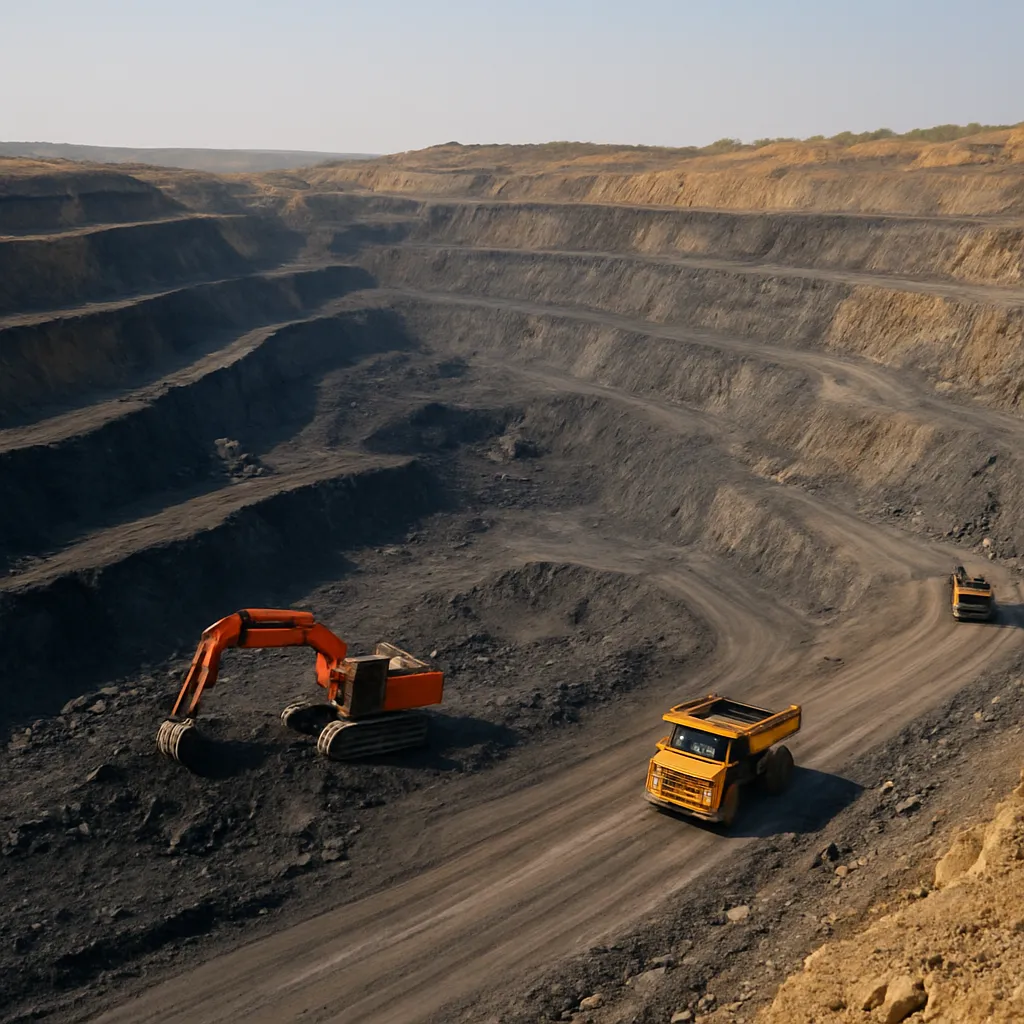
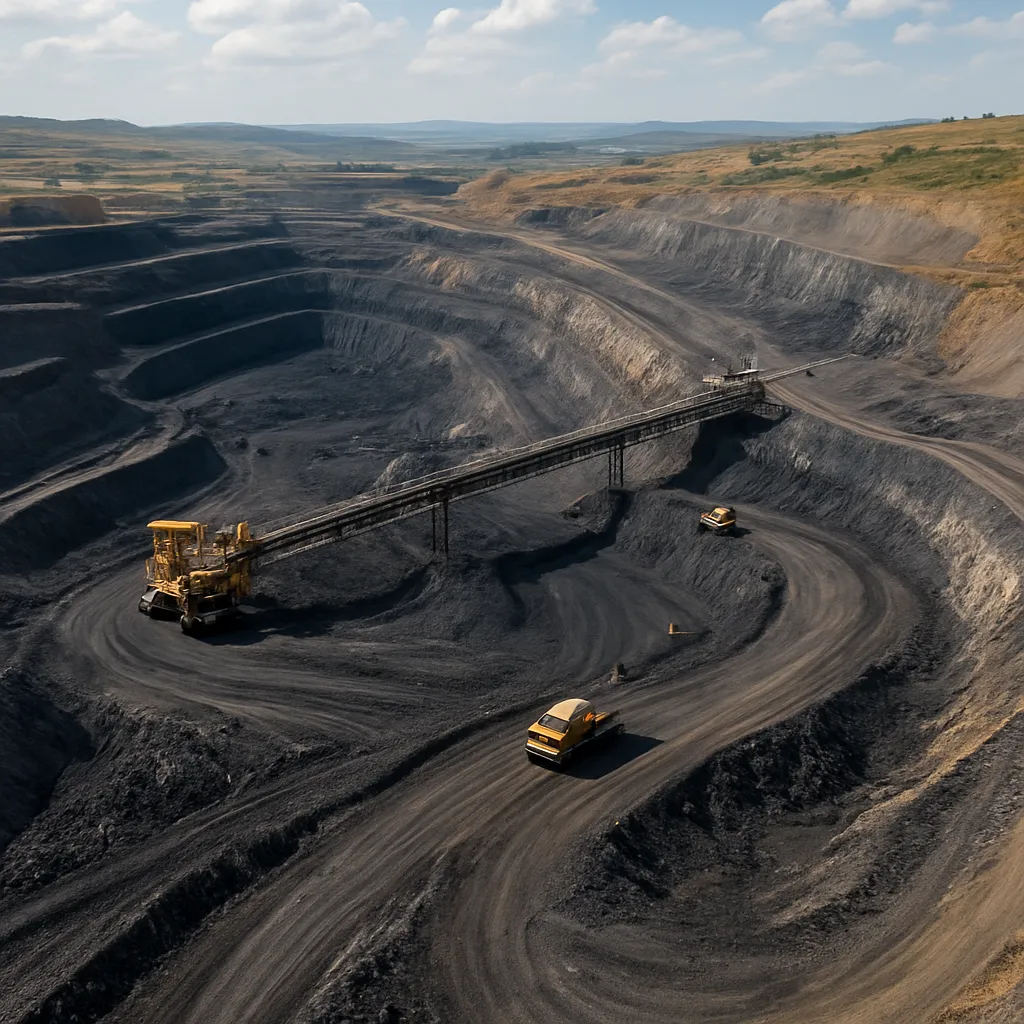
The Booysendal area’s geological setting favors both surface (opencast) and underground mining methods, depending on seam depth, overburden, and local topography. Where seams are shallow and laterally extensive, opencast methods are economically dominant; where seams are deeper, bord-and-pillar or longwall-style underground extraction may be used.
Mining operations, coal quality and production characteristics
Specific, publicly available production figures for a dedicated “Booysendal Coal Mine” are limited or not consistently reported in centralized databases, partly because Booysendal is more frequently mentioned in connection with other minerals and mixed mining operations. Nonetheless, we can describe typical operational characteristics, coal qualities, and production metrics relevant to a coal mine in this region.
Coal quality and uses
- Thermal properties: The coal tends to have a medium calorific value suitable for electricity generation by utilities such as Eskom and for industrial boilers.
- Moisture, ash and sulfur: Values vary by seam and depth; ash contents in South African highveld coals are commonly in the 10–30% range, with sulfur typically low to moderate—an advantage for compliance with combustion emissions standards after appropriate beneficiation.
- Coal processing: Beneficiation plants (washing) are often used to reduce ash and increase saleable calorific value—integral when targeting export markets or supplying higher-spec industrial consumers.
Typical production and mine life parameters
For small- to medium-sized mines in the region, annual run-of-mine production can range from several hundred thousand tonnes to a few million tonnes. Larger complexes in Mpumalanga and neighbouring districts may reach annual outputs above 5–10 million tonnes. Life-of-mine estimates are highly dependent on resource size and extraction rate; many projects plan for 10–30 years of operation subject to conversion of resources to reserves and market conditions.
Infrastructure and logistics
- Access to rail and road networks is a key determinant of whether coal is destined for domestic power plants or export terminals. The region has established rail corridors linking coalfields to the Richards Bay Coal Terminal and other ports.
- Proximity to power stations increases local demand for thermal coal; mines near Eskom stations frequently have offtake agreements or long-term contracts.
- Processing facilities, water supply for beneficiation, and waste management (tailings) are central infrastructure elements for any mining operation here.
Economic and statistical context
While site-specific statistics for Booysendal coal are not comprehensively published, understanding the national and regional coal economy helps frame the mine’s potential role. South Africa’s coal sector is critical to the national economy, energy security and export earnings.
National production and reserves
- South Africa is one of the world’s major coal producers and exporters—regularly ranked among the top global coal-producing countries and a leading exporter of thermal coal.
- Estimates of South Africa’s total coal resources and reserves run into the tens of billions of tonnes; recoverable reserves are often cited in the range of tens of billions of tonnes depending on definitions and cut-off grades.
- Coal supplies a large share of domestic electricity generation—historically around 70%–90% of grid generation—placing coal at the center of South Africa’s energy mix.
Employment and regional economic impact
Coal mining in regions like Mpumalanga and adjacent provinces is a significant employer. Individual mines can employ from a few hundred to several thousand workers directly, with many more jobs supported indirectly in transport, processing, equipment maintenance and local services.
- Typical direct employment: hundreds to a few thousand employees per medium to large mine.
- Multipliers: every direct mining job often supports two to four indirect jobs in the local economy, amplifying impact on local towns and service sectors.
- Royalties and taxes: mineral royalties, corporate taxes and local procurement contribute to municipal and provincial revenues.
Trade and market orientation
Coal from South African mines is divided between domestic consumption (power generation, petrochemical feedstocks, industrial boilers) and export markets, with a significant portion of export coal destined for Asia and Europe. Quality, price, and logistics determine whether an individual mine focuses on domestic contracts or exports.
Environmental, social and regulatory considerations
Modern coal mining in South Africa, including operations in the Booysendal area, faces several environmental and social challenges that shape permitting, community relations and operational costs.
Environmental management
- Water usage: Coal beneficiation and dust suppression require large water volumes. Mines must manage water rights, treatment and discharge to avoid pollution of local rivers and aquifers.
- Acid mine drainage (AMD): While more commonly associated with base metal mines, AMD can also arise where pyritic material is exposed; careful waste-rock management and closure planning are essential.
- Air quality and dust: Blasting, haulage and stockpiling generate dust; mitigation includes water sprays, covers, and buffer zones to protect nearby communities and ecosystems.
- Rehabilitation: Progressive rehabilitation of disturbed land is often a regulatory requirement, with financial provision for mine closure included in licensing conditions.
Social license to operate
Community engagement and local economic development are mandatory components of modern mining practice in South Africa. Key social issues include:
- Employment and local procurement: Mines that prioritize local hiring and supplier development improve community relations and generate broader economic benefit.
- Resettlement and land use: Where projects encroach on agricultural or communal land, fair compensation and resettlement planning are critical.
- Health and safety: Occupational safety standards, mine-health surveillance and local public-health initiatives are central to responsible operation.
Regulatory framework
Mining in South Africa is regulated by a combination of national laws and provincial permitting systems. These include mineral rights administration, environmental impact assessment and licensing, and labor regulations. Compliance with the Department of Mineral Resources and Energy (DMRE) and environmental authorities is mandatory. Additionally, international investors and lenders often require adherence to global environmental and social governance standards.
Significance in the industry and economic implications
Even if Booysendal’s coal output is modest relative to national totals, mines in this area contribute to multiple strategic objectives:
- Energy security: Mines supplying thermal coal to power stations underpin grid stability and industrial activity.
- Export earnings: Exportable product generates foreign exchange and supports port and logistics sectors.
- Value chains: Coal feedstock supports local industries such as cement, chemicals and brickmaking, and supplies nearby power plants that power broader industrial clusters.
- Employment and socio-economic upliftment in mining communities form a key part of regional development strategies.
Technological, market and policy trends impacting Booysendal and similar mines
Several trends will influence the future of coal mines in the Booysendal region and across South Africa:
- Mechanization and automation: Increasing use of large-scale draglines, electric haul trucks and digital mine-planning tools improves safety and reduces unit costs, though with implications for employment patterns.
- Coal beneficiation and blending: Enhanced processing allows lower-quality coal to meet stricter emission and calorific requirements for both domestic and export markets.
- Carbon policy and energy transition: National and international climate policies, potential carbon pricing and decarbonization trends place long-term pressure on thermal coal demand; however, transition timelines differ by region and sector.
- Methane management: Coal-mine methane capture can reduce greenhouse gas emissions and provide an auxiliary energy source if captured economically.
Future outlook and conclusions
The Booysendal area exemplifies the dual realities of South African mining: abundant mineral endowment and pressing environmental and economic transition challenges. While direct public data about a dedicated Booysendal coal operation are limited, the mine’s likely characteristics—medium-volatile bituminous coal, a mix of opencast and underground extraction potential, and importance to regional employment—mirror those of many South African coal projects.
Key factors that will shape Booysendal’s trajectory include:
- Market demand for thermal coal domestically and abroad, influenced by global energy prices and policy shifts;
- Access to transport and port infrastructure, which determines export competitiveness;
- Operational efficiency and ability to meet environmental standards through beneficiation, water management and rehabilitation;
- Community engagement and local economic development commitments that sustain a social license to operate.
Given the pace of energy transition, mines that invest in improved environmental performance, diversification (such as co-processing opportunities), and workforce reskilling will be better positioned to sustain value for stakeholders. For Booysendal and its neighbours, the interplay between geology, logistics, regulatory environment and market dynamics will determine how the area contributes to South Africa’s coal story in the coming decades.
Selected key terms highlighted
- Booysendal
- South Africa
- coal
- bituminous
- thermal
- Eskom
- Mpumalanga
- exports
- employment
- sustainability