The Asam-Asam Coal Mine, located in the Indonesian portion of the island of Borneo, is one of many coal-producing operations that contribute to Indonesia’s position as a global thermal coal supplier. This article examines the mine’s geographical setting, geological characteristics, types of coal found there, economic importance, logistical arrangements, environmental and social aspects, and future prospects. It also places Asam-Asam in the broader context of the Indonesian coal industry, highlighting how regional factors and national policy shape the mine’s role in energy markets and local development.
Location and geological setting
The Asam-Asam Coal Mine is situated on the island of Borneo, in the Indonesian provinces that together are commonly referred to as Kalimantan. Kalimantan is the principal coal-producing region of Indonesia, with large deposits spread across East, South, Central and North Kalimantan. The exact coordinates and administrative district for Asam-Asam vary by source, but it is characteristic of mines in the coastal and inland sedimentary basins of Kalimantan where extensive Tertiary and Quaternary sedimentary sequences host thick coal seams.
Geologically the coal occurrences in this region formed in deltaic to paralic environments, where ancient peat swamps accumulated organic material that later underwent diagenesis and burial. The sedimentary basin architecture often results in multiple seam packages, with varying seam thicknesses, lateral continuity and quality. Typical regional coal seams may be interbedded with sandstone, shale and occasional limestone layers, and they often crop out along river valleys and gentle slopes where strip mining is feasible.
Coal characteristics and mining methods
The coal extracted from Asam-Asam and nearby operations is primarily thermal coal used for electricity generation and industrial heat. In keeping with much of Indonesian production, the coal ranks generally as low- to medium-rank thermal coal, often classified as sub-bituminous or high-volatile bituminous depending on local geology and coalification degree.
- Typical characteristics of regional coals:
- Calorific value: widely variable; many Indonesian thermal coals fall in the range of roughly 4,000–6,500 kcal/kg (GAR), though specific seams can be higher or lower.
- Moisture: relatively high inherent moisture compared with coals from some other regions, which affects energy density and transportation economics.
- Ash and sulfur: ash content can vary; Indonesian coals are often valued for relatively low sulfur content, but ash content varies with seam and parting contamination.
- Volatile matter: generally high, making these coals suitable for pulverized coal firing in power plants rather than metallurgical uses.
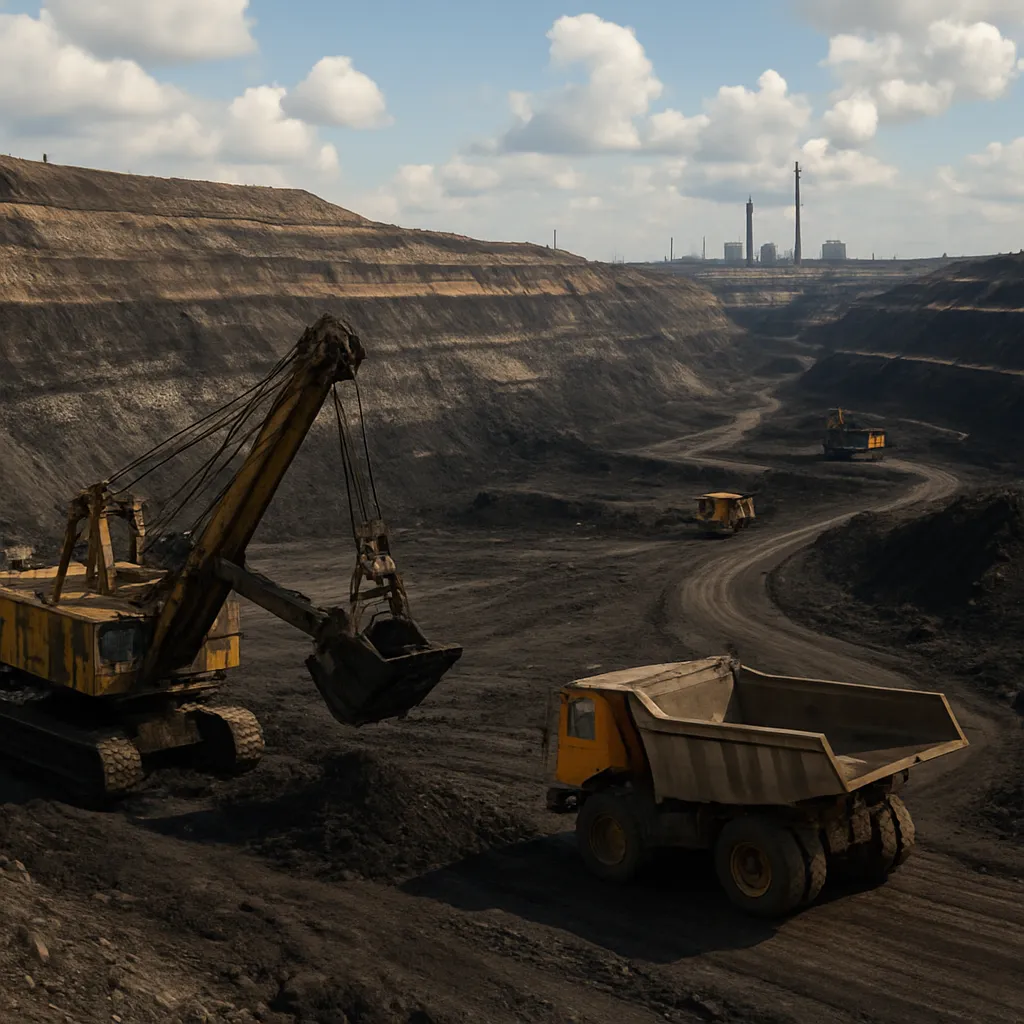
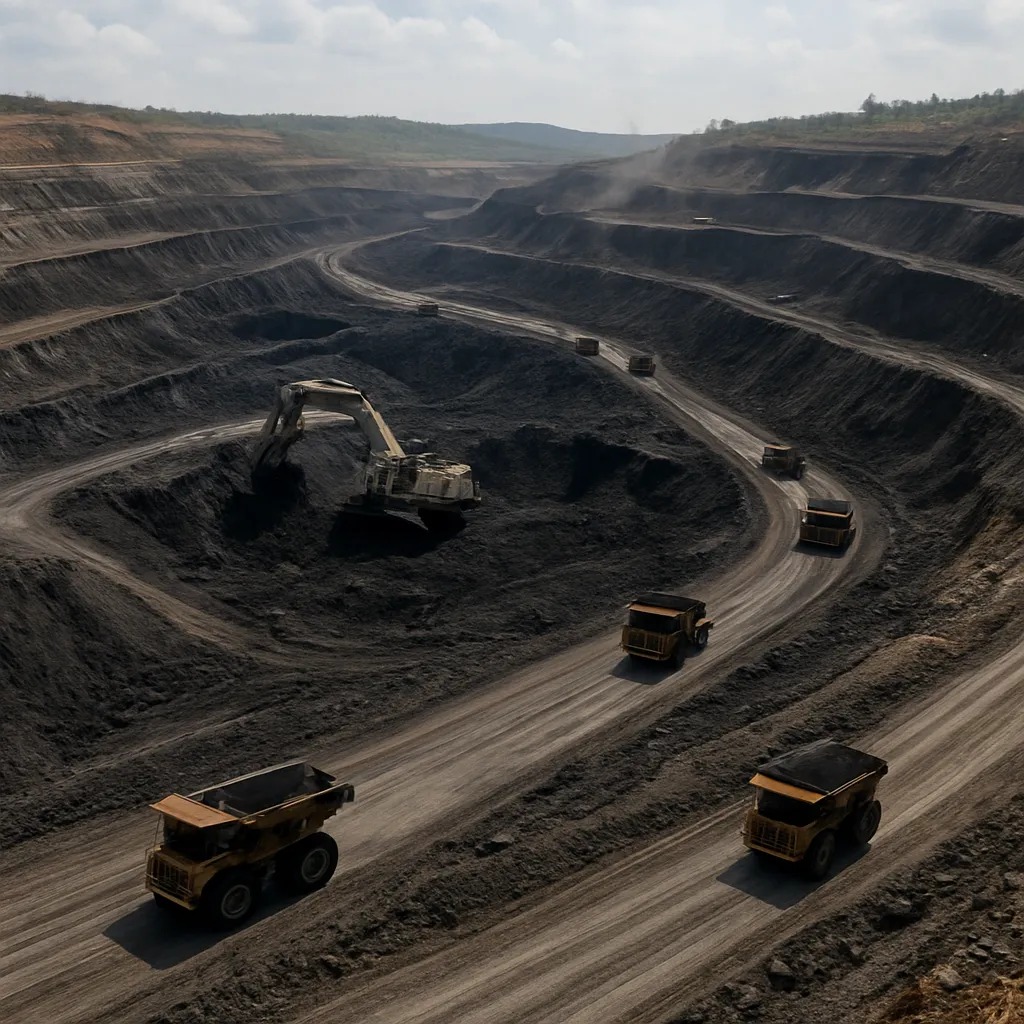
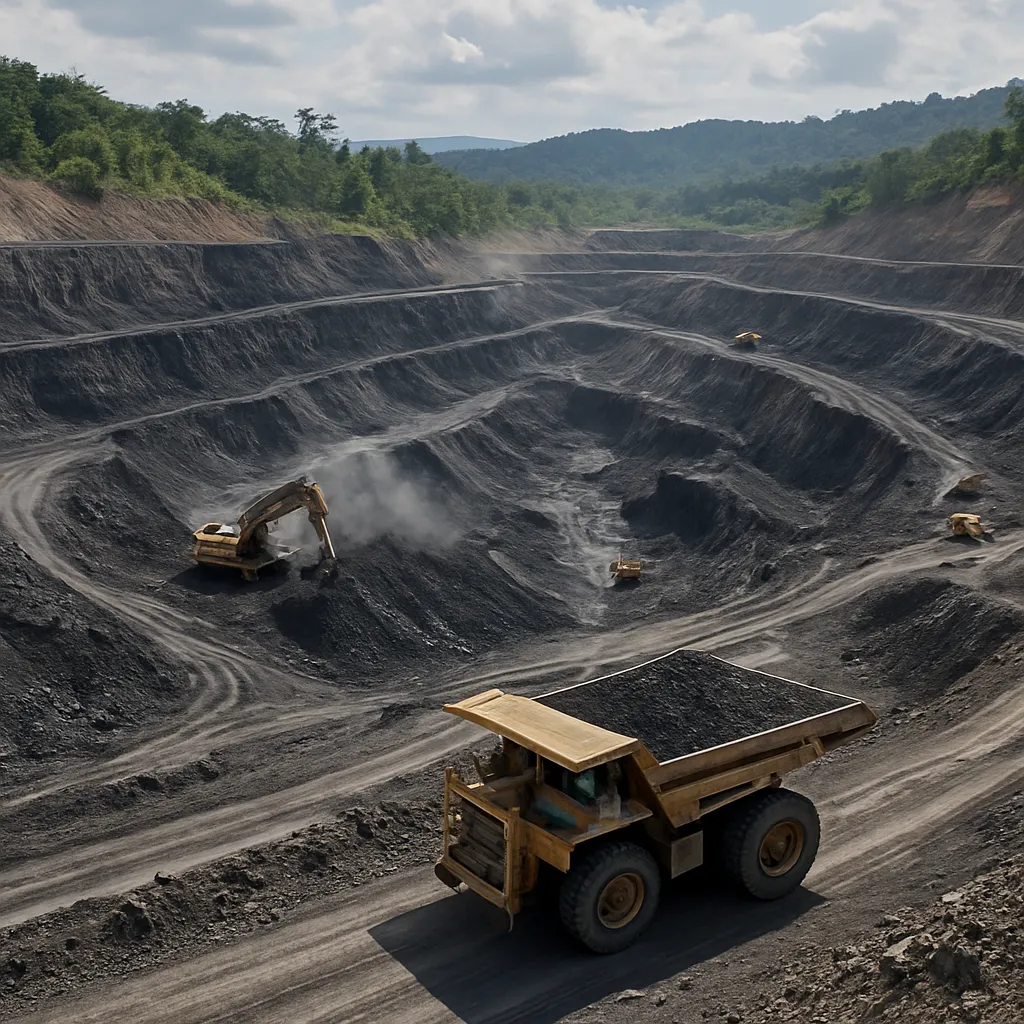
- Mining method: The Asam-Asam site, like many Kalimantan mines, typically employs open-pit or surface mining methods. These allow economically feasible extraction of near-surface seams by sequential removal of overburden and bench mining.
- Typical seam geometry: Seam thickness in the region can be highly variable—some seams are a few meters thick, while others reach double-digit thicknesses over limited areas, influencing mine design and strip ratio.
Economic significance and production statistics
Indonesia is one of the world’s leading producers and exporters of thermal coal. The national industry supports government revenues, regional economies and global energy supplies. While detailed, verified production figures specifically for the Asam-Asam Coal Mine are not always publicly available in the international data sets, the mine operates within an economic environment defined by several observable patterns:
- National context: In recent years Indonesia has produced on the order of several hundred million tonnes of coal annually and has consistently been among the top global coal exporters. Annual production and export figures fluctuate with global demand, domestic policy and market prices. Estimates for Indonesia’s total annual production in the last decade typically fall in a broad band of approximately 400–600 million tonnes, with exports constituting a substantial portion of that volume.
- Regional share: The island of Kalimantan accounts for the majority of Indonesia’s coal production. Mines in Kalimantan supply both export markets and domestic power plants. South and East Kalimantan are especially important coal-producing provinces, alongside other Kalimantan territories.
- Mine-scale estimates: As a medium-sized operation typical of the region, Asam-Asam’s annual production, when reported, is often expressed in the low millions of tonnes per year for comparable mines. Small pits produce hundreds of thousands of tonnes annually, while large operations can exceed tens of millions. Exact figures for Asam-Asam should be confirmed from company production reports or government mining statistics for the most recent year.
- Economic contribution: Coal mining contributes to local GDP, generates royalties and taxes for provincial and national governments, and supports an array of service industries. A single mine can provide direct employment to several hundred workers and indirect jobs in logistics, maintenance and local commerce.
Infrastructure, logistics and markets
Logistics are a crucial part of coal mining economics in Kalimantan. Transport infrastructure includes haul roads, conveyors, barges, river transport, and coastal ports. Mines close to navigable rivers often load barges for shipment to coastal transshipment points or directly to coal terminals. In other cases, dedicated haul roads and truck fleets move coal to nearby jetties or regional ports.
- Domestic and export markets: The coal produced is primarily thermal coal destined for electric power plants. Exports supply major coal-importing countries in Asia, notably India, China, Japan, South Korea and Southeast Asian neighbors. Domestic demand includes state-owned and independent power producers.
- Price sensitivity: Coal mining economics at Asam-Asam are sensitive to international coal prices, freight costs, and contract structures. Many suppliers operate under long-term contracts at fixed or indexed prices, while spot sales are influenced by short-term demand and shipping rates.
- Value chain participants: Key actors include mining companies, contractors, logistics providers, port operators, traders and final consumers such as utilities. Corporate arrangements often feature joint ventures, contractor-operated works and off-take agreements with power plants.
Industry importance and linkages
The Asam-Asam Coal Mine is part of a network of mines that underpin both regional industry and national energy strategy. Coal plays multiple roles:
- Energy security: In Indonesia, coal-fired power generation remains a cornerstone of the electricity mix, supporting rapid electrification and industrialization across the archipelago.
- Export earnings: Coal exports generate foreign exchange and help finance other sectors of the economy. As a thermal coal source, Asam-Asam contributes to export volumes that sustain trade balances.
- Industrial feedstock: Beyond power generation, coal provides process heat for industries such as cement and manufacturing in domestic and regional markets.
Quantitative indicators
While explicit mine-level statistics for Asam-Asam are not always transparent in public reporting, useful indicators include:
- Production volumes: For comparable mines in Kalimantan, annual production commonly ranges between a few hundred thousand to several million tonnes. The precise figure for Asam-Asam in a given year should be verified with company disclosures or Indonesian Ministry of Energy and Mineral Resources (ESDM) publications.
- Employment and income: Direct employment typically numbers in the hundreds for mid-sized operations; payroll and contractor spending often represent a significant portion of local cash flows.
- Fiscal contributions: Royalties, corporate taxes, and regional levies yield government revenues. Royalties are generally calculated as a percentage of sale price or production volume under national regulations.
Environmental and social aspects
Coal mining in tropical regions like Kalimantan poses distinct environmental and social challenges and responsibilities. Asam-Asam shares many of these issues and mitigation needs:
- Land use and biodiversity: Clearing for open-pit mining may lead to loss of native vegetation and habitat fragmentation. The region’s tropical forests and peatlands are sensitive ecosystems, and disturbance can cause biodiversity loss and carbon release.
- Water management: Mines must manage surface and groundwater flows, control sedimentation, and prevent contamination. Acid mine drainage risk is lower for many Indonesian coals relative to some metallurgical ores, but proper tailings and runoff management are essential.
- Air quality and dust: Blasting, haulage and material handling generate dust that needs mitigation via water spraying, covered conveyors and dust suppression systems to protect workers and nearby communities.
- Greenhouse gas emissions: Combustion of coal contributes to global CO2 emissions. Producers and consumers face increasing pressure to manage emission footprints through efficiency improvements, carbon offsetting, or transition strategies.
- Community impacts: Mines affect local livelihoods through land acquisition, job creation, and infrastructure development. Effective corporate social responsibility programs typically cover health services, education, local contracting opportunities and infrastructure upgrades.
Rehabilitation and sustainability measures
Progressive operators implement land rehabilitation and mine closure planning from early in the mine life. Typical practices include:
- Progressive reclamation: Recontouring, topsoil replacement and replanting with native species to restore ecosystems or prepare land for alternative uses such as agriculture.
- Water treatment facilities: Sediment basins and treatment ponds to ensure effluents meet regulatory standards.
- Monitoring programs: Ongoing environmental monitoring for water, air, and biodiversity indicators to track impacts and remediation success.
- Social investment: Programs to support alternative livelihoods, vocational training and community development that reduce dependence on a single industry.
Operational challenges and regulatory environment
Mining operations at Asam-Asam navigate regulatory frameworks, technical challenges and market dynamics. Key operating constraints include permit requirements, land access negotiations, fluctuating commodity prices and logistical bottlenecks.
- Permitting and compliance: Indonesian mining regulations require environmental impact assessments, permits for land use and mine closure planning. Compliance with provincial and national regulations is central to legal operation.
- Technical challenges: Managing overburden removal, maintaining low strip ratios, controlling groundwater inflows and ensuring bench stability are typical engineering concerns.
- Market volatility: Coal prices are cyclical; mines must optimize cost structures and contract mixes to remain viable through price swings.
Future prospects and strategic outlook
Looking ahead, the future of Asam-Asam Coal Mine will be influenced by multiple intersecting trends:
- Global energy transition: Growing decarbonization efforts and alternative energy competition are reshaping demand for thermal coal. However, in many Asian economies, coal remains a critical source of baseload power in the near to medium term.
- Domestic policy: Indonesia’s national energy policies, electrification goals, and potential stimulus for domestic coal use can affect production priorities and pricing.
- Technological improvements: Efficiency gains in mining equipment, digitalization of operations, and improved fuel handling can reduce costs and environmental footprints.
- Value-added strategies: Some producers pursue beneficiation and higher-quality coal blending to access better markets or support industrial consumers that require specific specifications.
Opportunities for sustainable development
For Asam-Asam, opportunities to remain economically viable while addressing sustainability concerns include:
- Investing in lower-emission logistics and improved fuel efficiency across the supply chain.
- Implementing robust mine closure plans that restore biodiversity and provide community benefits.
- Partnering with local stakeholders to develop alternative economic activities that persist after mine closure.
- Exploring carbon management initiatives, such as methane capture from coal seams where applicable or participation in verified offset programs.
Interesting facts and contextual notes
Beyond operational detail, a few points of broader interest about Asam-Asam and similar mines:
- Historical context: Many coal deposits in Kalimantan were discovered during the 20th century exploration campaigns; their exploitation accelerated with demand for energy in Southeast Asia.
- Community transformation: Coal developments often catalyze rapid community growth—new towns, schools and healthcare facilities often accompany long-term mining projects.
- Local entrepreneurship: Mining supply chains foster local businesses providing food services, vehicle maintenance, construction and other support services.
- Technological adoption: Mines in the region are increasingly adopting mechanized excavation, digital monitoring and fleet management systems to enhance productivity.
The Asam-Asam Coal Mine exemplifies the complexities of modern coal mining in Indonesia: it provides economic benefits and employment, supplies energy markets, and operates under increasing scrutiny for environmental and social performance. Its future will be shaped by market demand, regulatory developments and how effectively operators balance short-term production goals with long-term sustainability and community resilience. Understanding Asam-Asam therefore requires seeing the mine both as a localized industrial enterprise and as part of Indonesia’s broader energy and economic landscape.