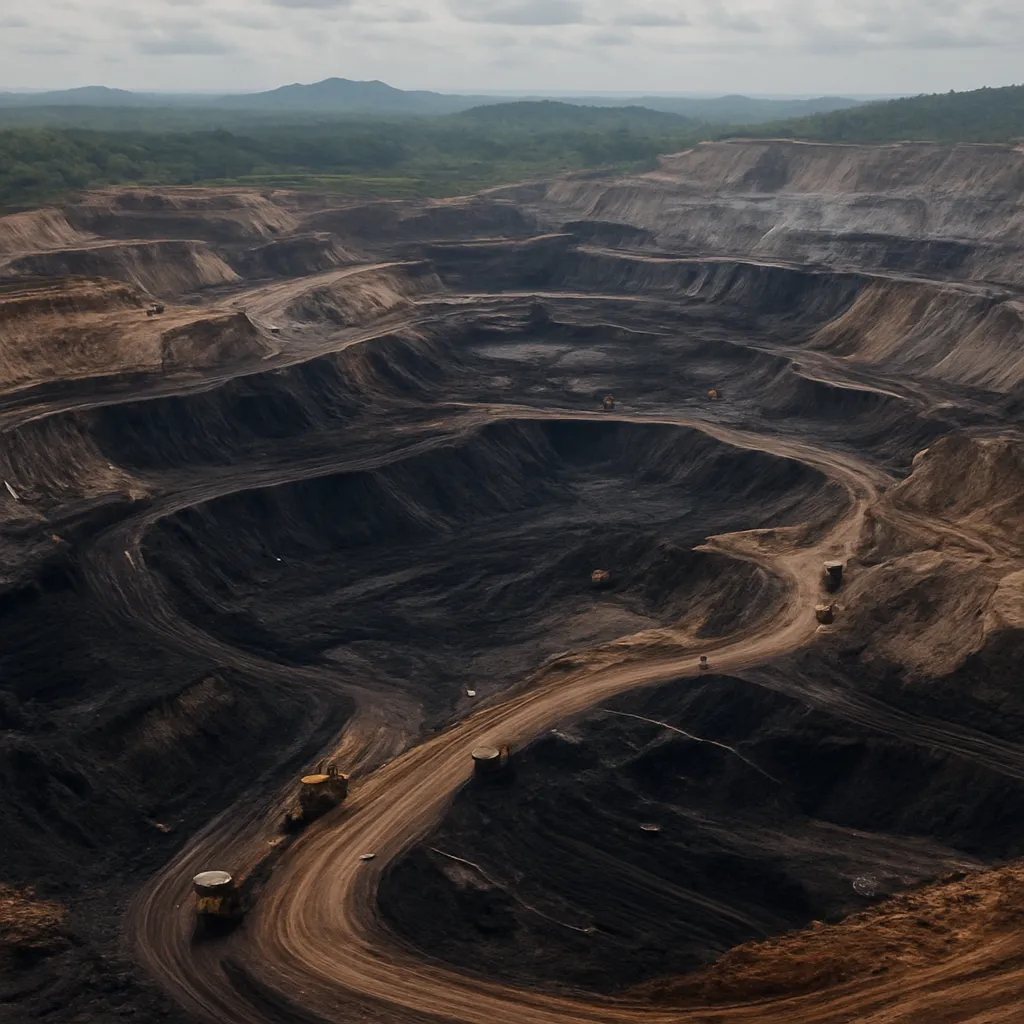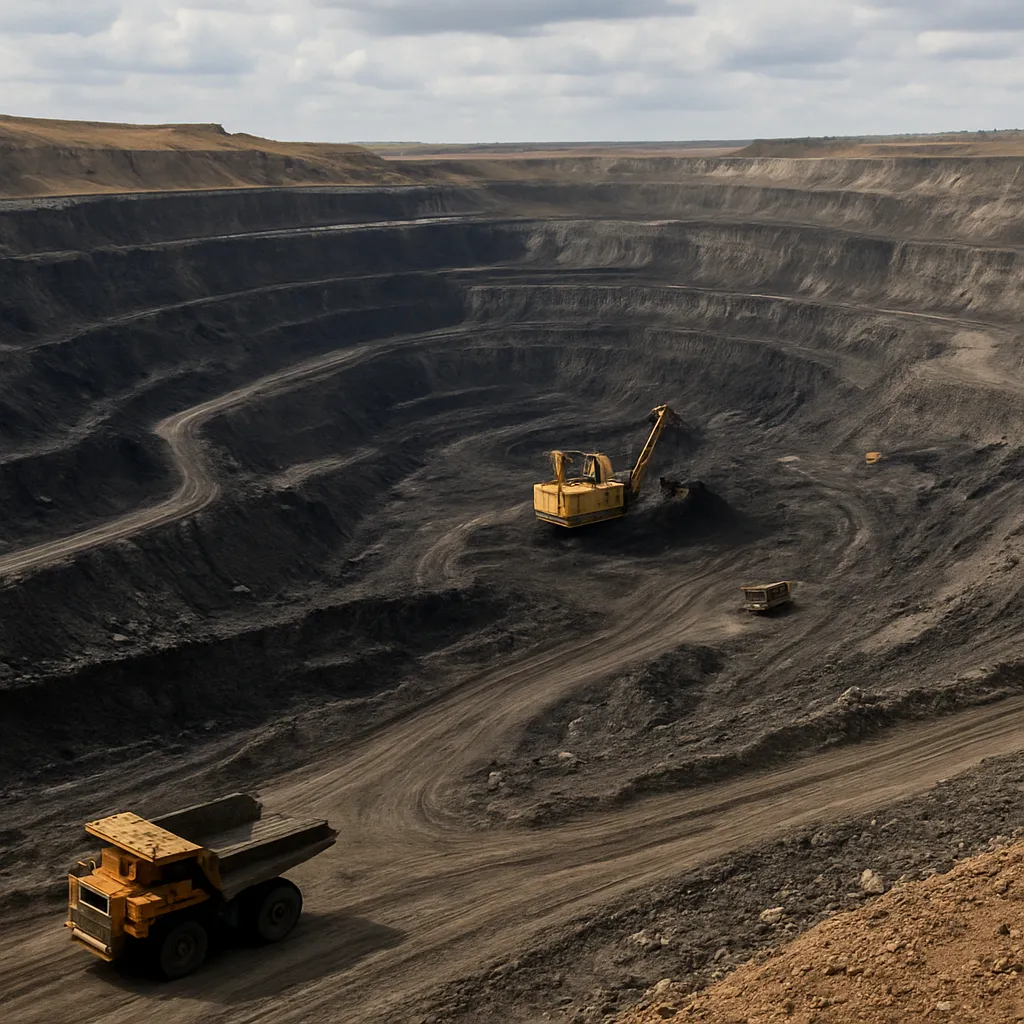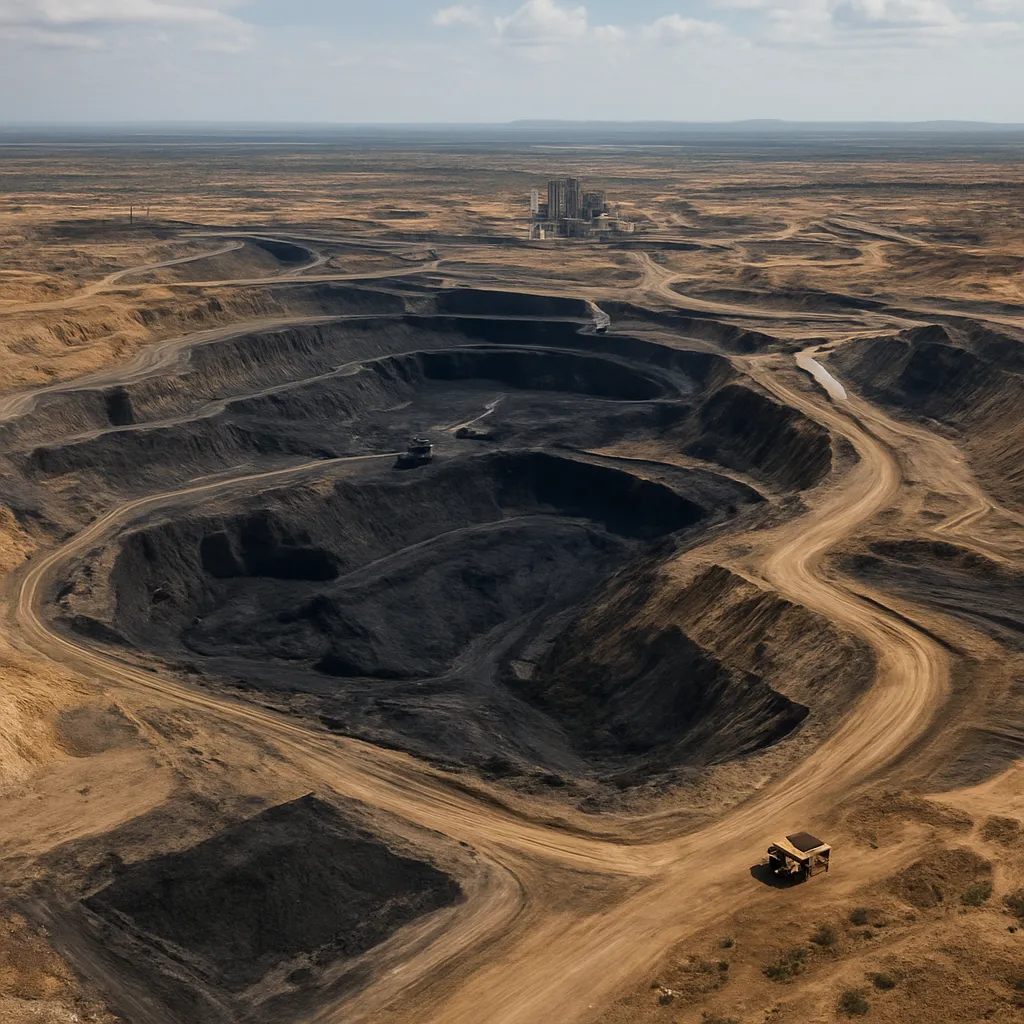
The Moatize II development in Mozambique represents one of the most important coal projects in southern Africa. Located in the rich Moatize coal basin in western Mozambique, the mine has reshaped local economies, spurred major infrastructure projects, and played a consequential role in global coal markets over the past decade and more. This article examines the location and geology of the deposit, the characteristics of the coal, operational and infrastructural arrangements, economic and social implications, environmental considerations, and likely future trajectories for the Moatize II expansion and the regional industry.
Location, Geology and Discovery
The Moatize coalfield sits in the western part of Mozambique’s central province of Tete, within the greater Zambezi river basin. The town of Moatize functions as the local administrative and logistics hub for mining activities. The coal basin is part of a wider geological system of Permo-Carboniferous age, with multiple seams that vary in thickness, depth and quality across the basin.
The large-scale commercial interest in Moatize began in the early to mid-2000s when exploration campaigns quantified extensive resources. The deposit rapidly attracted international mining companies and investors because of its potential scale and relatively high-quality coal characteristics. What is commonly referred to as Moatize II is the second development phase or expansion of the original mine complex — an effort to move from initial production to a much higher, sustained output level supported by rail and port upgrades.
Coal Type, Quality and Resources
Moatize contains both thermal and, in parts of the basin, higher-grade coal that can serve as coking (metallurgical) feedstock. The coal quality varies by seam and by location within the basin, but generally the deposit is noted for relatively favourable calorific values and low sulphur content compared with many other large African coalfields.
Resource estimates have fluctuated as more drilling and evaluation work has been carried out. At the project’s initial commercialisation stage, reported in public filings and national assessments, the Moatize basin held resources on the order of well over one billion tonnes. Conservative and commonly cited figures place effective resources in the range of approximately 1.5–2.5 billion tonnes, with proven and probable reserves representing a substantial fraction of that total. Exact figures depend on classification standards and the delimitation of the mining licenses included in a given estimate.
- Coal ranks present: primarily sub-bituminous to bituminous affinities across seams.
- Typical attributes: relatively good calorific value for thermal use, variable ash content, and generally low sulphur.
- Uses: power generation (domestic and export markets) and selected industrial/metallurgical markets for higher-quality seams.
Operations and Infrastructure: From Moatize I to Moatize II
The Moatize development was structured in phases. The initial phase (often called Moatize I) established mining operations, initial processing and export flows. Moatize II refers to the significant scale-up — in pit size, processing capacity and logistics — intended to increase annual output substantially.
Major international mining companies and trading houses became involved through acquisitions, joint ventures and logistics partnerships. A notable milestone in the project’s evolution was the acquisition of Riversdale Mining by Vale (a major Brazilian miner) in the early 2010s, which brought large-scale capital and commitment to logistics upgrades. The acquisition and project financing underlined the international strategic importance of the basin.
Transport and port logistics are central to the project’s viability. Moatize sits inland, and two primary corridors were developed or rehabilitated to move coal to the coast:
- The Sena corridor to the port of Beira, using upgraded sections of the Sena railway, which historically served the region but required significant rehabilitation.
- The Nacala corridor (the Integrated Nacala Logistics Corridor), which links Moatize to the deepwater port of Nacala-a-Velha on the Indian Ocean. This route required major investments in track rehabilitation, rolling stock, bulk-handling facilities and a purpose-built coal terminal.
The logistics build-out included not just railway rehabilitation but also new roads, power improvements, and bespoke port facilities to handle coal exports on a commercial scale. Moatize II depended on these multimodal investments to achieve targets of double-digit million tonnes per annum throughput.
Production Capacity and Market Orientation
Planned and installed capacities for Moatize have been presented in phases: initial throughput was designed in the low millions of tonnes per annum, whereas expansion targets were set to reach close to or above 20 million tonnes per annum in later stages. A commonly referenced capacity in discussions of the first major expansion is approximately 11–12 million tonnes per annum for Phase I operations, with ambitions to grow to around 20–22 million tonnes per annum with full-scale Moatize II development and associated rail/port capacity.
Export markets have primarily been Asia (notably India and East Asian buyers), southern Africa and other international buyers seeking thermal coal for power generation and, for higher-grade coals, buyers in steelmaking supply chains. The project therefore sits at the intersection of regional development needs and global commodity markets, making it sensitive to price swings in coal.
Economic and Fiscal Impact
The Moatize coal complex has had significant macroeconomic implications for Mozambique. Key economic effects include:
- Export revenues: At peak production and favourable coal prices, coal exports from the Tete region became among Mozambique’s top export earners, contributing billions of US dollars to foreign exchange receipts over multi-year periods.
- Public revenues: The state benefits through royalties, taxes and dividends where state entities hold interests; large-scale mining licenses also drive infrastructure co-investment and local procurement.
- Employment and livelihoods: The mine and its supply chain have created thousands of direct jobs and supported tens of thousands of indirect roles in construction, services, logistics and trade. Reskilling and local hiring programs have been part of contractual obligations with operators.
- Local economic multipliers: Spending on housing, services and local businesses around Moatize and along transport corridors has stimulated secondary economic activity.
While the project brought capital and revenue, the net fiscal outcome for Mozambique depends on long-term commodity prices, contractual terms, and the strength of governance and local content implementation. During periods of low coal prices or constrained logistics, fiscal receipts from coal are compressed, highlighting the volatility of dependence on a single commodity.
Social and Community Dimensions
Large-scale mining inevitably has social consequences. The Moatize expansions required land for pits, processing, rail and ancillary infrastructure, prompting resettlement programs. Thousands of residents in villages and peri-urban Moatize were affected, requiring negotiated compensation, new housing, and livelihood restoration plans.
Key social themes include:
- Resettlement and compensation: Formal programs were established, but delivery and satisfaction have been uneven, eliciting community complaints and the need for ongoing engagement.
- Employment expectations: Local communities often expect rapid and widespread employment; balancing skilled position requirements with local hiring has been challenging.
- Social investment: Companies have funded clinics, schools and water/sanitation projects as part of community investment packages, though questions about sustainability of these services after project transitions remain.
Environmental Considerations and Risks
Mining in the Moatize basin poses environmental challenges typical for large open-pit coal operations, some of which are context-specific:
- Land disturbance and biodiversity: Large pit footprints and supporting infrastructure disrupt habitats and local land uses.
- Water resources: Coal operations can alter surface water flows and groundwater dynamics; monitoring and mitigation for water quality and quantity are essential in an agricultural and riverine setting.
- Air quality and dust: Bulk handling, rail movements and blasting contribute to dust and related impacts, requiring controls and monitoring to protect community health.
- Waste and tailings: Managing overburden, fine coal waste and other byproducts requires engineered containment, rehabilitation planning and ongoing oversight to prevent long-term liability.
Regulatory frameworks in Mozambique require environmental impact assessments and management plans. International financiers and operators have also applied lender and corporate environmental standards, but implementation has been a point of contention with civil society and affected communities. The intersection of environmental stewardship and social welfare remains a central governance challenge for Moatize II.
Statistics and Data: Production, Reserves and Trade
Accurate, up-to-date statistics depend on company reporting, government statistics offices, and trade data. Some recurring, broadly agreed data points and ranges include:
- Resource scale: basin-level resources in the order of approximately 1.5–2.5 billion tonnes (varies with classification and acres included).
- Initial production capacity: Phase I designs were commonly stated near ~11–12 Mtpa.
- Expansion targets: Moatize II ambitions have ranged toward ~20–22 Mtpa with full logistics availability.
- Export corridors: the Nacala and Sena corridors were both rehabilitated/upgraded to handle multi-million tonne traffic; port capacity at Nacala-a-Velha was expanded to serve bulk coal vessels.
At peak export years and favourable pricing, the Moatize complex contributed several hundred million to over one billion US dollars in annual export receipts; however, these totals have fluctuated with global coal prices and operational constraints. External factors such as global energy transition trends, Chinese seaborne demand cycles, and regional transport disruptions influence annual outcomes.
Industry Significance and Strategic Importance
Moatize II is strategically significant on multiple levels:
- Regional development: The project catalysed major infrastructure works that benefit broader trade and mobility in Mozambique and neighbouring countries.
- Global coal markets: Large African coal projects like Moatize diversified seaborne supply, particularly for Asian thermal coal demand during the 2010s.
- Investment signalling: The scale of capital deployed signalled confidence in Mozambique as a mining investment destination, stimulating interest in other mineral prospects.
- Policy and governance test-bed: Moatize’s social and environmental challenges have tested Mozambique’s regulatory capacity and served as examples for future extractive projects.
Challenges, Risks and Controversies
Several challenges have shaped Moatize II’s trajectory:
- Commodity price volatility: Global coal prices can compress margins and delay expansion plans.
- Logistics bottlenecks: Rail or port constraints can limit export volumes even when mine production is available.
- Community relations: Disputes over resettlement, compensation and local opportunities have at times slowed operations or generated negative publicity.
- Environmental compliance: Ensuring long-term rehabilitation and avoidance of water and land degradation requires sustained commitment beyond immediate operational horizons.
- Global energy transition: As economies decarbonise and shift energy mixes, coal demand dynamics may change, posing strategic uncertainties for new long-life coal investments.
Interesting and Lesser-Known Facts
Beyond headline production figures, Moatize II has several features of wider interest:
- Integrated logistics legacy: The scale of railway and port rehabilitation undertaken for coal has become useful infrastructure for other commodities and general freight, potentially lowering transport costs for regional trade.
- Technological adoption: Modern mine planning, fleet management and coal handling at Moatize have introduced new operational standards to Mozambique, including remote monitoring and improved safety protocols.
- Cross-border economic effects: The corridors cross neighbouring Malawi and link to regional trade networks, meaning benefits and impacts are not strictly confined to Mozambique.
- Private-public interactions: The project offers numerous case studies in public-private partnerships, concession design, and dispute resolution about community-level impacts and national resource governance.
Future Prospects and Outlook
The future of Moatize II will be shaped by a set of interrelated factors:
- Global demand for coal and coal price trajectories, particularly in Asia and southern Africa.
- Operational reliability of logistics corridors (rail and port) and the ability to scale throughput effectively.
- Local and national governance — including fiscal terms, environmental enforcement and community engagement strategies.
- Investment choices by owners and financiers in an era of shifting energy policy: some operators are diversifying portfolios while others maintain coal portfolios on the premise of continued demand for thermal and certain metallurgical coals.
Should global demand remain supportive and logistics remain reliable, Moatize II could operate as a major long-life coal producer, delivering sustained export revenue and infrastructure benefits to Mozambique. Conversely, if pricing weakens substantially or if policy shifts accelerate the decline in thermal coal markets, the project will need to adapt through diversification of uses, improved operational efficiency or consideration of alternative economic uses for infrastructure.
Key Takeaways
- The Moatize basin in western Mozambique is one of Africa’s substantial coal provinces, hosting both thermal and limited coking coals and offering very large reserves in aggregate.
- Moatize II represents a significant expansion phase of mining intended to raise annual production into the double-digit million tonnes range, contingent on rail and port capacity.
- Major investments in the Nacala and Sena corridors transformed regional logistics, enabling seaborne export and broader trade benefits.
- The project has been economically transformative at local and national levels but has also posed social and environmental challenges that require long-term management.
- Future performance depends on global coal markets, logistics reliability, governance, and evolving energy policy trends.
Selected factual notes
- Major company involvement included international miners and traders that financed exploration, mine construction and logistics upgrades.
- Project phases were conceived to move from an initial targeted throughput of roughly 11–12 Mtpa to expanded targets nearer 20–22 Mtpa with full logistics availability.
- Resource estimates reported in public domains generally place basin-level resources well above one billion tonnes, with varying classifications for proven/probable reserves.