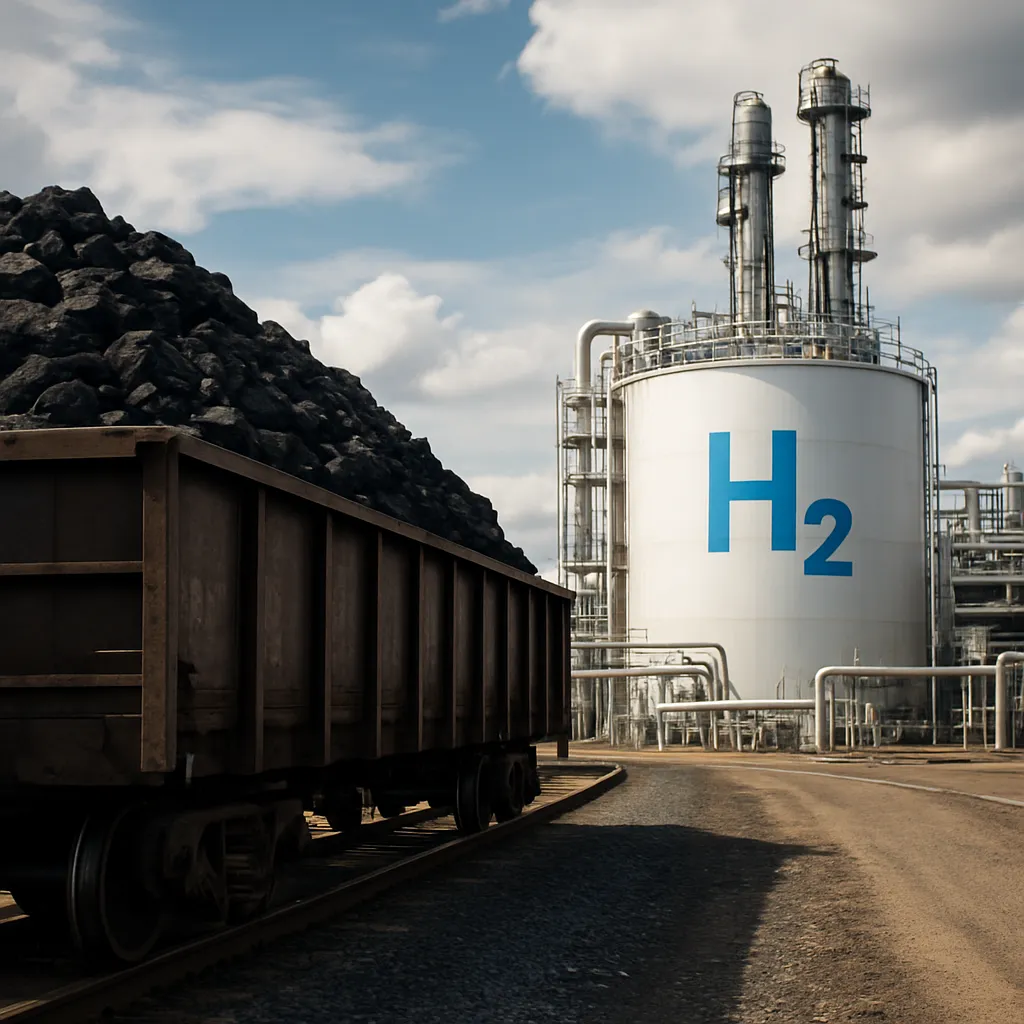
The interplay between coal and the global hydrogen market has become a focal point for policymakers, energy companies, and investors aiming to reconcile traditional energy resources with the drive toward cleaner fuels. While renewable sources often dominate public discussions on low-carbon hydrogen, coal remains a widely available feedstock that can be leveraged for large-scale production. This article examines historical precedents, technological pathways, environmental challenges, and financial opportunities that frame coal’s evolving role in the hydrogen economy.
The Evolution of Coal-based Hydrogen Production
Historically, coal gasification has underpinned the creation of town gas for residential heating and industrial processes since the early 19th century. Advances in chemical engineering gradually transformed simple gasworks into sophisticated syngas facilities capable of separating syngas components and extracting high-purity hydrogen. Key milestones include:
- Development of the steam methane reforming (SMR) process, which later inspired similar techniques for coal.
- Introduction of the Fischer-Tropsch synthesis, enabling conversion of coal-derived syngas into synthetic fuels and hydrogen as byproducts.
- Scaling of integrated gasification combined cycle (IGCC) plants in the 1990s and 2000s, proving that coal gasification could generate both electricity and hydrogen streams.
Interest in coal-to-hydrogen resurged in the 21st century as nations with abundant coal reserves sought to secure energy security while meeting growing hydrogen demand. Governments in Asia, Eastern Europe, and parts of South America initiated pilot projects to couple gasification with carbon management technologies.
Coal as Feedstock for Hydrogen: Technologies and Processes
Transforming solid coal into molecular hydrogen involves several sequential steps. Each stage presents unique opportunities to optimize yield, efficiency, and environmental performance.
Gasification and Syngas Purification
In a pressurized gasifier, pulverized coal reacts with oxygen and steam to produce syngas, a mixture of hydrogen, carbon monoxide, carbon dioxide, and minor impurities. The primary reactions include the water-gas shift reaction (CO + H2O ⇌ CO2 + H2) and methanation side-reactions. Downstream purification employs:
- Pressure swing adsorption (PSA) units to isolate high-purity hydrogen.
- Membrane separation technologies that selectively filter H2 under specific temperature and pressure conditions.
Integration with Carbon Capture
To meet decarbonization targets, many modern coal-based hydrogen facilities integrate carbon capture, utilization, and storage (CCUS). Captured CO2 can be sequestered underground, injected for enhanced oil recovery, or converted into value-added products. Key approaches include:
- Pre-combustion capture, where CO2 is removed from syngas before shifting and purification.
- Post-combustion capture, applied to flue gases in combined cycle turbines generated by syngas combustion.
When CO2 capture exceeds 90%, coal-to-hydrogen pathways can produce so-called blue hydrogen, which can significantly lower the carbon footprint compared to unabated coal usage.
Environmental and Market Considerations
While coal offers widespread availability and competitive costs in many regions, environmental risks remain a key hurdle. Emissions of greenhouse gass, water consumption, and mining impacts provoke public scrutiny and regulatory pressures. Stakeholders must weigh several factors:
- Water footprint: Gasification and cooling processes require substantial freshwater, raising concerns in water-stressed areas.
- Local air pollutants: Trace amounts of sulfur oxides, fine particulates, and mercury can escape unless robust scrubbing is in place.
- Land use and biodiversity: Coal mining can lead to habitat disruption, soil erosion, and long-term landscape alteration.
From a market perspective, coal-derived hydrogen competes with both renewable electrolysis and natural gas SMR. Government incentives such as carbon pricing, tax credits, or mandated clean hydrogen standards can dramatically shift relative costs. Recent initiatives include:
- Subsidies for CCUS projects to lower effective carbon capture costs.
- Green hydrogen mandates that create premium markets for low-emission production pathways.
- International trade agreements aimed at guaranteeing supply chains for hydrogen and hydrogen carriers (e.g., ammonia).
Coal Stocks and Financial Strategies
Investors looking at coal stock opportunities must navigate a complex landscape of regulatory change, fluctuating commodity prices, and technological uncertainty.
Assessing Coal Company Fundamentals
- Reserve quality and mine lifespans, which determine long-term extraction costs.
- Existing partnerships with hydrogen or CCUS developers, indicating strategic diversification.
- Capital expenditure commitments for modernization of gasification units or pollution control installations.
Risks and Rewards
Coal equities often experience stock volatility tied to oil and gas price cycles, macroeconomic shifts, and geopolitical tensions. However, firms that reposition as integrated energy suppliers—offering coal, hydrogen, and CCUS services—may unlock new revenue streams. Critical considerations include:
- Regulatory compliance costs: Anticipating future carbon taxes or stricter emission caps.
- Financing conditions: Access to green bonds, sustainability-linked loans, and public-private funding consortia.
- Public perception and social license: Community opposition to mine expansions can delay projects.
Active portfolio managers often blend traditional coal stocks with emerging hydrogen pure-plays to balance energy security and climate objectives. Strategic allocations might target companies with proven track records in both coal extraction and hydrogen project development.
Outlook for Coal in the Hydrogen Transition
Coal’s future in the hydrogen market hinges upon improvements in conversion efficiency, cost reductions in carbon capture, and coherent policy frameworks. Regions with heavy reliance on coal have strong incentives to deploy existing infrastructure for hydrogen production rather than decommission assets prematurely. Concurrently, advancements in renewable electrolysis and bio-based hydrogen will influence the competitive landscape.
Ultimately, the co-existence of multiple hydrogen pathways—coal, natural gas, and renewable—can foster a diversified global supply that addresses varied resource endowments and decarbonization timelines. Coal’s legacy infrastructure, if retrofitted with advanced CCUS, stands to play a bridging role as the world scales toward a net-zero energy system.