This article examines the Hongliulin Coal Mine in China, placing it in the broader context of Chinese coal mining, regional geology, economic impact, environmental considerations and industrial significance. Detailed, mine-level figures for Hongliulin are not widely published in international open sources; where specific data are unavailable, I present well-documented general patterns and comparable statistics from China’s coal sector to help understand the likely profile and role of a mine with this name. The narrative covers the mine’s probable geological setting, the types of coal typically extracted in similar Chinese operations, the likely mining and processing methods used, and the socioeconomic and environmental consequences associated with such operations.
Location, naming and the challenge of publicly available data
The name Hongliulin (possible Chinese characters: 红柳林, literally “red willow forest”) is not unique and may correspond to several localities across the People’s Republic of China. Publicly accessible, authoritative sources that provide mine-level detail (such as annual production, proved reserves or ownership) for every small or medium coal mine are often limited, fragmented or available only in Mandarin through local government or company reports. As a result, a precise coordinate, administrative province or company operator for a specific Hongliulin Coal Mine is not reliably retrievable from global datasets available to international audiences up to mid-2024.
Despite this limitation, many operational traits and impacts of such a mine can be inferred from typical Chinese coalfield operations. Therefore, the following sections combine generalizable, evidence-based information about coal mines of comparable scale and setting in China, plus national and regional statistics, to outline an informed profile of Hongliulin-like operations.
Geological setting and types of coal likely present
China’s major coal-bearing basins include Shanxi, Inner Mongolia, Shaanxi, Ningxia, Heilongjiang, and several others. Coal deposits range from low-grade lignite through sub-bituminous and bituminous ranks to anthracite in select regions. A typical mine bearing the name Hongliulin would most likely exploit Paleozoic or Mesozoic seam systems found in northern or northwestern basins, where bituminous coal used for power generation and industrial heat predominates.
Key geological features that determine mine design and coal quality include seam thickness, depth, dip, roof and floor lithology, presence of faults, and the occurrence of gases like methane. In many Chinese coalfields:
- Seams are accessible by both open-pit (surface) mining where overburden is shallow, and by underground methods such as longwall or room-and-pillar mining where seams are deeper.
- Coal rank influences end use: lower-rank coals commonly fuel thermal power plants, while higher-rank, low-ash, low-sulfur coals may serve metallurgical uses as coking coal.
If Hongliulin were a typical inland mine, the dominant product would likely be thermal or semi-soft bituminous coal supplied to regional power stations, industrial boilers and local coal-to-chemical processors.
Mining methods, processing and infrastructure
Modern Chinese mines employ a mix of mechanized surface and underground techniques. The mining method at Hongliulin would be chosen based on seam geometry:
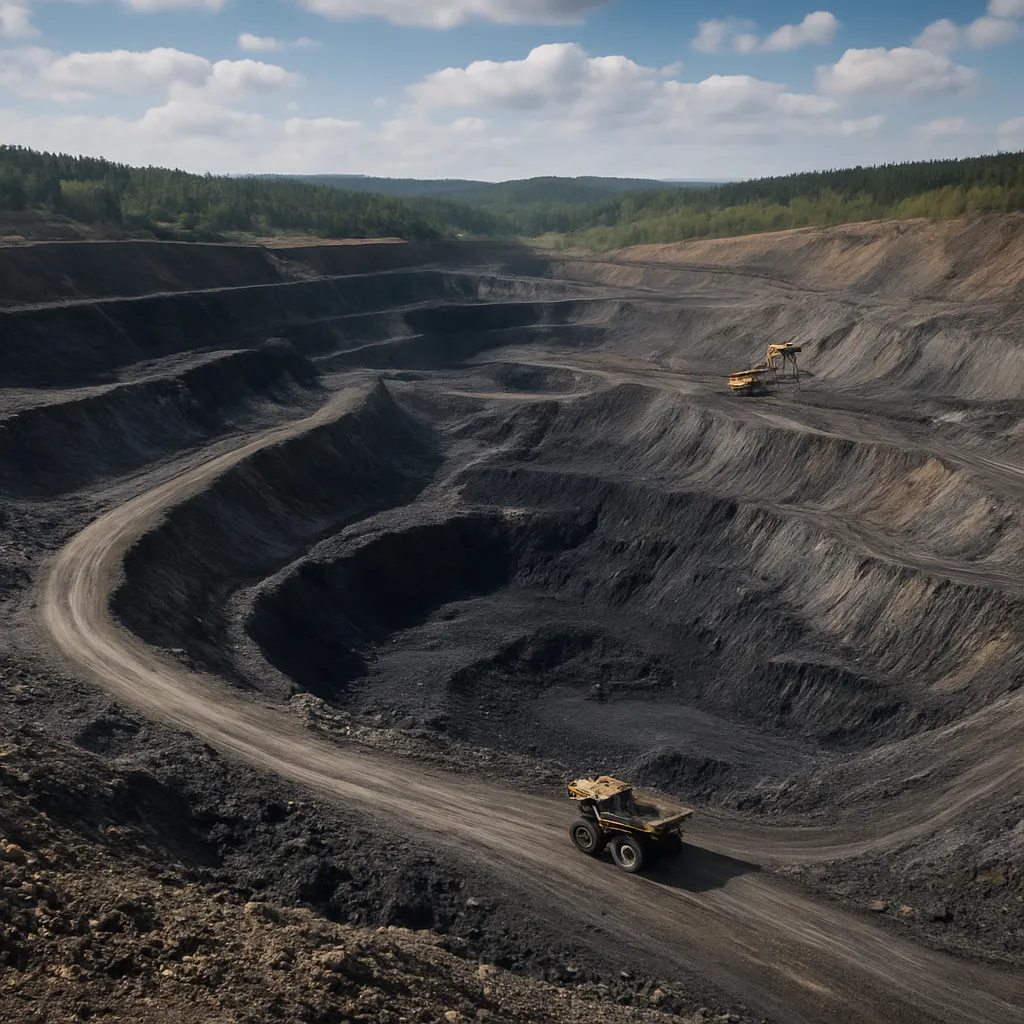
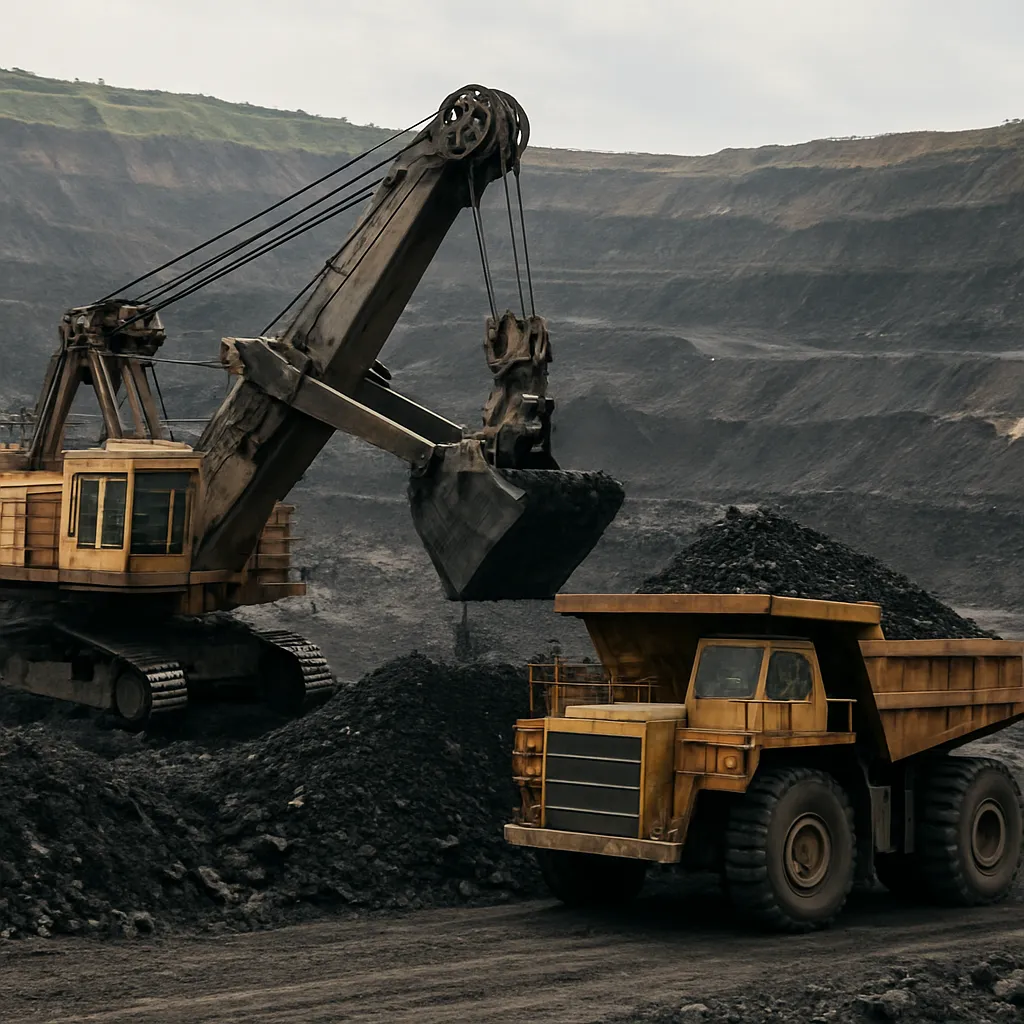
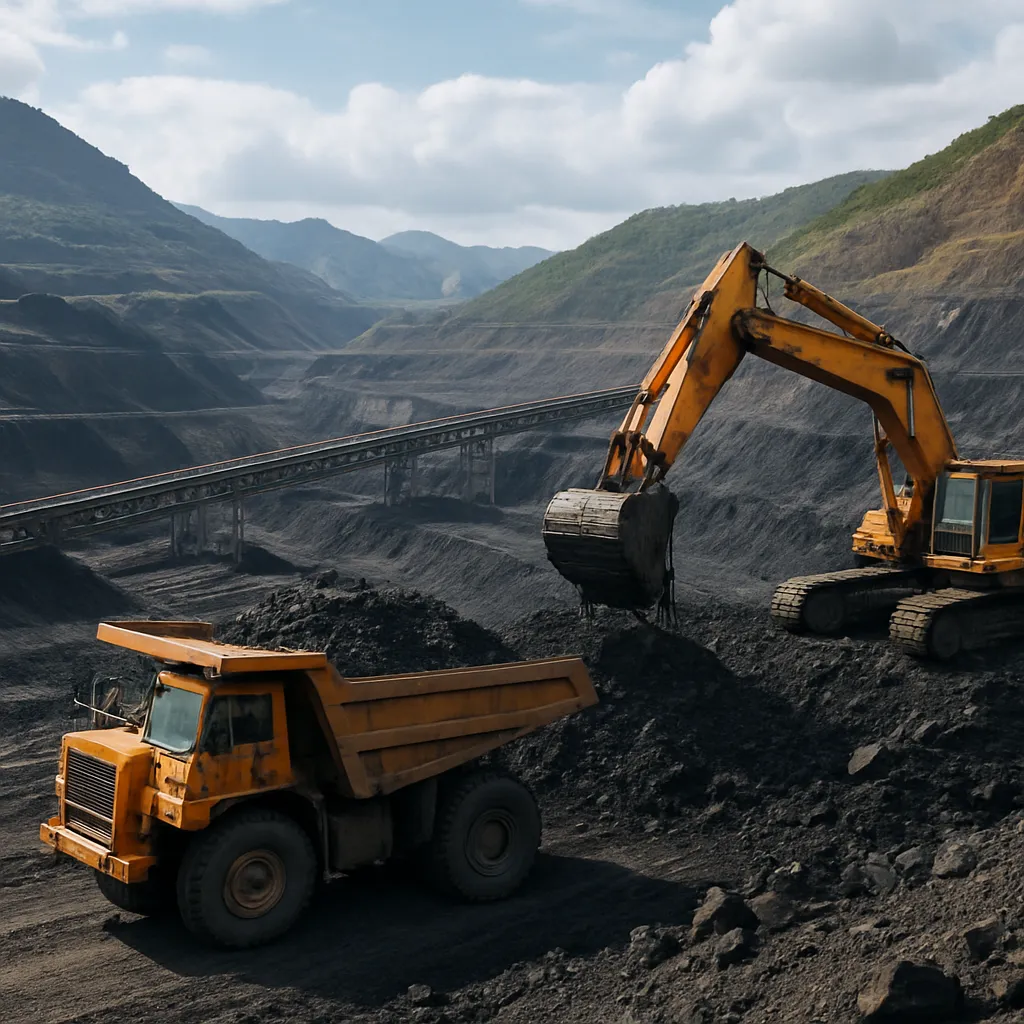
- Open-pit operations use large shovels, truck fleets, or overburden conveyors when the stripping ratio is economical. Surface pits allow rapid scaling of output but require significant land disturbance and reclamation planning.
- Underground operations at scale increasingly use longwall faces with hydraulic supports and continuous miners; this yields high recovery and productivity but requires sophisticated ventilation, ground control and methane management systems.
Coal processing centers (wash plants) separate impurities and adjust size fractions to meet market specifications. Typical processing steps:
- Crushing and sizing to produce sales-categories (e.g., lump coal, slack, fines).
- Washing (dense medium, jigs, spirals) to reduce ash and sulfur and improve calorific value.
- Drying and blending to meet client specifications for power plants or industrial users.
Logistics and export infrastructure may include belt conveyors, railway links and road haulage. If Hongliulin serves domestic markets, a dedicated rail spur to a provincial line or trucked deliveries to nearby power stations are most likely. For higher-value coking coal, proximity to steelmaking hubs and port access (if exported) affect economic viability.
Economic significance and typical financial parameters
Coal mines of the small-to-medium category in China generate regional economic activity in several ways:
- Direct employment for miners, engineers, plant operators, logistics and administrative staff. Typical medium-sized operations might employ from several hundred up to a few thousand workers; very large complexes employ many thousands.
- Indirect jobs in equipment supply, transport, local services and mine-contracting sectors.
- Fiscal contributions via taxes, royalties and local fees that support municipal budgets and infrastructure investment.
Key economic metrics for a mine like Hongliulin (illustrative ranges based on industry norms rather than mine-specific public data) include:
- Annual mine output: small operations commonly produce 0.2–1 million tonnes/year; medium operations 1–5 million tonnes/year; large regional producers exceed 5 million tonnes/year.
- Unit revenue per tonne is a function of coal quality and market: thermal coal sales prices in China are volatile and regionally differentiated, while coking coal commands higher per-tonne values. Typical price bands (subject to market swings) span tens to a few hundred US dollars per tonne equivalent when converted and adjusted for quality.
- Operating costs include extraction, processing, labor, energy, royalties, environmental compliance and transport; profitability depends on scale, washing yields and logistics efficiency.
Because China’s domestic market is the primary consumer, mines that can ensure stable supplies, low unit costs and reliable quality remain economically vital even amid broader energy transitions.
Employment, community and regional development
A coal mine such as Hongliulin often forms the backbone of a local economy. Social and economic roles include:
- Providing stable wages in regions with limited alternative employment opportunities, which aids rural-urban balance and supports local retail and service sectors.
- Financing local public amenities through taxes and company-sponsored community projects (housing, healthcare clinics and schools are common).
- Generating skills and technical capacity: mining companies often run in-house training, vocational programs and apprenticeships that upskill local populations for roles in mechanized mining, geology and maintenance.
Community dependence on a single commodity can create vulnerability to price shocks or resource depletion, so diversification initiatives are commonly pursued in coal counties to broaden economic resilience.
Environmental impacts, mitigation and regulatory context
Coal mining imposes multiple environmental pressures; regulatory frameworks at national and provincial levels in China have tightened significantly over the past two decades. Major environmental considerations include:
- Land disturbance and habitat loss from open pits, spoil tips and access roads. Modern reclamation laws require progressive rehabilitation, soil restoration and revegetation plans.
- Water issues: dewatering of mines can lower groundwater levels and change surface flows; contaminated mine water and tailings effluents require treatment to control heavy metals and high salinity.
- Air pollution: dust from mining and handling, and emissions from coal combustion downstream; mining also releases methane, a potent greenhouse gas.
- Subsidence risks from underground extraction that can damage infrastructure and farmland if not carefully managed.
Mitigation strategies commonly adopted include:
- Methane capture and utilization systems (ventilation air methane recovery, gas drainage), which improve safety and reduce greenhouse gas footprints.
- Closed-loop water treatment, tailings management improvements and constructed wetlands to manage effluents.
- Dust suppression via water sprays, covered conveyors and particulate monitoring.
- Land reclamation and post-mining land uses such as solar farms, industry sites or restored ecosystems under supervised mine-closure plans.
National policy drivers—such as China’s carbon-peaking and carbon-neutrality goals—are pushing the coal industry toward higher environmental performance, cleaner combustion technology, and investment in emissions-reducing measures.
Safety record, regulations and modern practices
Historically China’s mining sector had a high accident rate relative to many OECD countries. Over recent decades, stricter safety regulations, mine consolidations, automation and improved enforcement have reduced fatalities and major incidents substantially. Key safety features now common at responsible operations include:
- Real-time monitoring of gas concentrations, roof stability and personnel location systems to rapidly detect hazards.
- Automated longwall shearers, remote-control loaders and mechanized haulage to reduce exposure of personnel to high-risk tasks.
- Robust emergency response planning, regular drills, and integration with local medical and rescue services.
A mine like Hongliulin would be expected to conform to national safety standards and provincial oversight, although implementation quality can vary by operator and region.
Statistical context: national and regional coal dynamics
While mine-level numbers for Hongliulin are not publicly verified in international datasets, the following national and regional statistics help place it in context:
- China is the world’s largest coal consumer and producer; in the early 2020s, annual Chinese coal production was on the order of several billion tonnes. Annual consumption remains similarly large because China relies heavily on coal for power generation, industrial heat and certain chemical processes.
- Regional basins such as Shanxi, Inner Mongolia and Shaanxi account for very large shares of national output. Many smaller mines are concentrated in provincial coal towns that feed provincial power and industrial needs.
- Medium-scale mines supplying regional power plants typically contribute a notable share of a province’s coal throughput and are key nodes in coal logistics networks involving rail and truck transport.
For mine-level planning and investment, comparative metrics often used include recoverable reserves (measured in million tonnes), annual extraction rate (Mt/yr), coal quality indices (calorific value in kcal/kg or kJ/kg, ash percentage, sulfur percentage), and methane emission rates.
Industrial significance and downstream markets
Coal mines like Hongliulin are strategically important to several downstream sectors:
- Power generation — thermal coal remains the primary fuel for many of China’s coal-fired power stations; consistent domestic supply underpins grid reliability.
- Steelmaking — where coking coal is present, mines feed the metallurgical coal market critical to blast-furnace based steel production.
- Coal-chemicals and coal-to-liquids — in some provinces, integrated complexes convert coal into synthetic fuels, chemicals and fertilizers, adding value locally.
The ability of a mine to supply these markets reliably determines its strategic value: mines with stable quality and logistics advantages are often integrated into longer-term offtake and supply agreements with power utilities and industrial enterprises.
Trends, modernization and the future outlook
Several broad trends are shaping the trajectory of coal mines in China and would influence the operating life and management of Hongliulin-type operations:
- Consolidation and professionalization: Provincial governments have consolidated production into larger, more efficient enterprises to reduce safety risks and achieve economies of scale.
- Automation and digitalization: Remote-controlled equipment, predictive maintenance using IoT sensors, and data analytics are improving productivity and safety.
- Environmental tightening: New rules on emissions, land reclamation and water use are increasing compliance costs but also driving investments in cleaner processes and emissions mitigation.
- Energy transition pressures: While coal remains significant in China’s energy mix, long-term policy goals for emissions reduction and renewable energy expansion will influence demand trajectories, especially for lower-quality thermal coals.
For a mine like Hongliulin, strategic options include upgrading washing and blending capacities to supply higher-quality coal, capturing methane for power generation, diversifying into coal-chemical operations, or planning for post-mining land uses that support local economic diversification.
Case studies and comparable operations
Examining similar Chinese mine operations can illustrate plausible specifics for Hongliulin:
- A medium-sized longwall mine in northern China might report recoverable reserves of tens to hundreds of million tonnes, annual production between 1–4 Mt, and employ 1,000–3,000 people on-site and in support services.
- An open-pit mine serving a provincial power conglomerate may prioritize low-cost, high-throughput extraction, invest in belt conveyors and rail connections, and focus on supplying a few large utility customers under contract.
- Mines in coal-to-chemical clusters commonly integrate washing, coking or gasification facilities, producing higher-value products for domestic industry, albeit at higher capital intensity and environmental scrutiny.
These examples help frame likely operational scales, investments and social footprints for Hongliulin-like mines even absent mine-specific public disclosures.
Concluding synthesis
The Hongliulin Coal Mine, while not extensively documented in international open records at the mine level, fits into a well-established pattern of Chinese coal operations that are geologically diverse, economically significant at the regional level, and increasingly shaped by safety, environmental and technological reforms. Coal types typically range from thermal bituminous grades to, in other regions, coking grades; mining methods range from open-pit to advanced longwall systems; and economic impacts include direct employment, local fiscal contributions and integration into national energy security chains. Environmental and social pressures are prompting modernization—especially in methane management, water treatment and land reclamation—while policy trends around emissions and renewable energy will determine long-term trajectories.
If precise numerical metrics (production, reserves, ownership and specific coal quality indices) for Hongliulin are required for planning or publication, the most reliable next steps are to consult provincial mining bureaus, corporate annual reports (if the operator is a listed company), or Chinese-language local government notices and geological surveys that typically contain authenticated mine-level information.