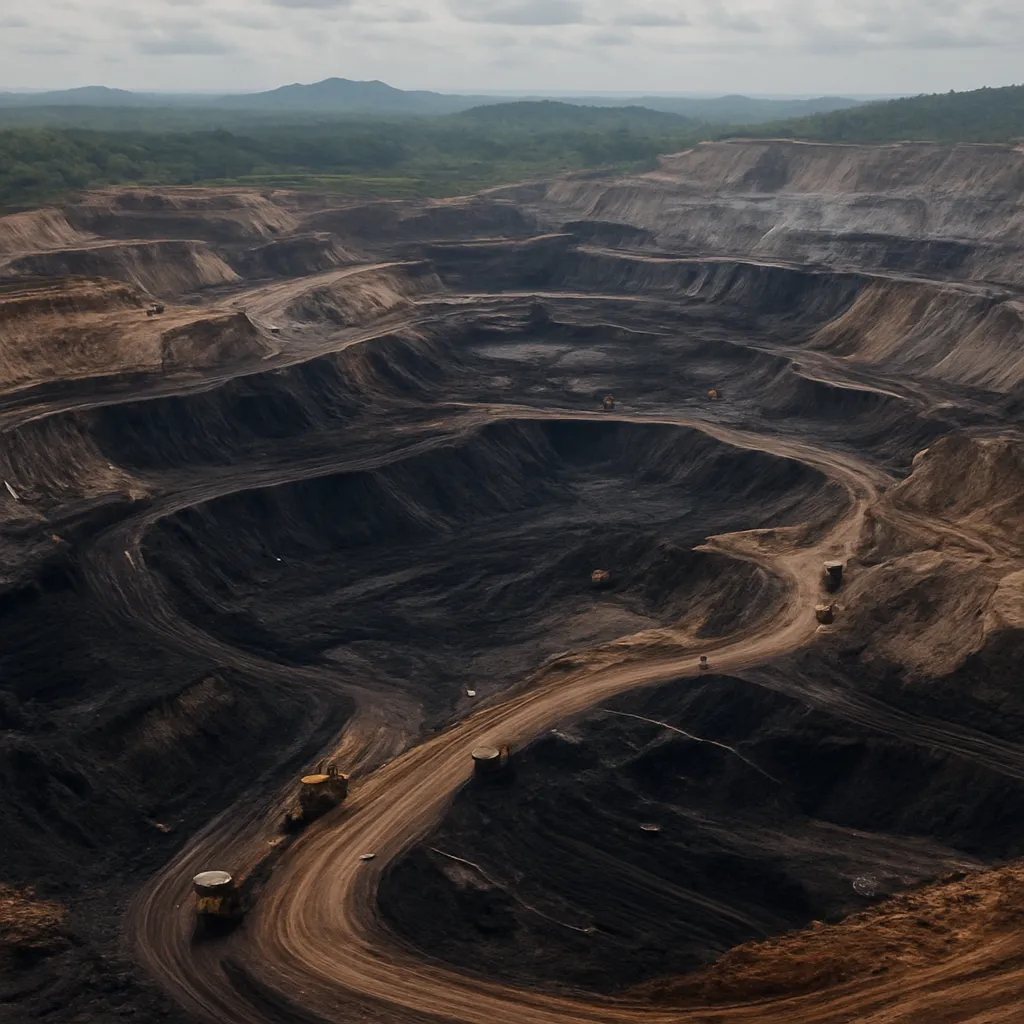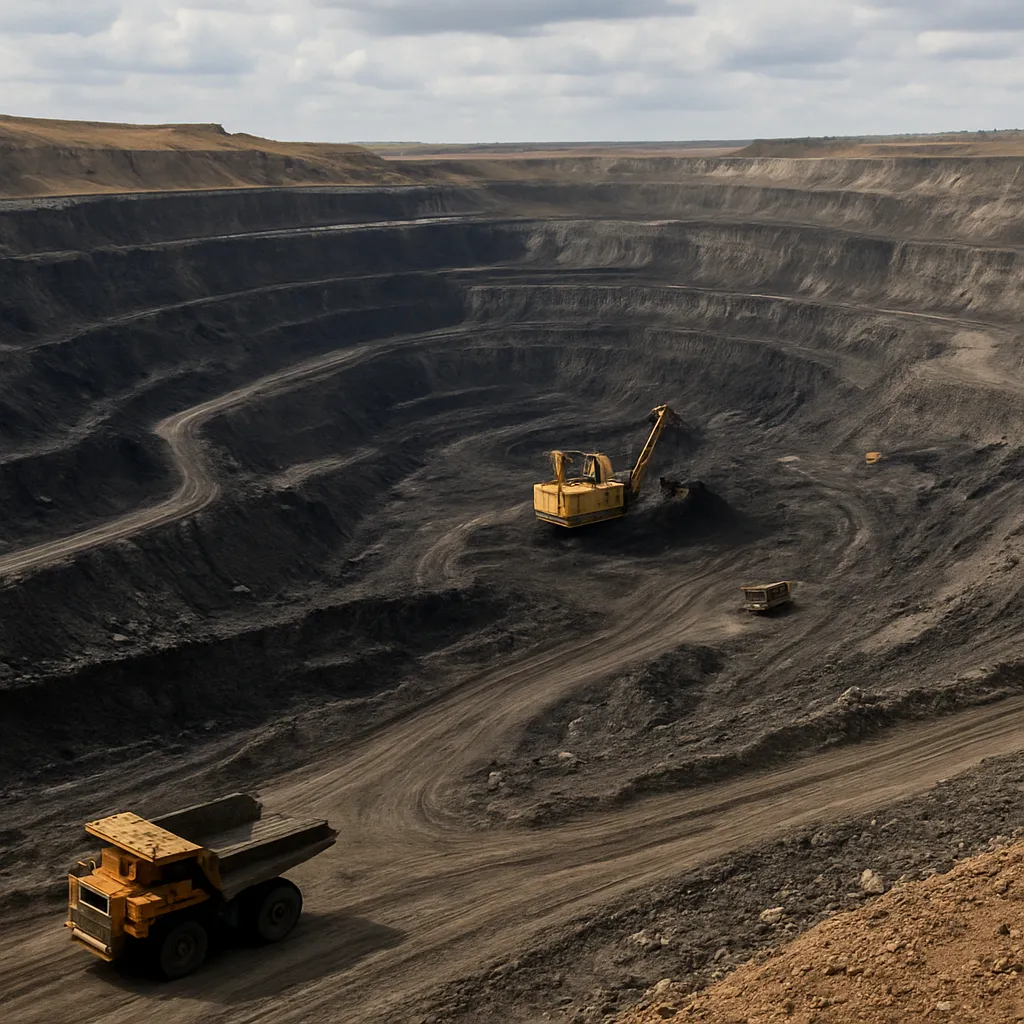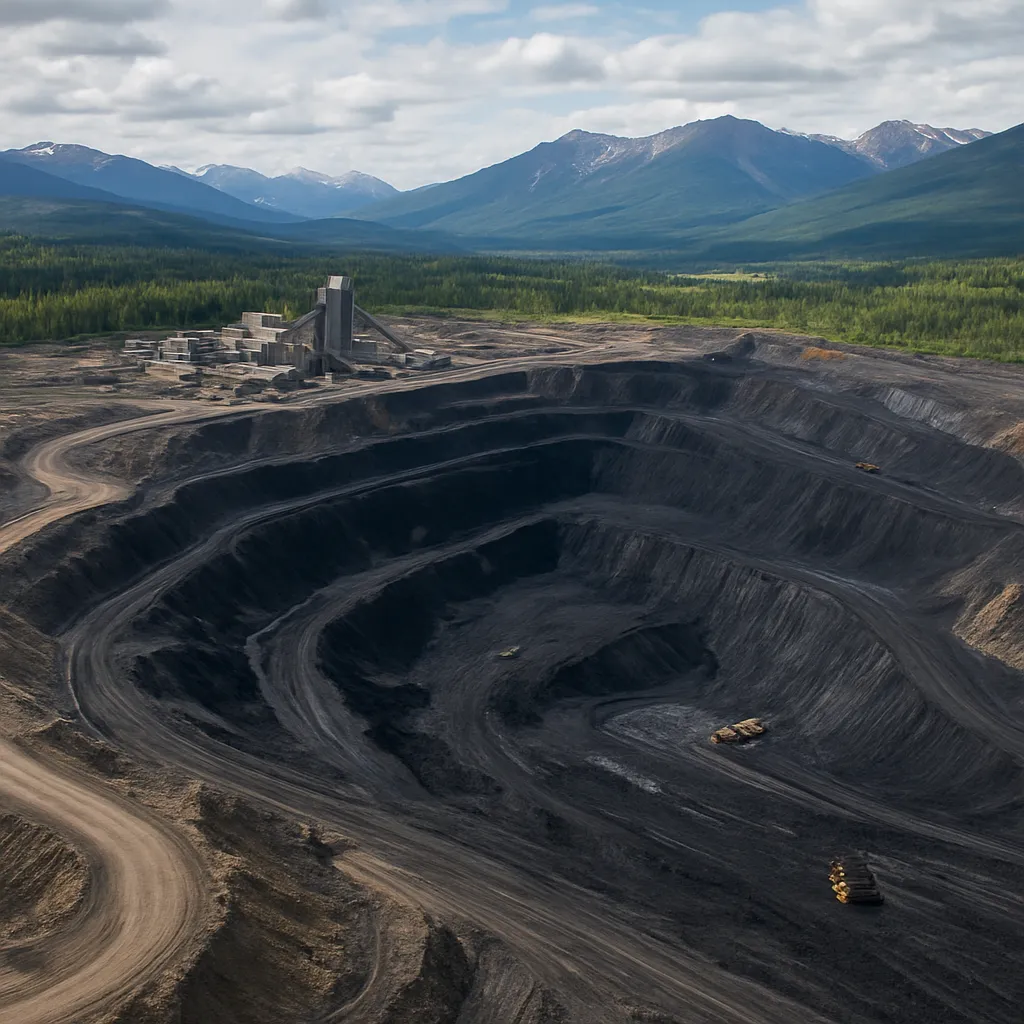
The Grande Cache Coal Mine, situated in the foothills of the Canadian Rocky Mountains near the town of Grande Cache in western Alberta, is a mining complex with a long history and significant local impact. Over decades of operation the mine has been an important source of high-quality coal, a major employer in the region, and a focal point of debates about energy, environment and regional development in Canada. This article examines the mine’s location and geology, the types and quality of coal extracted, its economic and social importance, key statistical indicators, environmental and regulatory issues, and the future prospects and challenges facing the operation.
Location and geological setting
The Grande Cache Coal Mine lies in the southwestern part of Alberta, Canada, in the valley of the Smoky River and the surrounding hills that form the eastern slopes of the Rocky Mountains. The mine is closely associated with the town of Grande Cache, a community that grew up around coal extraction and related services. Geologically, the deposit belongs to the coal-bearing strata of the Western Canada Sedimentary Basin. These sediments include marine and non-marine sequences deposited from the Late Cretaceous into the Paleogene, and coal seams are hosted in Carboniferous–Permian to younger strata depending on the specific local geology.
Coal seams in the Grande Cache area are typically found in folded and faulted strata, reflecting the tectonic forces associated with the Rocky Mountain uplift. Structural complexity affects how coal is mined, requiring careful geological mapping and mine planning. The deposit has been developed as an underground mining operation, with accessible seams that historically have been exploited using a combination of underground mining methods adapted to seam geometry and continuity.
Type and quality of coal produced
The Grande Cache operation is best known for producing higher-grade coal, particularly coal suitable for industrial uses. The most notable product from the mine is metallurgical coal (commonly called coking coal), which is processed into coke and used in steel manufacture. Metallurgical coals are valued for properties such as low ash, appropriate volatile matter, and good coking characteristics that enable the production of strong coke for blast furnaces and other steelmaking processes.
In addition to metallurgical grades, mines in the region may yield thermal coal suitable for power generation, depending on seam variability and market demand. The Grande Cache coal historically has been characterized by relatively low ash and sulfur contents compared with many thermal coals, making it more attractive for steelmaking and export markets.
Mining methods and operations
Operations at Grande Cache have primarily relied on underground mining techniques. These methods can include longwall and room-and-pillar systems, chosen based on seam thickness, continuity and structural considerations. Underground mining minimizes surface disturbance compared with open-pit methods, but poses its own set of engineering and safety challenges such as roof control, ventilation, water management and the handling of gas if present.
Supporting infrastructure for the mine has included processing and coal-handling facilities, maintenance shops, worker accommodation and transportation links — roads connecting to regional highways and rail links for shipping coal to domestic users or ports for export. The logistics chain plays a key role in the economic viability of the mine: access to rail and port facilities determines market reach and freight costs.
Economic and social significance
The Grande Cache Coal Mine has been a major economic engine for its region. As one of the principal employers in the town of Grande Cache and surrounding area, the mine provided direct employment—miners, engineers, technicians, and administrative staff—as well as indirect jobs in service, supply and transport sectors. The presence of the mine supported local businesses, municipal revenues and community services.
On a broader scale, production of high-quality metallurgical coal contributes to Canada’s export earnings and to global steelmaking supply chains. Metallurgical coal is a critical raw material for producing steel, which in turn underpins construction, manufacturing and infrastructure sectors worldwide. Thus, even a single mine that yields coking-grade coal can have outsized importance relative to its production tonnage.
Ownership, history and operational timeline
The history of coal mining in the Grande Cache region spans several decades and involves multiple owners and operational phases. The town itself was established in the latter half of the 20th century to support mining activity. Over time, ownership of the mine changed hands through corporate acquisitions, reorganizations and operational pauses typical of extractive industries, especially those sensitive to volatile commodity prices.
Like many coal operations, Grande Cache has experienced boom-and-bust cycles driven by global steel demand, coal price swings, and changes in capital availability for mining investment. These cycles have translated into periods of expansion and contraction, workforce layoffs and rehiring, and intermittent closure or reduced output when market conditions were unfavorable.
Production volumes, reserves and statistics
Exact and up-to-date production figures for the Grande Cache Coal Mine vary by year and by source. Historically, the mine’s annual production has been in the range typical for medium-sized underground metallurgical coal operations in Canada—commonly hundreds of thousands to a few million tonnes per year depending on market conditions, mine configuration and operational decisions. Recoverable reserves in the property have been reported in the scale of multiple millions of tonnes, providing the potential for several years to decades of operations if economic conditions permit.
Employment at the mine, in periods of full operation, has typically supported several hundred direct jobs, with many more in supporting industries. For the adjacent town of Grande Cache (population fluctuating over time but numbering a few thousand), the mine has been a central employer, contributing significantly to local income, municipal tax base and social services.
- Production (typical range): several hundred thousand to a few million tonnes per year (varies annually).
- Reserves (order of magnitude): multiple millions of tonnes of recoverable coal in delineated deposits.
- Employment: typically several hundred direct mine employees at full operation, with additional indirect jobs.
- Markets: domestic industrial users and export markets via western Canadian ports.
Because mine-specific numbers change with ownership statements and governmental reporting, anyone seeking precise current statistics should consult the latest corporate disclosure, provincial mine safety and resource reports, or the Alberta government’s energy and minerals data portals.
Trade, logistics and markets
Coal from Grande Cache has historically been shipped to both domestic and international customers. For export, coal from Alberta typically moves by truck or rail to ports on the British Columbia coast for shipment to major steel-producing regions in Asia such as Japan, South Korea and China, as well as to other global markets. Transportation costs and the availability of port capacity are important determinants of realized price and competitiveness.
The value of metallurgical coal is largely determined by calorific value, coking properties, ash and sulfur content, and the consistency of product quality. Contracts with steelmakers often depend on specifications and performance in coke ovens; hence, maintaining consistent quality and reliable delivery is essential for long-term market relationships.
Environmental management and regulatory environment
Mining operations in Alberta, including Grande Cache, operate under a framework of provincial and federal regulations aimed at protecting public safety, water resources, air quality and land reclamation. Environmental management practices typically include:
- water treatment and management to control sediment and potential contaminants;
- dust suppression and air quality monitoring to reduce particulate emissions;
- progressive reclamation of disturbed areas where applicable;
- management of mine waste, tailings (if present), and coal handling runoff;
- monitoring of subsidence and impacts on surface infrastructure in underground operations.
The mine’s environmental performance and regulatory compliance are closely monitored by provincial authorities. In addition, corporate environmental, social and governance (ESG) considerations have become increasingly important for investors, insurers and trading partners, leading to more transparency and reporting on environmental performance, greenhouse gas emissions and community impacts.
Health and safety
Worker safety is paramount in underground coal mining. The Grande Cache operation has been subject to mine safety regulations, inspections and reporting requirements aimed at managing risks such as roof falls, ground control, airborne contaminants, machinery hazards and transportation incidents. Technological advances—in ventilation systems, roof-support technology and monitoring equipment—have improved safety outcomes across the coal sector, and ongoing training and safety culture remain central to risk reduction.
Community and social effects
The mine’s role in the local community extends beyond direct employment. It has historically contributed to municipal revenue, fund local infrastructure projects, and support community programs. Conversely, periods of reduced production or mine closure have economic and social consequences: local businesses lose customers, municipal budgets contract, and community identity—often tied to the mine—faces stress. Workforce transitions, retraining programs and economic diversification are important strategies for communities reliant on a single large employer.
Indigenous and local stakeholder engagement is also a critical element in contemporary mining practice. Mines must consult with Indigenous communities with asserted or established rights and accommodate concerns related to land use, environmental protection and benefit sharing.
Technological and operational innovations
Over its operational life, Grande Cache has incorporated mining and processing technologies to improve efficiency, safety and product quality. Automation of certain underground operations, improved geological modeling, and better material-handling systems are examples of advancements applied in modern underground coal mines. Such innovations can lower unit costs, increase recovery rates and extend the economic life of deposits.
Challenges and controversies
Coal mining globally faces a set of challenges that also affect Grande Cache. These include volatile commodity prices, competition from other coal basins, and policy shifts in major markets toward lower-carbon energy sources. While metallurgical coal demand is tied to steelmaking—which currently lacks a full-scale substitution for coking coal—long-term demand may be influenced by advances in alternative steelmaking technologies (electric arc furnace with scrap, hydrogen-based direct reduction) and recycling rates.
Environmental concerns and regulatory pressures related to greenhouse gas emissions, land disturbance and water impacts are often focal points in public discussion. Balancing the economic benefits of mining with environmental stewardship and community expectations is an ongoing tension.
Future prospects and strategic considerations
The future of the Grande Cache Coal Mine depends on multiple interlinked factors: global steel demand, metallurgical coal prices, operational costs (including transportation), and regulatory and social license considerations. If steel demand and prices remain robust, mines producing high-quality coking coal can remain economically attractive. Continued investment in modern mining technology and environmental management can bolster competitiveness and social acceptance.
Conversely, prolonged periods of weak prices or substantial policy-driven declines in coal consumption could reduce the viability of operations, prompting care in mine planning and community economic diversification efforts. For stakeholders—workers, local governments, investors and Indigenous groups—planning for a range of scenarios (continued operations, scaled operations, or closure and reclamation) is prudent.
Key takeaways and broader significance
The Grande Cache Coal Mine is more than a deposit of mineral wealth: it is a focal point of regional economic life, a link in global steel supply chains, and a case study in how resource-dependent communities navigate changing markets and environmental expectations. Producing predominantly high-grade metallurgical coal, the mine has historically supported hundreds of jobs, generated local economic activity and contributed to export earnings. Its operations illustrate the technical demands of underground coal extraction and the importance of logistics and market access.
At the same time, Grande Cache reflects the wider challenges facing coal-producing regions: commodity cyclicality, the need for robust environmental management, and pressures to diversify local economies. For policymakers, industry participants and communities, the mine underscores the importance of balancing resource development with long-term sustainability, worker safety, and resilient local development strategies.
Selected summary statistics (approximate and illustrative)
- Typical annual production range: hundreds of thousands to a few million tonnes (varies by year).
- Recoverable reserves: several million tonnes within defined seams (order-of-magnitude estimate).
- Workforce at full operation: several hundred direct employees, plus indirect employment.
- Main product: metallurgical (coking) coal with generally favorable ash and sulfur profiles.
- Markets: domestic industrial customers and exports via western Canadian ports to steel-producing regions.
For the most precise and current data—production tonnages, reserve certifications, employment figures and ownership details—consult the latest corporate filings, Canadian provincial mining reports, and public disclosures from the companies that have operated the Grande Cache site. The mine’s past and potential future illustrate both the economic value of metallurgical coal and the complex trade-offs involved in resource extraction in the 21st century.