This article provides a comprehensive overview of the Goedehoop Coal Mine in South Africa — its location, geology, products, economic role, environmental and social implications, and broader significance in the regional and national coal industry. The focus is both factual and contextual: where the mine sits within the South African mining landscape, what kinds of coal are produced, how the operation contributes to local and national economies, and what challenges and opportunities lie ahead for a coal site in a rapidly changing global energy environment.
Location, geology and operational setting
The Goedehoop Coal Mine is located in the Highveld coalfields of South Africa, within the greater Mpumalanga region known as one of the country’s primary coal basins. Mpumalanga accounts for a dominant share of South African coal production, and the province’s geological setting — including the Witbank and Highveld coal seams — underpins an industrial cluster of collieries, power stations and coal-handling infrastructure. The mine lies in a landscape shaped by historic coal formation processes dating back to the Permian period, when dense vegetation and sedimentation produced extensive coal seams.
Geologically, the deposit beneath Goedehoop and surrounding collieries typically consists of repeating sequences of sandstone, mudstone and multiple coal seams. Coal seams in this region vary in thickness, depth and continuity; some are near-surface and suitable for open-pit (opencast) extraction, while others are deeper and accessed via underground methods. The coal in this part of South Africa is generally bituminous in character and is predominantly used for thermal applications (power generation), although variations in rank and quality mean that certain parcels can be suitable for blending or metallurgical use.
What is mined at Goedehoop: coal types and quality
The primary commodity extracted from Goedehoop is coal, with the majority of production geared toward the domestic power generation market and, to a lesser extent, export customers. The coal mined in the Mpumalanga Highveld is typically classified as thermal coal — used primarily to produce steam for electricity generation. Thermal coal qualities from the region can vary, and typical parameters include calorific value, ash content, moisture, sulfur and volatile matter. Indicative ranges for Highveld thermal coal are:
- Calorific value: approximately 18–25 MJ/kg (roughly 4,300–6,000 kcal/kg)
- Ash content: variable, often ranging from 15% to over 30% depending on seam and washery performance
- Sulfur content: moderate, which requires attention to emissions control when burned in power stations
Some collieries in the region also produce coals that can be blended to meet specific boiler specifications or to realize higher export value. The presence of different benches within a seam and the ability of local washery infrastructure to beneficiate (clean) the run-of-mine coal are important determinants of the final product quality dispatched to customers.
Mining methods, infrastructure and logistics
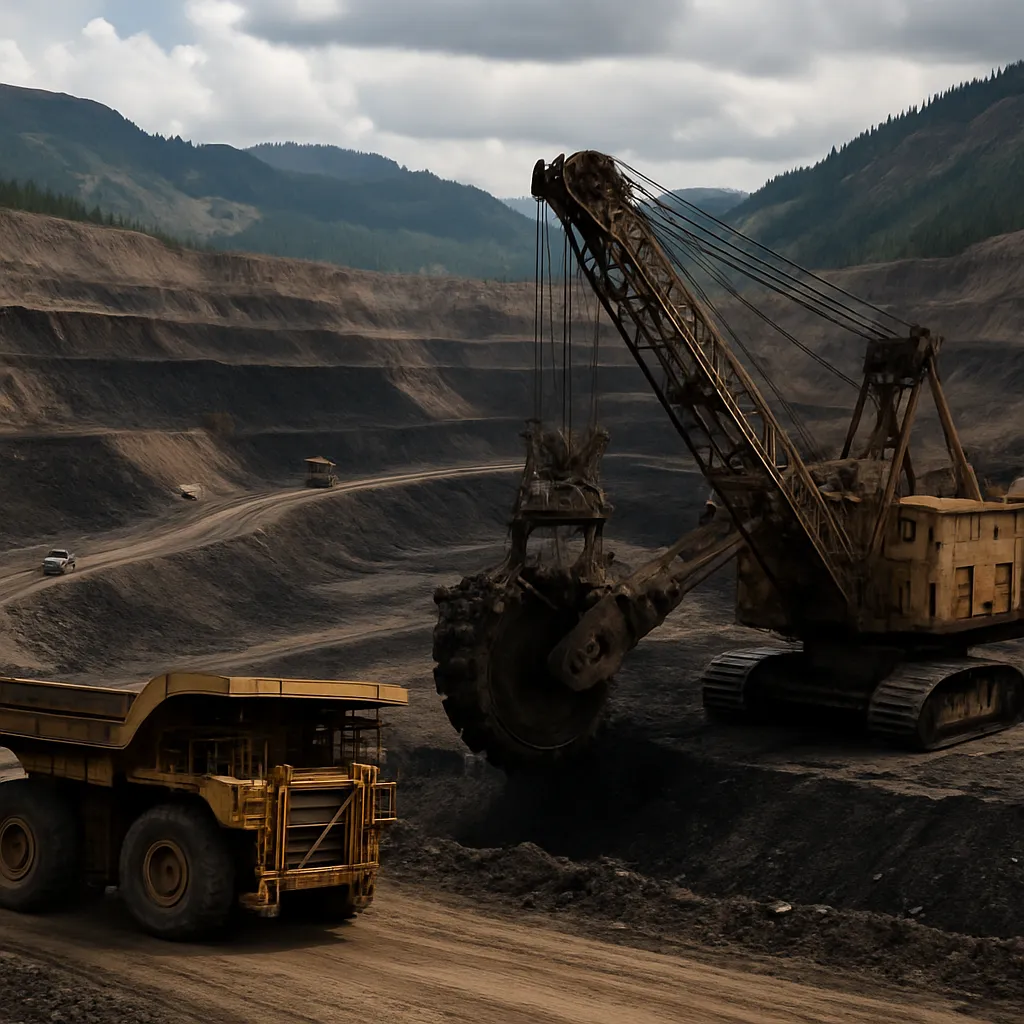
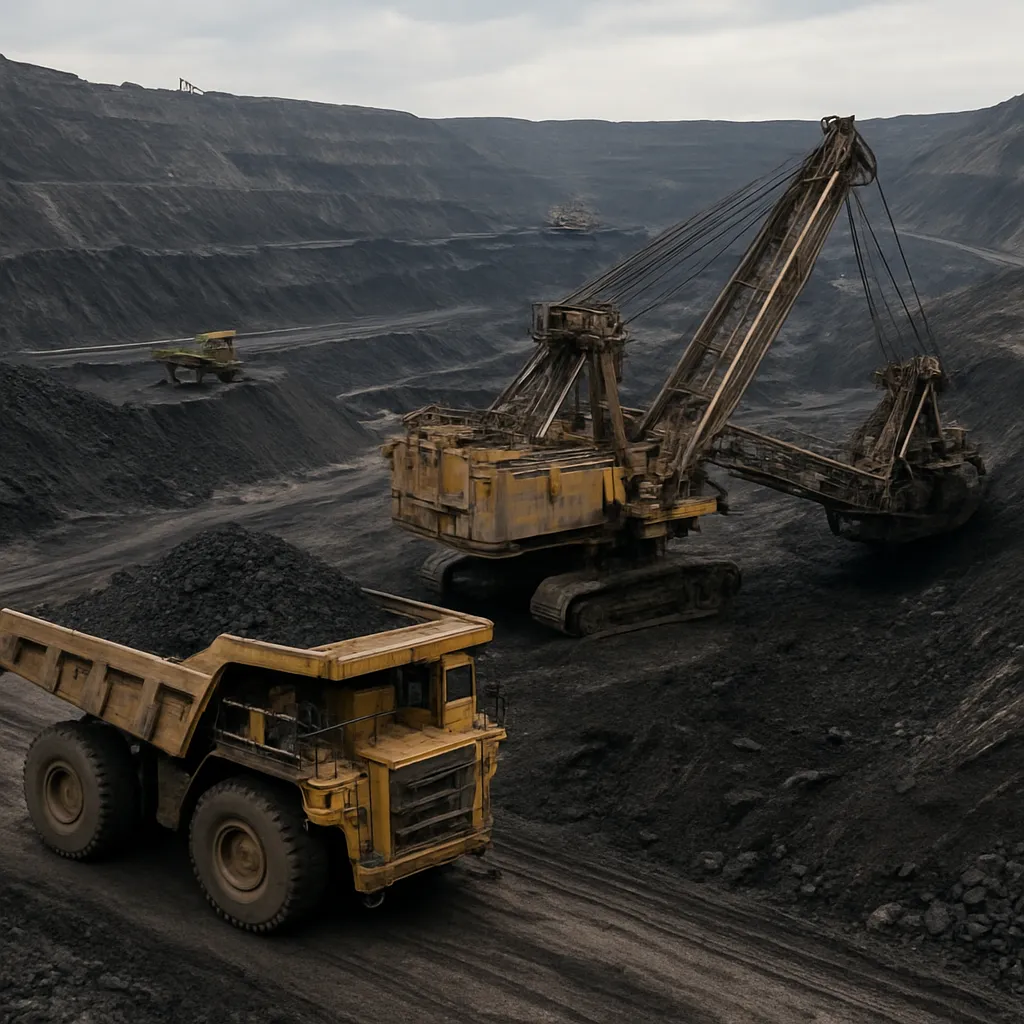
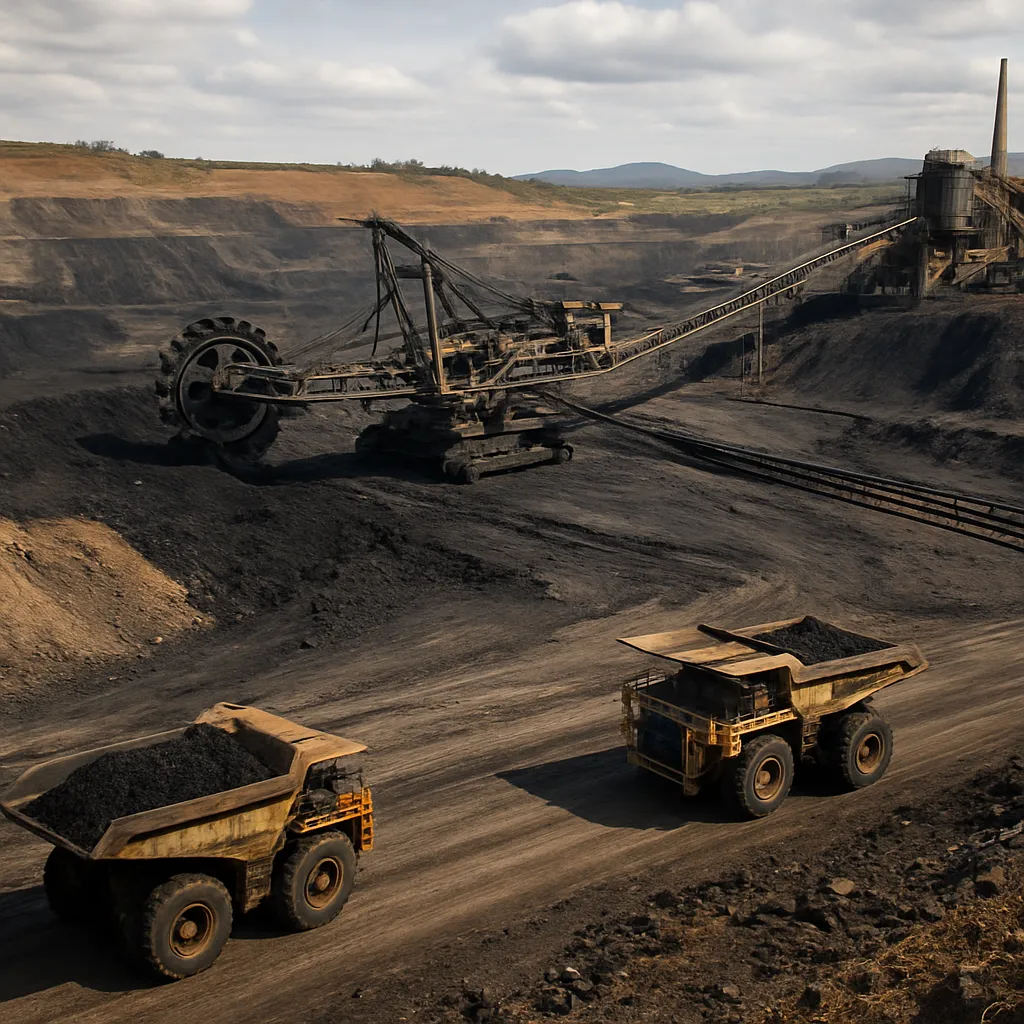
Mining methods in the Highveld, and at operations like Goedehoop, typically reflect seam depth, geometry and operational economics. Where seams are shallow, opencast (surface) mining is the preferred method due to lower cost per tonne and higher productivity. For deeper seams, underground methods such as bord-and-pillar or longwall mining may be used. Modern operations combine mechanization, continuous miner systems and conveyor networks to move coal from face to surface efficiently.
The logistical network supporting Goedehoop includes local roads, rail connections and access to coal handling and preparation plants. South African coal destined for export is usually railed to the Richards Bay Coal Terminal (RBCT) on the east coast, which is one of the world’s largest coal export terminals. Domestic coal typically moves by rail or truck to coal-fired power stations operated by Eskom and to industrial users such as steel and cement producers.
Economic significance and employment
Goedehoop, like many collieries in Mpumalanga, plays an important role in the local and regional economy. Coal mining provides direct employment at the mine site and indirect jobs across supply chains — transport, equipment maintenance, local services, and processing plants. For communities surrounding collieries, mining operations are often among the largest employers and contributors to household incomes.
On a national scale, South Africa remains one of the leading coal producers globally. In recent years South Africa’s annual coal production has been in the broad range of roughly 200–260 million tonnes per year, with Mpumalanga contributing the majority — often cited at around 70–80% of national output. This centrality of coal in South Africa’s energy mix is reflected in the fact that the country’s electricity system relies heavily on coal-fired generation. As a result, collieries such as Goedehoop are integral to securing fuel supply for large baseload power stations, and interruptions in supply can have wide-ranging implications for energy security.
Employment figures at a single mine vary by operation size and technology levels. A mid-sized underground colliery can employ several hundred to over a thousand workers directly, while surface mines might employ more during peak operation. Beyond payrolls, mines contribute to municipal revenues through royalties, property taxes, and local procurement, and many operate community development programs focusing on education, health, and small-business support.
Market channels: domestic use and exports
The coal produced at Goedehoop primarily serves two market channels:
- Domestic coal-fired power generation — supplying Eskom and independent power producers;
- Export markets — coal that meets required specifications is sent to coastal terminals for overseas buyers, particularly in Asia and Europe.
Domestic demand dynamics are shaped by South Africa’s power sector needs, maintenance cycles at power stations, and broader economic activity. Export demand fluctuates with global coal prices, shipping costs and buyer preferences. Quality parameters such as calorific value and ash content determine whether coal is allocated for export or retained for domestic power use, often via washery upgrading and blending strategies.
Statistical context and production data
Precise production statistics for a specific mine like Goedehoop are subject to company reporting and can change year by year. Where public annual reports or governmental mine registries publish mine-level figures, they provide the most reliable numbers. In the absence of mine-specific public data here, the following context may be useful:
- Mpumalanga province: typically supplies around 70–80% of South Africa’s coal output.
- South African coal production: broadly in the order of 200–260 million tonnes per annum in recent years, with fluctuations due to demand and operational disruptions.
- Export volumes: a significant portion of production is exported; in years prior, South Africa exported between 60–100 million tonnes of coal annually, depending on market conditions and domestic demand.
For definitive, up-to-date figures on Goedehoop’s annual production, reserves and employee numbers, the mine operator’s latest annual report or the South African Department of Mineral Resources and Energy (DMRE) mine registry are the recommended primary sources.
Environmental, safety and community considerations
Coal mining is resource-intensive and carries environmental footprints that require active management. Key areas of concern and management at mines like Goedehoop include:
- Water use and quality: mining and coal washing consume water and can affect groundwater and surface water through runoff and discharge. Responsible operations implement water recycling, treatment systems and monitoring programs.
- Air quality and dust: operations generate dust and particulates, requiring suppression measures, monitoring and compliance with air quality regulations.
- Mine rehabilitation: post-mining land use planning, progressive rehabilitation during operation and final rehabilitation and closure plans are essential to restore landscapes and reduce long-term liabilities.
- Safety: South African regulations and industry best practices emphasize worker safety; continuous improvement in training, mechanization, and incident prevention is an ongoing priority.
- Community engagement: meaningful engagement with neighbouring communities, provision of social investments and respect for local livelihoods and land rights are important for social license to operate.
Environmental performance is increasingly scrutinized by regulators, financiers and civil society. Mines that demonstrate strong environmental management, transparent reporting, and investment in community development often maintain more stable long-term operations.
Significance in the South African energy transition
The global shift toward decarbonization and renewable energy presents both challenges and transitional opportunities for coal-producing regions. In South Africa, coal still contributes a large share of electricity generation, but policy conversations and international pressures are accelerating efforts to diversify the energy mix. This trend affects collieries like Goedehoop in several ways:
- Demand outlook: long-term demand for thermal coal may decline as renewable capacity, gas and energy storage take a larger share of generation. However, transition timelines are uncertain, and coal is likely to remain significant in the medium term.
- Economic diversification: regions dependent on coal must pursue economic diversification strategies to preserve livelihoods as the energy landscape evolves.
- Carbon and environmental policies: potential carbon pricing, emissions standards and international finance conditions create financial and operational incentives to reduce emissions and invest in cleaner technologies.
Many collieries and local governments are exploring strategies such as job reskilling, investment in renewable projects, and rehabilitation-led economic development to prepare for a lower-carbon future while addressing immediate social needs.
Historical background and ownership structures
The coalfields around Mpumalanga have been mined for over a century and have formed the backbone of regional industrial development. Individual mines have changed ownership multiple times through mergers, acquisitions and restructurings as the industry has consolidated and adapted. Ownership structures range from multinational mining companies to locally headquartered firms and private consortia. The legal and regulatory framework in South Africa includes obligations on mining rights, community beneficiation, and environmental performance, which shape how operations are structured and managed.
Interesting facts and broader industry connections
A few notable points that place Goedehoop in the broader context of coal mining and industry trends:
- Mpumalanga is one of the most coal-intensive regions in the world in terms of production concentration, linking mines, rail and port infrastructure into an integrated value chain.
- Coal from collieries in this region fuels large baseload power stations whose performance directly influences national industrial activity and economic growth.
- The logistical corridor from mine to port is a critical bottleneck and opportunity; rail capacity and port throughput can materially affect export earnings and mine dispatching.
- Coal beneficiation (washing and processing) improves product quality and can access higher-value markets, reinforcing the importance of local washery infrastructure.
- Sustained investment in safety, mechanization, and environmental management is transforming operational practices compared with several decades ago, improving worker safety and reducing environmental impacts over time.
Future prospects and strategic considerations
Looking ahead, the future of mines such as Goedehoop will be shaped by a mix of operational, market and policy factors:
- Market dynamics: global coal demand, especially from Asia, will influence export opportunities and pricing. Domestic power sector performance and maintenance schedules affect local off-take.
- Regulatory environment: national policies on energy, emissions and mining rehabilitation will determine operational costs and compliance obligations.
- Investment in technology: adoption of cleaner coal technologies, automation and digital mining can reduce emissions, lower costs and enhance safety.
- Community and workforce transition: proactive planning for the socioeconomic impacts of any long-term reduction in coal dependency is critical to maintain stability and livelihoods.
For mine operators, stakeholders and policymakers, balancing the immediate economic benefits of coal production with long-term sustainability and diversification is a central strategic task. Responsible operations emphasize transparency, environmental stewardship, and meaningful community engagement while adapting to changing market realities.
Concluding observations
The Goedehoop Coal Mine is representative of the many collieries that form the backbone of South Africa’s coal sector. Its operations intersect geology, logistics, economics and social systems, supporting electricity generation, jobs and regional development. At the same time, the mine faces the same transitions confronting the global coal industry: evolving demand patterns, environmental constraints and the need for sustainable community outcomes. Understanding these intersections — and the technical, economic and social measures that can mitigate adverse impacts — is essential for stakeholders who seek to navigate the coming decades in a responsible and pragmatic manner.
Goedehoop coal Mpumalanga thermal metallurgical export employment electricity industry sustainability