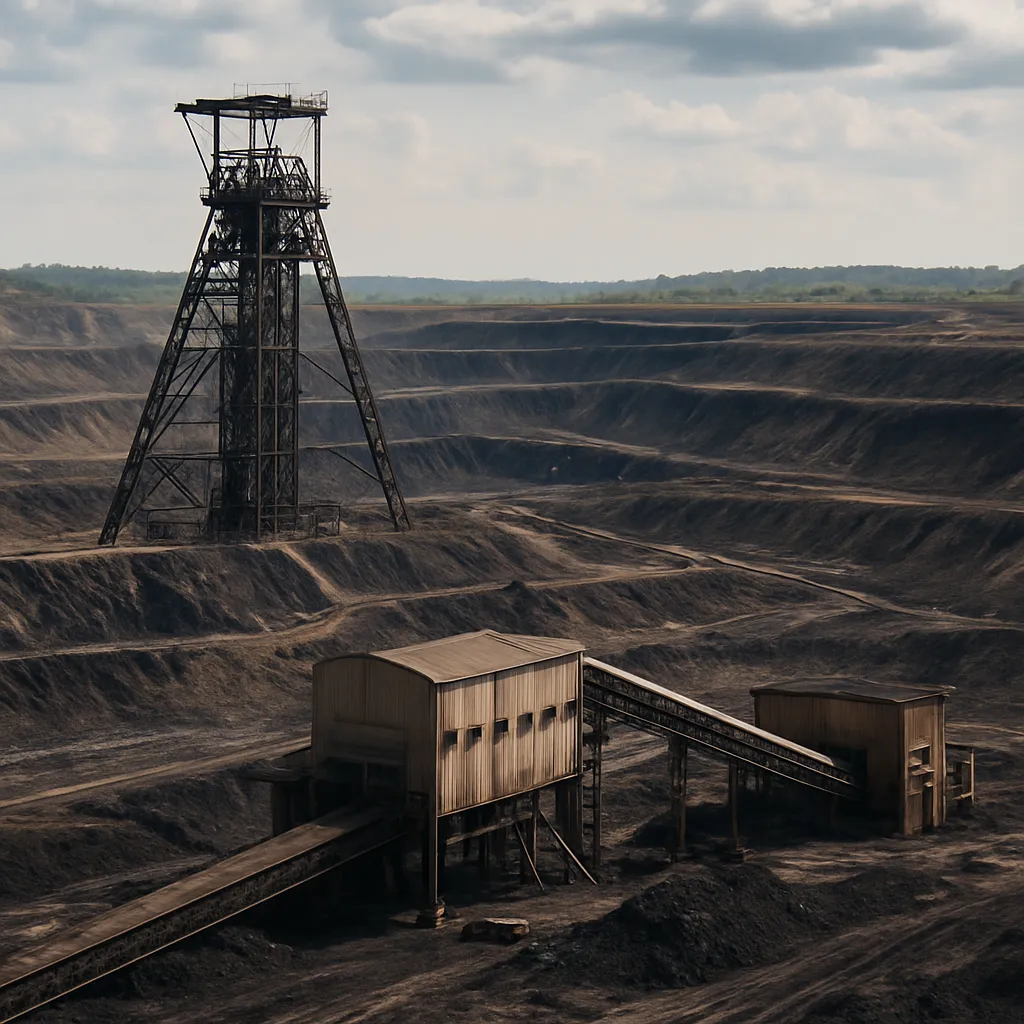
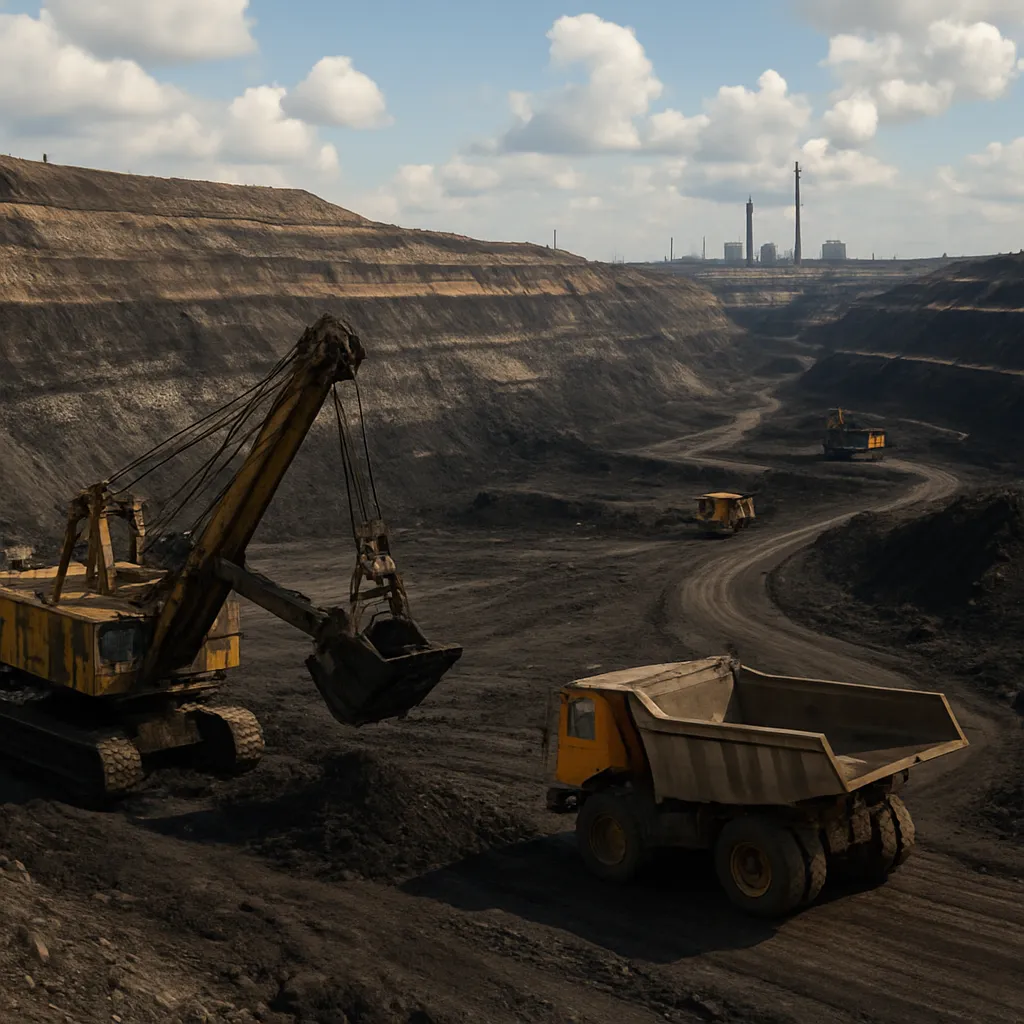
The following article provides an in-depth overview of the Anglo Moranbah South coal mining operation in Australia. It covers the mine’s location and geological setting, the type and quality of coal produced, operational and economic characteristics, logistical links to export markets, environmental and social aspects, and available statistics and future prospects. The aim is to offer a comprehensive, coherent picture of Moranbah South for readers interested in coal mining, regional economics, and energy commodities.
Location, Ownership and Geological Setting
Located in the heart of Queensland’s prolific Bowen Basin, the Moranbah South mine lies near the town of Moranbah in the Isaac Region of central Queensland. The mine is part of a cluster of operations that exploit Permian-age coal seams widely recognised for their continuity and commercially attractive coal seams. The site benefits from well-established mining infrastructure in the Bowen Basin, one of Australia’s most important coal-bearing provinces.
Moranbah South is associated with the global mining group Anglo American (or operated under Anglo’s portfolio in historical periods), and its operations typically fit into the company’s broader coal business focused on export markets. The Bowen Basin’s geology at Moranbah South comprises multiple coal seams of variable thickness, rank and quality. These seams have been targeted using modern underground mining methods to recover coal from deeper seams that are not suitable for open-cut extraction.
Mining Method, Coal Type and Quality
Moranbah South is principally an underground longwall operation. Longwall mining is suited to consistent, laterally extensive seams common in the Bowen Basin. The technique uses mechanised shearers and hydraulic roof supports to extract large continuous panels of coal, which allows for high productivity and relatively lower surface disturbance compared with large open-cut mines.
The coal produced at Moranbah South is primarily used for thermal and semi-soft applications, with characteristics that can also support PCI (pulverised coal injection) markets depending on blending and washing. Coal ranks in the Bowen Basin vary from sub-bituminous to bituminous, and Moranbah South’s product grades typically target high calorific value and favourable ash and sulfur profiles after processing. Coal from the mine is washed on-site or at nearby coal preparation plants to improve quality, reduce ash and produce marketable product groups tailored to Asian and domestic buyers.
Production, Logistics and Export Markets
The mine’s output is transported to export terminals by an established rail network connecting Moranbah to major Queensland ports. The main rail corridors in the region include the Goonyella rail system, which links Bowen Basin mines to ports such as Hay Point and Dalrymple Bay Coal Terminal. Moranbah South’s proximity to these rail and port systems is a core advantage, enabling efficient shipment to international customers.
Primary export markets for coal from Moranbah South historically include major Asian importers such as Japan, South Korea, China, Taiwan and various Southeast Asian countries. The coal is used mainly for power generation and in metallurgical processes (where PCI-quality coal is required), depending on the final product blend and customer specifications.
Economic and Regional Significance
Moranbah South contributes to both the local and national economy through direct employment, contractor engagement, regional procurement and royalties. Mining is a cornerstone of the Isaac Region economy, and the presence of a mine like Moranbah South supports a wide network of service providers — from drill and blast contractors to equipment maintenance, logistics providers and local retail and hospitality sectors in Moranbah township.
Beyond direct employment, the mine supports government revenue via royalties and taxes, and contributes to export earnings for Australia. Coal exports remain an important source of foreign exchange for the country, and Bowen Basin mines — including Moranbah South — play a consistent role in that export profile.
Employment, Workforce and Community Impact
A modern underground mine such as Moranbah South typically employs a mix of direct staff and a larger group of contractors. Workers include miners, engineers, geologists, metallurgists, maintenance crews, safety officers and logistics coordinators. Rotational fly-in fly-out (FIFO) and drive-in drive-out (DIDO) rosters are common in the Bowen Basin, reflecting the remote nature of mining operations and the region’s reliance on a mobile workforce.
At the community level, mining operations contribute to local infrastructure spending, sponsorships, community development projects and sometimes direct investments in education and health facilities. Towns like Moranbah have grown historically around the needs of the coal industry and have developed amenities, housing and services to support workforces and their families.
Environmental Management and Rehabilitation
Underground longwall operations typically have a smaller surface footprint than large open-cut mines, but they bring specific environmental management challenges. These include monitoring and managing subsidence, controlling groundwater interaction, dust and noise management, and handling mine water and tailings from coal washing processes. Anglo American and other major operators implement environmental management systems, monitoring programs and progressive rehabilitation plans to address these issues.
Key environmental practices at mines like Moranbah South often include:
- water management plans to protect local aquifers and surface water;
- progressive rehabilitation of disturbed land areas;
- air quality monitoring and dust suppression measures;
- biodiversity offsets and habitat restoration where required by regulation;
- community reporting and transparency on environmental performance.
Statistics, Production Trends and Financial Indicators
Specific annual production figures and reserve estimates for Moranbah South have varied over time with commodity cycles, investment decisions and operational developments. While precise year-on-year numbers should be obtained from the operator’s published reports and Queensland government resources, some broad observations apply:
- Annual production typically fluctuates within a multi-million tonne range depending on panel sequencing, maintenance schedules and market demand.
- Coal quality is improved through washing and blending, producing saleable products meeting diverse buyer specifications.
- Revenue and profitability correlate strongly with global coal prices, exchange rates and shipping costs; during periods of high seaborne thermal coal demand, operations generate strong cash flows, while downturns pressure margins.
For readers seeking precise historical figures (tonnages, operating costs, EBITDA or cash costs per tonne), company annual reports and Queensland mining tenure disclosures are the recommended primary sources. These reports typically provide:
- annual ROM (run-of-mine) and saleable production volumes;
- operating costs per tonne and cash cost measures;
- capital expenditure spending plans and sustaining capital;
- reserve and resource estimates classified by JORC or comparable standards.
Technological and Operational Innovations
Modern underground coal mines incorporate advanced technologies to improve safety, productivity and environmental performance. At Moranbah South, as with similar Anglo-operated assets, typical innovations include:
- automated longwall systems and real-time monitoring of machinery health;
- remote operation centres and digital analytics for production optimisation;
- geotechnical instrumentation to monitor subsidence and strata behaviour;
- improvements in coal processing to reduce ash and moisture and to tailor products to specific market requirements.
These technologies enhance asset longevity, reduce unplanned downtime, and help align production scheduling with market demand signals.
Regulatory Context and Safety Performance
Mining in Queensland is regulated under state legislation focused on health and safety, environmental protection and resource management. Mines in the region operate under a framework that mandates safety management systems, incident reporting, and rehabilitation bonds or assurances. Safety is a core priority: underground operations follow strict procedures to manage risks related to roof collapse, methane gas, coal dust explosion risk and heavy equipment operation.
Operators routinely publish safety performance metrics — such as total recordable injury frequency rates (TRIFR) — and regulators inspect operations to ensure compliance. Continuous improvement in safety technologies and training contributes to gradual reductions in accident rates across the industry.
Market Dynamics and Future Prospects
The future of coal mines such as Moranbah South is tied to global energy markets, steel production trends and the evolving policy landscape on climate change. Key factors that will influence Moranbah South’s outlook include:
- seaborne thermal coal demand in Asia and regional energy policy;
- metallurgical coal demand related to steel production routes and the pace of steel decarbonisation;
- operational life determined by reserve availability and cost competitiveness;
- capital investment decisions regarding extensions, panel sequencing and potential mechanisation upgrades;
- environmental regulations and carbon-related policies that affect demand and cost structures.
Industry scenarios indicate that while global coal demand is expected to decline over the long term in many regions as renewable energy and gas increase their share, certain coal products — particularly high-quality metallurgical coals — may retain strong value due to their role in steelmaking. Thermal coal demand in parts of Asia may remain robust for several years, supporting operations with competitive cost structures and good logistics.
Interesting Facts and Broader Context
Beyond production and economics, mines like Moranbah South contribute to several broader narratives:
- They are central to regional development; towns such as Moranbah grew strongly during mining booms and into service hubs for mining communities.
- They have spurred innovation in underground mining methods and safety practices because of the technical challenges of longwall operations.
- They sit at the intersection of global commodity markets: decisions made in Asia, shipping markets, or by steelmakers can materially affect local operations.
- Community expectations are evolving: transparency, environmental stewardship and local content have become increasingly important in maintaining the social licence to operate.
Summary and Key Takeaways
Anglo Moranbah South is a representative example of a modern Bowen Basin underground coal mine. Its significance lies in producing marketable coal products that feed export markets, supporting local regional economies, and demonstrating how contemporary mining integrates advanced technology, environmental management and community engagement. While the long-term outlook for coal is shaped by global decarbonisation trends, mines with competitive cost structures, high-quality products and efficient logistics — such as Moranbah South — have historically remained valuable contributors to both company portfolios and Australia’s export base.
Selected highlighted terms for emphasis:
Moranbah South, Bowen Basin, Anglo American, underground longwall, thermal coal, PCI, exports, rail, Hay Point, employment.