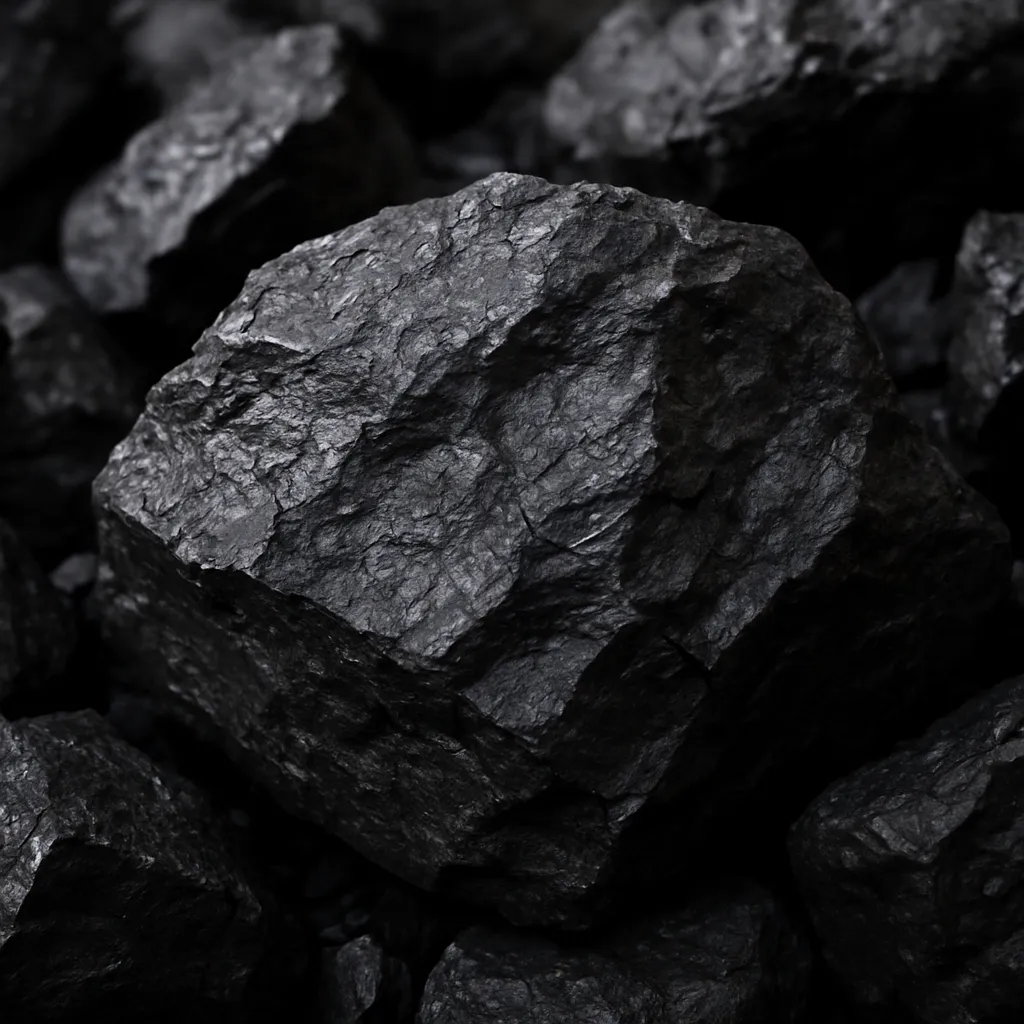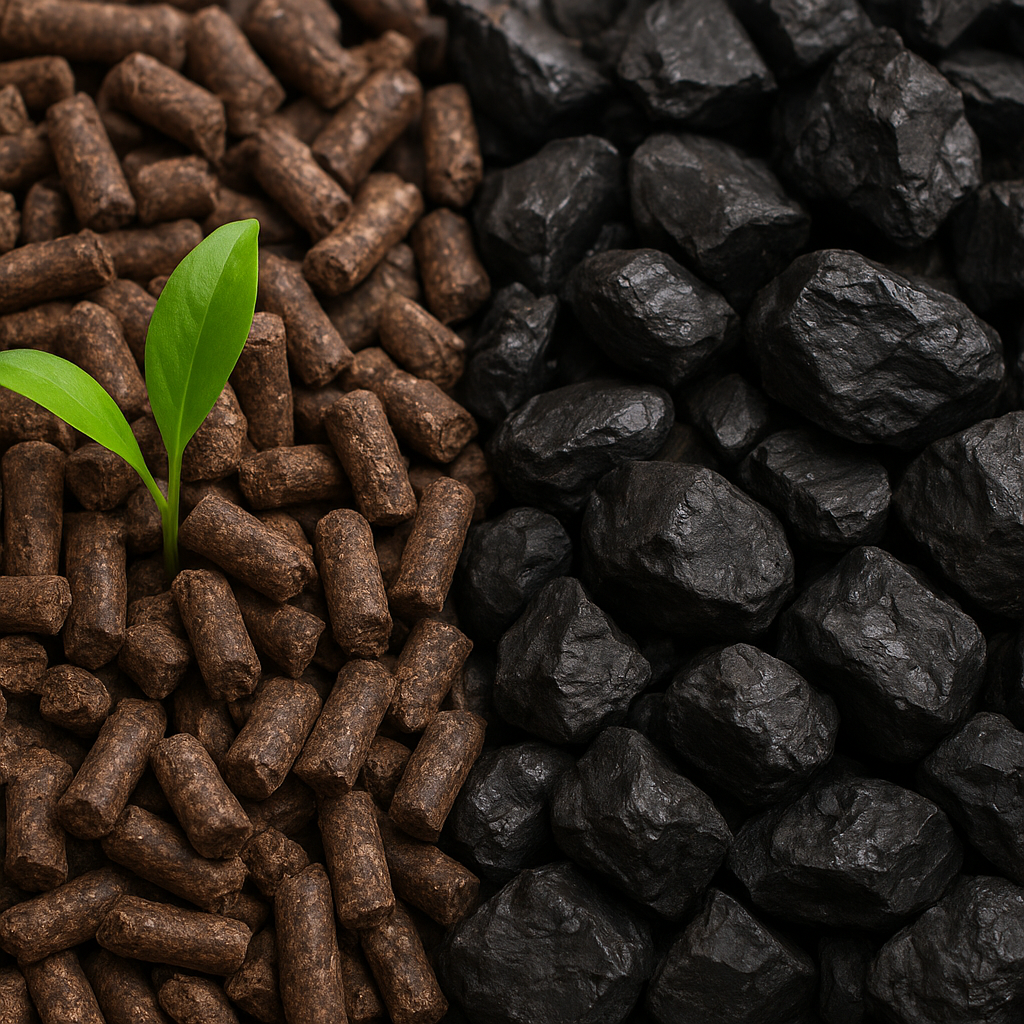
Bio-coal (sometimes called torrefied biomass or hydrochar, depending on the production method) is an engineered solid fuel produced from biological feedstocks that aims to match many properties of fossil **coal** while offering potentially lower lifecycle **carbon** emissions and greater **sustainability**. Interest in bio-coal has grown as utilities, industrial users and policymakers look for renewable alternatives that can be handled, stored and co-fired with existing coal infrastructure. This article explains how bio-coal is produced, where it is made and traded, the economic and industrial significance, available statistics and the environmental implications that shape its future.
Background and production processes
The term bio-coal covers several thermal and chemical treatments of biomass designed to increase energy content, reduce moisture and make the material hydrophobic and friable in a way that mimics some physical properties of **coal**. The main technologies that produce bio-coal are torrefaction, hydrothermal carbonization (HTC) and conventional carbonization or pyrolysis followed by densification (pelletizing or briquetting).
Torrefaction
Torrefaction heats biomass (typically 200–320°C) in an oxygen-limited environment to remove moisture and volatile compounds. The process produces a dark, friable solid with higher calorific value and improved grindability. Torrefied material is often further densified into **pellets** or briquettes for transport and combustion. Torrefaction enhances bulk energy density and makes the feedstock more resistant to biological degradation and water uptake.
Hydrothermal carbonization and pyrolysis
HTC treats wet biomass at 180–250°C under pressure to create a coal-like hydrochar without the energy penalty of drying. Pyrolysis at higher temperatures (400–700°C) produces biochar, bio-oil and syngas; the solid residue can serve as bio-coal after suitable processing and densification. Each route yields materials with distinct porosities, fixed-carbon content and ash characteristics, so the choice of process depends on the end use and available feedstock.
Densification and refining
Densification (pelletization, briquetting) is often required to achieve the volumetric energy density and handling characteristics required by industrial boilers and transport logistics. Additives or binders may be used in small amounts, and quality control targets include consistent size, low moisture, low fines and controlled ash composition to avoid slagging in furnaces.
Where bio-coal occurs and where it is produced
Bio-coal does not “occur” in nature the way fossil coal does. It is manufactured near sources of **biomass** or near centres of demand (power plants, industrial users). Production tends to cluster where feedstock is abundant, energy infrastructure is present, and regulatory frameworks or market demand support renewable solid fuels.
- Europe: Scandinavia (Sweden, Finland) and parts of Central and Western Europe have been early adopters due to large forest residue streams and existing pellet markets. The Netherlands and Germany host demonstration and commercial torrefaction units aimed at co-firing with coal in power plants.
- North America: The United States and Canada produce large volumes of wood pellets and are exploring torrefaction hubs near forested regions. Several pilot projects focus on supplying domestic industrial users and export markets.
- East and Southeast Asia: China, Vietnam, Indonesia and Malaysia have significant biomass processing industries. China in particular has invested in densified biomass and biomass-derived fuels for industrial heat and power.
- Latin America: Brazil and other countries with residue-rich agriculture are candidates for bio-coal production, particularly where sugarcane bagasse and other agricultural residues are available.
- Africa and Oceania: Activity is smaller but potential exists where agricultural residues and forestry by-products are available and export infrastructure is viable.
Typical feedstocks include forestry residues (branches, bark, sawmill waste), logging residues, agricultural residues (straw, husks), energy crops (short-rotation coppice), and certain organic fractions of municipal solid waste when pre-treated. Choice of feedstock strongly affects ash content, chlorine, sulphur and metal contaminants—key parameters for industrial use.
Economic and market aspects, with available statistics
The global market for densified biomass (mainly wood pellets) provides a baseline to understand bio-coal markets: global pellet production has been in the tens of millions of tonnes per year. Bio-coal (torrefied biomass and other coal-like products) is still a smaller, emerging share within that market, concentrated in pilot to early-commercial scale facilities. Precise statistics vary by source, but several trends are clear:
- Demand drivers are co-firing in existing coal power plants, industrial heat, and potential substitution in metallurgy and cement. Co-firing allows utilities to reduce fossil CO2 emissions without full conversion of boilers.
- Production costs for bio-coal depend on feedstock logistics, process scale, energy integration and densification. Costs can range widely; torrefaction increases capital and processing costs relative to simple pellet production but can reduce transport and handling costs by improving energy density and hydrophobicity.
- Transport economics matter: a densified bio-coal with higher energy density becomes competitive on interregional and export markets more readily than raw biomass. For long-distance exports (across oceans), densification is often essential.
Representative statistics and estimates (indicative ranges):
- Global wood pellet production (as a context): on the order of 20–40 million tonnes per year in recent years, with Europe and North America as leading producers and Europe as the largest consumer due to power and heating demand.
- Bio-coal (torrefied biomass) annual production: still small relative to pellets, often estimated in the low hundreds of thousands to a few million tonnes globally, depending on how projects scale up in the 2020s.
- Energy content: raw wood typically 14–18 MJ/kg (as-dried). Torrefied and densified products can reach roughly 18–25 MJ/kg, approaching lower-rank coals on a per-mass basis and higher on a volumetric basis due to densification.
- Market projections: analysts project growth driven by decarbonization policies, but the rate depends on regulatory support for co-firing, carbon pricing, and competition from electrification and other renewables.
Economically, bio-coal competes with several alternatives: conventional wood pellets, fossil coal (where available and cost-advantaged), gas, and emerging decarbonized solutions. Its commercial success hinges on local feedstock costs, logistics, and the premium placed on low-carbon fuels by regulators or buyers.
Industrial significance and applications
Bio-coal’s principal attractiveness is that it can be used with little modification in many systems designed for coal. This reduces capital expense for utilities and industries seeking to reduce fossil fuel use. Main applications include:
- Power generation: co-firing with coal in pulverized coal boilers or fluidized-bed units. Co-firing rates vary; even modest substitution (e.g., 10–20%) can substantially reduce net CO2 emissions if feedstock is sustainable.
- Industrial heat and steam: cement, pulp and paper, brick kilns and other industrial processes can utilize bio-coal for process heat, sometimes replacing or reducing coal or heavy fuel oil use.
- Metallurgy: there is active research into using bio-coal or charcoal-derived materials as partial substitutes for coking coal in blast furnaces or as reducing agents in direct reduction processes—this is technically challenging because metallurgical coal demands specific fixed-carbon, ash and volatile properties.
- Residential and commercial heating: densified bio-coal pellets can be used in district heating and large biomass boilers, though most household pellet markets still use conventional wood pellets.
From an operational standpoint, bio-coal reduces certain handling issues associated with raw biomass—lower moisture prevents freezing and biological degradation, and better grindability eases combustion in pulverized fuel systems. Yet ash composition and behavior (e.g., slagging, fouling) must be carefully managed and matched to the host plant.
Environmental and lifecycle considerations
Evaluating the environmental benefit of bio-coal requires full lifecycle assessment (LCA) that includes feedstock sourcing, harvesting, transport, processing and end-use emissions. Key factors include:
- Carbon accounting: biomass is renewable only if regrowth or sustainable sourcing ensures that the CO2 emitted at combustion is re-sequestered. Short-rotation energy crops or residues from forest operations that do not cause deforestation generally offer stronger claims to low net emissions.
- GHG reductions: compared to coal, bio-coal can offer substantial CO2 emission reductions on a lifecycle basis when feedstock is sustainably sourced. Exact percentage reductions depend on transport distances, process energy mix and land-use impacts.
- Air emissions and local impacts: during combustion, bio-coal releases particulates, NOx and other pollutants similar to solid fuels; however, sulphur content is generally lower than in many coals. Ash management and potential contaminants (e.g., chlorine, heavy metals from contaminated feedstocks) must be controlled.
- Biodiversity and land use: large-scale feedstock cultivation or removal of forest residues can affect soil health and biodiversity. Responsible sourcing standards and certification schemes (e.g., forest stewardship) are important to ensure sustainability.
Certification and supply chain transparency are increasingly required by buyers and regulators who demand proof of origin, carbon accounting and sustainable practices. Co-firing mandates, renewable energy targets and carbon pricing influence lifecycle benefits and market demand.
Challenges, risks and policy drivers
Bio-coal faces several economic, technical and policy challenges despite its promise:
- Supply chain scaling: ensuring continuous, sustainable feedstock supply at competitive cost is a major barrier, especially in regions with dispersed or seasonally available residues.
- Capital intensity: torrefaction and HTC plants require significant capital expenditure, and investors need clarity on long-term markets and policy support to commit.
- Competition: other low-carbon options (electrification, green hydrogen, biomass pellets, waste-to-energy, carbon capture on coal) compete for investment dollars and policy attention.
- Standardization: unlike long-established coal specifications, bio-coal standards are still evolving. Lack of uniform quality standards complicates trade and technical integration.
- Policy dependence: many projects rely on renewable fuel mandates, subsidies or carbon pricing to be cost-competitive. Policy reversals can quickly change project economics.
Despite these challenges, supportive policies—such as renewable mandates, incentives for co-firing, or higher carbon prices—can accelerate adoption. The presence of existing coal infrastructure presents both an opportunity (retrofits and co-firing) and a risk (lock-in of suboptimal solutions that delay deeper decarbonization).
Future prospects and technological innovations
Several technological and market trends could expand bio-coal’s role in the energy transition:
- Process integration and energy efficiency: improving energy integration within torrefaction plants and using residual heat or syngas helps reduce production costs and CO2 footprints.
- Hybrid approaches: combining bio-coal production with carbon capture and storage (BECCS) could provide negative emissions when sustainably deployed—this is especially attractive for industries with hard-to-abate emissions.
- Advanced feedstocks: converting diverse residues and waste streams into bio-coal via HTC or catalytic upgrading expands feedstock availability and reduces competition with food production.
- Standardization and certification: international standards for torrefied biomass and harmonized sustainability criteria would lower market barriers and increase buyer confidence.
- Regional hubs: clustering feedstock supplies, processing and export terminals into regional hubs reduces logistics costs and makes export markets more viable.
Research continues into optimizing process temperatures, residence times, and gas utilization to improve yields and reduce greenhouse gas intensity. In parallel, sector coupling (linking bio-coal plants to industrial heat sinks, chemical production, or BECCS installations) could create integrated low-carbon clusters.
Conclusion
Bio-coal represents a pragmatic, near-term pathway to reduce fossil coal use by leveraging existing infrastructure and enabling higher shares of renewable, solid fuels in power and industry. Its success depends on careful attention to feedstock sustainability, lifecycle emissions, economic competitiveness and supportive policy frameworks. While still an emerging market relative to conventional pellets, bio-coal’s technical ability to mimic many coal properties—higher **energy density**, better storage stability and compatibility with pulverized fuel systems—makes it an attractive transitional fuel for countries and industries with extensive coal-dependent assets. Continued innovation, robust sustainability standards and strategic investment in supply chains will determine whether bio-coal grows from niche deployments into a meaningful contributor to a lower-carbon industrial landscape.